

How to use hyaluronic acid serum for healthier hair
TL;DR:
- Hyaluronic acid enhances hair hydration, reduces frizz, and adds shine through moisture binding on the surface. It does not repair structural damage or stimulate hair growth but improves manageability when used correctly. Proper application includes applying to damp hair, sealing with an occlusive product, and adjusting use based on hair type and climate.
You wash your hair, let it dry, and still end up with frizzy, dull strands that feel more like straw than silk. Sound familiar? For women navigating the changes that come with aging hair, dryness and lack of shine are two of the most frustrating daily battles. Hyaluronic acid (HA) has earned a legendary reputation in skincare, and now it’s making waves in haircare too. As Byrdie notes, HA is a humectant that attracts and binds water, improving hydration and reducing frizz rather than repairing broken hair. This guide walks you through everything you need to know to use it effectively.
Table of Contents
- What is hyaluronic acid and how does it work on hair?
- What you need to use hyaluronic acid serum for hair
- Step-by-step: How to apply hyaluronic acid serum for best results
- Troubleshooting and common mistakes
- What to expect: Results, limitations, and myths
- The real value of hyaluronic acid for hair: Our take
- Explore hyaluronic acid hair and skincare solutions
- Frequently asked questions
Key Takeaways
| Point | Details |
|---|---|
| Hydration booster | Hyaluronic acid serum attracts water to the hair, helping boost hydration and comfort. |
| Superficial benefits | Expect smoother, softer, and less frizzy hair—not deep repair or regrowth. |
| Proper use matters | Apply HA serum to damp hair and seal with conditioner or a light oil for best results. |
| Know your goals | Choose HA serums for hydration; use other targeted treatments if you seek regrowth or bond repair. |
What is hyaluronic acid and how does it work on hair?
Think of hyaluronic acid as your hair’s version of a big drink of water. HA is a naturally occurring molecule found in the body, and its superpower is holding up to 1,000 times its weight in moisture. As a humectant, it works like a sponge, drawing water from the environment and from deeper layers into the hair shaft and scalp surface.
When it comes to hair specifically, HA doesn’t work the same way for every formula. Molecular weight matters quite a bit here. High molecular weight HA sits on the surface of the hair, creating a light, smoothing film that tames frizz and adds shine. Low molecular weight HA can penetrate more deeply into the scalp’s upper layers, potentially supporting scalp hydration and comfort. According to a 2025 PMC review, HA’s biological effects and scalp penetration depend significantly on molecular weight and formulation.
Here’s what HA can realistically do for your hair:
- Hydrate the hair surface and scalp
- Reduce frizz by keeping the cuticle smooth and moisturized
- Add softness and a subtle shine
- Improve scalp comfort, especially if your scalp feels tight or dry
- Extend the benefits of your conditioner when used together
What it cannot do is equally important to understand. HA does not repair broken disulfide bonds (the structural bonds damaged by heat or color), and it does not stimulate hair follicles for regrowth. If those are your goals, you’ll need targeted treatments designed for that purpose. But if softer, more manageable hair is what you’re after, exploring the HA benefits for hair is a genuinely exciting place to start.
What you need to use hyaluronic acid serum for hair
Getting the most out of hyaluronic acid serum isn’t complicated, but having the right setup makes a real difference. Here’s what to gather before you begin.
Essential items:
- A hyaluronic acid serum formulated for hair or skin use (we recommend our 8 oz pure HA serum for households that want a generous, cost-effective supply)
- A spray bottle of water or a hydrating hair mist
- A wide-tooth comb for even distribution
- An optional lightweight occlusive like a leave-in conditioner or a few drops of argan oil
Environmental consideration: HA is a humectant, which means it needs existing moisture to do its job. Applying to damp hair consistently maximizes its effects. If your environment is very dry, like during winter indoors or in a desert climate, HA can actually pull moisture from your hair instead of the air, leaving it feeling drier. An occlusive layer seals everything in.
| Condition | Best approach | Why it matters |
|---|---|---|
| Humid climate | HA serum alone | Plenty of ambient moisture to draw from |
| Dry/indoor climate | HA serum + occlusive | Prevents reverse moisture draw |
| Fine hair | Lightweight HA serum | Avoids weighing hair down |
| Thick or coarse hair | Richer HA blend | More coverage for dense strands |
| Dry, itchy scalp | Low molecular weight HA | Supports deeper scalp hydration |
Understanding how to use hyaluronic acid serum properly is honestly half the battle. Many people skip the sealing step or apply it to bone-dry hair and wonder why the results feel underwhelming. The table above shows how small adjustments based on your hair type and climate make a huge difference.
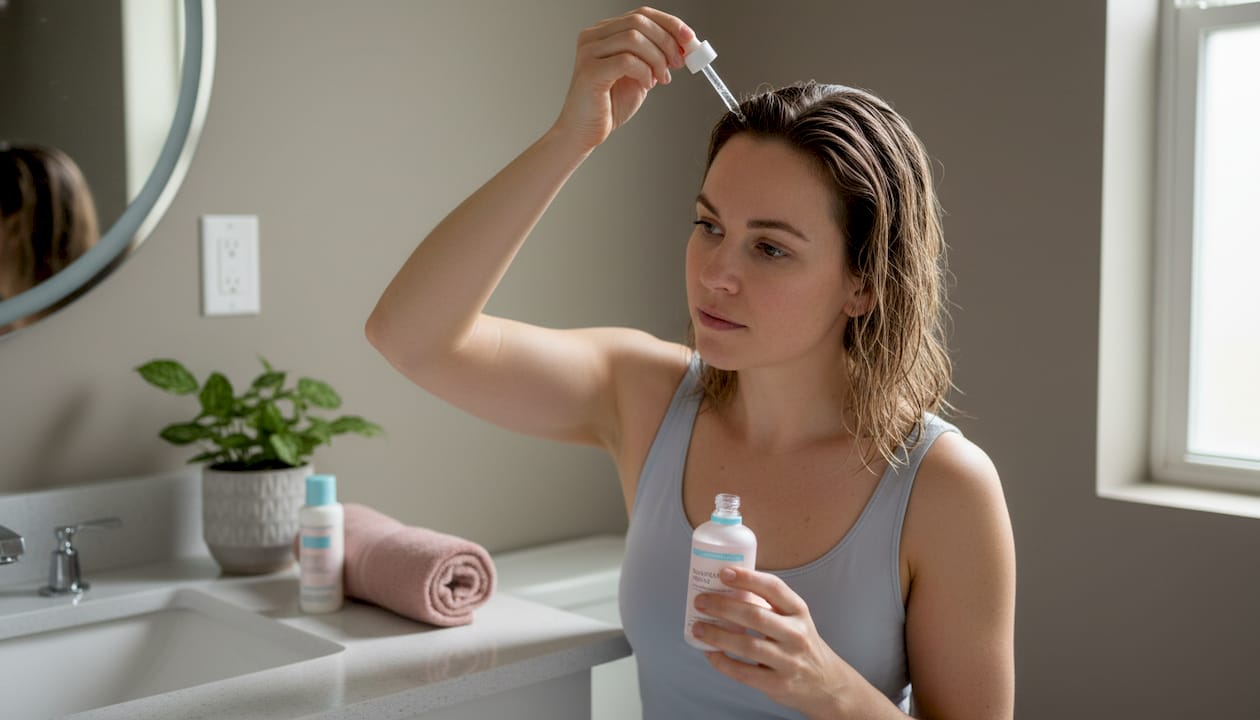
Pro Tip: If you’re using our 8 oz HA serum, it’s easy to decant a small travel size into a dropper bottle just for hair use. This keeps your routine organized and lets you control exactly how many drops you’re applying each session.
Step-by-step: How to apply hyaluronic acid serum for best results
Here’s the good news: applying HA serum to your hair is genuinely simple. Once you get the routine down, it takes under two minutes and fits naturally into your post-wash routine.
Step-by-step application:
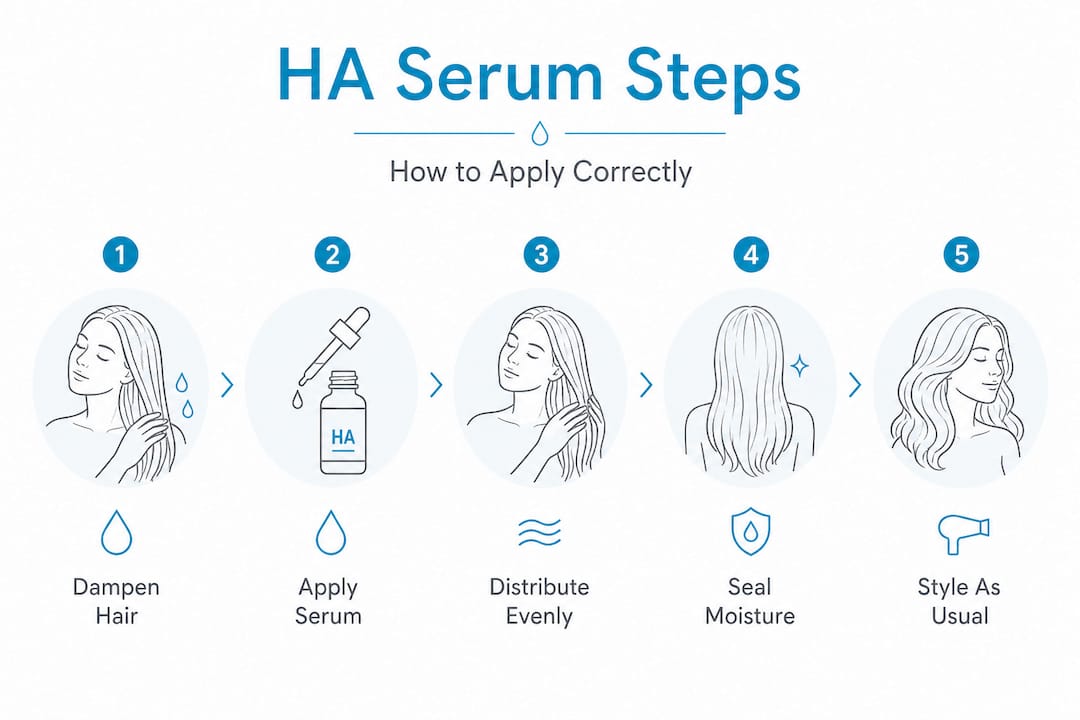
- Wash your hair with your regular shampoo and conditioner, then gently towel-dry until your hair is damp, not dripping.
- Dispense 3 to 5 drops of HA serum into your palms. For longer or thicker hair, you may want up to 8 drops. Rub your palms together lightly to spread the serum.
- Smooth the serum over your mid-lengths and ends first, where dryness and frizz tend to concentrate. Then lightly work any remaining product into your scalp if dryness or tightness is a concern.
- Comb through with a wide-tooth comb to distribute the serum evenly from root to tip. This step is easy to skip but makes a noticeable difference in smoothness.
- Apply an occlusive layer such as a leave-in conditioner or a light hair oil over the serum. This seals the moisture in so the HA stays effective for longer throughout the day.
- Air-dry or style as usual. The serum won’t interfere with heat tools, but letting hair air dry after application preserves more of the hydration you just locked in.
For a more detailed breakdown of technique, our step-by-step HA application guide covers the finer points. And if you’re curious about stacking HA with other active ingredients, browse our HA combination products to see what pairs well.
| Application variable | Recommendation | Outcome |
|---|---|---|
| Amount of serum | 3 to 8 drops depending on hair density | Even coverage without residue |
| Hair state at application | Damp, not soaking wet | Optimal water binding |
| Distribution method | Wide-tooth comb | Reduces frizz and tangles |
| Finishing layer | Leave-in conditioner or light oil | Seals moisture, extends softness |
| Frequency | Daily or every wash | Consistent hydration benefits |
“HA is most effective as a surface hydrator, binding moisture and improving hair softness when used correctly.”
It’s worth noting that while your hair will feel noticeably softer and smoother after consistent use, HA won’t repair hair shaft integrity or reverse structural damage. The benefits are real, they’re just focused on comfort and surface hydration rather than deep structural correction.
Troubleshooting and common mistakes
Even the best ingredients can underperform when applied incorrectly. Here are the most common mistakes we see, and how to easily fix them.
Common errors to avoid:
- Applying to dry hair: HA needs moisture to activate. On dry hair in low humidity, it has nothing to draw from and can actually pull residual moisture out of the hair shaft. Always mist hair with water first if it has dried out since washing.
- Skipping the occlusive in dry climates: This is the single biggest mistake. In low humidity environments, skipping a sealing product like conditioner or oil means the HA evaporates along with the moisture it gathered. According to expert guidance from Byrdie, HA is significantly less effective without an occlusive in dry conditions.
- Expecting hydration to equal repair: HA hydrates beautifully. But if your hair is damaged from bleach, heat, or over-processing, hydration helps with softness and manageability, not structural repair. Setting realistic expectations keeps you from being disappointed.
- Choosing the wrong formula: Not all HA serums are created equal. Some are designed with additives that work beautifully on skin but feel heavy or sticky on fine hair. For guidance on choosing the right HA formula for your hair type, we’ve broken down the differences by molecular weight and formulation style.
- Using too much product: More is not better here. A few drops go a long way. Overloading your hair with serum can leave it feeling slightly tacky or flat.
Pro Tip: If you live somewhere with very low humidity, like a heated apartment in winter, try using a humidifier in your bedroom. It raises ambient moisture so your HA serum has something to grab onto, making every application noticeably more effective.
What to expect: Results, limitations, and myths
Let’s talk honestly about what you will and won’t see when you add HA serum to your hair routine.
What you can realistically expect:
- Softer, more touchable hair within the first few uses
- Reduced frizz and improved cuticle smoothness
- More manageable styling with less flyaway behavior
- A subtle shine boost, especially on dull or aging hair
- Improved scalp comfort if dryness or tightness has been an issue
These are genuine, meaningful benefits. Aging hair, in particular, tends to lose moisture retention capacity over time, making it drier, coarser, and harder to manage. HA addresses exactly that problem. A 2025 PMC review confirmed that while HA is not a clinically proven hair growth stimulant, it can meaningfully increase comfort and smoothness for aging hair.
The myths worth busting:
One of the most persistent misconceptions is that HA serums can stimulate new hair growth. This idea gets amplified on social media, but the evidence simply doesn’t support it. Hair growth serums that do show clinical results typically contain entirely different active ingredients with specific follicle-stimulating properties. A double-blind, placebo-controlled study on clinically active hair serums confirms that growth-stimulating formulas use a distinct category of actives. HA is not among them.
Another myth is that more molecular weight options automatically mean better results for hair. In reality, the best formulas for hair use a blend of different molecular weights, because surface smoothing and deeper scalp care address different problems. What matters most is using your chosen formula correctly and consistently.
For more on building science-backed beauty routines that layer HA with other evidence-based ingredients, we’ve put together a thorough breakdown worth reading.
The real value of hyaluronic acid for hair: Our take
After years of working with hyaluronic acid across skincare and haircare formulations, here’s our honest take: HA is one of the most misunderstood hair ingredients on the market, but for the right reason. It works so well on skin that people naturally assume it will work the same way on hair, and the truth is a little more nuanced.
HA is genuinely excellent for what it actually does. Aging hair is dryer, more porous, and less able to retain moisture on its own. A well-formulated HA serum, applied correctly and sealed in with a light conditioner, delivers real, noticeable softness and shine that many other products can’t match at the same weight. Think of it like a lightweight moisturizer for your hair. Brilliant for what it addresses, but not a substitute for a protein treatment if your bonds are broken, or a scalp serum if regrowth is the priority.
Where we see women get frustrated is when they use HA with expectations borrowed from the hair growth or bond-repair category. That’s not a failure of the ingredient. It’s a mismatch between the tool and the goal. Our recommendation: use HA serum as your daily hydration step within a broader strategy, and pair it with targeted treatments when other specific concerns come into play.
Consistent moisture is genuinely one of the most underrated elements of healthy HA for anti-aging routines in both skin and hair. HA is one of the cleanest, most effective ways to deliver it.
Explore hyaluronic acid hair and skincare solutions
If you’re ready to put what you’ve learned into practice, we’ve made it easy to find the right place to start.
Our pure hyaluronic acid serum is a bestseller for a reason. It’s versatile, clean, and works beautifully on both skin and hair. For hair routines especially, we strongly recommend the 8 oz size. It gives you enough product to use generously on your hair without rationing, and it’s cost-effective for daily use. You can also explore our full range of anti-aging hyaluronic acid serum options if you want something tailored specifically to aging skin and hair concerns. For a full picture of what this ingredient can do, our 10 benefits of hyaluronic acid guide is the best next read.
Frequently asked questions
Can hyaluronic acid serum help with hair growth?
Current evidence shows that hyaluronic acid serums hydrate hair and scalp effectively, but they do not directly stimulate hair follicles for new hair production. If hair growth is your primary goal, look for serums with clinically supported growth actives instead.
Is it safe to use hyaluronic acid serum on the scalp daily?
Yes, HA serum is generally safe for daily scalp and hair use. For best results, always apply to damp hair rather than a completely dry scalp to ensure the humectant has moisture to work with.
Do I need a special type of hyaluronic acid for my hair?
Most quality hair serums use a blend of molecular weights optimized for surface hydration and light scalp penetration. The molecular weight of HA influences how deeply it can act, so a multi-weight formula tends to cover more bases.
Should I seal hyaluronic acid serum with another product?
For best results, yes. Applying a light conditioner or oil over your HA serum locks in the moisture the humectant has gathered, especially if you live in a dry climate or heated indoor environment.