

Hyaluronic Acid for Skin: Benefits for Clear, Youthful Skin
Most of us spend years chasing clear skin by targeting breakouts, oil, and blemishes. But here’s the thing: clear, glowing skin is about so much more than just fighting acne. For women between 25 and 45, hydration and a strong skin barrier are just as critical as any spot treatment. Hyaluronic acid for skin health has become a cornerstone of modern skincare for good reason. It works with your skin’s own biology to deliver deep moisture, support elasticity, and reduce the visible signs of aging. This guide walks you through exactly what HA does, how to use it effectively, and the mistakes you’ll want to skip.
Table of Contents
Key Takeaways
| Point | Details |
|---|---|
| Hydration is essential | Supporting your skin’s moisture barrier is the foundation for clear, smooth, and resilient skin at any age. |
| Hyaluronic acid multitasks | HA hydrates, plumps, reduces wrinkles, and strengthens barrier function for lasting clarity and radiance. |
| Usage method matters | Blending topical and oral HA and pairing with other skincare ingredients maximizes clear-skin and anti-aging results. |
| Application tips | Apply HA to damp skin and seal in with moisturizer for best effectiveness and prevention of dryness. |
Why hydration and the skin barrier matter for clarity
Let’s start with something that surprises a lot of people: dehydrated skin is actually more prone to breakouts, not less. When your skin is dry and stripped, it overproduces oil to compensate, which can clog pores and trigger inflammation. Well-hydrated skin, on the other hand, has a stronger lipid barrier (the protective outer layer of the epidermis), which means it’s better at keeping out environmental stressors like pollution and bacteria.
Think of your skin barrier like a brick wall. The skin cells are the bricks, and the lipids (fats) between them are the mortar. When that mortar dries out, the wall gets crumbly and gaps appear. Moisture escapes, irritants sneak in, and your skin starts to look dull, rough, and reactive. Keeping that barrier intact is the single most important thing you can do for long-term skin clarity.
Here’s what well-hydrated skin actually looks like in practice:
-
Smoother texture with fewer rough patches and visible pores
-
Brighter, more even tone because light reflects off a plump, smooth surface
-
Fewer breakouts because a healthy barrier limits bacterial invasion
-
Reduced redness and irritation thanks to lower inflammatory response
-
More resilient skin that bounces back from stress, weather changes, and hormonal shifts
Dry or compromised skin tells a very different story. It looks dull, feels tight, and tends to react to products that would otherwise be totally fine. Acne can actually worsen when the barrier is compromised, because inflamed, dehydrated skin is less able to heal itself efficiently.
This is where hyaluronic acid shines. It’s a molecule your body already produces naturally, found in your skin, joints, and connective tissue. As a humectant (think of it like a sponge), HA draws moisture from the environment and deeper skin layers up to the surface. HA’s hydration benefits go far beyond simple surface moisturizing. As research confirms, hyaluronic acid binds up to 1,000 times its weight in water, providing deep hydration, plumping skin, and supporting elasticity by reinforcing the skin’s extracellular matrix.
“Hydration isn’t a luxury add-on to your skincare routine. It’s the foundation everything else is built on.”
Pro Tip: Pair your HA serum with a gentle, sulfate-free cleanser and a barrier-supporting moisturizer that contains ceramides or niacinamide. This combination keeps the barrier strong while HA does its hydrating work.
Now that we’re clear on why hydration is foundational for clear skin, let’s explore how hyaluronic acid excels at delivering it.
How hyaluronic acid actually works for clear, youthful skin
Here’s where it gets really interesting. Not all hyaluronic acid is the same, and understanding the difference can completely change your results. HA molecules come in different sizes, called molecular weights (MW), and each size behaves differently on your skin.
High molecular weight HA sits on the surface of the skin. It creates a film that locks in moisture and gives you that immediate plumping, dewy effect you notice right after applying a serum. It’s great for surface hydration and smoothing fine lines temporarily.
Low molecular weight HA penetrates deeper into the epidermis. It works below the surface to improve elasticity and support the skin’s structural matrix over time. This is the type that makes a real difference in how your skin ages.
Nano HA (the smallest form) goes even deeper, reaching the dermal layer where collagen and elastin live. Research confirms that different molecular weights of HA serve distinct skincare roles: high MW for surface hydration, low MW for deeper penetration and elasticity, and nano HA for anti-wrinkle cellular effects.
Modern, well-formulated serums use blends of all three. That’s why a quality anti-aging HA serum outperforms a single-weight formula. You’re getting benefits at every level of the skin simultaneously.
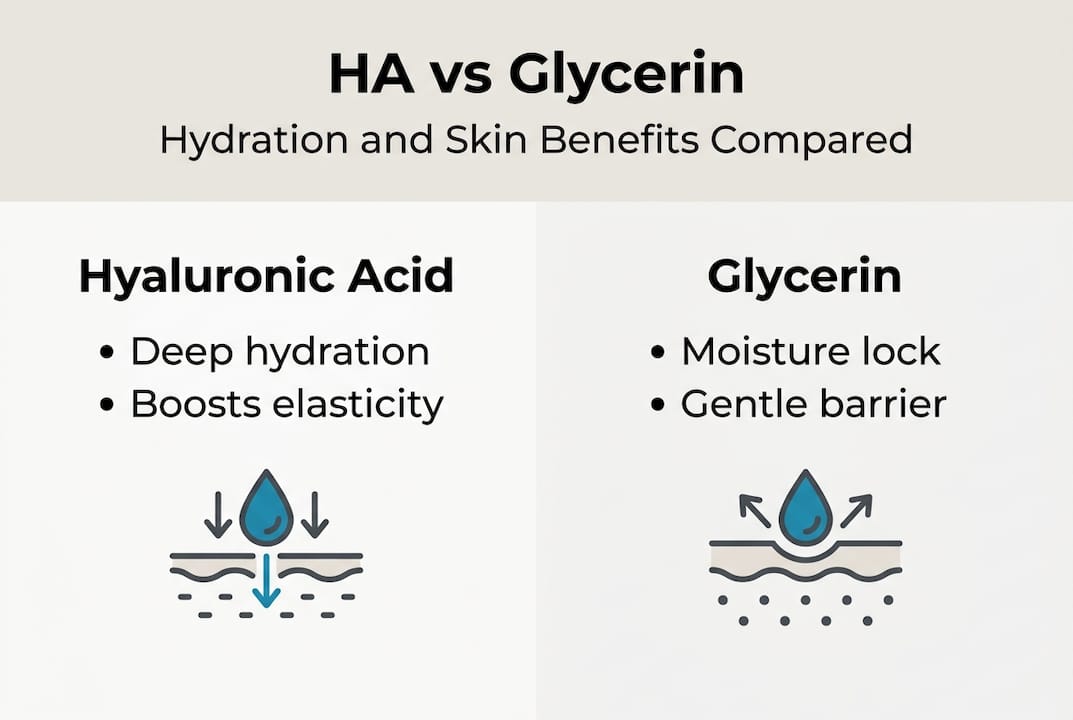
Here’s a quick comparison to put HA in context:
| Feature | Hyaluronic acid | Glycerin |
|---|---|---|
| Type | Humectant | Humectant |
| Water binding | Up to 1,000x its weight | Moderate |
| Plumping effect | Immediate and visible | Mild |
| Depth of action | Multi-layer (with MW blends) | Surface level |
| Long-term dryness resistance | Moderate | Strong |
| Best for | Plumping, anti-aging, clarity | Maintaining baseline moisture |
| Skin feel | Lightweight, silky | Can feel slightly sticky |
Glycerin is a solid, reliable humectant and works well in moisturizers. But HA’s ability to work at multiple skin depths makes it the more powerful option for women focused on both anti-aging and clear skin. The two actually work beautifully together in layered routines.
Understanding HA’s science lets us appreciate the breadth of its benefits. Here’s how clinical evidence stacks up.
HA in practice: topical, oral, and injectable — what’s right for you?
The good news is that you have options. HA isn’t just a serum ingredient anymore. You can use it topically, take it as a supplement, or receive it as a professional injectable treatment. Each method has its strengths, and the right choice depends on your skin goals, budget, and lifestyle.
Topical HA is the most accessible starting point. A well-formulated serum delivers fast, visible hydration and plumping within days. Clinical evidence shows that topical HA improves skin hydration and reduces wrinkles, roughness, and fine lines with clinical results appearing within 4 to 12 weeks of consistent use. Our pure HA serum and HA + Vitamin B5 serum are designed to deliver exactly this kind of multi-depth hydration.
Oral HA supplements work from the inside out, and the research is genuinely impressive. Studies show that oral HA at 60 to 120 mg/day improved hydration, brightness, smoothness, and reduced wrinkles, roughness, and sebum in women aged 35 to 65 in randomized controlled trials. Results typically build over 6 to 12 weeks, making this a longer-term strategy but a very effective one.
Injectable HA is the most targeted option and is performed by a licensed professional. It’s particularly effective for deeper concerns. Research shows that injectable HA improved atrophic acne scars by 31% according to Goodman-Baron grade after four months of treatment.
| Method | Effectiveness | Duration | Typical cost | Best use |
|---|---|---|---|---|
| Topical serum | High for surface hydration | Daily maintenance | Low to moderate | Everyday hydration, fine lines |
| Oral supplement | Moderate to high | 6 to 12 weeks to peak | Low | Systemic hydration, aging skin |
| Injectable | Very high for deep issues | 6 to 18 months | High | Acne scars, deep lines, volume loss |
Here’s a simple morning and night routine to layer HA topically for maximum benefit:
-
Cleanse with a gentle, non-stripping cleanser
-
Apply toner or essence (optional, but great for prepping damp skin)
-
Apply HA serum while skin is still slightly damp
-
Follow with a lightweight moisturizer to seal in the hydration
-
Apply SPF 30 or higher in the morning (non-negotiable for anti-aging)
-
At night, swap SPF for a richer moisturizer or a hydrating face mask 2 to 3 times per week
Pro Tip: Try the “In & Out” strategy by combining a daily oral HA supplement with your topical serum routine. Using both together produces noticeably superior hydration results compared to either method alone, especially for women over 35.
With so many ways to use HA, let’s make sure you avoid the common mistakes that could sabotage your results.
Expert tips: maximizing results and avoiding pitfalls
Getting the most out of hyaluronic acid isn’t complicated, but there are a few things that trip people up. The biggest one? Applying HA serum to completely dry skin in a dry environment. HA is a humectant, which means it draws moisture from somewhere. If there’s no moisture in the air and none on your skin, it can actually pull water from deeper skin layers and leave your face feeling tighter than before.
Here are the most important best practices to keep in mind:
-
Apply HA to damp skin. After cleansing, pat your face dry but leave it slightly moist. This gives HA the water it needs to work with.
-
Always seal with a moisturizer. An occlusive or emollient moisturizer locks in the hydration HA has drawn to the surface. Skipping this step, especially in dry or cold climates, can lead to moisture evaporating right off your face.
-
Avoid fragrance-heavy HA formulas if you’re breakout-prone. Fragrance is one of the most common skin irritants, and it can trigger inflammation even in an otherwise gentle product.
-
Don’t expect HA to replace your acne or anti-aging actives. HA supports your routine beautifully, but it doesn’t replace retinol for cell turnover, vitamin C for brightening, or salicylic acid for pore clearing. Think of it as the hydrating backbone that makes those actives work better and feel less harsh.
-
Choose MW-blend formulas. Single molecular weight products are less effective. A blend gives you surface plumping and deeper structural support at the same time.
-
Oral plus topical beats either alone. If you’re serious about results, combining both methods is a clinically supported strategy.
One area where people sometimes get caught off guard is with injectable HA. As research notes, rare reactions to injectable HA can occur, and overuse of topical HA or poor formulation may irritate the skin. In dry climates, HA needs to be sealed in to prevent moisture loss. Always go to a licensed, experienced professional for injectables, and always patch-test new topical products.
You can explore our full range of HA skin products to find the right formula for your skin type and concerns.
Pro Tip: Even if you’ve used hyaluronic acid before, always patch-test a new HA product on your inner wrist or behind your ear for 24 hours. Formulations vary widely, and what works in one product may not work in another.
By using these strategies, you’ll join many women who’ve genuinely transformed their skin barriers and radiance. But what’s the real secret to long-term success with HA? Here’s our take.
Why Hyaluronic Acid for Skin Works Better Than More Products
We’ve seen a lot of skincare trends come and go, and here’s what we know for certain: buying more products is rarely the answer. The women who see the most dramatic, lasting results with hyaluronic acid aren’t the ones with the most products on their shelves. They’re the ones who understand what they’re using and why.
Not all HA products are equal. Formula quality, molecular weight blend, concentration, and what the HA is paired with all determine whether you’ll see real results or just a temporary dewy glow. Reading labels matters. Understanding HA explained at a deeper level helps you make smarter choices.
True skin clarity comes from consistency, not from chasing every new launch. A simple, well-chosen routine used faithfully for 8 to 12 weeks will outperform a complicated 10-step routine that you abandon after two weeks. Your skin also changes with the seasons, your diet, your stress levels, and your hormones. Listening to those signals and adapting your routine accordingly is a skill worth developing. The goal isn’t perfect skin overnight. It’s resilient, healthy, hydrated skin that keeps improving over time.
Level up your clear skin routine with Cosmedica Skincare
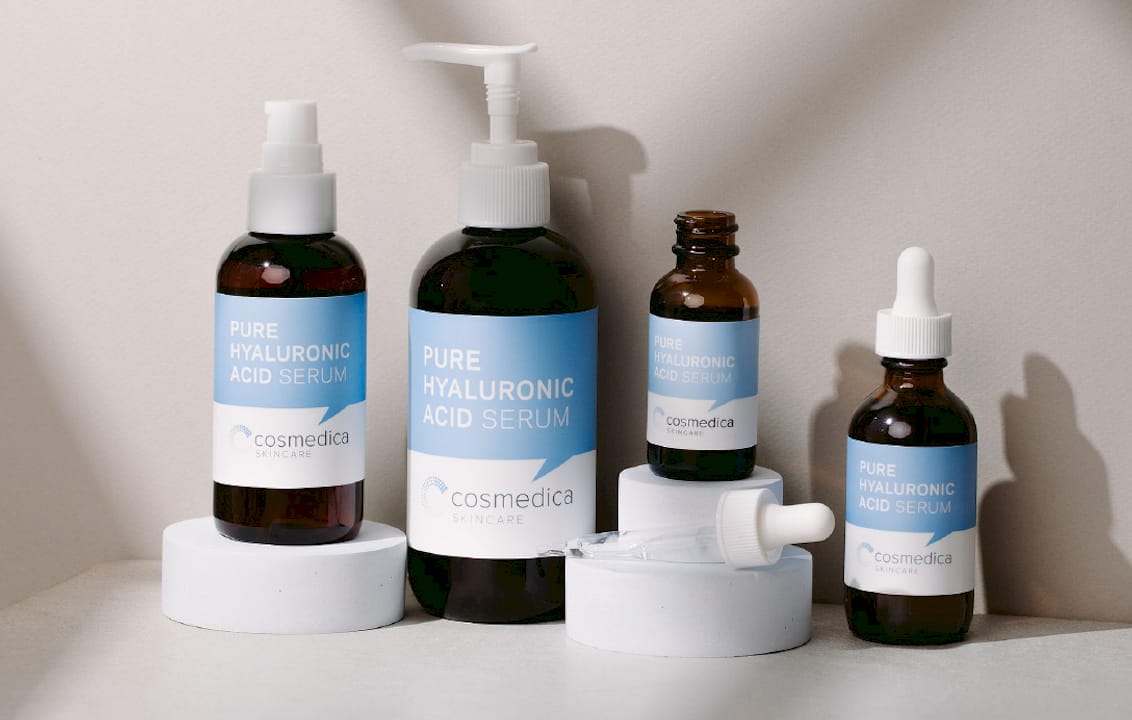
Ready to put everything you’ve learned into action? At Cosmedica Skincare, we’ve built our entire line around clinical-grade hyaluronic acid formulas designed specifically for women who want real, visible results without the guesswork.
Whether you’re starting with a daily HA benefits serum or ready to explore our full anti-aging HA serum collection, we have options tailored to every skin concern and stage of life. Our formulas use multi-molecular weight blends, so you’re getting surface hydration and deeper structural support in every application. Take our skin quiz to find your perfect match, or browse our expert guides to build a routine that’s truly personalized to you.
Frequently asked questions
Does hyaluronic acid clog pores or worsen acne?
Hyaluronic acid is non-comedogenic, meaning it does not clog pores, and research confirms that HA promotes clear skin via hydration, barrier support, and reduced inflammation, making it suitable for acne-prone skin.
How long does it take to see results from hyaluronic acid?
Most people notice improved hydration and plumping within days of starting a topical serum, but clinical studies show that topical and oral HA deliver measurable improvements in wrinkles and smoothness after 4 to 12 weeks of consistent use.
Can you use hyaluronic acid with retinol or vitamin C?
Yes, HA pairs exceptionally well with both retinol and vitamin C. Research confirms that HA is supportive to actives for women managing acne and aging concerns, and it helps buffer irritation from stronger ingredients.
What are the risks or side effects of hyaluronic acid products?
Topical HA is generally very well tolerated, but rare reactions to injectable HA and irritation from topical overuse or poor formulation can occur, so always patch-test and consult a professional before injectables.
Should hyaluronic acid be used year-round, even in dry climates?
Absolutely, but the key is sealing it in. Research shows that low humidity can lead to dehydration if HA is not sealed in with a moisturizer, so layering is especially important in dry or cold environments.