

Enhance your skincare regimen: Hyaluronic acid for lasting youthful skin
TL;DR:
- Hyaluronic acid is a powerful humectant that draws moisture into the skin but can cause dehydration if not sealed properly in certain climates. Its effectiveness diminishes with age due to natural decline, requiring targeted use with moisturizers rich in ceramides to maintain skin health. Proper application order, environmental awareness, and product selection are essential for maximizing anti-aging benefits.
Hyaluronic acid is one of the most talked-about ingredients in skincare right now, but here’s a truth that surprises a lot of people: it doesn’t always hydrate your skin. In fact, if you apply it the wrong way or in the wrong climate, it can actually pull moisture out of your skin, leaving you drier than before. For women in their 30s, 40s, and 50s who are serious about anti-aging results, understanding the nuances of how this powerhouse ingredient works isn’t optional. It’s the difference between skin that truly glows and skin that just looks tired.
Table of Contents
-
Finding your skincare regimen order: Best practices for layering
-
Avoiding common pitfalls: Humidity, sensitivity, and product choice
-
The uncomfortable truth about anti-aging regimens: Why one-size-fits-all never works
Key Takeaways
| Point | Details |
|---|---|
| Hyaluronic acid’s real power | It plumps and hydrates skin but must be properly sealed for best results. |
| Routine order matters | Applying hyaluronic acid before actives and sealing with moisturizers maximizes benefits. |
| Climate impacts results | Dry climates require extra care to avoid hyaluronic acid drawing moisture out of your skin. |
| Choose wisely for your skin | Fragrance-free, ceramide-rich formulas work best for mature, sensitive, or compromised barriers. |
Why hyaluronic acid matters in your skincare regimen
With the need for targeted hydration clear, it’s important to understand how hyaluronic acid supports your overall skincare regimen and where it can be misunderstood.
Hyaluronic acid (HA) is a humectant, which means it works like a sponge. It draws water molecules toward itself and holds onto them, helping your skin stay plump, smooth, and bouncy. What makes it remarkable is its ability to hold 1,000 times its weight in water, making it one of the most efficient moisture-binding ingredients available. Think of it as giving your skin a big, long drink of water and then helping it hold onto every drop.
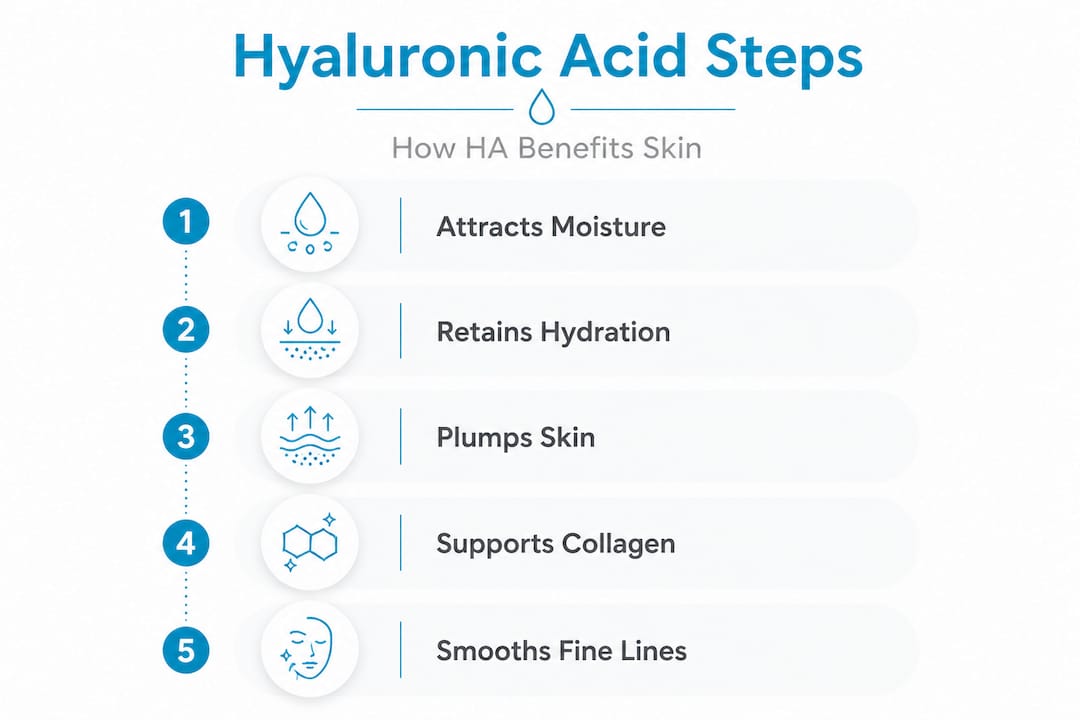
For women in their 30s and beyond, this matters enormously. Your skin naturally produces less hyaluronic acid as you age, which is a big reason why fine lines, loss of elasticity, and dullness tend to accelerate during these years. Replenishing it topically helps maintain that cushion-like layer in the epidermis that keeps skin looking youthful and resilient.
HA also plays a supporting role in collagen synthesis. A well-hydrated skin environment helps collagen fibers function better and hold their structure longer. This is why why skin care routines matter is such an important conversation when we’re talking about long-term anti-aging goals.
But here’s where the plot thickens. Hyaluronic acid can backfire in low-humidity environments. If you apply HA serum in a dry climate or during winter months with the heat cranked up, and you don’t seal it with a moisturizer or occlusive, it has nowhere to draw moisture from except your skin itself. The result? You end up more dehydrated than when you started.
Here are the key situations where HA works beautifully and where it needs extra support:
-
Humid climates: HA thrives, pulling ambient moisture into the skin with ease
-
Dry or low-humidity climates: seal HA with occlusive or risk drawing moisture from deeper skin layers
-
Sensitive skin: Apply HA first, before retinol or actives, to buffer potential irritation
-
Mature or thinning skin barriers: Prioritize fragrance-free, ceramide-rich formulas to avoid disrupting the lipid barrier
-
High molecular weight HA only in dry climates: Can sit on the surface and draw moisture upward and then outward
Stat callout: Your skin’s natural HA levels drop significantly starting in your 30s and continue declining with age, which directly contributes to visible signs of aging like fine lines and reduced elasticity.
Pro Tip: If you have sensitive or mature skin, always choose fragrance-free products and pair your HA serum with a ceramide-rich moisturizer. Ceramides reinforce the lipid barrier, keeping the moisture that HA attracts locked in right where your skin needs it.
Finding your skincare regimen order: Best practices for layering
Now that you know how hyaluronic acid works and the potential risks, let’s structure your routine for real-world results.
Order matters in skincare. A lot. Applying products in the wrong sequence doesn’t just reduce their effectiveness; it can actually cause irritation or push active ingredients where they shouldn’t go. The golden rule is to move from thinnest to thickest consistency, letting each layer absorb before moving on to the next.
Here’s a simple numbered framework that works beautifully for women focused on anti-aging:
-
Cleanser: Start clean. Remove makeup, sunscreen, and daily buildup with a gentle, pH-balanced cleanser.
-
Toner or essence (optional): Prep the skin and add a first layer of lightweight hydration.
-
Hyaluronic acid serum: Apply on damp skin. This is the key trick most people miss. Damp skin gives HA the moisture it needs to do its humectant job without pulling from deeper layers.
-
Actives (retinol, vitamin C, or acids): For sensitive skin, apply these after HA to buffer potential irritation.
-
Eye cream: Pat gently around the orbital bone.
-
Moisturizer: This is your seal. A ceramide-rich moisturizer locks in everything below it, especially the HA.
-
SPF (AM only): Always the last step in your morning routine.
For anyone following an anti-aging skincare routine, this sequence isn’t just logical, it’s backed by how skin actually absorbs and responds to ingredients.
Here’s a quick reference table for your AM and PM routines:
| Step | AM Routine | PM Routine | Notes |
|---|---|---|---|
| 1 | Gentle cleanser | Oil or balm cleanser | Double cleanse at night if wearing SPF |
| 2 | Hydrating toner | Exfoliating toner (2-3x/week) | Skip actives on sensitive nights |
| 3 | Hyaluronic acid serum | Hyaluronic acid serum | Apply to damp skin always |
| 4 | Vitamin C serum | Retinol (after HA for sensitive skin) | Don’t mix vitamin C and retinol |
| 5 | Eye cream | Eye cream | Pat, don’t rub |
| 6 | Moisturizer | Richer night cream or ceramide moisturizer | Seal HA in every single time |
| 7 | Broad-spectrum SPF 30+ | Facial oil (optional) | SPF is non-negotiable in the AM |
Not sure which routine fits your specific skin type? A skin quiz can help you pinpoint exactly what your skin needs without the guesswork.
For sensitive skin, apply HA before retinol and always follow with a ceramide-rich moisturizer, especially as your skin barrier becomes thinner over time.
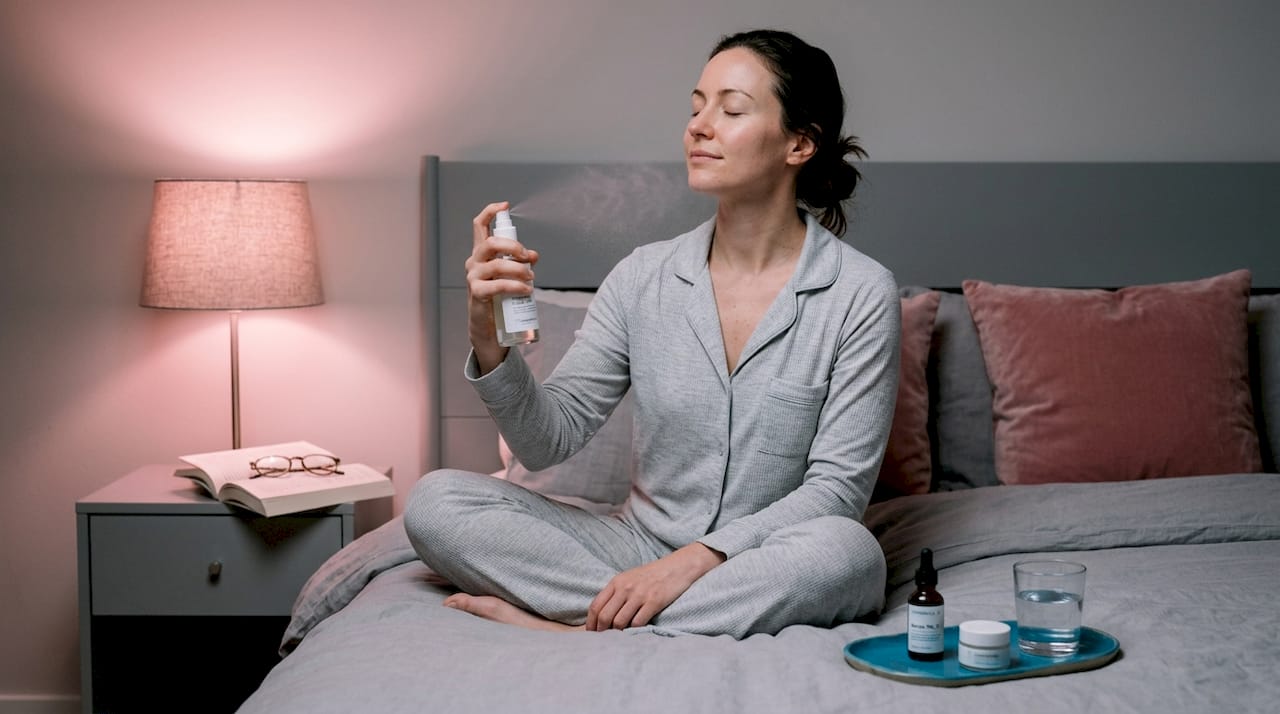
Pro Tip: Mist your face lightly with water before applying your HA serum at night. This gives the humectant just enough surface moisture to do its job even in the driest bedrooms.
Avoiding common pitfalls: Humidity, sensitivity, and product choice
After understanding routine order, it’s crucial to avoid the common mistakes that may sabotage your results, especially with hyaluronic acid.
One of the most persistent mistakes we see is women applying HA serum without thinking about the environment they’re in. Climate is a huge factor that most skincare guides skip entirely, and it’s genuinely important.
In low-humidity environments, HA pulls moisture from the deeper layers of your skin when there isn’t enough ambient moisture to attract. Low molecular weight HA can even penetrate deeper and cause inflammation in certain sensitive skin types. This is a real risk that deserves attention, not a rare edge case.
Here’s a breakdown of how climate and skin type affect your HA strategy:
| Condition | Risk | Strategy |
|---|---|---|
| Dry or desert climate | HA draws moisture from skin | Always seal with an occlusive or rich moisturizer |
| Cold winter air (indoors with heat) | Very low humidity indoors | Apply HA to damp skin, moisturize immediately after |
| Humid climate | HA works optimally | Standard application is fine |
| Sensitive skin | Low MW HA may cause redness | Choose high MW or multi-weight formulas |
| Mature or thinning barrier | Fragrance may disrupt lipid layer | Use only fragrance-free, ceramide-rich options |
Understanding the types of hyaluronic acid is genuinely useful here. Molecular weight determines how deep HA penetrates. High molecular weight HA sits on the skin’s surface, plumping and smoothing. Low molecular weight HA goes deeper, but it can irritate sensitive or compromised skin. The best anti-aging formulas use a blend of both.
“In dry or low-humidity climates, hyaluronic acid can pull moisture from the skin if not properly sealed, and low molecular weight formulas may trigger inflammation in sensitive skin types.” What is hyaluronic acid?
Here are the product label red flags to avoid:
-
Fragrance or perfume: Listed high on the ingredient label? Walk away, especially for mature or sensitive skin
-
High MW HA as the only form: Fine for humid climates, problematic for dry ones without an occlusive follow-up
-
Alcohol denat. near the top: Drying and barrier-disrupting, counterproductive with HA
-
No ceramides in the moisturizer you plan to pair it with: If the moisturizer doesn’t help seal your barrier, HA loses much of its benefit
-
Preservatives like MIT (methylisothiazolinone): Known sensitizers that don’t belong in a routine designed for reactive skin
If you want to learn how to use hyaluronic acid correctly from application to sealing, the details really do matter.
Choosing the right hyaluronic acid products for anti-aging
Knowing the pitfalls helps you shop smarter. Now, let’s focus on choosing the products that will truly boost your routine.
Reading an ingredient label feels intimidating until you know exactly what you’re looking for. For anti-aging purposes, the best hyaluronic acid products aren’t just ones with “hyaluronic acid” on the label. They’re formulated thoughtfully for mature, sensitive, or barrier-compromised skin.
Here’s what to look for on the label:
-
Multi-weight HA: Look for both sodium hyaluronate (typically smaller molecular weight, goes deeper) and hyaluronic acid (larger molecular weight, surface smoothing). Having both gives you surface and depth coverage.
-
Ceramides: These lipid molecules reinforce the skin’s natural barrier, keeping moisture locked in and irritants out. For mature or thinning skin barriers, ceramide-rich moisturizers used after HA are essential.
-
Fragrance-free: This isn’t just a “nice to have” for women 30 and over. Synthetic fragrance is one of the most common causes of contact dermatitis and can progressively weaken your skin barrier over years of use.
-
Peptides: When paired with HA in a formula, peptides signal the skin to support collagen production, making the anti-aging effect more significant.
-
Niacinamide: A great companion ingredient that brightens skin tone and helps regulate oil without disrupting the barrier.
Pro Tip: When you pick up a new HA serum, flip it over and scan the first five ingredients. Those represent the highest concentrations in the formula. If HA and skin-supportive actives appear early and fragrance doesn’t appear at all, you’re probably holding a solid product.
For the most effective anti-aging results, we always recommend exploring a dedicated anti-aging hyaluronic acid serum formulated specifically to address the needs of skin that’s beginning to show the signs of time. Generic serums often miss the mark for mature skin.
What “ceramide-rich” actually means: A formula marketed as ceramide-rich should contain ceramides listed as ceramide NP, ceramide AP, or ceramide EOP, ideally more than one type. These are the specific lipid molecules that replicate your skin’s natural barrier structure. A product with one ceramide near the bottom of the list isn’t meaningfully “ceramide-rich.”
What “fragrance-free” actually means: It means no added scent, synthetic or natural. This is different from “unscented,” which can actually contain masking fragrances. Always look for “fragrance-free” specifically.
The uncomfortable truth about anti-aging regimens: Why one-size-fits-all never works
Here’s something we’ve learned after years in the skincare industry: the women who get the best long-term results aren’t the ones chasing the newest ingredient or the trendiest formula. They’re the ones who take the time to understand their own skin, their climate, and their barrier health.
The biggest mistake we see, consistently, is treating skincare like a universal prescription. Someone reads about a celebrity using a particular HA serum, buys it, applies it without sealing, lives in Phoenix, and then wonders why their skin feels tighter and more dehydrated after two weeks. The ingredient wasn’t the problem. The application was.
We believe that personalization isn’t a luxury in skincare. It’s the foundation. Your skin in January in Minnesota behaves completely differently than your skin in July in Miami. Your skin at 35 has different needs than your skin at 50. A routine that worked perfectly two years ago might need adjustment after a hormonal shift or a change in medication.
The skincare industry loves to sell simplicity because simplicity sells. But the truth we’ve seen play out time and again is that small, thoughtful tweaks make more difference than switching to an entirely new product line. Sealing your HA with the right moisturizer, applying it to damp skin, choosing the right molecular weight for your climate. These are the moves that genuinely change outcomes.
Using hyaluronic acid for real results means getting comfortable with experimentation, paying attention to how your skin responds, and adjusting confidently. That’s not complicated. It’s just intentional.
Find your perfect regimen with Cosmedica Skincare
If you’ve made it this far, you already have a serious head start on most people when it comes to understanding how to use hyaluronic acid effectively. Now comes the rewarding part: putting it all into practice.
At Cosmedica Skincare, we’ve spent years developing formulas specifically designed for the nuanced needs of women who are serious about anti-aging. Our products aren’t just built around hyaluronic acid. They’re built around how it works best. We recommend starting with our full breakdown of the benefits of hyaluronic acid if you want to deepen your understanding, and then exploring our anti-aging serum highlights to find the right formula for your skin. Our complete anti-aging facial care collection is a great place to browse products that genuinely work together as a system.
Frequently asked questions
Can I use hyaluronic acid every day in my skincare regimen?
Yes, most people can use hyaluronic acid daily, but it must always be sealed with a moisturizer. In low-humidity environments, unsealed HA draws moisture from your skin rather than the air, which can worsen dryness over time.
What is the best way to layer hyaluronic acid and retinol?
Apply hyaluronic acid first on clean, slightly damp skin, then layer retinol on top. For sensitive or mature skin, always follow with a ceramide-rich moisturizer to buffer potential retinol irritation and seal in hydration.
How can I avoid irritation from hyaluronic acid?
Choose fragrance-free formulas, avoid products with high molecular weight HA as the sole form in dry climates, and always follow with a moisturizer to lock everything in. Sensitive skin benefits most from high MW or multi-weight blends.
Do I need hyaluronic acid if I already use a good moisturizer?
A quality moisturizer seals hydration in, but hyaluronic acid actively attracts and binds water molecules to the skin, which is a different function. Together, they work as a team, and for mature or dehydrated skin, using both makes a noticeable difference in plumpness and texture.