

Why Is Hyaluronic Acid Trending in Skincare in 2026
TL;DR:
- Hyaluronic acid is a versatile ingredient that attracts water, improving skin hydration and texture effectively. Its popularity stems from fast results, broad compatibility, and medical backing through injectables and approved uses. Proper application, including applying to damp skin and sealing with moisturizer, maximizes its benefits while managing expectations for structural changes.
Scroll through any beauty feed right now and you will find hyaluronic acid, abbreviated as HA, basically everywhere. Why is hyaluronic acid trending so hard? The short answer is that it genuinely works, but the full story is more interesting than that. HA sits at the intersection of two massive beauty movements: the push for science-backed skincare and the rise of minimally invasive aesthetic medicine. Together, those forces have made this molecule one of the most recognized and sought-after ingredients in beauty. We are going to break all of it down for you, without the hype.
Table of Contents
- Key takeaways
- What is hyaluronic acid and how does it work?
- Why is hyaluronic acid trending in skincare products?
- HA’s role in aesthetic medicine and injectables
- How to use hyaluronic acid effectively
- Why HA remains relevant in 2026 and beyond
- My honest take on the hyaluronic acid wave
- Try Cosmedica-skincare’s HA serums for yourself
- FAQ
Key takeaways
| Point | Details |
|---|---|
| HA works by attracting water | As a humectant, it can hold up to 1,000 times its weight in water, making it genuinely effective for hydration. |
| Molecular weight changes everything | High molecular weight HA hydrates the surface; low molecular weight penetrates deeper and may stimulate collagen production. |
| Topical HA requires a moisturizer | Using HA without sealing moisture in can actually draw water out of skin in dry environments. |
| Injectable HA is fueling broader trust | With millions of filler procedures performed annually, consumer familiarity with HA has grown beyond topical products. |
| Formulation quality determines results | Not all HA serums are equal; concentration, molecular weight, and pairing ingredients define whether you see real benefits. |
What is hyaluronic acid and how does it work?
Hyaluronic acid is a naturally occurring polysaccharide, which is a type of carbohydrate molecule, found throughout the human body. You will find it in your joints, eyes, and connective tissue, but the skin holds the largest concentration by volume. Its primary job is to retain water and keep tissues lubricated and cushioned.
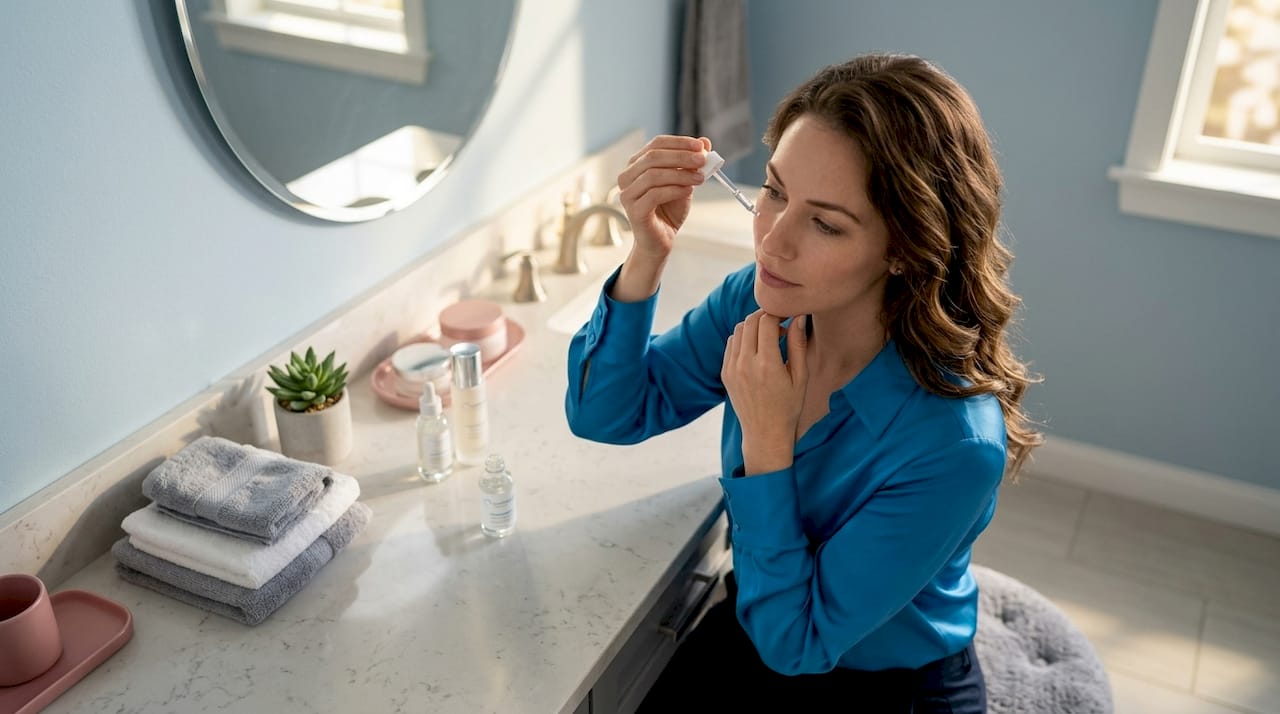
Think of HA like a sponge that never stops working. A single gram of HA can hold up to six liters of water, which is why even a thin layer on skin makes such an immediate visual difference. Skin looks plumper, fine lines soften, and the overall texture feels smoother. That is not a marketing claim; it is straightforward hydration physics.
Here is what most people do not fully understand about HA’s structure:
- High molecular weight HA sits on the skin’s surface, forms a film, and creates what feels like a big drink of water for the epidermis. It is visible, immediate, and deeply satisfying to touch.
- Low molecular weight HA is smaller and can travel deeper into the skin layers, where it stimulates collagen production and works more at a structural level.
- Sodium hyaluronate is the salt form of HA. It has a smaller molecular size, which means it absorbs better from topical products and costs less to produce. Most affordable serums use this form.
The catch? Your body produces less HA as you age. Skin that once bounced back effortlessly starts to feel drier and look less full, and that natural decline is a major reason why people reach for topical and injectable HA options. Hydration directly affects skin elasticity, texture, and the appearance of fine lines, so replacing what time takes away has obvious appeal.
One important distinction worth knowing: there is a common mix-up between what topical HA does versus what injectable HA does. Topical products hydrate and smooth the skin’s surface, while injectable HA physically restores lost volume beneath the skin. Both use the same molecule, but the outcomes are different. Understanding this distinction helps set realistic expectations.
Why is hyaluronic acid trending in skincare products?
The skincare market does not anoint ingredients randomly. HA earned its place at the top through a combination of real results, low irritation risk, and compatibility with virtually every other ingredient. But several specific forces have pushed it into full mainstream territory.
- Visible results, fast. Most people notice a difference within minutes of applying an HA serum. That instant plumping and smoothing effect creates the kind of positive feedback loop that builds loyal users and drives word-of-mouth.
- Works on every skin type. Dry, oily, sensitive, combination. HA does not clog pores, it does not cause breakouts, and it does not cause the redness that stronger actives like retinol or acids can trigger. That universality is rare.
- Affordable options have gone mainstream. Ingredient-focused HA serums at accessible price points have driven massive consumer adoption, proving that you do not need luxury pricing to get real hydration results.
- Social media and retail momentum. When one HA product goes viral, the entire category benefits. Retailers stock more, brands launch more, and the cycle continues.
- It pairs well with actives. HA acts as a buffer when used alongside stronger ingredients like retinol or vitamin C. It helps maintain hydration while those actives do their work, making it a go-to supporting player in multi-step routines.
The expert consensus is that HA is genuinely effective for improving skin texture and hydration, though it should not be positioned as a wrinkle reversal treatment. That honest middle ground, real but realistic benefits, is actually what gives HA its staying power. Trends built on overpromising tend to collapse. HA trends hold because most people who try it get something real out of it.
Pro Tip: Apply your HA serum to slightly damp skin, then immediately follow with a moisturizer. This traps the water HA has attracted before it can evaporate, giving you maximum plumping effect.
HA’s role in aesthetic medicine and injectables
Here is where the story gets broader. The HA trend is not just about serums. Minimally invasive procedures reached 8.7 million in 2023, and HA fillers represent a significant share of that volume. Every person who gets an HA filler goes home and often starts researching topical HA products too, creating a direct pipeline between medical aesthetics and the retail skincare market.
HA fillers work differently from topical products. Injected beneath the skin, they physically replace volume that aging has taken away, restoring cheekbone definition, smoothing nasolabial folds, or refreshing lip fullness. The results are structural, not just surface-level hydration.
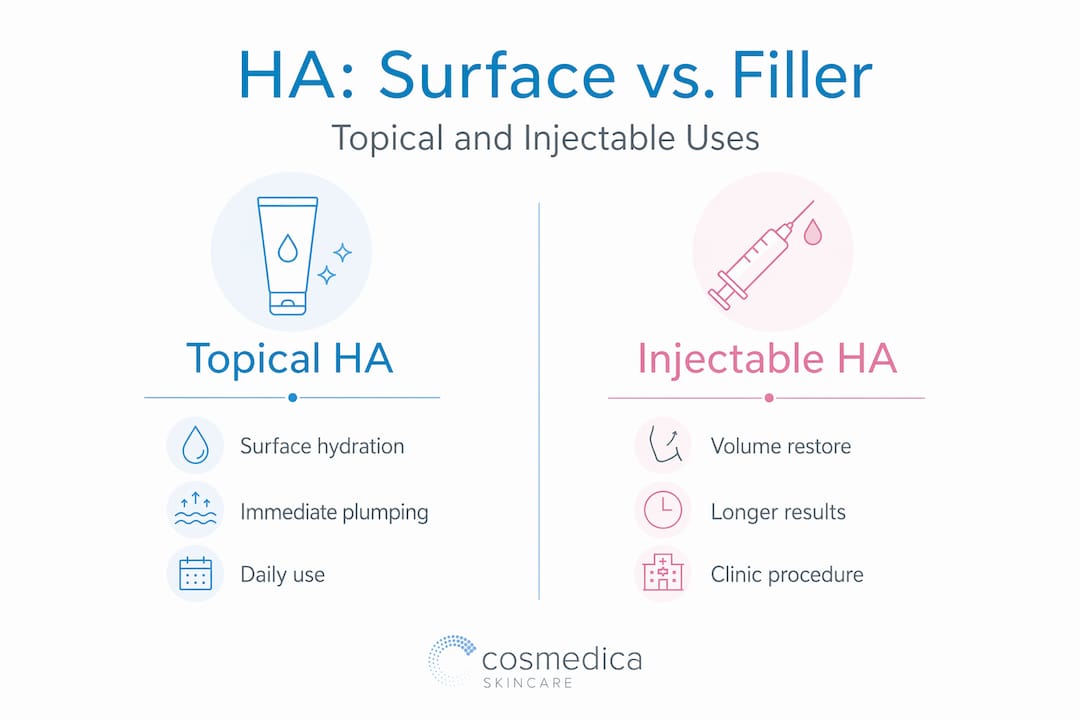
Here is a quick comparison of topical versus injectable HA to put it in context:
| Feature | Topical HA | Injectable HA fillers |
|---|---|---|
| Mechanism | Humectant; attracts surface moisture | Physical volume replacement beneath skin |
| Depth of action | Epidermis and upper dermis | Dermis and subcutaneous tissue |
| Duration of results | Hours to days (must reapply) | 6 to 18+ months depending on product |
| Who performs it | Self-applied at home | Licensed medical professional |
| Primary benefit | Hydration, texture, temporary plumping | Volume restoration, structural contouring |
Non-surgical procedures are increasingly preferred because patients want subtle improvements with little downtime. That cultural shift toward preventative and gradual aesthetic care has made HA fillers the default recommendation for early-stage volume loss.
Innovation is keeping this category exciting too. Products like HArmonyCa, a dual-action injectable that combines HA with calcium hydroxyapatite, provide both immediate volume and long-term collagen stimulation lasting up to 18 months. That kind of advance broadens the appeal well beyond the typical filler patient.
Pro Tip: If you are curious about HA fillers, consult a board-certified dermatologist or plastic surgeon for an initial assessment. The injection technique and product choice matter enormously for natural-looking results.
HA also carries FDA-approved medical uses for conditions like osteoarthritis and dry eye syndrome, which reinforces consumer trust in the ingredient at a fundamental level. When something is approved for medical use, people feel more confident putting it on their skin.
How to use hyaluronic acid effectively
This is where a lot of people go wrong. HA is a humectant, meaning it pulls moisture toward itself from the surrounding environment. In a humid bathroom right after your shower, that means it pulls moisture from the air onto your skin. In a dry office or airplane cabin, it can pull moisture from deeper layers of your skin toward the surface and then lose it to the air. Standalone HA in dry conditions can actually leave skin feeling tighter and drier if you skip the follow-up moisturizer.
Here is a practical step-by-step guide for using HA correctly in your routine:
- Cleanse first. Start with a gentle cleanser to remove any product buildup or pollutants. You want a clean canvas so HA can do its job without interference.
- Apply HA serum to damp skin. Pat your face mostly dry after cleansing, but leave a little moisture. Applying HA while skin is slightly damp gives the molecule immediate water to work with.
- Use the right amount. A few drops cover the entire face. You do not need to saturate skin; HA is effective in small concentrations.
- Layer strategically. If you use a toner or essence, apply those before HA. Save actives like retinol or vitamin C for after the HA layer or use them on alternate nights.
- Seal immediately with a moisturizer. This is non-negotiable. Proper skincare layering is what locks in everything HA attracted and prevents it from evaporating. A cream with ceramides or shea butter works especially well.
- Apply sunscreen in the morning. HA does not make skin photosensitive, but well-hydrated skin still needs UV protection to prevent the very damage that accelerates HA depletion in the first place.
- Use it consistently. The biggest results come with daily application over weeks, not from occasional use. Once in the morning, once at night is the standard recommendation from most dermatologists.
If you want to get into how to layer HA with other actives in a full routine, there is a detailed walkthrough worth reading. The short version is that HA goes on after water-based toners and before heavier oils or creams.
Why HA remains relevant in 2026 and beyond
So why does the momentum keep going? A few things are converging at once, and they reinforce each other.
The topical skincare category is still growing, driven by consumers who want effective, simple routines built around ingredients they understand. HA fits that perfectly. It is one word, it does one thing very well, and it works on day one. In a market full of complex multi-step systems, that simplicity is a genuine advantage.
On the medical aesthetics side, the innovation pipeline is active. Cross-linking technologies in filler formulations continue to improve how long results last and how naturally they integrate with tissue. Younger demographics are now using preventative HA treatments, which expands the patient base considerably.
There is also a cultural shift happening around transparency in beauty. Consumers are skeptical of miracle claims and more interested in understanding what an ingredient actually does. HA benefits from that shift because its mechanism is straightforward, the science is solid, and the results, while not magic, are real and consistent.
“HA provides important hydration that improves skin texture and elasticity, but it is not a cure-all for aging signs. Realistic expectations are what keep people satisfied with the results they actually get.” — skincare science research
The combination of consumer education, retail accessibility, and ongoing medical innovation means HA is not just a trend with an expiration date. It has become foundational.
My honest take on the hyaluronic acid wave
I have been watching ingredients rise and fall in skincare for a long time, and my perspective on HA is this: it deserves its moment, but not for the reasons most brands push.
What I have noticed is that people often buy HA serums expecting structural change, filling in hollow cheeks or erasing deep wrinkles, and then feel let down. That is a marketing problem, not an ingredient problem. When I see an HA serum positioned as a non-surgical facelift, I get frustrated. It gives people false expectations and ultimately undermines trust in a genuinely useful ingredient.
What HA actually does well is hydration and texture improvement, and those things matter more than the beauty industry admits. Healthy hydration is the foundation that makes every other active work better. Retinol irritates less when skin is well-hydrated. Vitamin C absorbs better. Your makeup sits differently. The real benefits of HA are not flashy, but they are consistent and cumulative.
My recommended approach is simple. Pick a serum with both high and low molecular weight sodium hyaluronate if you can find one. Always seal it with a moisturizer. Use it daily. Do not expect it to replace volume loss; if that is your concern, a conversation with a dermatologist about fillers is the more honest path. What I have found is that people who use HA with accurate expectations become the most loyal users of all, because the ingredient consistently delivers exactly what it promises.
— Thomas
Try Cosmedica-skincare’s HA serums for yourself
If reading this has you ready to put HA to work in your routine, Cosmedica-skincare has done a lot of the formulation work for you. The Pure Hyaluronic Acid Serum is a focused, lightweight formula that layers beautifully under any moisturizer, with a concentration and texture designed for daily use on all skin types.
For those who want a more complete approach, the Trio Facial Serum Kit pairs HA with complementary actives in a curated routine that covers hydration, brightening, and anti-aging in a single purchase. It is a smart way to start if you are building or refreshing your routine from the ground up.
You can also browse the full serum collection to find the right combination for your skin type and concerns. Every formula is cruelty-free, dermatologist-tested, and made with quality ingredients at a price point that makes daily use genuinely accessible. For even more skin support from within, pairing topical HA with collagen peptides can complement your surface-level routine with structural benefits.
FAQ
What makes hyaluronic acid so popular right now?
HA delivers visible hydration results quickly, works on all skin types, and carries minimal irritation risk. Its growing use in both affordable serums and injectable fillers has made it one of the most recognized trending skincare ingredients across both retail and medical aesthetics.
Can hyaluronic acid dry out your skin?
Yes, in certain conditions. Because HA is a humectant, it draws moisture from its environment. In low-humidity conditions without a sealing moisturizer applied on top, it can pull water from deeper skin layers and leave the surface feeling tight or dry.
What is the difference between topical and injectable hyaluronic acid?
Topical HA hydrates and smooths the skin’s surface without penetrating deeply, while injectable HA physically restores lost facial volume beneath the skin. The two applications address different concerns and should not be compared as equivalent treatments.
How often should I use a hyaluronic acid serum?
Most dermatologists recommend using a topical HA serum twice daily, once in the morning and once at night, as part of a regular routine. Consistent daily use produces the most noticeable and lasting improvements in skin texture and hydration.
Does hyaluronic acid work better in certain formulations?
Formulations that combine both high and low molecular weight HA offer broader benefits, with surface-level hydration and deeper skin support working together. Sodium hyaluronate is the most common and well-absorbed form found in effective topical serums.