

Anti-aging skin care process: a step-by-step guide
TL;DR:
- Building a simple, science-backed anti-aging routine with cleanser, sunscreen, moisturizer, niacinamide, and retinol can deliver real results for women aged 25 to 45. Consistent application and tailored adjustments for skin type enhance effectiveness without overspending or compromising cruelty-free values. Prioritizing daily sun protection and patience over quick fixes ensures long-term skin health and visible aging prevention.
If you’ve ever stood in the skincare aisle feeling genuinely overwhelmed by serums promising to “erase ten years overnight,” you’re not alone. Anti-aging advice is everywhere, and a lot of it contradicts itself, which makes building a real, effective routine feel impossible. We’re here to cut through the noise. This guide walks you through a simple, science-backed anti-aging skin care process designed specifically for women aged 25 to 45 who want real results without spending a fortune or compromising their cruelty-free values. No gimmicks. No overwhelming 12-step programs. Just a clear, actionable process that works for all skin types.
Table of Contents
- What you need to get started
- Step-by-step anti-aging skin care process
- How to personalize for your needs
- Troubleshooting and mistakes to avoid
- Beyond home care: professional and combined strategies
- Our take: What really delivers in anti-aging skin care?
- Cosmedica can help you build your perfect anti-aging routine
- Frequently asked questions
Key Takeaways
| Point | Details |
|---|---|
| Start simple | Focusing on sunscreen, moisturizer, and a retinol or niacinamide gives the most reliable foundation for anti-aging. |
| Personalize your process | Always adjust routines to your skin’s needs, tolerance, and budget for best long-term results. |
| Introduce actives slowly | Begin new ingredients like retinol gradually to boost results and minimize irritation. |
| Consistency matters | Daily use, especially of sunscreen, outperforms any quick-fix product for younger-looking skin. |
| Professional options exist | Combined professional and at-home approaches can enhance your results, but start with proven essentials first. |
What you need to get started
Now that you know what you’ll get from this guide, let’s make sure you have everything needed to begin.
Good news: you don’t need a packed shelf or a luxury budget to start seeing results. Understanding why skin care routines matter is actually the first and most important step, because commitment to consistency will always outperform the priciest product used inconsistently.
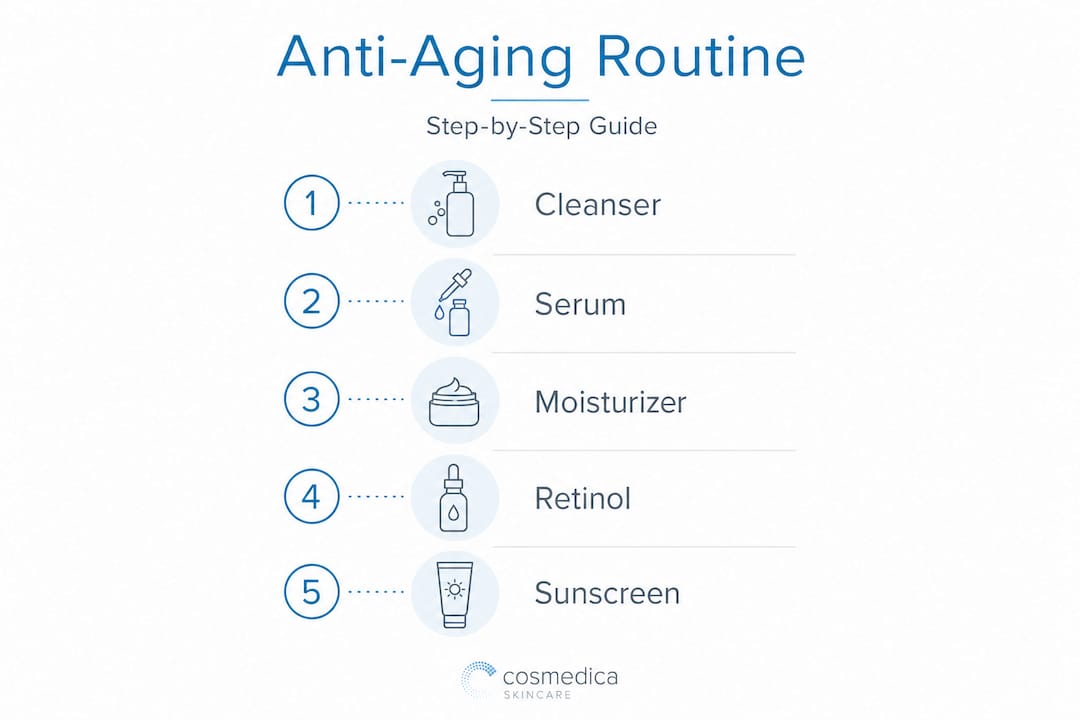
Here are the core essentials to build your anti-aging foundation:
1. Gentle cleanser. This is your clean slate. Look for a sulfate-free formula that removes dirt and makeup without stripping your skin’s natural lipid barrier (the protective layer of oils your skin produces to stay healthy and hydrated).
2. Broad-spectrum sunscreen (SPF 30 or higher). This is non-negotiable. More on this in a moment.
3. Lightweight moisturizer. Even oily skin needs hydration. A gel-based moisturizer works beautifully for oilier skin types, while a richer cream suits drier skin.
4. Niacinamide serum. Niacinamide (a form of vitamin B3) is a multi-tasking powerhouse. It calms redness, improves skin texture, strengthens the barrier, and helps other actives absorb more effectively.
5. Retinol or a retinoid. Think of retinol as the gold standard of anti-aging ingredients. It accelerates cell turnover, stimulates collagen production, and visibly reduces fine lines over time. An affordable anti-aging routine frames retinol as the cornerstone of the process, paired with a moisturizer to prevent irritation, and highlights niacinamide as useful for multiple goals, all within a budget under $40.
Here’s a quick cost and cruelty-free overview to help you shop smart:
| Product type | Estimated cost | Cruelty-free options available |
|---|---|---|
| Gentle cleanser | $8-$15 | Yes (widely available) |
| Broad-spectrum SPF 30+ | $10-$20 | Yes (look for Leaping Bunny) |
| Lightweight moisturizer | $10-$18 | Yes |
| Niacinamide serum | $8-$15 | Yes |
| Retinol/retinoid | $10-$20 | Yes (check label carefully) |
| Estimated total | $46-$88 |
Budget tip: You can absolutely get started under $50 by choosing drugstore brands that carry cruelty-free certifications. Shopping during sales events or bundling products from the same brand often brings costs down significantly.
Optional add-ons to enhance your routine over time:
- Vitamin C serum (brightening and antioxidant protection in the morning)
- Hyaluronic acid booster (for extra hydration, especially in dry climates)
- Sheet masks (great for weekly hydration or calming treatments)
- Peptide serum (supports collagen and elastin with gentle but effective chemistry)
- Facial oil (ideal for nighttime moisture sealing, especially in winter)
Pro Tip: Before checking anything else on a product label, look for the Leaping Bunny logo or a “certified cruelty-free” statement. The Leaping Bunny certification is the most rigorous cruelty-free standard and ensures no animal testing at any stage of production.
Patch testing is a step many people skip, and it’s the number one reason people experience unexpected reactions. Apply a small amount of any new product to the inside of your wrist or behind your ear. Wait 24 to 48 hours before adding it to your face. This is especially important when introducing retinol or any active ingredient.
Step-by-step anti-aging skin care process
With your essentials ready, here’s exactly how to build your morning and night anti-aging routine for real results.
The goal here is not to layer every product you own onto your face twice a day. The goal is strategic, evidence-based application that gives each ingredient the best chance to do its job. For a deeper look at the full picture, our radiant skin step-by-step routine walks you through the science behind the order of application.
Morning routine (photoprotection focus)
- Cleanse gently. Use lukewarm water and your gentle cleanser. Massage in circular motions, rinse thoroughly, and pat (don’t rub) your face dry. In the morning, a quick rinse without cleanser works perfectly if your skin feels clean.
- Apply niacinamide serum. After cleansing, apply a few drops of niacinamide for barrier support to your face and neck. This primes your skin and makes your moisturizer and sunscreen absorb better.
- Moisturize. While your skin is still slightly damp, apply your moisturizer. For oily skin, choose a gel or fluid formula. For dry skin, go for a cream. Sensitive skin types do best with fragrance-free options.
- Sunscreen last. Always finish your morning routine with SPF. Evidence-based anti-aging guidance consistently emphasizes that sunscreen is the non-negotiable foundation for preventing photoaging (skin damage caused by UV exposure, including wrinkles, dark spots, and loss of elasticity). Apply generously and reapply every two hours if you’re outdoors.
Evening routine (active treatment focus)
- Double cleanse if you wear sunscreen or makeup. Start with a cleansing balm or micellar water to remove sunscreen and makeup, then follow with your regular cleanser.
- Gentle exfoliation (once or twice weekly). This isn’t a nightly step. A mild chemical exfoliant like a low-percentage lactic acid or glycolic acid toner removes dead skin cells and helps retinol absorb more effectively. Avoid physical scrubs, which can create micro-tears in the skin.
- Apply retinol. Start with two to three nights per week to build tolerance. Apply a pea-sized amount to dry skin and allow it to absorb for a few minutes. Our retinol skin care collection offers formulas for beginners through to experienced users. Over four to eight weeks, you can gradually increase frequency as your skin adjusts.
- Seal with moisturizer. Follow retinol with a generous layer of moisturizer. This is the “sandwich method” many dermatologists recommend for reducing retinol irritation while still delivering results.
For anyone new to retinol, exploring our skin rejuvenation methods guide gives a great overview of how different actives work together.
Classic vs. budget-friendly routine comparison
| Feature | Classic routine | Budget-friendly routine |
|---|---|---|
| Key actives | Prescription retinoid, peptide serum, vitamin C | OTC retinol, niacinamide |
| Application frequency | Daily (actives at night) | 2-3x per week for retinol |
| Estimated monthly cost | $80-$150+ | $30-$50 |
| Best for | Experienced users, deeper concerns | Beginners, sensitive skin |
| Cruelty-free availability | Varies | High (many affordable brands) |
| Results timeline | 8-12 weeks | 12-16 weeks |
Pro Tip: Always introduce new actives one at a time, at least two weeks apart. This way, if your skin reacts to something, you’ll know exactly which product is responsible instead of having to strip your entire routine.
How to personalize for your needs
While the above routine offers a strong foundation, everyone’s skin is unique. Here’s how to adjust the process for your goals and values.
A routine that works brilliantly for your friend with combination skin might be completely wrong for your dry or sensitive skin. Personalization isn’t about buying more products. It’s about choosing the right ones. You can even take a quick skin quiz to help identify products aligned with your specific skin type and concerns.
Customizations by skin type:
- Oily skin: Swap creamy cleansers for gel formulas. Use a mattifying, lightweight SPF. Niacinamide is your best friend here because it helps regulate sebum (your skin’s natural oil) without drying you out. Opt for a water-based moisturizer.
- Dry skin: Look for cleansers with hydrating ingredients like glycerin or ceramides. Layer a hyaluronic acid serum before your moisturizer for extra water retention. Use a rich, emollient night cream to support the lipid barrier. Consider starting retinol at a lower concentration (0.025% to 0.05%) to prevent flakiness.
- Sensitive skin: Fragrance-free everything. Seriously. Choose a retinol formula that contains soothing ingredients like centella asiatica or oat extract. The sandwich method (moisturizer, retinol, moisturizer) is especially helpful. Hyaluronic acid enhancements can also boost comfort and hydration without irritation.
- Combination skin: Treat different zones differently. Apply a lightweight moisturizer to the T-zone and a slightly richer formula to drier cheek areas. Niacinamide, again, is excellent for balancing combination skin because it addresses multiple concerns simultaneously.
Age-related adjustments:
In your late 20s, prevention is the primary goal. Sunscreen, antioxidants, and a basic moisturizer are genuinely enough. In your 30s, adding niacinamide and low-strength retinol begins addressing early fine lines and texture changes. By your 40s, you may want to add a peptide serum or a richer night moisturizer to support skin that’s naturally producing less collagen.
Switching to cruelty-free formulations is easier than ever in 2026. Look for brands certified by Leaping Bunny or PETA’s Beauty Without Bunnies program. Many affordable drugstore and indie brands now carry full cruelty-free lines without sacrificing formula quality.
Niacinamide is a standout ingredient for affordable routines because it addresses barrier function, redness, texture, and radiance all at once, which makes other actives easier to tolerate and reduces the need for multiple specialized products.
The minimalist approach really does work. Think quality over quantity. Two or three well-chosen products used consistently will always outperform a chaotic 10-step routine used sporadically.
Pro Tip: Keep a simple skin journal, even just a note on your phone with dated entries. Track how your skin looks and feels after each new product introduction. This takes less than two minutes and saves you from guesswork when something needs adjusting.
Troubleshooting and mistakes to avoid
Customizing your routine is powerful, but let’s also troubleshoot any roadblocks to get the absolute best results from your efforts.
Even the most thoughtfully built routine can run into issues. Most of the time, the problem isn’t the product itself. It’s the way it’s being used.
Common mistakes that slow results:
- Skipping sunscreen. Even on cloudy days, UV radiation reaches your skin. Skipping SPF in the morning entirely undoes the repair work your nighttime actives did. This is the single biggest anti-aging mistake.
- Overusing actives. More retinol does not mean faster results. It means more irritation, more peeling, and often a damaged skin barrier that takes weeks to recover.
- Product hopping. Trying a new serum every two weeks prevents you from ever seeing real results. Most anti-aging actives need a minimum of eight to twelve weeks to show visible change.
- Layering incompatible ingredients. Retinol and benzoyl peroxide, or vitamin C and AHA exfoliants in the same application, can reduce each other’s effectiveness and increase irritation. Research your combinations before stacking.
- Applying retinol to damp skin. Damp skin increases absorption dramatically, which sounds good but actually leads to more irritation. Always apply retinol to completely dry skin.
How to handle reactions:
Redness and mild flaking during the first few weeks of retinol use are completely normal. This is called the “retinization” period. Reduce frequency to once per week, double up on moisturizer, and give your skin time to adjust. If irritation persists beyond four weeks or becomes severe (burning, swelling, or blistering), discontinue use and consult a dermatologist.
For unexpected breakouts after introducing a new product, note that purging (a temporary increase in breakouts caused by accelerated cell turnover) can occur with retinol use. This is different from a true allergic reaction. Purging typically resolves within six weeks and affects areas where you’d normally break out.
A note worth remembering: Topical routines require adherence and gradual response, not rapid “turn back time” effects. The most effective approach is the slow, consistent one, not the dramatic overnight fix.
Traveling and environmental stressors:
When traveling, especially by plane, cabin air is extremely drying. Pack a mini hydrating mist, skip exfoliants and retinol the night before and after long flights, and prioritize moisturizer and SPF. In high-pollution environments, consider adding a vitamin C serum in the morning to neutralize free radical damage. You can also read more about science-backed anti-aging principles that hold steady no matter what your environment throws at you.
Beyond home care: professional and combined strategies
After you’ve mastered the at-home process, here’s how professional strategies, when chosen thoughtfully, can enhance your results.
A consistent home routine is the foundation. Professional treatments work best when they sit on top of that foundation, not instead of it. Think of professional treatments like a turbo boost. They can accelerate certain results, but they can’t replace daily habits.
Popular non-surgical professional options include:
- Microneedling: Creates controlled micro-injuries in the skin to stimulate collagen and elastin production. Ideal for fine lines, texture, and acne scarring.
- Chemical peels: Professional-grade exfoliation using acids at higher concentrations than OTC products. Addresses dullness, pigmentation, and mild wrinkles.
- Laser resurfacing: Targets deeper layers of the skin to stimulate collagen remodeling. A wide range of options exist from gentle (no downtime) to more intensive treatments.
- Radiofrequency or ultrasound treatments: Tighten skin and improve firmness without surgery, typically through a series of sessions.
Combination therapies can yield synergistic improvements in skin laxity and wrinkles, but these approaches require professional guidance and robust evidence for safety. “Doing it all at once” without medical oversight can lead to irritation, hyperpigmentation, or uneven results, especially for darker skin tones.
Who should see a dermatologist? Anyone dealing with persistent breakouts that don’t respond to OTC treatment, noticeable skin laxity, deep wrinkles or folds, post-inflammatory hyperpigmentation, or any suspicious changes in moles or lesions should book a consultation rather than self-treating.
Questions to ask before pursuing any professional treatment:
- Is this provider board-certified and experienced with my skin type?
- What is the realistic recovery time for this procedure?
- How many sessions are typically needed to see results?
- Is this treatment safe to combine with my current home routine (including retinol)?
- What are the potential side effects for my skin tone?
For more on what professional and at-home expert skin rejuvenation tips can realistically deliver, we have a dedicated resource that breaks this down by treatment type.
Our take: What really delivers in anti-aging skin care?
We’ve been in this space long enough to say something that goes against the grain of most beauty marketing: the least exciting routine is usually the most effective one.
Here’s the uncomfortable truth. Most of the “miracles” marketed in a sleek bottle with dramatic before-and-afters rely on your hope for rapid transformation. But visible aging is a slow, cumulative process, which means visible improvement is also a slow, cumulative process. There’s no bypassing that. Understanding why routines matter at a foundational level shifts your entire mindset from “chasing results” to “building habits.”
Daily sunscreen, applied consistently over months and years, does more to prevent visible aging than any serum you can buy. Retinol, used correctly and consistently over eight to twelve weeks minimum, genuinely restructures skin over time. Niacinamide quietly keeps your barrier strong and your tone even. None of these ingredients make headlines. They’re not exciting. But they work.
Our hard-won lesson: The women who see the most meaningful long-term results aren’t the ones who try every trending ingredient. They’re the ones who find a simple, well-formulated routine and stick with it through the boring, uneventful weeks when nothing seems to be happening. That consistency is where the real transformation lives.
We also believe deeply in self-assessment over comparison. Your skin is not a “before” photo. It’s a living organ that responds to stress, sleep, hormones, seasons, and dozens of other factors. Some weeks it’ll glow. Some weeks it won’t. That’s not failure. That’s biology.
Own your routine. Trust the science. And give yourself credit for doing the work, even when the results are still catching up.
Cosmedica can help you build your perfect anti-aging routine
Ready to take your anti-aging routine further? Here’s how Cosmedica can support your journey.
At Cosmedica Skincare, everything we formulate is cruelty-free, dermatologist-tested, and designed to work for real women with real budgets and real skin concerns. Whether you’re just starting out or ready to level up, our anti-aging facial care collection offers a curated range of products built around the ingredients we talked about in this guide. If retinol is next on your list, our retinol skin care collection includes beginner-friendly formulas designed to ease you into this powerhouse ingredient. And for daily hydration and barrier support, our cruelty-free moisturizers have you covered for every skin type. Start simple, shop smart, and let your routine do the work.
Frequently asked questions
What age should I start using anti-aging skin care products?
Most dermatologists recommend starting a simple anti-aging routine, including daily sunscreen, in your mid-20s or early 30s, because prevention is always more effective than correction.
How often should I apply retinol in my routine?
Begin with two to three nights per week and increase gradually as your skin builds tolerance, and retinol introduced gradually at night, always followed by moisturizer, gives your skin the best chance to adapt without irritation.
Are budget routines with niacinamide effective?
Yes, a budget-focused routine with niacinamide under $40 is dermatologist-recommended for addressing barrier strength, redness, texture, and radiance while also making it easier to tolerate other anti-aging actives like retinol.
Can I combine home routines with professional anti-aging treatments?
Absolutely, and your home routine should remain consistent whether or not you pursue professional treatments, though combination therapies require professional guidance to ensure safety and effectiveness.
What is the most important step in anti-aging skin care?
Consistent sunscreen use every morning is the most critical step because sunscreen prevents photoaging, which is the leading cause of visible wrinkles, dark spots, and skin laxity over time.