

Best Day and Night Cream for Aging Skin: 2026 Guide
TL;DR:
- The Cosmedica Vitamin C Facial Day Cream provides lightweight antioxidant protection with SPF for aging skin. The Cosmedica Retinol Night Cream offers a richer formula to support collagen and cellular renewal overnight. Consistent use of these products over several months enhances skin firmness, brightness, and texture.
For aging skin, the Cosmedica Vitamin C Facial Day Cream is our top daytime pick and the Cosmedica Retinol Night Cream is the best night option — and together, they cover every phase of what mature skin actually needs.
Here’s the quick breakdown:
- Best day cream: Cosmedica Vitamin C Facial Day Cream — lightweight, antioxidant-rich, and ideal for all skin types including oily and combination. Pairs beautifully with a broad-spectrum SPF 30+ applied on top.
- Best night cream: Cosmedica Retinol Night Cream — a richer, repair-focused formula with retinol to speed cell turnover and support collagen. Best for dry, normal, and mature skin; sensitive skin should start slowly (a few nights per week).
- Best supporting serum (AM or PM): Cosmedica 10% Niacinamide + Zinc Treatment Serum — calms, refines pores, and works in both routines.
- Best value bundle: Cosmedica Super Serum Set — a smart starting point if you want compatible actives without the guesswork.
Consistency is what separates results from wishful thinking. Start with these picks, follow the layering guidance below, and give your skin at least 8–12 weeks before judging.
Table of Contents
- Why do day and night creams work differently for aging skin?
- What should you look for in a day cream for aging skin?
- What makes a night cream effective for aging skin?
- How do you choose by skin type?
- What does a good AM and PM routine actually look like?
- How long does it take to see results, and what are the risks?
- Our recommended products for aging skin
- What dermatologists say about anti-aging creams
- Key Takeaways
- The ingredient gap most people miss
- Cosmedica-skincare makes the routine easy to start
- Useful sources
- FAQ
Why do day and night creams work differently for aging skin?
The short answer: your skin has two very different jobs depending on the time of day, and your products should match that rhythm.
During the day, your skin is on defense. It’s fighting UV rays, pollution, and free radicals that accelerate photoaging. Day creams should be lightweight and non-comedogenic, built around antioxidants and, ideally, SPF to shield the skin’s surface. Heavy occlusives or strong actives like retinoids don’t belong in an AM formula — retinoids degrade in sunlight and can increase photosensitivity.
At night, the dynamic flips. Skin barrier repair, cellular turnover, and collagen synthesis all ramp up while you sleep. That’s when richer textures, retinoids, peptides, and ceramides can do their best work — absorbed without interference from sunscreen or makeup.
- Day cream priorities: antioxidants (vitamin C, vitamin E), niacinamide, lightweight hydration, SPF or SPF-compatible base
- Night cream priorities: retinoids or bakuchiol, peptides, ceramides, hyaluronic acid, richer emollients
That said, a single well-formulated moisturizer plus distinct AM/PM serums can work just fine for many people. If you’re already using a vitamin C serum in the morning and a retinoid serum at night, one good moisturizer in between is a perfectly practical approach. Two separate creams make the most sense when your skin type demands different textures AM vs PM, or when your climate is extreme (very dry winters, very humid summers).
Pro Tip: If you want to simplify, use one fragrance-free moisturizer and let your serums do the heavy lifting — vitamin C serum in the morning, retinol serum at night. It’s a leaner routine that still covers all the bases.
What should you look for in a day cream for aging skin?
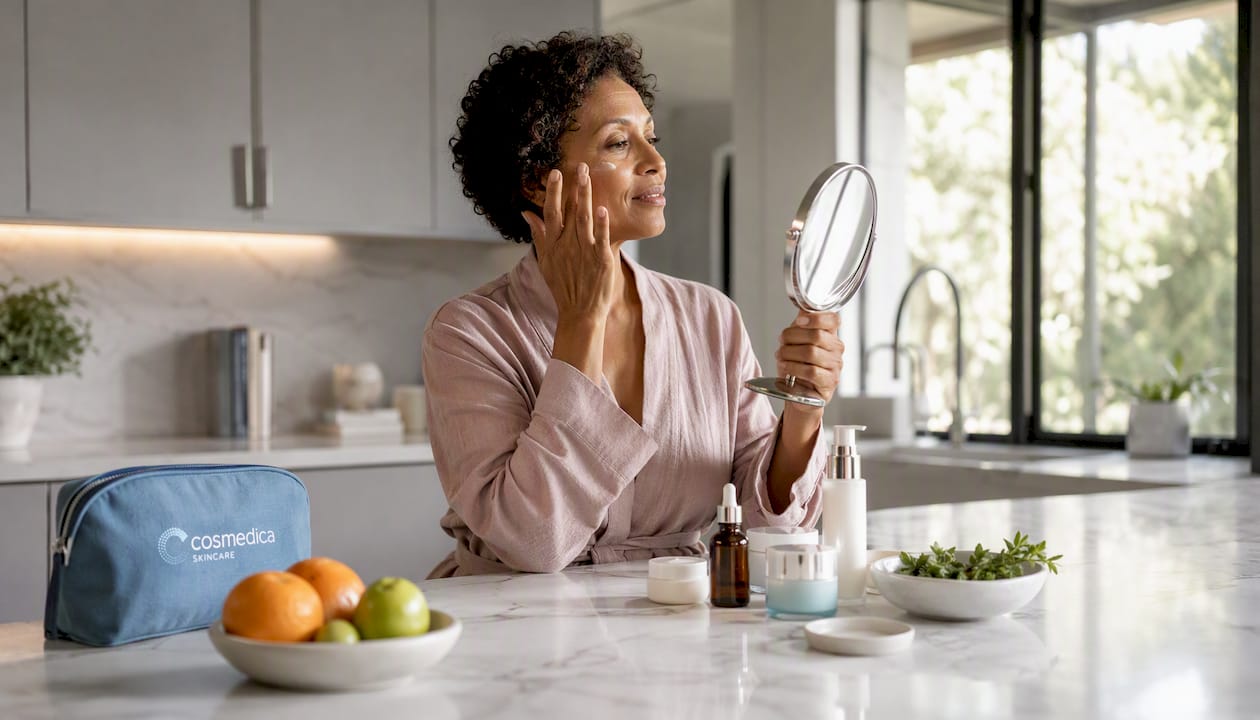
Choose a lightweight, non-comedogenic formula that leads with antioxidant protection. SPF is the single most effective anti-aging intervention available without a prescription — and it works best when paired with a morning antioxidant like vitamin C.
Here’s what the label of a solid anti-aging day cream should show:
- Vitamin C (L-ascorbic acid): Neutralizes free radicals, brightens uneven tone, and boosts photoprotection when combined with SPF. Stability matters — look for opaque or airless packaging. Our full breakdown of vitamin C benefits for skin covers what to expect.
- Niacinamide: Strengthens the lipid barrier, reduces redness, and refines the look of pores. It also makes other actives more tolerable.
- Hyaluronic acid or glycerin: Humectants that pull moisture into the epidermis and keep skin plump throughout the day.
- Ceramides: Lipids that reinforce the skin barrier — especially helpful for dry or mature skin that loses ceramides with age.
- Broad-spectrum SPF 30+: If your day cream doesn’t include it, layer a dedicated sunscreen on top. The role of sunscreen in anti-aging is well-documented — skipping it undoes everything else.
What to avoid in the AM: High-strength AHAs (glycolic, lactic acid) without immediate SPF follow-up, and retinoids — save those for your PM routine.
On price: a higher price tag doesn’t guarantee better results. What matters is the concentration and stability of active ingredients, not the packaging or the brand story. Budget options with proven actives (vitamin C, niacinamide, hyaluronic acid) often outperform expensive creams with vague “complex” ingredients. Mid-range formulas tend to hit the sweet spot — stable actives, good textures, and reasonable price per use.
What makes a night cream effective for aging skin?
A good night cream for aging skin is richer, more occlusive, and built around ingredients that trigger the skin’s own repair processes — not just moisturize the surface.
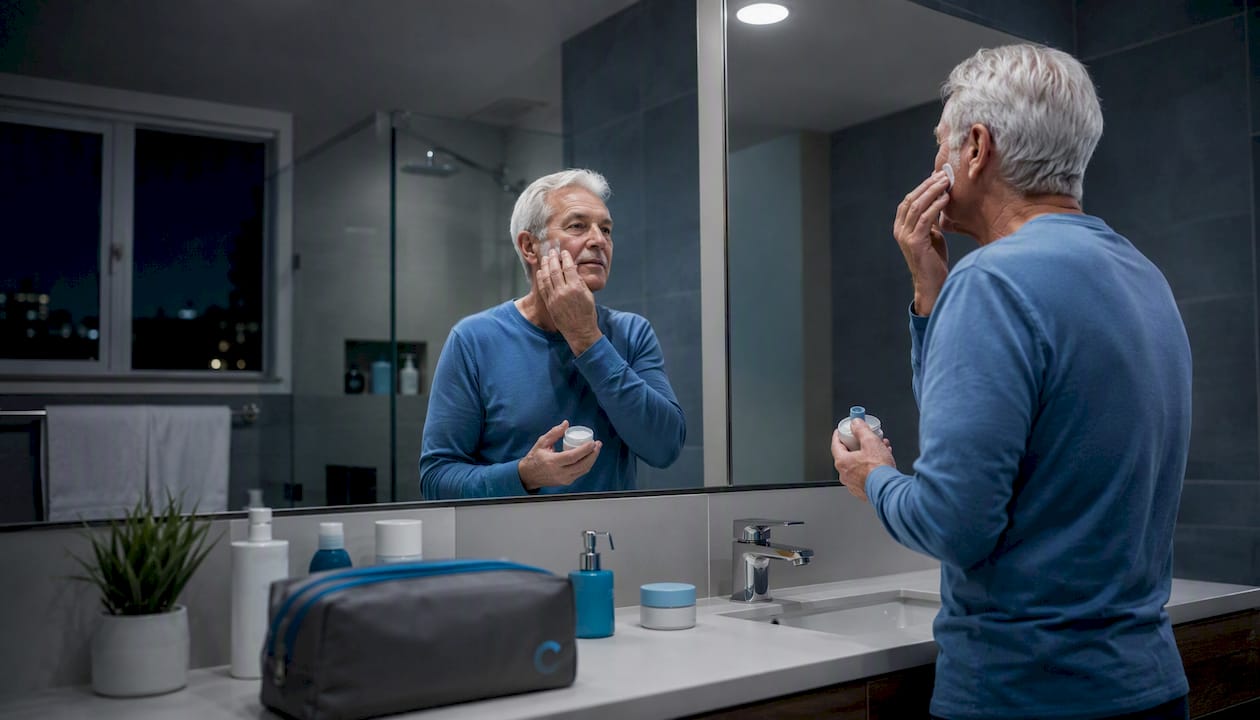
The star ingredient is retinol (a form of retinoid). Retinoids have the strongest evidence base for reducing visible signs of aging — they speed cell turnover, fade discoloration, and can measurably increase collagen on biopsy. No other over-the-counter ingredient comes close for long-term wrinkle reduction.
Beyond retinol, look for:
- Peptides: Short chains of amino acids that signal the skin to produce more collagen and elastin. They’re gentler than retinoids and work well for sensitive skin.
- Ceramides: Replenish the lipid barrier that breaks down with age, locking in moisture overnight.
- Hyaluronic acid: A humectant that acts like a sponge, drawing water into the skin and keeping it there while you sleep.
- Bakuchiol: A plant-derived alternative to retinol that’s gentler and safe during pregnancy. It won’t deliver the same depth of results as a retinoid, but it’s a solid option for those who can’t tolerate retinol.
One thing worth knowing: topical collagen in creams mainly moisturizes the surface rather than boosting your skin’s own collagen production — the molecules are simply too large to penetrate. Ingredients that trigger collagen synthesis (retinoids, peptides) are the ones that actually move the needle.
How to introduce retinol safely
Retinol is powerful, but it needs a slow introduction — especially for sensitive or dry skin.
- Start a few nights per week for the first several weeks
- Move to every other night for weeks 4–8
- Work up to nightly use only if your skin tolerates it without peeling or redness
- Always apply a broad-spectrum sunscreen the next morning — retinol increases photosensitivity
- Avoid during pregnancy or breastfeeding and consult your OB-GYN or dermatologist before use
Pro Tip: Try “buffering” — apply your retinol night cream over a thin layer of moisturizer instead of directly on bare skin. It slows absorption slightly and dramatically cuts down on the dryness and flaking that makes people quit too soon.
How do you choose by skin type?
Matching your cream to your skin type isn’t complicated, but it does matter. Dermatologists advise matching product formulation to skin type — and “non-comedogenic” on the label is non-negotiable for oily or acne-prone skin.
| Skin Type | Day Cream | Night Cream | Key Priorities |
|---|---|---|---|
| Dry / mature | Rich moisturizer with ceramides + vitamin C | Retinol cream with hyaluronic acid + ceramides | Deep hydration, barrier repair, collagen support |
| Oily / combination | Lightweight gel-cream, non-comedogenic, niacinamide | Light-to-medium retinol formula, oil-free | Pore refinement, texture, no clogging |
| Sensitive | Fragrance-free, niacinamide, no strong acids | Bakuchiol or low-concentration retinol, buffered | Tolerability first, gradual introduction |
| Normal / balanced | Vitamin C day cream + SPF | Standard retinol night cream | Maintenance, brightening, prevention |
| Acne-prone | Non-comedogenic, niacinamide, salicylic acid | Low retinol, non-comedogenic, no heavy oils | Breakout prevention, texture refinement |
For sensitive or acne-prone skin, PHAs (polyhydroxy acids) are a gentler exfoliant alternative to AHAs — they work at the skin’s surface without the same irritation risk. If you’re starting retinol and your skin is reactive, begin with the lowest available concentration and buffer every time.
What does a good AM and PM routine actually look like?
Layering products in the right order makes a real difference in how well they absorb and how your skin responds. Think of it as building from lightest to heaviest, with SPF always finishing the morning.
AM routine (protect and brighten)
- Cleanse with a gentle, pH-balanced face wash — a vitamin C face wash is a nice way to start the antioxidant layering early
- Antioxidant serum — apply your vitamin C serum and let it absorb for 60–90 seconds
- Day moisturizer — a lightweight cream or gel-cream; press gently into skin
- Broad-spectrum SPF 30+ — this goes last, every single morning, rain or shine
PM routine (repair and restore)
- Double cleanse if you wore sunscreen or makeup — an oil cleanser first, then a gentle foaming wash
- Targeted serum — on retinol nights, apply your retinol serum or use a retinol night cream directly; on alternate nights, a gentle exfoliant like a lactic acid treatment can help with texture and cell turnover
- Night cream — apply a richer cream to seal in the serum and support overnight repair
- Optional: A small amount of a heavier balm or oil on very dry zones (cheeks, corners of the mouth) as an occlusive finish
| Step | AM | PM | Frequency |
|---|---|---|---|
| Cleanse | Daily | Daily | Every day |
| Vitamin C serum | Daily | Skip | Every morning |
| Niacinamide serum | Daily or alternate | Daily or alternate | 1–2x daily |
| Day moisturizer / SPF | Daily | Skip | Every morning |
| Retinol / retinoid | Skip | Yes | 2–3x/week → nightly |
| Exfoliant (AHA/PHA) | Skip | Alternate nights | 2–3x/week max |
| Night cream | Skip | Daily | Every night |
Wait about 60 seconds between serum and moisturizer layers — it’s not a hard rule, but it gives lighter formulas a moment to settle before you layer something heavier on top.
How long does it take to see results, and what are the risks?
Realistic expectations are what keep people consistent — and consistency is what actually produces results.
Here’s the honest timeline:
- Hydration and plumpness: Visible within days to 1–2 weeks of regular use
- Texture refinement and brightness: 4–6 weeks with consistent vitamin C and niacinamide use
- Fine line reduction: 8–12 weeks minimum with retinol; some studies show continued improvement at 6 months
- Deeper wrinkles and collagen-driven changes: 3–6+ months of consistent retinoid use — and topical creams deliver modest, incremental changes, not dramatic transformations
Key timeline reminder: Many products need to be used once or twice daily for up to six weeks before you notice a difference. If you stop using them, your skin will likely return to how it looked before. — Mayo Clinic
Safety checklist before you start:
- Patch test any new product on your inner arm for 24–48 hours before applying to your face
- Stop use if you experience severe redness, swelling, or blistering — mild flaking and dryness from retinol is normal; burning is not
- Sunscreen is non-negotiable after any retinoid or exfoliant use — your skin is more vulnerable to UV damage
- Pregnancy and breastfeeding: Avoid retinoids entirely; bakuchiol is considered a safer alternative, but always confirm with your healthcare provider
- When to see a dermatologist: Persistent irritation, cystic acne, or significant pigmentation changes warrant a professional consultation
Topical creams improve the appearance of aging skin, but they don’t replace procedural anti-aging treatments like laser resurfacing or microneedling for deeper structural changes. Think of your daily routine as the foundation — and professional options as the occasional boost.
Our recommended products for aging skin
Here’s how we’d build the routine using Cosmedica-skincare’s lineup, matched to what the science actually supports.
Cosmedica Vitamin C Facial Day Cream
Best for: All skin types, especially normal, combination, and oily skin that needs lightweight hydration with antioxidant protection. Key actives: Vitamin C (L-ascorbic acid), hyaluronic acid Texture: Lightweight, absorbs quickly, non-greasy How to use: Apply every morning after your vitamin C serum, before SPF. It layers well under sunscreen and doesn’t pill under makeup.
This is the vitamin C day cream we reach for when the goal is brightening and environmental defense without heaviness. Vitamin C in the morning is a well-established pairing with SPF — it neutralizes free radicals that sunscreen alone can’t catch.
Cosmedica Retinol Night Cream
Best for: Dry, normal, and mature skin; anyone focused on reducing fine lines and supporting collagen over time. Key actives: Retinol, moisturizing emollients Texture: Richer, creamy, designed for overnight absorption How to use: Apply a few nights per week to start, building toward nightly use as your skin adjusts. Always follow with SPF the next morning.
Retinol is the workhorse of any serious anti-aging night routine. This cream delivers it in a moisturizing base that helps offset the dryness that often comes with retinoid use.
Cosmedica 10% Niacinamide + Zinc Treatment Serum
Best for: Oily, combination, and acne-prone skin; anyone dealing with enlarged pores, uneven tone, or redness. Key actives: 10% niacinamide, zinc Texture: Lightweight serum How to use: Apply morning or evening (or both) after cleansing and before moisturizer. It plays well with vitamin C and retinol — no conflict.
Niacinamide at a meaningful concentration calms inflammation, tightens pores, and makes skin more receptive to other actives. It calms inflammation, tightens the look of pores, and makes the skin more receptive to other actives. The zinc addition helps regulate oil production.
Cosmedica Super Serum Set
The Super Serum Set is the easiest entry point if you want a compatible AM/PM serum pair without having to research ingredient interactions. The actives are chosen to work together, which removes a lot of the trial-and-error that frustrates people new to active skincare.
Pro Tip: Layer the niacinamide serum under your day cream every morning — it primes the skin, calms any residual redness, and makes your vitamin C work even better. It’s one of the most underrated pairings in a daytime routine.
What dermatologists say about anti-aging creams
The dermatology community is pretty consistent on a few key points — and they cut through a lot of the marketing noise.
“Dermatologists emphasize tailoring anti-aging creams to skin type and warn against assuming expensive equals more effective — ingredient efficacy matters more than price. Start anti-aging prevention in mid-to-late 20s with sunscreen and antioxidants; long-term consistency yields better outcomes than late-stage single interventions.” — Cleveland Clinic
On the ingredient side, a few things are worth spelling out clearly:
Retinoids and peptides stimulate collagen; topical collagen does not. Collagen molecules in creams are too large to penetrate the skin — they sit on the surface and moisturize, which is fine, but it’s not collagen synthesis. Retinoids and peptides actually signal the skin to produce its own collagen. That’s the distinction worth paying for.
Antioxidants plus SPF prevent photoaging better than any corrective cream. Vitamin C in the morning paired with broad-spectrum sunscreen is the most cost-effective anti-aging combination available without a prescription. Photoaging (UV-driven damage) accounts for the majority of visible skin aging — preventing it is always more efficient than reversing it.
Buffering retinoids is a clinically sound strategy. Applying retinol over a moisturizer rather than on bare skin slows absorption slightly and significantly reduces the peeling and redness that cause people to quit. Starting retinoids slowly and using buffering techniques is standard dermatology guidance for sensitive skin.
When should you actually see a dermatologist? If over-the-counter retinol isn’t moving the needle after 6 months of consistent use, a prescription retinoid (tretinoin) is a meaningful step up — and a board-certified dermatologist can also assess whether your concerns warrant a procedural approach.
Key Takeaways
The best day and night cream for aging skin combines a vitamin C day cream with SPF for morning protection and a retinol night cream for overnight repair — with niacinamide as the all-day supporting player.
| Point | Details |
|---|---|
| Best day pick | Cosmedica Vitamin C Facial Day Cream — lightweight antioxidant protection for all skin types, worn before SPF. |
| Best night pick | Cosmedica Retinol Night Cream — richer repair formula; start a few nights per week and build gradually. |
| SPF is non-negotiable | Apply broad-spectrum SPF 30+ every morning, especially after retinoid or exfoliant use. |
| Results take time | Hydration improves in days; fine line reduction takes 8–12 weeks; collagen-driven changes need 3–6+ months. |
| Cosmedica-skincare routine | The Super Serum Set plus Retinol Night Cream covers AM/PM actives with compatible, affordable formulas. |
The ingredient gap most people miss
Here’s something worth saying plainly: most people shopping for the best cream for mature skin focus on the jar, the brand, or the price — and miss what’s actually on the ingredient list.
The research on anti-aging skincare is genuinely clear in a way that most beauty categories aren’t. Retinoids work. Vitamin C works. Niacinamide works. SPF works. Everything else is supporting cast. A $15 retinol cream with a solid formulation will outperform a $120 cream built around vague “youth complex” marketing language every single time.
What we find compelling about the Cosmedica-skincare approach is the straightforwardness of it. The Retinol Night Cream leads with retinol. The Vitamin C Day Cream leads with vitamin C. The Niacinamide serum is 10% niacinamide. There’s no mystery ingredient obscuring what you’re actually paying for.
The other thing worth saying: creams are one piece of a wider picture. Sun protection, sleep, hydration, and not smoking matter more than any product you put on your face. A consistent routine with proven actives — started early and maintained — beats any aggressive corrective intervention you might reach for later. Start small, stay consistent, and let the ingredients do their job.
Cosmedica-skincare makes the routine easy to start
Getting the right products together shouldn’t require a chemistry degree. Cosmedica-skincare’s lineup is built around proven actives at accessible prices — cruelty-free, vegan, and formulated for real results rather than impressive-sounding labels.
The Super Serum Set is the most practical starting point: compatible AM/PM serums that pair directly with the Vitamin C Facial Day Cream and Retinol Night Cream for a complete, no-guesswork routine. Add the 10% Niacinamide + Zinc Treatment Serum if pores, oiliness, or uneven tone are your main concerns — it fits into both morning and evening routines without conflict.
Browse the full Cosmedica moisturizer collection to find the texture that fits your skin type, or explore the new collection for the latest formulas. Every order comes with customer support and a straightforward returns process — so you can try the routine with confidence.
Useful sources
These are the primary sources used throughout this article. If you want to go deeper on any ingredient or recommendation, these are the places to start — and for personalized advice, a board-certified dermatologist is always the right call.
- What To Look for in Daytime and Nighttime Facial Creams — Cleveland Clinic: Dermatologist guidance on AM vs PM formulas, texture differences, and ingredient priorities.
- How to Select Anti-Aging Skin Care Products — American Academy of Dermatology (AAD): Practical guidance on matching products to skin type and the role of SPF and vitamin C.
- Wrinkle Remedies — AAD: Explains why topical collagen doesn’t penetrate and which ingredients actually stimulate collagen synthesis.
- Maximize Anti-Aging Products — AAD: Covers buffering techniques, gradual retinoid introduction, and sensitive-skin strategies.
- Wrinkle Creams: Your Guide to Younger Looking Skin — Mayo Clinic: Balanced overview of what wrinkle creams can and can’t do, with ingredient-by-ingredient breakdowns.
- Skin Care for Aging Skin — Harvard Health: Covers moisturizers, retinoids, vitamin C, peptides, and sunscreen for mature skin.
- Anti-Aging Cream Ingredients — The Independent: Expert perspective on the evidence base for retinoids and realistic expectations.
- Do You Really Need a Separate Day and Night Moisturizer? — Forbes: Dermatologist perspectives on one-jar vs two-jar routines and when each makes sense.
FAQ
What is the best anti-aging cream that really works?
Retinol-based night creams have the strongest evidence for reducing visible signs of aging, including fine lines and uneven texture. For daytime, a vitamin C cream paired with broad-spectrum SPF 30+ is the most effective combination for preventing further photoaging.
What is the highest-rated moisturizer for aging skin?
Dermatologists consistently recommend moisturizers with proven actives — hyaluronic acid, ceramides, niacinamide, and retinol — over expensive creams with vague ingredient lists. The Cosmedica Retinol Night Cream and Vitamin C Facial Day Cream are well-formulated options that cover both AM and PM needs.
What is the best anti-aging cream for skin over 60?
Mature skin over 60 benefits most from richer textures, higher ceramide content, and consistent retinol use — starting at a low concentration and building gradually. A hydrating night cream for dry skin with retinol and peptides, paired with a vitamin C day cream and daily SPF, addresses the core concerns of deeper lines, dryness, and loss of firmness.
How long before I see results from an anti-aging cream?
Hydration and plumpness can improve within days. Texture and brightness typically show improvement at 4–6 weeks. Meaningful fine line reduction from retinol takes at least 8–12 weeks, and collagen-driven changes require 3–6+ months of consistent use.
Can I use a day cream at night if I don’t have a separate night cream?
You can, but you’ll miss the richer textures and repair-focused actives (retinol, peptides, ceramides) that make night creams effective for aging skin. A lightweight day cream used at night won’t cause harm, but it won’t deliver the same overnight repair benefits.
This article is for general informational purposes only and is not a substitute for professional medical or dermatological advice. Consult a board-certified dermatologist or healthcare provider for guidance specific to your skin type, health history, and any medications you may be taking.