

Sunscreen's Role in Anti-Aging: Science-Backed Guide
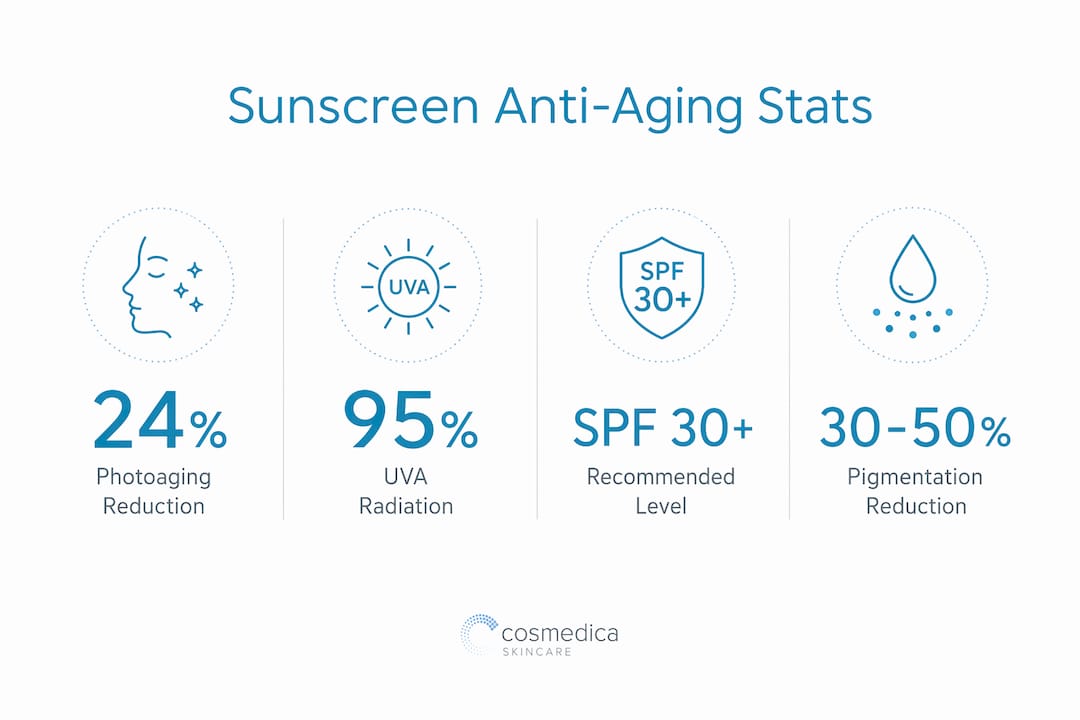
Daily broad-spectrum sunscreen is the single most evidence-backed anti-aging product available, full stop. A landmark randomized controlled trial published in the Annals of Internal Medicine found that people who used sunscreen every day showed 24% less skin aging over 4.5 years compared to those who used it only occasionally. The role of sunscreen in anti-aging comes down to one core function: blocking the ultraviolet rays that systematically break down your skin’s structural proteins, year after year, long before you notice a single wrinkle.
Here is what consistent sunscreen use actually protects against:
- Collagen and elastin breakdown caused by UVA rays penetrating deep into the dermis
- DNA damage and inflammation triggered by UVB rays in the outer skin layers
- Wrinkles and fine lines that form as the extracellular matrix degrades over time
- Hyperpigmentation and dark spots linked to chronic UV-induced melanin disruption
- Loss of skin elasticity and firmness from accumulated photoaging damage
- Oxidative stress from reactive oxygen species generated by UV exposure
Think of sunscreen as your skin’s daily shield. Everything else in your anti-aging routine, from retinol to vitamin C serums, works better when UV damage is not undoing it every morning.
How do UVA and UVB rays actually age your skin?

Not all UV rays are created equal, and understanding the difference matters for choosing the right protection. Two types reach your skin every day: UVA and UVB.
UVA rays make up roughly 95% of the UV radiation that reaches the earth’s surface. They penetrate deeply into the dermis, the layer where collagen and elastin live, and they are present at consistent levels all day long, even on cloudy days and through glass. UVB rays account for less than 5% of UV radiation but carry much higher energy. They primarily damage the epidermis, the outer skin layer, causing sunburn, DNA mutations, and inflammation.

| UV Type | Penetration depth | Primary aging effect | Present year-round? |
|---|---|---|---|
| UVA | Deep dermis | Collagen/elastin breakdown, wrinkles, laxity | Yes, all day |
| UVB | Epidermis | DNA damage, sunburn, pigmentation | Strongest at midday |
Key differences worth keeping in mind:
- UVA penetrates window glass; UVB does not, which is why indoor workers still accumulate photoaging
- UVB intensity peaks between 10 AM and 4 PM; UVA stays relatively constant throughout the day
- Both ray types activate matrix metalloproteinases (MMPs), the enzymes that digest your skin’s structural proteins
- Broad-spectrum sunscreen protects against both, which is why the “broad-spectrum” label on the bottle is non-negotiable
Pro Tip: Even on overcast days, up to 80% of UV rays still reach your skin. Applying sunscreen every morning, rain or shine, is the habit that actually moves the needle on long-term aging prevention.
What happens inside your skin when UV hits it?
This is where things get genuinely fascinating, and a little alarming. UV exposure does not just sit on the surface. It triggers a cascade of biochemical events that slowly dismantle your skin’s architecture.
The central players are matrix metalloproteinases, or MMPs. These are enzymes that your skin produces in response to UV radiation. Under normal conditions, MMPs help with healthy tissue remodeling. Under chronic UV exposure, they go into overdrive. UV-induced MMPs enzymatically digest collagen and elastin in the extracellular matrix (ECM), the structural scaffolding that keeps skin firm and smooth. MMP-1, MMP-3, and MMP-9 are the primary culprits, targeting type I and type III collagen fibers specifically.
| Biological process | What it does to your skin | Visible result |
|---|---|---|
| MMP activation | Degrades collagen and elastin in the ECM | Wrinkles, sagging, loss of firmness |
| Reactive oxygen species (ROS) | Oxidizes proteins, lipids, and DNA | Accelerated cellular aging, inflammation |
| Dermal elastosis | Abnormal accumulation of damaged elastic fibers | Rough, leathery skin texture |
| DNA strand breaks | Mutations in skin cell DNA | Pigmentation changes, increased cancer risk |
Alongside MMPs, reactive oxygen species (ROS) play a major role. Think of ROS as unstable molecules that your skin generates when UV hits it. They attack proteins, lipids, and DNA in a process called oxidative stress. When your skin’s natural antioxidant defenses cannot keep up, the damage accumulates. Keratinocytes and fibroblasts, the main structural cells of your skin, are the primary ROS producers under UV exposure.
The cumulative picture is what dermatologists call photoaging: a clinical pattern that includes deep wrinkles, dermal elastosis, uneven pigmentation, and skin laxity. Unlike the natural aging that happens regardless of sun exposure, photoaging is largely preventable. That is the opening sunscreen exploits.
What does the science actually say about sunscreen and aging?
The evidence here is unusually strong for a skincare claim. The 2013 randomized controlled trial published in Annals of Internal Medicine remains the gold standard. Researchers followed healthy, middle-aged adults over 4.5 years and found that the daily sunscreen group showed no detectable increase in skin aging, while the discretionary-use group aged measurably. The 24% reduction in photoaging markers held up across both men and women.
More recent clinical work has reinforced those findings across diverse skin types. A standardized photoprotection trial found 30%–50% reductions in wrinkles and pigmentation with consistent high-SPF use, with biopsy evidence showing decreased solar elastosis in sunscreen users. That is not just a surface-level cosmetic change. It reflects real structural preservation in the dermis.
“Regular sunscreen use retards skin aging in healthy, middle-aged men and women.” — Hughes et al., Annals of Internal Medicine, 2013 (the landmark RCT that established daily sunscreen as the most evidence-backed anti-aging intervention available)
A few other findings worth knowing:
- Photographic and biopsy evidence from multiple studies confirms fewer wrinkles, less hyperpigmentation, and reduced skin laxity in consistent sunscreen users compared to controls.
- Sunscreen combined with shade and protective clothing produces better outcomes than sunscreen alone, suggesting layered photoprotection is the real goal.
- The American Academy of Dermatology cites sunscreen as a mandatory component of any photoprotection strategy, not an optional add-on.
- Evidence shows broad protection against the full solar spectrum, including UVB, UVA, UVA1, visible light, and short infrared (IRA), is required to fully prevent extrinsic aging.
The dermatological consensus is clear: no other single topical product has this level of clinical backing for slowing visible skin aging.
How to use sunscreen daily for real anti-aging results
Knowing sunscreen works is one thing. Using it correctly is where most people leave results on the table. Here is what the research actually supports:
- SPF 30 minimum, every day. The American Academy of Dermatology recommends SPF 30 or higher for daily use. For prolonged outdoor exposure, SPF 50+ is the better call, especially for lighter skin tones.
- Broad-spectrum is non-negotiable. A sunscreen that only blocks UVB leaves your dermis completely exposed to UVA-driven collagen breakdown. Look for “broad-spectrum” on the label.
- Apply the right amount. SPF testing is conducted at 2 mg/cm², which translates to about a nickel-sized amount for your face. Most people apply far less, which dramatically reduces actual protection.
- Apply 20 minutes before sun exposure. The World Health Organization advises this timing to allow chemical filters to activate properly.
- Reapply every two hours outdoors. Sweating, swimming, and even touching your face break down coverage faster than you think.
- Year-round consistency matters most. UVA exposure accumulates even in winter and through car windows. The daily habit, not the occasional beach application, is what the 4.5-year trial was actually measuring.
- Layer it correctly in your routine. Apply sunscreen as the last step of your morning skincare routine, after moisturizer and before makeup. This keeps the filter layer intact and uncompromised.
Pro Tip: Pairing your sunscreen with a vitamin C serum applied underneath adds a second line of defense. Antioxidants neutralize the ROS that UV generates, and broad-spectrum sunscreens with antioxidant ingredients have been shown to reduce free radical formation more effectively than UV filters alone.
Choosing the right sunscreen and building a complete anti-aging defense
Not every sunscreen is built the same, and the formula you choose can make a real difference for your skin type and specific aging concerns.
What to look for in a sunscreen:
- Broad-spectrum UVA/UVB protection with an SPF of at least 30 for daily use
- Mineral filters (titanium dioxide, zinc oxide) for sensitive skin; they provide a physical barrier with minimal systemic absorption and are well-tolerated across skin types
- Tinted formulas with iron oxide if pigmentation or melasma is a concern. Tinted sunscreens block UVA1 and visible light, offering protection that untinted formulas miss entirely
- Antioxidant-enriched formulas for added defense against pollution and infrared radiation, both of which contribute to extrinsic aging beyond UV alone
Beyond sunscreen: layering your protection
Sunscreen works best as part of a broader strategy. Dermatologists consistently emphasize that physical barriers and shade are mandatory companions to topical photoprotection, not optional extras. A few practical additions:
- Seek shade between 10 AM and 4 PM when UVB intensity peaks
- Wear UPF-rated clothing and wide-brimmed hats for extended outdoor time
- Add a daily antioxidant serum to your morning routine to address the oxidative stress that sunscreen alone cannot fully block
- Use niacinamide to support the skin barrier and reduce pigmentation; it pairs well with sunscreen without interfering with SPF performance
- Consider a high UV skincare routine on days with intense sun exposure for added coverage
A diet rich in antioxidants also plays a supporting role. Research links dietary antioxidant intake to reduced severity of photoaging signs in adults over 45, complementing what you apply topically.
Expert insights on combining sunscreen with your anti-aging routine
Dermatologists are unusually unified on this point: sunscreen is not one step in an anti-aging routine. It is the step that determines whether every other step actually works. Retinol rebuilds collagen. Vitamin C brightens and protects. Hyaluronic acid plumps. But without daily UV protection, those gains erode faster than they accumulate.
At Cosmedica-skincare, the approach to anti-aging is built around this same principle. Combining daily broad-spectrum photoprotection with targeted serums and moisturizers addresses aging from multiple angles simultaneously. A well-designed anti-aging skincare routine layers sunscreen with active ingredients that repair, hydrate, and defend, rather than treating each product as a standalone fix.
Here is how that integration looks in practice:
- Morning: Cleanser, antioxidant serum (vitamin C or niacinamide), moisturizer, broad-spectrum SPF 30+ sunscreen
- Evening: Cleanser, treatment serum (retinol or lactic acid), moisturizer. No sunscreen needed at night, but this is when repair actives do their best work
- Weekly: Hydrating mask or exfoliating treatment to support cell turnover and keep the skin barrier healthy
The American Academy of Dermatology is explicit that sunscreen functions as a mandatory ancillary tool alongside physical barriers and shade. No single product works in isolation. The goal is a layered system where each element reinforces the others.
Cosmedica-skincare’s formulations are designed with this layered philosophy in mind: cruelty-free, dermatologist-tested products that complement daily photoprotection rather than compete with it. The anti-aging tips from leading skincare professionals consistently point to this same combination of topical antioxidants, active ingredients, and consistent sun protection as the foundation of any effective long-term approach.
Key Takeaways
Daily broad-spectrum sunscreen is one of the most clinically supported anti-aging tools available, significantly reducing visible skin aging when used consistently.
| Point | Details |
|---|---|
| Daily use drives results | The 24% reduction in photoaging markers was observed over 4.5 years of consistent daily use, not occasional application. |
| Broad-spectrum coverage is required | UVA protection prevents collagen breakdown; UVB protection prevents DNA damage and inflammation. |
| MMPs are the mechanism | UV-induced MMP enzymes degrade collagen and elastin in the ECM, causing wrinkles and laxity. |
| Antioxidants amplify protection | Sunscreens with antioxidant ingredients reduce free radical damage that UV filters alone cannot block. |
| Layered protection works best | Sunscreen combined with shade, protective clothing, and active serums produces the strongest anti-aging outcomes. |
FAQ
Does sunscreen actually prevent wrinkles?
Yes. A randomized controlled trial published in Annals of Internal Medicine found that daily broad-spectrum sunscreen users showed 24% less skin aging over 4.5 years, with biopsy evidence confirming reduced collagen breakdown and fewer visible wrinkles.
Is most skin aging really caused by sun exposure?
UV radiation is the primary driver of extrinsic skin aging, which accounts for the majority of visible aging signs like wrinkles, dark spots, and skin laxity. Natural (intrinsic) aging also occurs, but photoaging from cumulative UV exposure is largely preventable with consistent protection.
What SPF do dermatologists recommend for anti-aging?
The American Academy of Dermatology recommends SPF 30 or higher for daily use, applied as the last step in your morning routine and reapplied every two hours during outdoor activity. For prolonged sun exposure or lighter skin tones, SPF 50+ offers stronger protection.
Does sunscreen help with dark spots and pigmentation?
Clinical trials show 30%–50% reductions in wrinkles and pigmentation with consistent high-SPF use. Tinted sunscreens with iron oxide offer additional protection against visible light, which can worsen conditions like melasma even when UV is blocked.
What else slows skin aging most effectively?
Daily broad-spectrum sunscreen combined with topical antioxidants (vitamin C, niacinamide), retinol, and physical barriers like shade and protective clothing forms the most evidence-backed anti-aging strategy. A diet rich in antioxidants also complements topical photoprotection for adults concerned about long-term skin health.