

How to Brighten Skin Tone: Natural and Medical Methods
Brightening your skin tone comes down to three consistent habits: daily broad-spectrum sun protection, regular exfoliation and hydration, and targeted topical treatments backed by clinical research. You don’t need a complicated 12-step routine to see real results. What you do need is the right combination of methods matched to your skin type, plus the patience to stick with them.
Here’s a quick snapshot of what actually works:
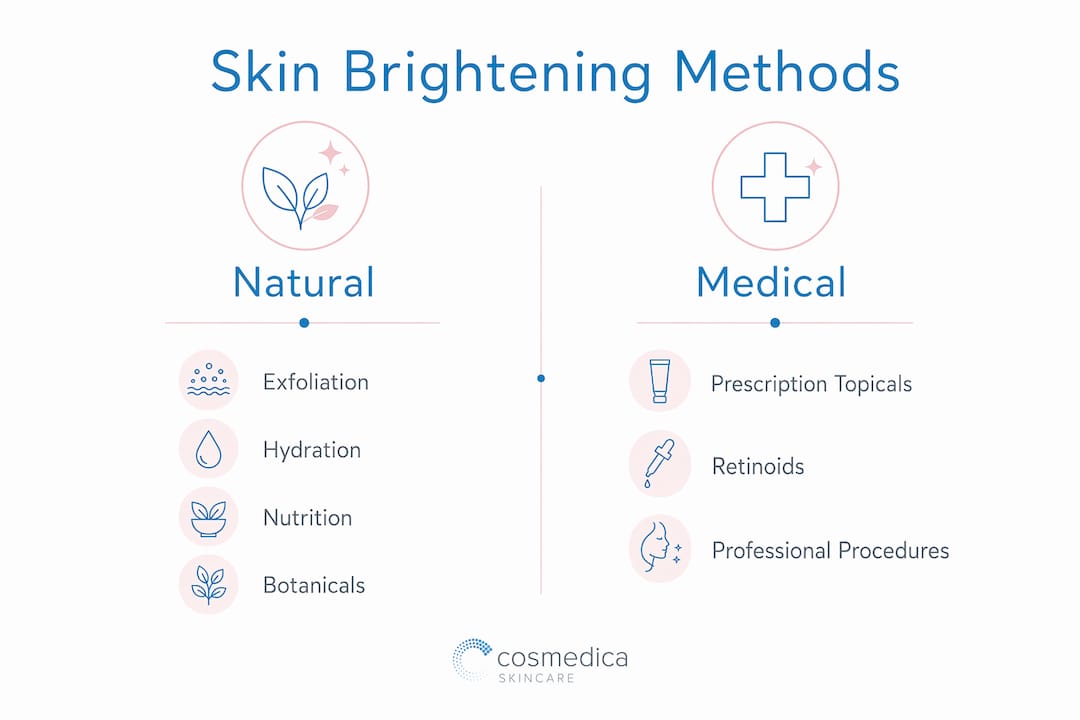
- Daily sunscreen (SPF 30 or higher): Sun exposure is the primary driver of increased pigment production, making broad-spectrum sunscreen the single most important step in any brightening routine.
- Exfoliation: Removing dead skin cells 2–3 times per week with chemical exfoliants like glycolic acid or salicylic acid reveals fresher, more even-toned skin underneath.
- Hydration: Well-hydrated skin reflects light better and looks naturally more radiant, both from drinking enough water and applying humectant-rich moisturizers.
- Nutrient-rich diet: Vitamins A, B, C, and E support melanin regulation and skin repair from the inside out.
- Natural topical ingredients: Turmeric, licorice extract, green tea, and rosehip oil offer antioxidant and mild brightening benefits with consistent use.
- Medically supported topicals: Vitamin C serums, niacinamide, retinoids, and prescription-strength hydroquinone address hyperpigmentation at the cellular level.
- Professional procedures: Chemical peels, laser therapy, and microneedling are available for persistent discoloration that doesn’t respond to topical care alone.
Results vary by method. Topical brighteners like vitamin C and niacinamide typically show visible change in 8–12 weeks, while professional treatments may deliver results in 1–4 sessions with dermatologist supervision.
Natural ways to brighten your skin tone at home
Natural skin brightening works best when you treat it like a system, not a single product. Exfoliation, hydration, nutrition, and sun protection all reinforce each other, and skipping one tends to slow the others down.
Exfoliation
Chemical exfoliants outperform physical scrubs for most people. Glycolic acid (an alpha hydroxy acid) and salicylic acid (a beta hydroxy acid) dissolve the bonds between dead skin cells rather than scrubbing them off, which means less irritation and more even results. Start with once or twice a week, then build up as your skin adjusts. Over-exfoliating strips the skin barrier and can actually worsen uneven tone.
Hydration inside and out
Dehydrated skin looks flat and dull. Drinking enough water throughout the day helps, but topical hydration matters just as much. Look for moisturizers containing hyaluronic acid, glycerin, or ceramides. Think of hyaluronic acid as a sponge that pulls moisture into the skin and holds it there, giving your complexion that plump, lit-from-within look. A daily skincare routine that layers a hydrating serum under your moisturizer makes a noticeable difference within a few weeks.
Nutrition for skin radiance
Yes, diet affects skin tone. Vitamins A, B, C, and E, whether from food or supplements, support melanin regulation and help repair UV-damaged cells. Antioxidant-rich foods like berries, leafy greens, and citrus work from the inside to reduce oxidative stress that contributes to uneven pigmentation. It’s not a quick fix, but it’s a real one.
Natural masks and topical botanicals
Natural oils and plant extracts like rosehip, jojoba, turmeric, licorice, and green tea have anti-inflammatory and melanin-inhibiting properties that support mild brightening over time. A turmeric and honey mask applied once or twice a week is a popular home remedy with some clinical backing. Licorice extract, in particular, contains glabridin, a compound that inhibits tyrosinase, the enzyme responsible for melanin production.
Sun protection as a brightening tool
Sunscreen isn’t just preventive. It’s an active part of brightening. Every time UV light hits unprotected skin, it triggers melanocyte activity and deepens existing dark spots. Tinted sunscreens with iron oxide provide an extra layer of protection against high-energy visible light, which research shows can worsen hyperpigmentation even on cloudy days. Apply SPF 30 or higher every morning, rain or shine.
Pro Tip: Layer your brightening routine in this order: cleanser, vitamin C serum, moisturizer, then sunscreen. Vitamin C is most effective on freshly cleansed skin, and sunscreen always goes on last to seal everything in.
Medical treatments that dermatologists recommend for skin brightening
When natural methods plateau, clinically proven treatments can take things further. The key is knowing which option fits your skin type and how to use it safely.

Prescription topicals
Hydroquinone 4% is the clinical gold standard for depigmentation. Applied once or twice daily for a few months, it works by inhibiting tyrosinase to limit melanin production. The most effective prescription approach is triple-combination therapy (TCT), which pairs hydroquinone with tretinoin and fluocinolone acetonide. This combination, sometimes called the Kligman formula, has the strongest clinical evidence for treating melasma and post-inflammatory hyperpigmentation.
Hydroquinone use should be cyclic, not continuous. After an initial 3–6 month course, dermatologists typically recommend a break or a maintenance schedule of weekend-only or three-times-weekly application to minimize side effects.
Retinoids
Retinoids like tretinoin 0.1% improve pigmentation by modulating cell turnover and reducing inflammation. In clinical trials, tretinoin 0.1% produced roughly 40% lightening in hyperpigmented lesions compared to 18% in control groups. The catch: a substantial portion of patients in those trials developed retinoid dermatitis, which can temporarily worsen pigmentation in darker skin tones. Starting at a lower concentration and increasing gradually helps reduce that risk. Cosmedica-skincare’s retinol night cream offers a gentler entry point for those new to retinoids.
Vitamin C
Topical vitamin C (ascorbic acid) is one of the most well-studied over-the-counter brightening agents. It works by interfering with melanin synthesis and neutralizing free radicals from UV exposure. For best results, use a stabilized L-ascorbic acid formula in the morning, followed by sunscreen. A dedicated vitamin C skincare routine makes it easier to stay consistent.
Professional procedures
Chemical peels, laser therapy, and microneedling are reserved for persistent hyperpigmentation that doesn’t respond to topical care. Glycolic acid peels and Jessner’s solution peels are common first-line procedural options. Low-fluence Q-switched lasers and picosecond lasers are preferred for their more favorable side effect profiles. Both peels and lasers carry a higher risk of post-inflammatory pigmentary changes in people with deeper skin tones, so dermatologist supervision is non-negotiable.
| Treatment | Key Ingredient or Method | Typical Duration | Notes |
|---|---|---|---|
| Hydroquinone monotherapy | Hydroquinone 4% | 3–6 months | Cyclic use; avoid continuous application |
| Triple-combination therapy | HQ + tretinoin + fluocinolone | 3–6 months | Gold standard; prescription only |
| Retinoid therapy | Tretinoin 0.1% | 3–6 months | Risk of retinoid dermatitis; titrate slowly |
| Vitamin C serum | L-ascorbic acid 10% | 8–12 weeks | OTC; use in the morning with SPF |
| Chemical peel | Glycolic acid, Jessner’s | 1–6 sessions | Adjunctive; caution in darker skin tones |
| Laser therapy | Q-switched or picosecond | 1–4 sessions | For refractory lesions; dermatologist only |
Which ingredients actually brighten skin, according to science
The brightening ingredient market is crowded, but clinical research narrows the field considerably. Here’s what the evidence actually supports.
- Hydroquinone: The most studied depigmenting agent. Inhibits tyrosinase and, at higher concentrations, may promote melanocyte degradation. Prescription-strength 4% has the strongest evidence for melasma and post-inflammatory hyperpigmentation.
- Kojic acid: A tyrosinase inhibitor derived from fungal species including Aspergillus and Penicillium. One randomized controlled trial found kojic acid worked faster than hydroquinone for treating melasma.
- Niacinamide (vitamin B3): Blocks the transfer of melanosomes from melanocytes to keratinocytes, which is a different mechanism than most brighteners. Two separate RCTs confirmed its efficacy for facial and axillary hyperpigmentation.
- Tranexamic acid: A newer agent gaining traction as an alternative to hydroquinone, available both topically and orally for cases resistant to topical therapy.
- Vitamin C (ascorbic acid): Interferes with melanin synthesis and provides antioxidant protection. Clinical studies show it successfully treats melasma and post-inflammatory hyperpigmentation.
- Retinoids: Accelerate cell turnover to push pigmented cells to the surface faster, while also reducing melanin production through anti-inflammatory pathways.
- Azelaic acid: Inhibits tyrosinase and DNA synthesis in melanocytes. Two RCTs support its use for melasma and post-inflammatory hyperpigmentation, and it’s generally well tolerated by sensitive skin.
- Arbutin: A tyrosinase inhibitor with two RCTs supporting its use for melasma. Often found in “natural” brightening products as a gentler alternative to hydroquinone.
- Licorice extract: Contains glabridin (a tyrosinase inhibitor) and liquiritin (which disperses melanin). Multiple RCTs show clinical efficacy for melasma and UV-induced pigmentation.
- Green tea and turmeric: Both have antioxidant properties and have shown clinical efficacy for melasma and facial hyperpigmentation in controlled studies.
Clinical consensus: Combination therapy using multiple topical agents, including sunscreen, retinoids, and a brightening agent, consistently outperforms any single-agent approach because melanin production involves multiple pathways that no one ingredient can fully address alone.
A clinical evaluation of 17 whitening cosmetic ingredients including kojic acid, arbutin, niacinamide, vitamin C, and tranexamic acid confirmed that twice-daily application over four weeks produced measurable pigment reduction across all agents, though the degree varied. The takeaway: most of these ingredients work, but consistency and combination matter more than picking the “perfect” single product.
One important warning: avoid unregulated skin-bleaching products, particularly those containing mercury or unlabeled steroids. These are sold online and in some international beauty stores, and they carry serious health risks including kidney damage and permanent skin damage.
Key Takeaways
Brightening skin tone safely requires daily sun protection, consistent topical brighteners, and patience, with combination therapy delivering the strongest clinical results.
| Point | Details |
|---|---|
| Sunscreen is non-optional | Daily broad-spectrum SPF prevents new pigmentation and protects active brightening treatments. |
| Hydroquinone 4% is the gold standard | Triple-combination therapy with tretinoin and fluocinolone has the strongest clinical evidence. |
| Retinoids carry a real risk | About 50% of patients in tretinoin trials developed retinoid dermatitis; start low and titrate slowly. |
| Combination therapy wins | Using sunscreen, a retinoid, and a brightening agent together outperforms any single ingredient. |
| Natural ingredients have clinical support | Kojic acid, niacinamide, licorice extract, and vitamin C all have RCT-backed evidence for reducing pigmentation. |
FAQ
How can I brighten my skin naturally?
Daily sunscreen, regular chemical exfoliation with glycolic or salicylic acid, and topical botanicals like licorice extract, turmeric, and vitamin C are the most effective natural approaches. Consistency over weeks to months is what drives visible results.
How do you make skin tone brighter in 7 days?
You can see a noticeable improvement in radiance within a week by exfoliating 2–3 times, applying a vitamin C serum each morning, and staying well hydrated. Deeper pigmentation changes take longer, typically 4–12 weeks of consistent treatment.
What is the fastest medical treatment for skin brightening?
Professional chemical peels and laser therapy produce faster visible results than topical treatments alone, but they require dermatologist supervision and carry a higher risk of post-inflammatory pigmentation, especially in darker skin tones.
Can diet affect skin tone?
Yes. Vitamins A, B, C, and E support melanin regulation and skin repair, and antioxidant-rich foods reduce the oxidative stress that contributes to uneven pigmentation. Diet alone won’t reverse hyperpigmentation, but it meaningfully supports topical and medical treatments.
How long does it take to see results from brightening treatments?
Topical brighteners like vitamin C and niacinamide typically show visible change in 8–12 weeks. Prescription hydroquinone is used for 3–6 months per treatment cycle. Professional procedures like laser therapy may deliver results in 1–4 sessions, depending on the severity of pigmentation.
Recommended
- Vitamin C and Hyaluronic Acid for Uneven Skin Tone – Cosmedica Skincare
- Vitamin C for Hyperpigmentation and Dark Spots – Cosmedica Skincare
- Behind the Bottle: Get To Know The Instant Brightening Kit – Cosmedica Skincare
- 5 Benefits of Using Brightening Eye Gel | Cosmedica Skincare – Cosmedica Skincare