

Pollution Defense Skincare: What It Is and Why It Works
What is pollution defense skincare?
Pollution defense skincare is a targeted regimen that protects your skin from the damaging effects of environmental pollutants by reinforcing the skin barrier and neutralizing oxidative stress before it causes lasting harm. Think of it as your skin’s daily armor against the invisible assault happening every time you step outside.
At its core, anti-pollution skincare works on two levels: physically shielding the skin from particle contact and chemically neutralizing the reactive oxygen species (ROS) that pollutants generate. Neither approach alone is enough. The most effective routines combine both.
Here’s what pollution defense skincare typically addresses:
- Particulate matter (PM2.5 and PM10): Tiny particles from traffic exhaust and industrial emissions that deposit on skin and trigger inflammation
- Ozone: A secondary pollutant that depletes vitamin E and squalene in the skin’s surface, weakening its natural defenses
- Volatile organic compounds (VOCs): Chemicals from paints, solvents, and fuel that generate free radicals on contact with skin
- UV radiation: Amplifies the damage caused by other pollutants, accelerating collagen breakdown and pigmentation
- Nitrogen oxides: Traffic-derived gases that account for roughly 30% of organic pollutants and compromise barrier function
A complete pollution defense routine typically includes a gentle cleanser to remove surface grime, an antioxidant serum to neutralize oxidative damage, a barrier-repair moisturizer to seal and protect, and broad-spectrum sunscreen to block UV synergy effects.
How pollution actually damages your skin
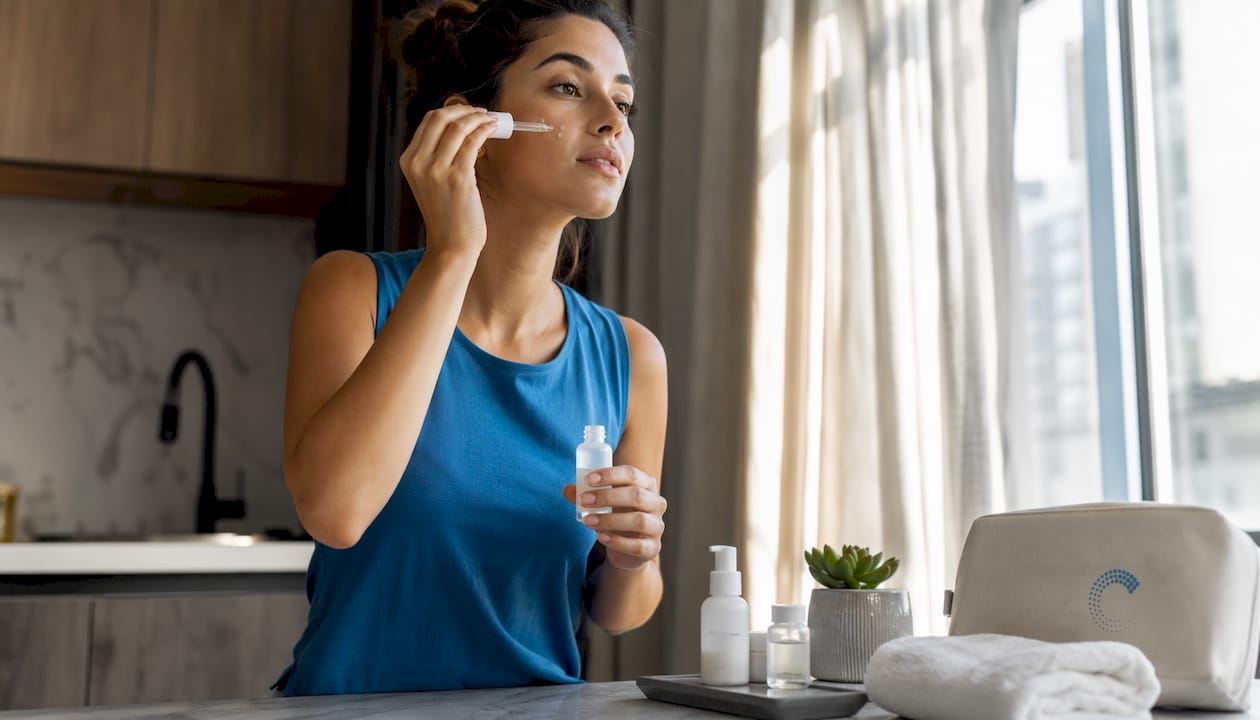
Pollution doesn’t just sit on the surface. It triggers a cascade of biological events that, over time, show up as premature wrinkles, uneven tone, and chronic dullness.
The primary mechanism is oxidative stress. Air pollutants like PM2.5 and ozone flood the skin with reactive oxygen species that overwhelm its natural antioxidant reserves. Once those defenses are depleted, ROS attack collagen fibers, lipid membranes, and DNA in skin cells.
“Pollution exposure activates matrix metalloproteinases and inflammatory cytokines that accelerate extracellular matrix breakdown, producing skin aging patterns that closely mirror photoaging from UV exposure.” — Journal of Drugs in Dermatology
The visible effects accumulate faster than most people realize:
- Redness and inflammation: Pollutants activate inflammatory pathways, causing persistent flushing and sensitivity
- Hyperpigmentation: Oxidative stress upregulates tyrosinase, the enzyme that drives melanin production
- Wrinkles and loss of firmness: Collagen and elastin degradation from MMP activation leads to sagging and fine lines
- Dullness and rough texture: Barrier disruption increases transepidermal water loss (TEWL), leaving skin dehydrated and lackluster
- Increased sebum: Studies comparing urban versus less-polluted populations show higher sebum production in pollution-exposed skin
The barrier disruption piece is especially important. When the stratum corneum’s lipid layer is compromised, pollutants penetrate more deeply, compounding damage at every layer of the epidermis. It becomes a cycle: pollution weakens the barrier, a weaker barrier lets in more pollution.
Key ingredients that actually protect skin from pollution
Not every product marketed as “anti-pollution” delivers real protection. The ingredients below have clinical backing, and understanding what each one does helps you read a label with confidence.
-
Vitamin C (ascorbic acid): The gold standard antioxidant for pollution defense. At concentrations like 15%, it prevents oxidative and inflammatory damage from particulate matter, preserving collagen and elastin in the extracellular matrix.
-
Vitamin E (tocopherol): Works synergistically with vitamin C to quench free radicals. On its own, vitamin E depletes quickly under ozone exposure, which is why pairing it with other antioxidants matters.
-
Ferulic acid: A plant-derived stabilizer that dramatically boosts the efficacy of both vitamins C and E. Including ferulic acid in a formulation enhances antioxidant absorption and extends their activity on skin.
-
Niacinamide: A multitasker that reduces inflammation, controls sebum, and blocks oxidative pathways triggered by urban dust exposure. It also brightens pigmentation caused by pollution-induced melanogenesis.
-
Green tea extract (EGCG): Rich in polyphenols that neutralize ROS and calm inflammatory cytokines. Green tea’s catechins are particularly effective against the type of oxidative damage generated by traffic-derived pollutants.
-
Ceramides: The lipid molecules that hold your skin barrier together, like mortar between bricks. Barrier creams with ceramides restore stratum corneum lipid layers, reducing how deeply pollutants can penetrate.
-
Hyaluronic acid: A humectant that draws water into the skin, counteracting the dehydration caused by pollution-induced TEWL. Think of it as refilling the moisture reservoir that pollution keeps draining.
-
Peptides: Short amino acid chains that support collagen synthesis and extracellular matrix repair. Acetyl tetrapeptide-2, for example, specifically supports elasticity in skin exposed to particulate matter.
-
Film-forming agents (exopolysaccharides): Ingredients like alteromonas ferment extract create a physical mesh on the skin surface that reduces particle adhesion and limits how much PM actually contacts the epidermis.
-
Retinol: Stimulates collagen production and accelerates cell turnover, helping repair pollution-induced structural damage over time. Best used at night when skin is in repair mode.
Pro Tip: Look for a vitamin C serum that combines ascorbic acid, ferulic acid, and tocopherol together. This trio works as a system: ferulic acid stabilizes the other two, making the formula significantly more effective than any single antioxidant alone.
No single ingredient provides a universal pollution shield. Effective defense comes from combining cleansing, antioxidant application, and barrier repair into a consistent regimen.

How to build an anti-pollution skincare routine
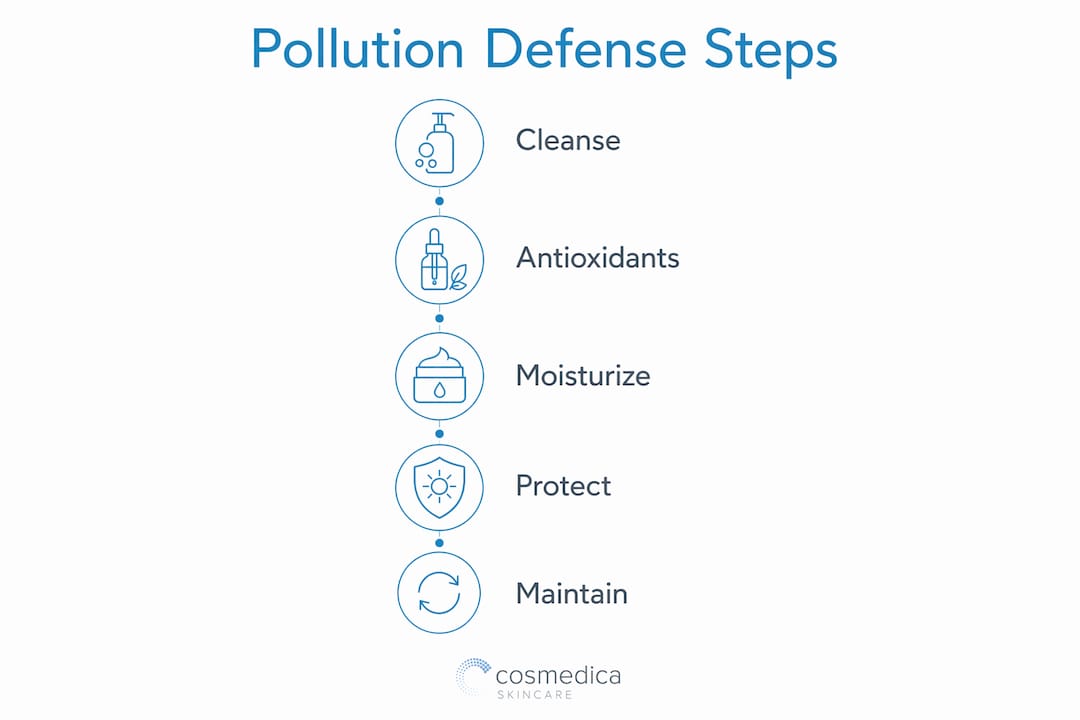
A well-structured routine doesn’t need to be complicated. Here’s how to layer your products for maximum protection, morning and night.
Morning routine:
-
Gentle cleanser: Start with a mild, non-stripping cleanser to remove any pollutant residue that settled overnight. Gentle cleansers clear surface pollutants without disrupting the lipid barrier you’re about to reinforce.
-
Antioxidant serum: Apply your vitamin C, ferulic acid, and vitamin E serum while skin is still slightly damp. This is your primary defense against daytime oxidative stress. Pat it in gently rather than rubbing.
-
Barrier moisturizer: Follow with a ceramide-rich moisturizer to seal the antioxidants in and physically strengthen the stratum corneum. Barrier repair moisturizers reduce pollutant penetration and keep TEWL in check throughout the day.
-
Broad-spectrum SPF 30+: UV radiation amplifies every other pollutant’s damage. Sunscreen is non-negotiable in an anti-pollution routine, full stop.
Evening routine:
-
Double cleanse if needed: If you’ve been in a high-pollution environment, an oil-based cleanser first lifts particulate grime, followed by a water-based cleanser to clear the rest. Consistent cleansing removes surface pollutants before they can accumulate and deepen barrier damage.
-
Niacinamide or repair serum: Nighttime is when skin shifts into repair mode. A niacinamide serum calms inflammation from the day’s exposure, while peptide-based formulas support overnight collagen repair.
-
Rich barrier moisturizer or overnight mask: Lock everything in with a heavier moisturizer or sleeping mask. Ingredients like ceramides, fatty acids, and hyaluronic acid work together to rebuild the stratum corneum while you sleep.
Lifestyle habits that complement your routine:
- Drink enough water daily to support skin hydration from the inside out
- Eat antioxidant-rich foods (berries, leafy greens, nuts) to replenish internal defenses
- Change pillowcases frequently to avoid redepositing pollutants onto freshly cleansed skin
- Use an air purifier indoors, especially in urban areas with high PM2.5 levels
Pro Tip: Apply your antioxidant serum before sunscreen, not after. Antioxidants work at the cellular level and need direct skin contact to neutralize ROS effectively. Sunscreen goes on last as the physical outer layer.
For a complete morning-to-night framework, the daily skincare routine guide from Cosmedica-skincare walks through each step in detail.
What the science says about pollution defense skincare
The clinical evidence here is genuinely reassuring. Structured anti-pollution regimens with antioxidant serums and barrier moisturizers significantly reduce visible pollution damage like redness, pigmentation, and texture roughness within a few weeks.
One well-designed study on Chinese women working outdoors in Beijing found that twice-daily application of a day/night antioxidant serum system, combined with a basic moisturizer, produced measurably lower skin pigmentation and redness compared to moisturizer alone, even under consistently high PM2.5 and NO2 levels. The treatment group also avoided the increasing sebum production trend seen in the control group.
“Regular topical application of an antioxidant cosmeceutical formulation represents an effective strategy to counteract the detrimental effects of environmental insults, particularly with respect to inflammaging.” — PMC, Application of Antioxidant Mixture Prevents Cutaneous Oxinflammaging
A separate study using a topical antioxidant mixture of 15% ascorbic acid, 0.5% ferulic acid, and 1% tocopherol found that it prevented PM-induced loss of collagen, elastin, and key structural proteins, while restoring oxidative stress markers to near-baseline levels. Dermatologist guidelines consistently recommend daily barrier maintenance with ceramides and hyaluronic acid as foundational to protecting sensitive skin from particulate matter penetration.
| Clinical outcome | Ingredient/approach | Evidence |
|---|---|---|
| Reduced skin pigmentation and redness | Day/night antioxidant serum system | Significant improvement vs. moisturizer alone in pollution-exposed subjects |
| Preserved collagen and elastin | Vitamin C + ferulic acid + vitamin E | Prevented PM-induced ECM protein loss in biopsy study |
| Improved barrier function and TEWL | Ceramide-rich moisturizer | Restored stratum corneum lipid layers across skin types |
| Reduced oxidative stress markers | Antioxidant cosmeceutical mixture | Restored 4HNE and COX2 levels toward baseline after PM exposure |
| Decreased particle adhesion to skin | Film-forming exopolysaccharide | Statistically significant reduction in carbon particle deposition in vivo |
The consistency message from dermatologists is clear: protection against pollution is a long-game investment. Collagen loss and chronic inflammation from daily exposure compound over years, and the window to prevent that damage is now, not after the signs appear. For a broader look at how anti-aging ingredients fit into this picture, Cosmedica-skincare’s 2026 guide covers the overlap between pollution defense and aging prevention in depth.
Building these habits early, and sticking with them, is exactly what the research supports. For practical guidance on making those habits stick year-round, the skin health tips resource at Laser Skin Solutions Portland offers a complementary perspective from the clinical side.
We put together a product set designed specifically for this kind of layered defense. The Super Serum Set from Cosmedica-skincare pairs antioxidant-rich serums with barrier-supporting formulas, and our full range of barrier moisturizers is built around the ceramide and hyaluronic acid combinations the clinical evidence points to. If niacinamide is the ingredient you want to prioritize, the 10% Niacinamide + Zinc Treatment Serum is a clean, targeted option that fits neatly into both morning and evening routines.
Key Takeaways
Pollution defense skincare works because it combines physical barrier reinforcement, antioxidant neutralization of ROS, and consistent cleansing into a regimen that addresses pollution damage at every level.
| Point | Details |
|---|---|
| Barrier reinforcement is foundational | Ceramides and fatty acids restore stratum corneum lipids, reducing how deeply pollutants penetrate. |
| Antioxidants prevent structural damage | Vitamin C, ferulic acid, and vitamin E together preserve collagen and elastin under PM exposure. |
| Results appear within 4–8 weeks | Clinical studies show measurable reductions in redness, pigmentation, and texture roughness within 4–8 weeks. |
| Cleansing is not optional | Removing surface pollutants nightly prevents accumulation and ongoing barrier damage. |
| Consistency drives long-term protection | Daily regimen adherence is what prevents the collagen loss and chronic inflammation that compound over years. |
FAQ
Does anti-pollution skincare actually work?
Yes. Clinical studies show structured anti-pollution regimens with antioxidant serums and barrier moisturizers reduce visible signs of pollution damage, including redness, pigmentation, and texture roughness, within 4–8 weeks of consistent use.
What are the best ingredients for pollution protection?
Vitamin C, ferulic acid, vitamin E, ceramides, niacinamide, and hyaluronic acid are the most clinically supported ingredients. They work best in combination, addressing oxidative stress, inflammation, and barrier repair simultaneously.
How do I know if pollution is damaging my skin?
Common signs include persistent dullness, uneven pigmentation, increased sensitivity, and fine lines appearing earlier than expected. Urban residents and people who spend time outdoors in high-traffic areas are at higher risk of pollution-induced skin aging.
Can I use niacinamide and vitamin C together?
Yes, and they complement each other well in a pollution defense routine. Niacinamide calms inflammation and controls sebum, while vitamin C neutralizes oxidative stress. Apply vitamin C first, let it absorb, then layer niacinamide on top.
Is sunscreen part of a pollution defense routine?
Absolutely. UV radiation amplifies the damage caused by other pollutants, accelerating collagen breakdown and pigmentation. Broad-spectrum SPF 30 or higher is a core component of any complete anti-pollution skincare routine.