

Aging Gracefully Strategies: 14 Expert-Backed Tips
TL;DR:
- Healthy aging depends on consistent habits like physical activity, good nutrition, sun protection, and social connection. These strategies influence cellular mechanisms to slow biological aging and improve overall health. Evidence supports practices such as regular exercise, a Mediterranean diet, daily skincare, quality sleep, and stress management.
Aging gracefully is less about fighting time and more about working with your body through smart, consistent habits. The core aging gracefully strategies that research consistently backs are: daily physical activity, balanced nutrition, sun protection and topical skincare, quality sleep, stress management, strong social ties, cognitive engagement, and regular preventive care. Together, these pillars address the biological mechanisms of aging at the cellular level, from oxidative stress and inflammation to epigenetic changes that speed up or slow down how fast you age.
Here is a quick-reference list of the strategies covered in depth below:
- Move your body with aerobic, strength, and balance exercise every week
- Eat for longevity with a Mediterranean-style, antioxidant-rich diet
- Protect your skin daily with broad-spectrum SPF, retinoids, and antioxidants
- Prioritize sleep for cellular repair and skin barrier restoration
- Manage stress through mindfulness and breathing practices
- Stay socially connected to lower inflammation and build resilience
- Challenge your brain with novelty, learning, and creative pursuits
- Keep up with preventive care through screenings, vaccines, and medication reviews
- Build resilience to navigate life transitions with intention
- Use supplements wisely based on evidence, not marketing
- Reduce toxin exposure from your environment and daily products
- Practice mindfulness tailored to your stage of life
1. How physical activity keeps you younger from the inside out
Physical activity is, without question, the most powerful modifiable factor for slowing biological aging. As NIH researcher Dr. Luigi Ferrucci puts it, "being physically active is the best gift that you can give to yourself." That is not a motivational poster quote. It reflects decades of gerontology research showing that exercise improves mitochondrial function, reduces pro-inflammatory cytokines, and even modulates gene expression tied to muscle repair and circadian regulation.
The CDC recommends adults 65 and older get at least 150 minutes per week of moderate-intensity aerobic activity, plus muscle-strengthening exercises on at least 2 days per week, plus balance training. That might sound like a lot, but 30 minutes of brisk walking five days a week covers the aerobic portion entirely.
Why balance training matters: Falls are the leading cause of injury-related death in adults over 65. Incorporating heel-to-toe walking, single-leg stands, or yoga into your weekly routine builds the stability that keeps you independent.
- Aerobic options: brisk walking, water aerobics, cycling, dancing
- Strength options: resistance bands, bodyweight squats, light dumbbell work
- Balance options: yoga, tai chi, standing on one foot while brushing your teeth
Even short bouts count. A five-minute walk, a quick dance break, a set of squats while waiting for coffee. It all accumulates toward your weekly total.
Statistic spotlight: A 16-week study of middle-aged women found that both aerobic and resistance training improved skin elasticity and dermal thickness by enhancing extracellular matrix gene expression. Exercise is not just for your heart and muscles. Your skin benefits too.
2. What you eat shapes how fast you age
Nutrition is one of the most modifiable factors in biological aging, and the evidence points clearly toward a Mediterranean-style eating pattern. Antioxidant-rich diets lower C-reactive protein and TNF-α, two key inflammatory markers, and support a diverse gut microbiome that benefits both skin health and systemic aging.
Think of your plate as your daily anti-aging protocol. Here is what to prioritize:
- Lean protein (fish, legumes, poultry) to preserve muscle mass as you age
- Calcium and vitamin D for bone density maintenance
- Omega-3 fatty acids from fatty fish, walnuts, and flaxseed to reduce inflammation
- Polyphenols from berries, dark chocolate, green tea, and colorful vegetables
- Fiber from whole grains, beans, and produce to support gut health
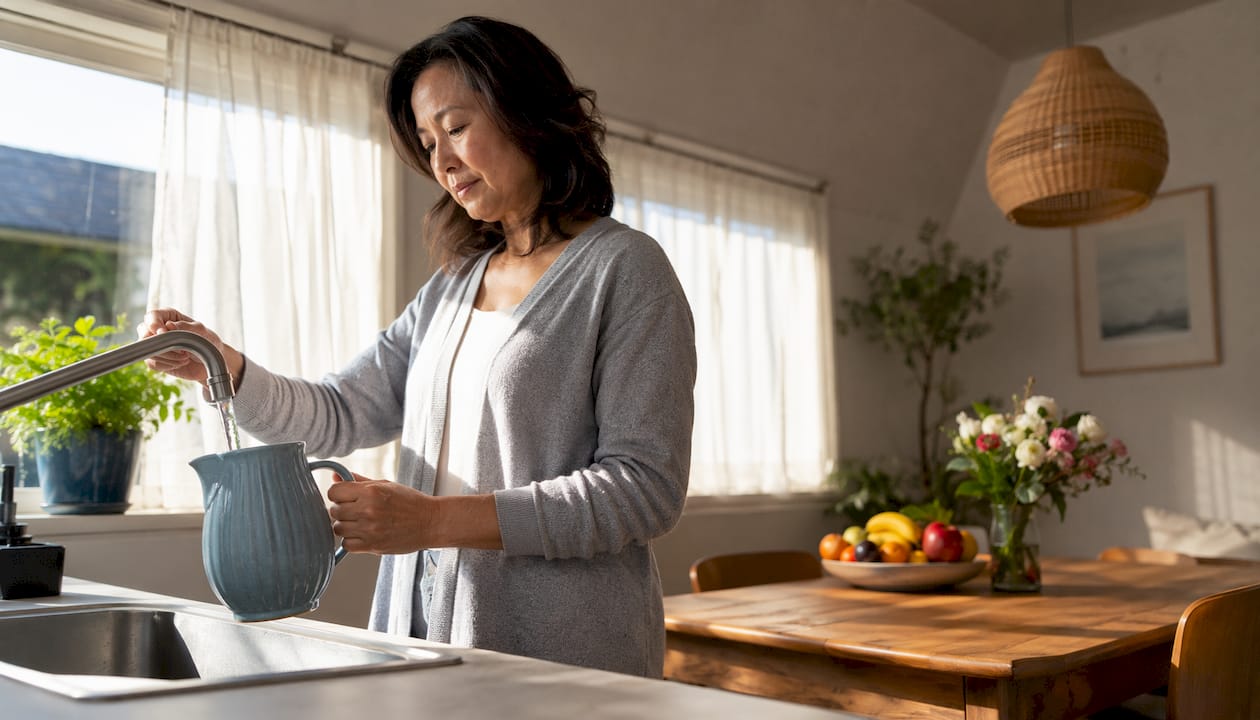
Hydration deserves its own mention. Skin cells, joint tissue, and kidney function all depend on consistent water intake. Aim for water-rich foods (cucumbers, watermelon, leafy greens) alongside your daily fluid intake.
One underappreciated tip: how you cook matters as much as what you cook. Grilling, frying, and roasting at high heat generate advanced glycation end-products (AGEs), compounds that accelerate collagen breakdown in skin. Steaming and boiling are associated with lower AGE formation. A small swap with a real payoff.
3. Protecting your skin is a long-term investment, not a vanity project
Skin longevity, now referred to in dermatology as “skinspan,” is a framework for extending the years your skin functions and looks healthy. A comprehensive review published in PMC recommends a clear first-line strategy: daily broad-spectrum UVA/UVB sun protection, topical retinoids, and antioxidant serums.
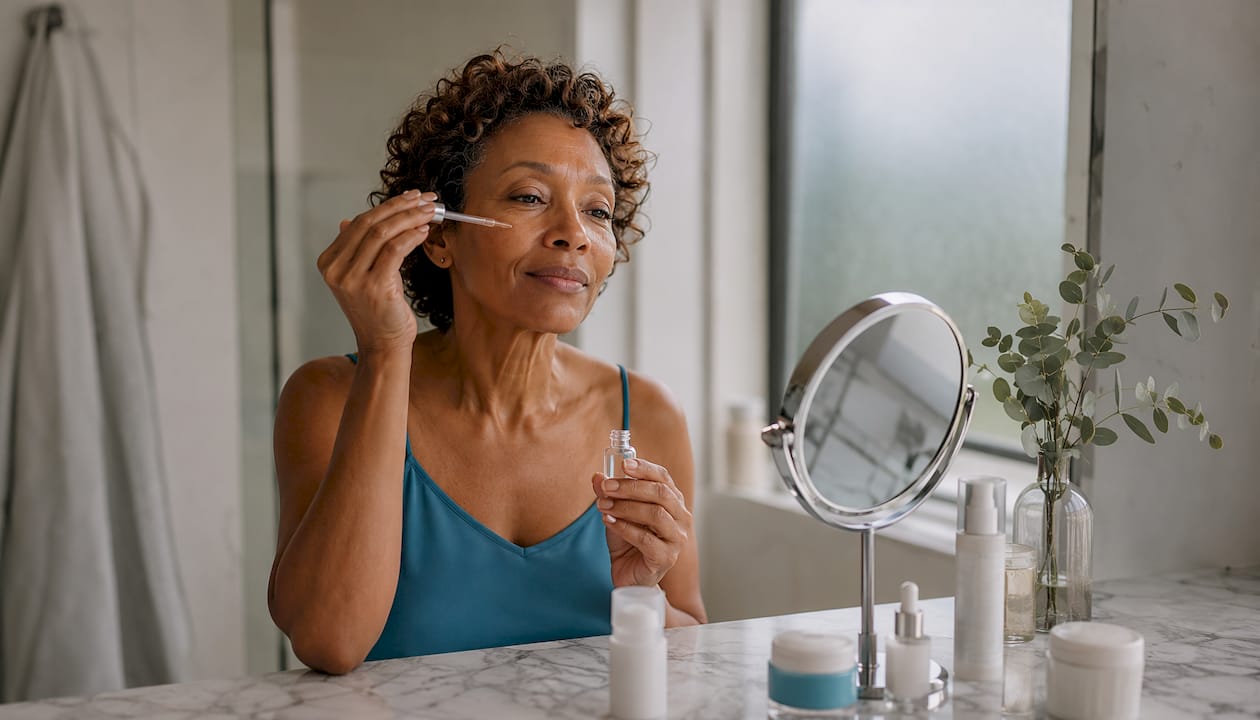
Broad-spectrum sunscreen suppresses UV-induced oxidative and inflammatory gene expression in skin cells. It is the single most evidence-backed intervention for preventing photoaging, period. Topical vitamin C (specifically L-ascorbic acid) scavenges free radicals, inhibits hyperpigmentation, and works synergistically with sunscreen to suppress collagen-degrading enzymes. Retinoids, meanwhile, accelerate cell turnover and stimulate collagen production.
A solid anti-aging skincare routine does not need to be complicated:
- Morning: gentle cleanser, vitamin C serum, moisturizer, broad-spectrum SPF
- Evening: gentle cleanser, retinoid (start 2–3 nights per week), barrier-supporting moisturizer
Pro Tip: Align your retinoid application with your evening routine, not morning. Retinoids work best at night because they are photosensitive, and applying them while your skin is in its natural repair cycle (which peaks during sleep) enhances their efficacy.
Second-line interventions like laser treatments and energy-based devices are options worth discussing with a dermatologist, but they build on, not replace, a consistent daily foundation.
4. Quality sleep is your body’s nightly repair session
Sleep is where a lot of the real anti-aging work happens. During deep sleep, your skin’s epidermal barrier restores itself, oxidative stress pathways quiet down, and inflammatory markers drop. Research shows that quality sleep lowers transepidermal water loss (TEWL) and reduces the oxidative activity linked to premature skin aging. Seven to eight hours is the target for adults, and consistency in your sleep schedule matters as much as the total hours.
Practical sleep hygiene habits that actually work:
- Keep a consistent wake time, even on weekends
- Dim lights and avoid screens for 60 minutes before bed
- Keep your bedroom cool (around 65–68°F is often cited as optimal)
- Limit caffeine after noon and alcohol in the evening
- If sleep problems persist beyond a few weeks, talk to your doctor. Sleep apnea and other conditions are common in older adults and very treatable.
Poor sleep does not just leave you tired. It elevates cortisol, disrupts glucose metabolism, and accelerates the very inflammatory processes that age your cells faster.
5. How stress management protects your skin and your cells
Chronic stress is a biological accelerant. Elevated cortisol increases inflammatory signaling molecules like IL-6 and CRP, which impair the skin’s barrier function and speed up cellular aging. The good news is that stress reduction measurably lowers these same markers, giving your skin and immune system a real chance to recover.
Daily stress management does not require a meditation retreat. Small, consistent practices add up:
- Diaphragmatic breathing: five slow breaths (inhale for four counts, exhale for six) activates the parasympathetic nervous system within minutes
- Progressive muscle relaxation: systematically tensing and releasing muscle groups reduces physical tension that often goes unnoticed
- Nature exposure: even a 20-minute walk in a park lowers cortisol measurably
- Journaling: writing down worries externalizes them and reduces rumination
Pro Tip: Pair your stress management practice with your skincare routine. Applying a calming serum or moisturizer while doing slow, intentional breathing turns a daily habit into a two-for-one benefit for your skin barrier and your nervous system.
6. Why social connection is as vital as diet and exercise
Strong social ties are not just good for your mood. They are a measurable factor in how fast you age biologically. Harvard T.H. Chan School of Public Health research confirms that social connection is as critical as nutrition and exercise in healthy aging, with loneliness accelerating inflammation and biological aging markers. Social isolation is not a soft concern. It is a physiological one.
Ways to build and maintain meaningful connection:
- Join a community group, fitness class, or hobby club that meets regularly
- Volunteer with a local organization (structured commitment keeps you accountable)
- Use video calls to stay close with family and friends who live far away
- Participate in faith communities, book clubs, or neighborhood associations
- Consider group exercise classes, which combine physical and social benefits
The quality of relationships matters more than the quantity. A few deep, reciprocal connections do more for your health than a large but shallow social network.
7. Keeping your brain sharp through curiosity and challenge
Cognitive reserve, the brain’s ability to adapt and compensate as it ages, builds through consistent mental challenge. Synaptic plasticity, especially in the hippocampus (the brain’s memory hub), naturally declines with age, but NIH research shows that lifestyle factors can preserve and even restore some of this function.
The key is novelty and effort, not any single activity. Your brain responds to being pushed into unfamiliar territory.
- Learn a new language, instrument, or craft skill
- Read across genres you would not normally choose
- Do crossword puzzles, Sudoku, or strategy games
- Engage in group discussions or debate-style conversations
- Take a class, online or in person, on a topic that genuinely interests you
Routine mental tasks, even if they feel “brainy,” do not build reserve the way new learning does. The challenge is the point.
8. Preventive care is the unglamorous strategy that pays off most
Routine health checkups catch problems before they become crises, and that is especially true after 65. Preventive care, including screenings, vaccine adherence, and medication reviews, decreases complication risks and supports longer independent living. Yet many adults skip or delay these appointments, often because nothing feels wrong yet.
A practical preventive care checklist for adults 65 and older:
- Annual wellness visit with your primary care physician
- Blood pressure and cholesterol monitoring at least yearly
- Colorectal cancer screening per your doctor’s recommendation
- Bone density scan (DEXA) if you are at risk for osteoporosis
- Flu vaccine annually; pneumonia, shingles, and COVID-19 vaccines per CDC schedule
- Medication review with your pharmacist or physician to check for interactions and fall-risk drugs
- Vision and hearing checks every 1–2 years
Medication management deserves special attention. Polypharmacy (taking multiple medications) is common in older adults and increases fall risk significantly. A pharmacist-led medication review is one of the simplest, most underused tools in aging well.
9. What the research actually says about aging and lifestyle
The science of aging has moved well beyond “eat your vegetables.” NIH-funded research using epigenetic “aging clocks” now measures biological age separately from chronological age, and the findings are striking. Participants in the CALERIE study who reduced caloric intake by an average of 12.5% showed a measurably slower pace of biological aging, as measured by clinical blood biomarkers and the DunedinPACE aging speedometer developed at Duke University.
Equally compelling: caloric restriction in that study also changed the expression of hundreds of genes, increasing activity in pathways related to muscle repair and circadian regulation while decreasing inflammation pathways. This is not a diet fad. It is molecular evidence that lifestyle choices rewrite how your genes behave.
Statistic spotlight: NIH researchers found that healthy lifestyle measures including physical activity, not smoking, maintaining a healthy weight, quality sleep, and preventive screenings can increase life expectancy by up to 10 years. No single supplement or procedure comes close to that combined effect.
Pro Tip: Consistency beats intensity. A modest daily walk, a mostly Mediterranean diet, and seven hours of sleep practiced for years will outperform any short-term “biohacking” protocol. The magic is in the mundane, repeated daily.
10. Adapting to life transitions with resilience
Life after 50 brings real transitions: retirement, loss of loved ones, shifting family roles, physical changes that require adjustment. How you respond to these transitions shapes your health as much as any supplement or skincare product. Resilience, the ability to adapt and recover, is a skill that can be built deliberately.
Psychologists at the Cleveland Clinic and elsewhere emphasize that resilience is not about avoiding difficulty. It is about developing flexible responses to it. Practical approaches include reframing setbacks as temporary rather than permanent, maintaining a sense of purpose through work, volunteering, or creative projects, and seeking professional support (therapy, counseling) when transitions feel unmanageable. Grief, for example, is a normal part of aging, and processing it with support rather than in isolation produces measurably better health outcomes.
Building a sustainable health routine that accommodates life’s changes, rather than one that collapses at the first disruption, is itself a resilience strategy.
11. Which supplements actually have evidence behind them
The supplement aisle is full of promises and thin on proof. A few supplements have genuine research support for aging-related benefits; most do not. Here is an honest breakdown:
- Vitamin D: Deficiency is common in adults over 65 and linked to bone loss, immune decline, and mood changes. Testing your levels and supplementing if deficient is well-supported.
- Omega-3 fatty acids (fish oil): Reduces systemic inflammation and supports cardiovascular and cognitive health. Dietary sources are preferable, but supplementation is a reasonable backup.
- Magnesium: Supports sleep quality, muscle function, and blood pressure regulation. Many older adults are mildly deficient.
- Collagen peptides: Early research suggests benefits for skin elasticity and joint comfort, though evidence is still building.
- Vitamin B12: Absorption decreases with age; deficiency causes fatigue and neurological symptoms. Supplementation is often warranted after 60.
Skip the “anti-aging” proprietary blends with no peer-reviewed backing. Always discuss new supplements with your physician, especially if you take prescription medications, since interactions are common.
12. How your environment accelerates or slows aging
Your daily environment contributes to aging in ways that are easy to overlook. Airborne pollutants, UV radiation, and indoor volatile organic compounds (VOCs) all generate oxidative stress that damages skin cells and accelerates systemic inflammation. The skinspan research framework specifically identifies pollution and UV as compounding stressors, recommending daily cleansing to remove particulate matter, avoiding outdoor activity during peak pollution hours, and using low-VOC products indoors.
Practical environmental habits worth adopting:
- Apply broad-spectrum SPF daily, even on cloudy days and indoors near windows
- Use an air purifier with a HEPA filter in your bedroom and main living space
- Choose fragrance-free, low-VOC cleaning and personal care products
- Avoid smoking and secondhand smoke exposure (smoking accelerates skin aging and systemic inflammation dramatically)
- Check your local air quality index before outdoor exercise on high-pollution days
Knowing your skin-aging ingredient risks is part of the same picture. Some common skincare ingredients can irritate or sensitize skin over time, undermining the barrier you are working to protect.
13. Mindfulness practices that fit where you are right now
Mindfulness for aging is not about achieving a blank mind. It is about building a more intentional relationship with your body, your thoughts, and the present moment. For older adults specifically, mindfulness practices reduce cortisol, improve sleep quality, and lower the inflammatory markers tied to accelerated aging.
Body scan meditation is particularly well-suited to this stage of life. Lying down and slowly directing attention through each part of your body builds interoceptive awareness, the ability to notice what your body is telling you before symptoms become serious. Gentle yoga and qigong combine breath, movement, and attention in ways that address physical and mental aging simultaneously.
Even five minutes of intentional breathing in the morning, before checking your phone, shifts your nervous system toward a calmer baseline for the day. The natural energy and wellness practices that support healthy aging consistently include some form of daily mindfulness, not as a luxury, but as maintenance.
Cosmedica-skincare supports your skin through every chapter
Aging well from the outside in starts with products you can actually trust. Cosmedica-skincare offers cruelty-free, dermatologist-tested formulations built around the ingredients that research backs most strongly: vitamin C, retinol, niacinamide, and hyaluronic acid. These are not trendy additions. They are the workhorses of evidence-based skincare.
If you are ready to put the skinspan framework into practice, the Super Serum Set is a great starting point. It combines targeted actives designed to support skin longevity, hydration, and a more even tone. For those focused on barrier health and texture, the moisturizer collection offers options formulated for aging skin’s specific needs. Affordable, effective, and built for the long game.
FAQ
What is the secret to aging gracefully?
Consistent daily habits outperform any single intervention. Physical activity, quality sleep, a nutrient-dense diet, sun protection, and strong social connections together address the biological drivers of aging more effectively than any supplement or procedure.
What is the #1 mistake that makes you age faster?
Chronic inactivity combined with poor sleep and unmanaged stress accelerates biological aging the most. NIH research shows these factors increase inflammatory markers and speed up epigenetic aging clocks measurably.
What is the 40-70 rule for aging?
The concept of beginning conversations about health planning well before a crisis arises is often emphasized, with suggested starting ages varying widely depending on individual circumstances.
How do you deal with aging anxiety?
Mindfulness practices, therapy, and building a sense of purpose through social engagement and meaningful activity are the most evidence-supported approaches. Anxiety about aging often decreases when people focus on what they can control, specifically the lifestyle habits covered throughout this article.
Does skincare actually slow skin aging?
Yes, when it is evidence-based. Daily broad-spectrum sun protection, topical retinoids, and antioxidant serums like vitamin C are first-line interventions with strong clinical backing for extending skinspan and reducing visible aging.
Key Takeaways
Aging gracefully requires consistent, evidence-backed lifestyle habits across physical activity, nutrition, skin protection, sleep, stress management, and social connection, working together to slow biological aging at the cellular level.
| Point | Details |
|---|---|
| Exercise is the top anti-aging tool | The CDC recommends moderate aerobic activity weekly plus strength training for adults 65 and older. |
| Diet shapes biological aging | Mediterranean-style eating lowers inflammatory markers like CRP and TNF-α, supporting both skin and systemic health. |
| Skinspan starts with SPF and retinoids | Daily broad-spectrum sun protection, topical retinoids, and antioxidants are the first-line evidence-based strategy for skin longevity. |
| Sleep and stress compound each other | Quality sleep lowers cortisol and restores the skin barrier; chronic stress accelerates the same inflammatory pathways sleep repairs. |
| Cosmedica-skincare | Offers cruelty-free, dermatologist-tested serums and moisturizers built around retinol, vitamin C, and niacinamide for evidence-based skin longevity. |