

How to Use Facial Oils for Glowing, Hydrated Skin
TL;DR:
- Facial oils seal in hydration and nourish the skin when used correctly as the final step in skincare routines. Proper layering involves applying oil after moisturizer and before sunscreen or SPF, on slightly damp skin, with 2-4 drops. Oils should match skin type, with linoleic acid oils for oily skin and oleic acid oils for dry or mature skin to maximize benefits.
Facial oils are emollient and occlusive products that seal in hydration and nourish the skin barrier when used correctly as the final step in your routine. Unlike moisturizers, they do not add water to the skin. Instead, they lock in moisture from the water-based products you apply underneath. Knowing how to use facial oils properly makes the difference between a dewy, healthy glow and a greasy, congested complexion. We put together this guide to walk you through timing, layering, oil selection, and the mistakes worth avoiding.
How to use facial oils: timing, layering, and application
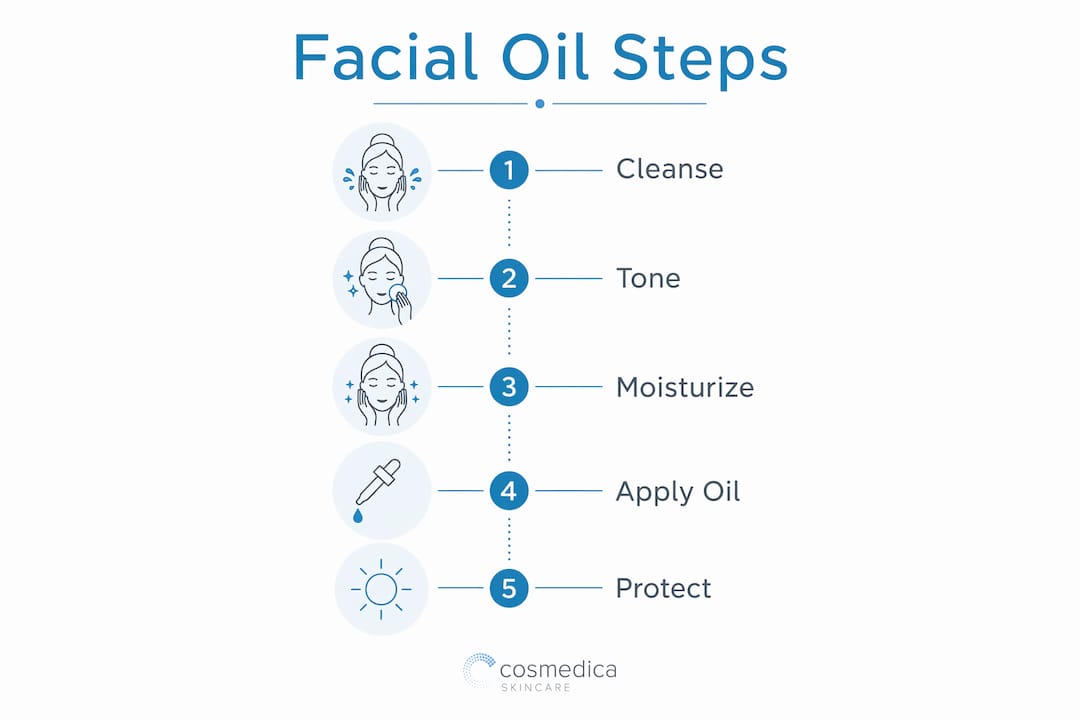
Getting the order right is the single most important step in facial oil application. Proper layering order runs like this: cleanse, toner or essence, hydrating serum, moisturizer, facial oil, then sunscreen in the morning. Oils go near the end because their large molecular structure creates an occlusive film that traps everything underneath. Skip this order and you block your serum from absorbing properly.

Morning vs. nighttime use
In the morning, apply your oil after moisturizer and before SPF. Use just 2–4 drops. More than 4 drops causes makeup to slide and reduces how well your other products work. At night, you have more flexibility. You can be slightly more generous since there is no makeup on top and your skin does its repair work while you sleep.
Step-by-step application technique
Follow these steps every time you apply a facial oil:
- Complete your full routine first. Apply cleanser, toner, serum, and moisturizer before reaching for your oil.
- Dispense 2–4 drops into your palms. Resist the urge to pour directly onto your face.
- Warm the oil between your hands. Rub your palms together for three to five seconds. This activates the oil and improves spreadability.
- Press gently onto slightly damp skin. Applying on damp skin enhances absorption and prevents the oil from sealing in dryness.
- Pat, do not rub. Use light pressing motions across your cheeks, forehead, and chin. Rubbing disrupts the occlusive layer you are trying to build.
- Wait 60 seconds before sunscreen. Give the oil a moment to settle before applying SPF on top.
Pro Tip: Mix one drop of facial oil into your moisturizer before applying. This simplifies your routine while still delivering the occlusive benefit, and it cuts down on that heavy, layered feeling.
How do you choose the right facial oil for your skin type?
Not all facial oils behave the same way on skin. The key variable is fatty acid profile, and matching it to your skin type determines whether an oil works for you or against you.
Oils for oily and acne-prone skin
Oils high in linoleic acid are the best choice for oily or breakout-prone skin. Linoleic acid-rich oils like jojoba and rosehip help regulate sebum production rather than adding to it. Jojoba is technically a liquid wax that closely mimics the skin’s natural sebum, making it one of the most skin-compatible options available. You can read a detailed comparison of jojoba vs. rosehip oil to see which fits your routine better.
Non-comedogenic oils like squalane and jojoba carry a low risk of clogging pores. Squalane is derived from sugarcane or olives and is exceptionally lightweight. It absorbs quickly and leaves almost no residue, which makes it a reliable daily option for people who break out easily.
Oils for dry and mature skin
Dry and mature skin benefits most from oleic acid-rich oils like marula and argan. These oils are denser and more nourishing, which suits skin that has lost lipids through aging or environmental damage. Argan oil is packed with vitamin E and essential fatty acids that support elasticity and repair. Marula oil absorbs faster than its richness suggests, making it a practical choice even for those who dislike heavy textures.
Oils for sensitive skin
Sensitive skin needs fragrance-free, minimal-ingredient formulas. Botanical extracts and added fragrances are common irritants in facial oils. Look for single-ingredient oils or formulas with a short, clean ingredient list. Chamomile-infused or calendula-based oils are gentle options with a track record of soothing reactive skin.
Pro Tip: Always patch test a new facial oil on your inner forearm for 24–48 hours before applying it to your face. Sensitive skin can react to even “natural” ingredients, and a quick patch test saves you from a week of irritation.
- Oily or acne-prone: jojoba, squalane, rosehip (high linoleic acid)
- Dry or mature: argan, marula, sea buckthorn (high oleic acid)
- Sensitive: fragrance-free single-ingredient oils, chamomile or calendula-based formulas
- Combination: lightweight oils like rosehip or squalane applied only to dry zones
What mistakes should you avoid when applying facial oils?
Most people who give up on facial oils do so because of a fixable mistake. Here are the most common ones and how to correct them.
- Applying oil before moisturizer. Oil creates a barrier. Anything you apply on top of it cannot penetrate. Always apply oil last, after your moisturizer.
- Using too much product. More than 4 drops overwhelms the skin and causes greasiness. Start with 2 drops and add more only if your skin feels tight after absorption.
- Skipping the damp-skin step. Applying oil to completely dry skin can seal in dryness instead of moisture. Mist your face lightly or apply while your moisturizer is still slightly tacky.
- Not waiting between layers. Rushing through your routine causes pilling. Give each product 30–60 seconds to absorb before layering the next one.
- Choosing a comedogenic oil for acne-prone skin. Coconut oil, for example, scores high on the comedogenic scale and clogs pores for many people. Check comedogenic ratings before committing to a new oil.
- Treating oil as a moisturizer replacement. Facial oils complement moisturizers by blocking transepidermal water loss. They do not hydrate on their own. Skipping your moisturizer and using only oil leaves your skin without the water-binding ingredients it needs.
- Ignoring climate and season. In humid climates, a lighter oil like squalane works better than a dense argan formula. In dry winter months, richer oils provide more protection.
Gradual introduction is the safest approach for any skin type. Start with facial oil use once or twice per week, then build up to daily use as your skin adjusts. Jumping straight to twice-daily application increases the risk of congestion and breakouts, especially if your skin is not used to occlusive products.
Do facial oils actually improve skin health? What the science says
The evidence for facial oils goes well beyond anecdote. A 2026 randomized study involving 60 participants aged 20–59 found that facial oil use over 8 weeks significantly increased cheek hydration and reduced itchiness. That result matters because it shows oils deliver measurable, lasting benefits, not just a temporary surface glow.
Plant-based oils increase skin hydration by 10%–20% within hours of application compared to baseline measurements. That improvement comes from the occlusive layer the oil forms on the skin’s surface. Think of it like plastic wrap over a bowl of food: the oil does not add moisture, but it stops existing moisture from escaping.
How oils reduce transepidermal water loss
Transepidermal water loss, or TEWL, is the rate at which water evaporates through the skin. High TEWL is a sign of a compromised skin barrier and is associated with dryness, sensitivity, and irritation. Facial oils reduce TEWL by forming a physical barrier over the epidermis. A 28-day clinical study on pequi oil confirmed improved barrier integrity, smoother skin texture, and reduced sebaceous gland activity. That combination of barrier repair and sebum regulation is rare in a single ingredient.
What dermatologists say about oils and skin repair
Dermatologists consistently position facial oils as complements to, not replacements for, moisturizers. The fatty acids, antioxidants, and vitamins in oils support skin repair and elasticity, but they work best when the skin is already hydrated underneath. Vitamin E in argan oil, for example, neutralizes free radicals that break down collagen. Rosehip oil contains vitamin A precursors that support cell turnover. These are meaningful benefits, but they require a properly hydrated base to deliver their full effect.
| Oil type | Key fatty acid | Best for | Notable benefit |
|---|---|---|---|
| Jojoba | Linoleic acid | Oily, acne-prone | Mimics natural sebum |
| Rosehip | Linoleic acid | Dull, uneven skin | Vitamin A precursors for cell turnover |
| Argan | Oleic acid | Dry, mature skin | Vitamin E for elasticity |
| Squalane | Neutral | All skin types | Lightweight, non-comedogenic |
| Marula | Oleic acid | Dry, sensitive skin | Fast absorption, rich nourishment |
Starting gradually, at once or twice per week, gives your skin time to adjust and lets you monitor for any reaction before committing to daily use. Dermatologists recommend this cautious introduction especially for people with reactive or acne-prone skin.
Key takeaways
Facial oils work best as the final sealing step in a hydrated routine, not as standalone moisturizers or shortcuts.
| Point | Details |
|---|---|
| Apply oils last | Layer facial oil after moisturizer to seal in hydration from water-based products. |
| Use 2–4 drops only | More than 4 drops causes greasiness and interferes with makeup and other products. |
| Match oil to skin type | Linoleic acid oils suit oily skin; oleic acid oils suit dry or mature skin. |
| Damp skin improves absorption | Apply on slightly damp skin or over a still-tacky moisturizer for best results. |
| Introduce gradually | Start once or twice per week to monitor skin tolerance before daily use. |
My honest take on facial oils after years of watching routines go wrong
Thomas here. I have spent years reading the research, testing products, and watching people make the same avoidable mistakes with facial oils. The most common one is not using too much oil. It is using oil in the wrong place in the routine and then blaming the oil when skin breaks out or gets greasy.
The second thing I have noticed is that people treat facial oils as a luxury add-on rather than a functional tool. A well-chosen oil, applied correctly, genuinely reduces TEWL and supports barrier repair. That is not marketing language. The clinical data backs it up. But the oil only does its job when there is actual hydration underneath it to seal in. If you skip your serum or moisturizer and go straight to oil, you are essentially wrapping dry skin in plastic. Nothing good comes from that.
My practical advice: start with squalane if you are new to face oils. It is lightweight, non-comedogenic, and works across almost every skin type. Pair it with a solid hydrating serum underneath, and you will notice a difference in texture within two weeks. Once you are comfortable with that, you can experiment with richer oils like argan or rosehip based on what your skin needs seasonally.
One more thing worth saying: do not let seasonal changes catch you off guard. The oil that works perfectly in summer may feel suffocating in winter when your skin needs more nourishment. Adjust your oil choice the same way you adjust your wardrobe. Your skin’s needs shift, and your routine should shift with them.
— Thomas
What Cosmedica-skincare recommends for your oil-based routine
Cosmedica-skincare carries a range of products designed to work together the way this article describes. Start with a moisturizer from our collection as your hydration base, then layer a facial oil on top to seal everything in. For a complete routine, the Super Serum Set pairs targeted serums with complementary hydration steps, giving you a structured foundation before your oil goes on. If nighttime recovery is your focus, the Multi-Active Hydrating Night Cream works alongside facial oils to support barrier repair while you sleep. All Cosmedica-skincare formulas are cruelty-free, dermatologist-tested, and built for real skin, not just ideal conditions.
FAQ
What is the correct order to apply facial oil?
Apply facial oil after your moisturizer and before sunscreen in the morning. The correct sequence is cleanser, toner, serum, moisturizer, facial oil, then SPF.
Can facial oils replace moisturizer?
No. Facial oils are occlusives that seal in moisture but do not add hydration on their own. You need a water-based moisturizer or serum underneath to provide the hydration the oil then locks in.
How many drops of facial oil should I use?
Use 2–4 drops per application. Using more than 4 drops can cause a greasy finish and make makeup slide off the skin.
Are facial oils safe for acne-prone skin?
Yes, when you choose the right type. Non-comedogenic oils like squalane and jojoba are safe for acne-prone skin and can help regulate sebum without clogging pores.
How long does it take to see results from facial oils?
Clinical research shows measurable improvements in skin hydration within hours of application. Consistent use over 8 weeks produces significant improvements in hydration levels and skin texture.