

3%–5% Niacinamide or Hyaluronic Acid: Choose by Your Skin Concern
If your skin feels tight, dull, and dehydrated, hyaluronic acid is your quick fix. If your real issues are oiliness, redness, or uneven tone, niacinamide is doing more of the actual work. The good news? You don’t have to pick a side. These two play well together, and layering them is one of the easiest wins in skincare.
TL;DR:
- Hyaluronic acid provides instant hydration by attracting water to the skin, especially effective in dry environments or winter.
- Niacinamide supports barrier repair, reduces oiliness, calms redness, and fades dark spots over a period of 4 to 8 weeks with consistent use.
- Both ingredients can be layered seamlessly, with hyaluronic acid applied first on damp skin, then sealed with moisturizer to prevent moisture loss.
- For targeted concerns, use hyaluronic acid for dehydration and fine lines, and niacinamide for oil control, redness, or hyperpigmentation.
- Combining hyaluronic acid and niacinamide in your routine enhances both immediate hydration and long-term skin health without adverse interactions.
Table of Contents
- Niacinamide vs Hyaluronic Acid: What Each One Actually Does
- What Does Niacinamide Do for Your Skin?
- Which One Wins for Your Skin Concern?
- Can You Use Niacinamide and Hyaluronic Acid Together?
- A Decision Guide by Skin Concern
- How Much Niacinamide and Hyaluronic Acid Should You Use?
- What Do Experts Say About These Ingredients Around Procedures?
- Why I Think Most People Are Overthinking This Choice
- Start Your Routine With Cosmedica Skincare
- Sources
- FAQ
Niacinamide vs Hyaluronic Acid: What Each One Actually Does
Let’s get one thing straight before we go further: hyaluronic acid and niacinamide aren’t competing for the same job. They’re teammates who happen to get lumped into the same “which one should I buy” debate.
Hyaluronic acid (HA) is a humectant, which is a fancy way of saying it acts like a sponge for water. It grabs moisture from the air and from deeper layers of skin and holds onto it right at the surface, which is why your skin looks instantly plumper after you use it. Harvard Health notes that HA can hold up to 1,000 times its weight in water, which is a wild stat once you actually picture it. That’s a big drink of water for skin that’s been dried out by wind, heat, indoor air, or one too many hot showers.
Niacinamide, on the other hand, is a form of vitamin B3, and it’s a multitasker in the truest sense. It doesn’t just sit on top of skin holding water. It works from the inside of the skin’s structure to support the lipid barrier (the fats and oils that keep moisture in and irritants out), calm redness, dial down oil production, and gradually fade dark spots.
Pro Tip: Think of hyaluronic acid as the glass of water and niacinamide as the plumbing repair. One gives you instant relief. The other fixes the system so you need less rescuing over time.
How to use hyaluronic acid for the best results
Formulation matters more than most people realize. Research on topical HA shows that molecular weight and vehicle affect how the ingredient performs, with lower molecular weight HA able to work its way into the upper skin layers, while higher molecular weight HA tends to sit on the surface, forming a film that traps water there. Neither is “better” outright. Many serums blend a few molecular weights specifically to hydrate at multiple depths at once.
Here’s how to actually get the payoff:
- Apply hyaluronic acid on slightly damp skin, right after cleansing, so there’s moisture for it to grab onto.
- Never apply it to bone dry skin in a dry room. It can pull moisture from deeper layers if there’s nothing in the air to draw from instead.
- Always follow with a moisturizer or facial oil to seal that hydration in. HA without a sealant is like leaving a window open after you fill a humidifier.
- Reach for a serum formulation if you want daily, layerable hydration, and a cream formulation if you want something that also protects the surface.
Anyone dealing with dehydrated, tight, or flaky skin, especially in dry climates or during winter months, tends to see the fastest, most obvious difference from HA. You can dig deeper into how hyaluronic acid works and what it actually looks like in a serum if you want the full breakdown.
What Does Niacinamide Do for Your Skin?
Niacinamide’s reputation as a “does everything” ingredient isn’t hype. It genuinely earns the label by working on several fronts that other actives usually tackle one at a time.
It supports the skin’s barrier by helping the body produce ceramides and other lipids that keep your skin’s outer wall intact. A stronger barrier means less water loss, less sensitivity to irritants, and skin that generally behaves better under stress (weather, actives, pollution, you name it). It also regulates sebum, which is the technical term for the oil your glands produce, so people with oily or acne-prone skin often notice less shine and fewer clogged pores over time.
Niacinamide has a calming effect on inflammation, too, which is why it shows up so often in products aimed at redness and rosacea-prone skin. And it interferes with the transfer of pigment inside skin cells, which is the mechanism behind its reputation for fading dark spots and evening out tone.
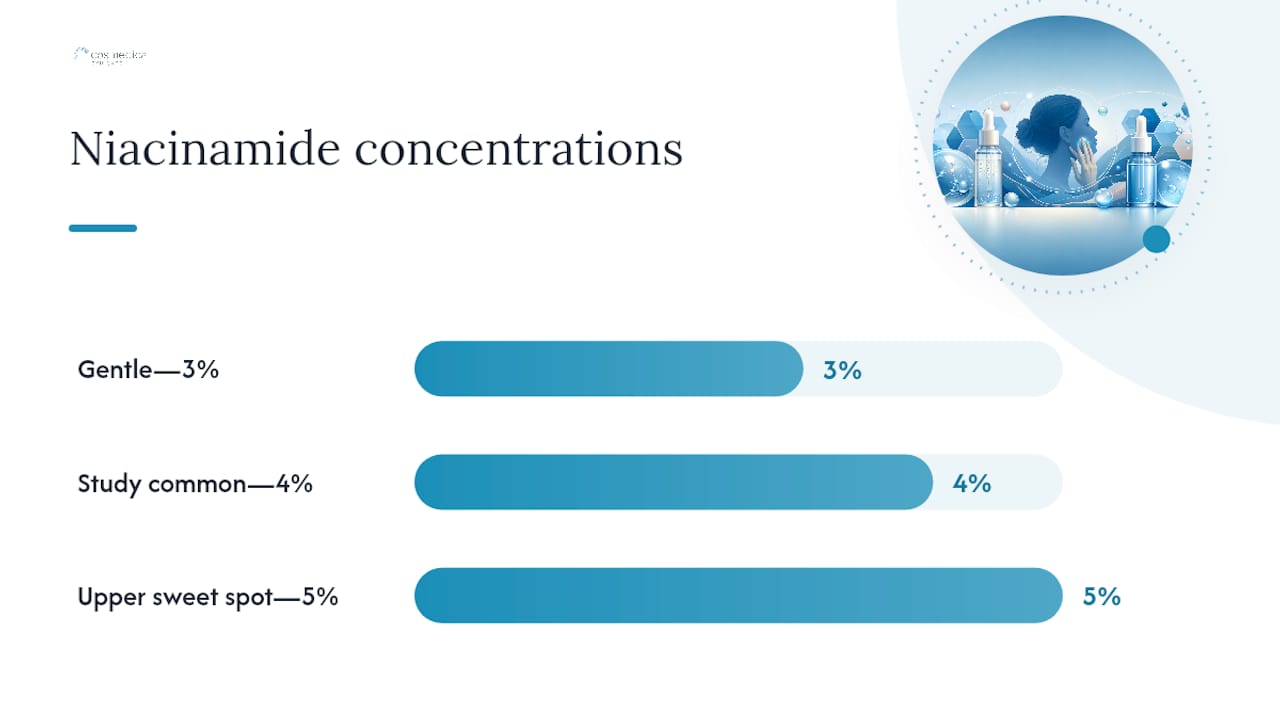
A Delphi consensus study of cosmetic dermatologists backs up niacinamide’s role in barrier support, redness reduction, and pigment improvement, with trials commonly using concentrations around 4% to see measurable change.
Here’s what that means for your timeline and shopping list:
- Expect 3% to 5% as the sweet spot for visible results without unnecessary risk of irritation.
- Give it 4 to 8 weeks before judging results. This is not an overnight ingredient.
- Look for it in serums if you want a concentrated daily dose, or in moisturizers if you want a gentler, cumulative approach.
- It suits oily, acne-prone, redness-prone, and uneven-toned skin especially well, and it’s gentle enough for sensitive skin at lower concentrations.
If you’re layering niacinamide with other actives already, our guide to pairing glycolic acid and niacinamide walks through how to avoid overloading your routine.
Which One Wins for Your Skin Concern?
The honest answer is that “winning” depends entirely on what your skin is actually complaining about. Hydration is an immediate, visible fix. Barrier repair, oil control, and pigment correction are gradual jobs that show up over weeks, not minutes.
Here’s where the confusion usually creeps in. People expect niacinamide to plump skin the way HA does, and it won’t, at least not directly. Niacinamide’s plumping effect (and it does have one) comes from a healthier barrier holding onto moisture better over time, not from instant water-binding. On the flip side, people expect hyaluronic acid to fade dark spots or calm redness because “it’s hydrating and hydrated skin looks better.” It doesn’t touch pigment or inflammation directly. It just makes skin look temporarily smoother and more radiant.
A few real-world scenarios make the choice easier:
- Flying tomorrow and your skin already feels like a raisin? Hyaluronic acid alone, applied generously and sealed with a moisturizer, solves the immediate problem.
- Dealing with post-breakout marks, oily T-zone, and general dullness? Niacinamide is doing the heavy lifting here, and it will outperform HA for this specific job.
- Combination skin with both dehydration and dullness? This is exactly the scenario where using both, rather than picking one, gets you further than either ingredient alone.
Can You Use Niacinamide and Hyaluronic Acid Together?
Yes, and this is one of the least controversial pairings in skincare. Dermatologist-sourced guidance consistently supports using niacinamide with hyaluronic acid as a layering combination, because the two ingredients don’t compete or cancel each other out. HA delivers water, niacinamide helps skin hold onto it and repair the barrier that’s supposed to keep it there.
The typical order goes like this:
- Cleanse your face and pat it slightly damp, not bone dry.
- Apply hyaluronic acid first, while skin still has a little moisture on it, so the humectant has something to grab.
- Layer niacinamide next, letting it absorb for a minute or two.
- Seal everything with a moisturizer or facial oil to lock the hydration in and prevent evaporation.
If your two products have wildly different textures (say, a thick niacinamide cream and a watery HA serum), apply thinnest to thickest instead of strictly following the order above. That general rule holds up regardless of which specific actives you’re layering.
Most people can use this combination once or twice daily. If you notice any tightness, redness, or small bumps under makeup, it’s usually a sign of over-layering, not an incompatibility between the two ingredients themselves.
Pro Tip: If your niacinamide serum starts “balling up” or pilling under moisturizer, let each layer sit for a full 60 to 90 seconds before adding the next. Rushing the absorption window is the number one cause of pilling, not the ingredients themselves.
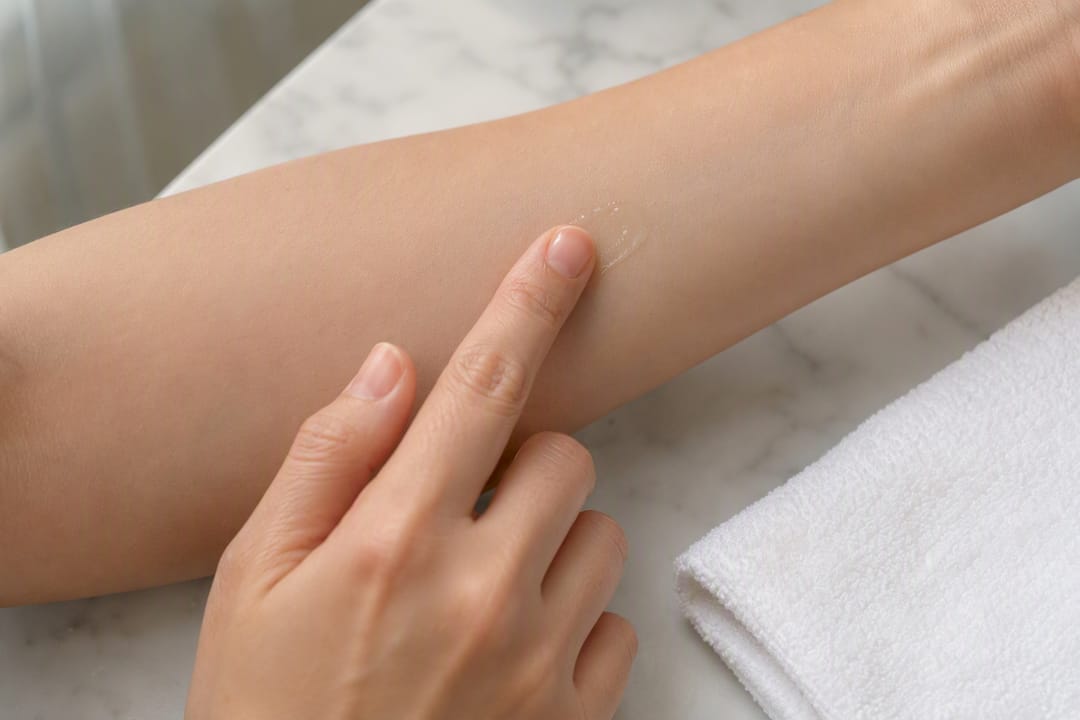
Before adding anything new, patch test on your inner arm or behind your ear for 24 to 48 hours. If irritation shows up, drop the frequency to every other day or reach for a lower concentration before giving up on the combination entirely. For a deeper look at how niacinamide behaves with other actives in a full routine, this pairing guide covers combinations beyond just HA.
A Decision Guide by Skin Concern
Rather than staring at two bottles wondering which one “wins,” match the ingredient to the specific problem sitting in front of you.
- Dehydration, tightness, or flaking: Hyaluronic acid is your priority. Apply on damp skin and seal with a moisturizer both morning and night.
- Fine lines from dehydration (not deep wrinkles): HA plumps the surface temporarily, which softens the look of fine lines caused by dryness. It won’t touch lines caused by lost collagen.
- Oily or acne-prone skin: Niacinamide takes the lead here, since it directly regulates oil production and calms the inflammation behind breakouts.
- Redness or rosacea-prone skin: Niacinamide’s anti-inflammatory action makes it the better single choice if you have to pick one.
- Hyperpigmentation or uneven tone: Niacinamide again, since it interferes with pigment transfer at the cellular level, something HA simply doesn’t do.
- Sensitive or compromised barrier: Start with a lower concentration niacinamide (around 3%) alongside HA, since a repaired barrier and steady hydration work hand in hand for calming reactive skin.
If your budget only stretches to one product right now, buy for your loudest complaint, not the ingredient with the better reputation. A dehydrated face doesn’t need niacinamide’s oil control. An oily, congested face doesn’t need more water-binding on the surface.
If you can run both, a simple AM and PM structure works for most skin types: hyaluronic acid every morning under sunscreen for all-day comfort, and niacinamide at night when your skin is doing its repair work anyway. Combination skin or anyone dealing with more than one concern at once can use both, both times a day, once their skin has adjusted to each ingredient individually.
How Much Niacinamide and Hyaluronic Acid Should You Use?
Concentration claims on packaging can be misleading, so it helps to know what the actual research supports before you spend money chasing a higher number.
For niacinamide, dermatologist consensus supports concentrations in the 3% to 5% range for visible improvement in redness, tone, and barrier function. Going above 10% doesn’t reliably deliver better results for most people, and it does raise the odds of flushing, stinging, or redness, particularly for those with reactive or compromised skin. More is not automatically better here.
Hyaluronic acid doesn’t really work the same way when it comes to percentages. A serum listing “2% hyaluronic acid” tells you almost nothing about how it will actually perform, because molecular weight and formulation determine how the ingredient behaves far more than the number on the label. This is a case where reading reviews and understanding formulation basics matters more than comparing percentages side by side.
A few safety basics apply to both ingredients:
- Patch test any new formulation for 24 to 48 hours before applying it to your whole face. Dermatology guidance consistently recommends this gradual introduction approach for new actives, not just these two.
- Always seal hyaluronic acid with a moisturizer. Skipping this step in a dry climate can leave skin feeling more parched than before you applied it.
- If you’re also using retinoids or strong acids (glycolic, salicylic), introduce niacinamide and HA first, let your skin adjust for a couple of weeks, then bring in the stronger active on alternating nights.
- Reduce frequency to every other day if you notice irritation, rather than stopping the ingredient altogether. Most reactions settle down once skin builds tolerance.
If you want to double up on hydration and antioxidant protection, pairing niacinamide with vitamin C is generally fine despite old myths claiming otherwise, and the same logic applies to layering vitamin C and hyaluronic acid: apply the vitamin C serum first on clean skin, then follow with HA to lock in moisture before your moisturizer.
What Do Experts Say About These Ingredients Around Procedures?
Skincare actives don’t get a free pass just because they’re gentle in a bottle, especially in the days surrounding an aesthetic procedure like a peel, laser treatment, or microneedling session. This is exactly where an international expert consensus becomes genuinely useful instead of just interesting trivia.
A recent Delphi consensus among cosmetic dermatologists and aesthetic specialists concluded that ceramides, cholesterol, hyaluronic acid, niacinamide, and peptides are appropriate across every phase of care: before treatment, during the peri-treatment window, in early aftercare, and through longer-term follow-up.
That’s a meaningfully different status than most active ingredients get. Retinoids, strong acids, and fragrance are typically paused around procedures because they can aggravate healing skin. HA and niacinamide are the rare exceptions that most experts agree stay on the table.
The practical logic makes sense once you see the mechanisms side by side. Freshly treated skin loses water fast, so hyaluronic acid helps replace it without introducing anything harsh. Niacinamide’s anti-inflammatory and pigment-modulating action becomes especially valuable for reducing the risk of post-inflammatory hyperpigmentation during recovery, a concern that matters even more for patients with deeper skin tones, where PIH risk runs higher after any barrier-disrupting treatment.
The rule of thumb worth remembering: HA supports rehydration, but it doesn’t replace pigment-directed care. If you’re recovering from a procedure, niacinamide is doing a job hydration alone can’t cover.
Why I Think Most People Are Overthinking This Choice
Here’s what I’ve noticed after digging through how this debate actually plays out online: people treat niacinamide and hyaluronic acid like rival products fighting for one open spot on the bathroom shelf. That framing is backwards. The research and the dermatology consensus both point the same direction: these ingredients solve different problems, and skin rarely has just one problem.
What gets underestimated is how much a stronger barrier (niacinamide’s job) makes hydration (HA’s job) actually stick. Slapping hyaluronic acid onto a compromised barrier is a bit like watering a cracked pot. Some of it holds, but a lot leaks right back out. Fix the barrier first, or at least alongside it, and your hydration budget goes a lot further.
Some skincare brands formulate with overlapping hydration and barrier support in mind rather than treating these as separate categories to choose between.
— Thomas
Start Your Routine With Cosmedica Skincare
You don’t need to buy two separate products, guess at percentages, and hope they play nice together. Cosmedica-skincare formulates hydrating and barrier-supporting serums specifically to be layered, so you’re not left wondering whether your niacinamide serum and your HA serum will actually cooperate on your skin.
If dehydration is your main complaint, start with a hyaluronic acid serum applied on damp skin and sealed with a moisturizer. If redness, oil, or uneven tone is the bigger issue, a niacinamide serum should lead your routine instead. And if you’re dealing with a bit of both, which is genuinely most people, the Super Serum Set pairs hydration and treatment serums together so you’re not guessing at layering order on your own.
Browse the full lineup at Cosmedica-skincare and build a routine around the one thing your skin is actually asking for.
Sources
- Hyaluronic acid for skin: benefits, how to use it, and side effects (Harvard Health)
- Skincare ingredients recommended by cosmetic dermatologists: A Delphi consensus study (JAAD abstract)
- Niacinamide vs. Hyaluronic Acid: Which One Is Better? (Women’s Health)
FAQ
Can you use hyaluronic acid and niacinamide together?
Yes. They’re widely considered a compatible, complementary pairing, with hyaluronic acid providing hydration and niacinamide supporting the barrier that helps skin retain it.
What should you not mix with niacinamide?
Niacinamide pairs fine with most ingredients, including vitamin C despite old myths, but layering it with strong acids or retinoids on the same night can increase irritation risk, so alternate nights if your skin is sensitive.
Is it better to use hyaluronic acid or niacinamide at night?
Niacinamide is often favored at night since it works gradually on repair and pigment while you sleep, while hyaluronic acid is useful both morning and night for hydration whenever your skin needs it.
Which is better for glowing skin, niacinamide or hyaluronic acid?
Hyaluronic acid gives faster, visible radiance by plumping the surface, while niacinamide builds a more even, calmer complexion over several weeks, so using both together tends to deliver the most complete glow.