

Peptides vs Retinol: Which One Fits Your Skin Goals?
For most people who can tolerate it, retinol delivers faster, stronger anti-aging results, while peptides work more gently and suit sensitive skin, pregnancy, or early prevention. Neither one is “better” in a vacuum. They’re built for different jobs, and once you see how each one works, the choice practically makes itself.
- Speed vs. tolerance: Retinol usually shows textural change in weeks but often causes dryness or peeling first. Peptides work slower with far less irritation risk.
- When to reach for peptides: Pregnancy, breastfeeding, rosacea-prone or highly reactive skin, or when you just want a gentler entry point into anti-aging care.
- When retinol wins: Established fine lines, acne, and pigmentation, when you want proven, faster change and can manage a short adjustment period.
Stick around. We’ll walk through how to layer both, when to skip one entirely, and two starter routines you can actually follow.
Key Takeaways
Retinol delivers faster, better-studied anti-aging results but requires a gradual introduction, while peptides offer gentler, cumulative support that suits sensitive skin and pregnancy.
| Point | Details |
|---|---|
| Speed vs. tolerance | Retinol shows textural change in weeks; peptides work more slowly with far less irritation risk. |
| Adjustment window | Expect redness or peeling for 4 to 8 weeks when starting retinol, especially above 0.05% strength. |
| Layering order | Apply retinol first, wait 20 to 30 minutes, then follow with peptides to avoid pH-related instability. |
| Pregnancy default | Peptides are the safe choice during pregnancy and breastfeeding, since retinoids are avoided in that window. |
| Starter routine | Cosmedica-skincare’s Super Serum Set pairs peptide and active serums for a lower-friction way to build both into one routine. |
Table of Contents
- Peptides vs Retinol: What Peptides Actually Do for Skin
- What Is Retinol, and How Strong Is It Compared to Other Retinoids?
- Peptide vs Retinol: Mechanism, Speed, and Who Should Choose Which
- Can You Use Peptides and Retinol Together?
- How Do You Choose Between Peptides and Retinol for Your Skin?
- How Long Until You See Results From Peptides or Retinol?
- What Does the Research Actually Say?
- Why We Think the “Pick One” Framing Misses the Point
- Try Cosmedica-skincare’s Starter Routine for Peptides and Retinol
- Sources
- FAQ
Peptides vs Retinol: What Peptides Actually Do for Skin
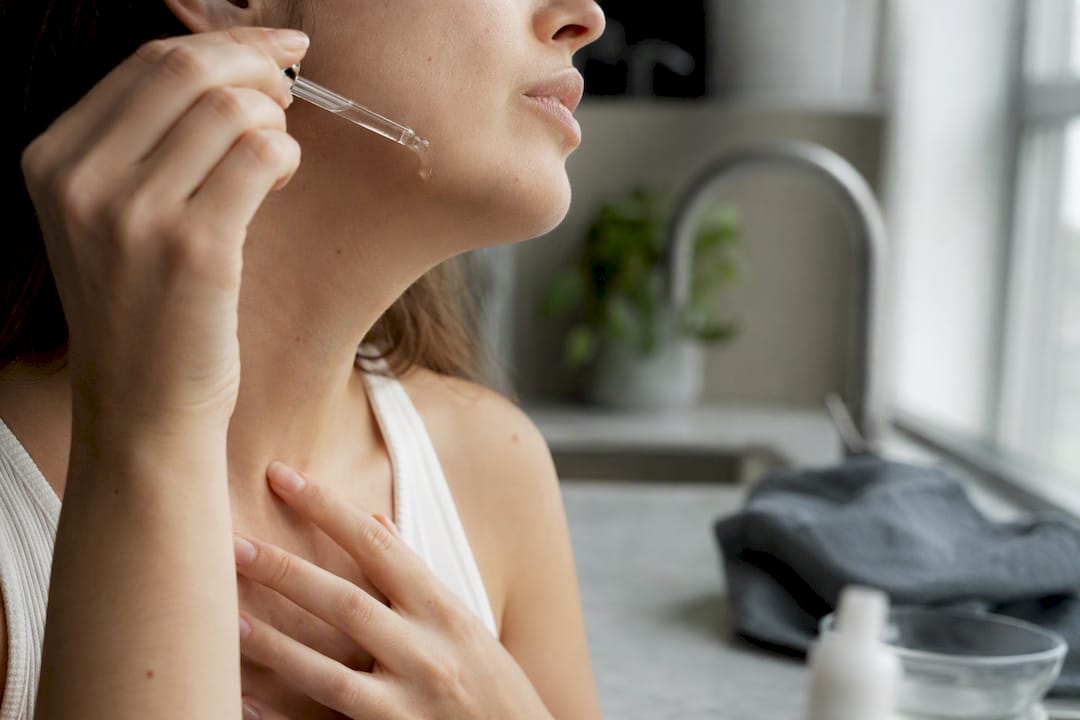
Peptides are short chains of amino acids, the same building blocks your skin uses to make collagen and elastin. When applied topically, certain peptides act like little messengers, tapping your skin cells on the shoulder and telling them to get back to work producing collagen or repairing the barrier. That’s a very different job than retinol’s approach, which we’ll get to in a moment.
Not all peptides do the same thing, and formulas can combine several types:
- Signal peptides (like Matrixyl) prompt collagen and elastin production, targeting fine lines and loss of firmness.
- Carrier peptides (like copper peptides) escort trace minerals such as copper into skin, supporting wound healing and enzyme activity.
- Enzyme-inhibitor peptides slow the breakdown of existing collagen, essentially playing defense instead of offense.
- Matrix-mimetic peptides imitate fragments of collagen itself, tricking skin into ramping up repair.
Most of these show up in serums, moisturizers, and the occasional peptide-infused mist, since they’re stable and gentle enough for daily, low-drama use. The evidence backing them is encouraging but uneven: plenty of lab studies and small clinical trials show real improvements in firmness and hydration, though the research base isn’t nearly as deep as decades of retinoid data. Peptides are generally well tolerated and often get recommended specifically for people who can’t handle retinoids.
Pro Tip: Check the ingredient list for the peptide’s full name (not just “peptide complex”) and look for it near the top of the list. A well-formulated peptide serum usually pairs it with barrier-supporting ingredients like ceramides or niacinamide, which help the peptide actually stick around long enough to work.
What Is Retinol, and How Strong Is It Compared to Other Retinoids?
Retinol sits in the middle of a vitamin A family tree that runs from mild to prescription-strength. Retinyl esters are the gentlest entry point, retinol comes next, retinaldehyde (retinal) is a notch stronger and converts to active form faster, and tretinoin, available only by prescription, sits at the top. Each conversion step in the body costs potency, so the fewer steps between the product and the active retinoic acid your receptors use, the stronger and faster it tends to act.
Retinol speeds up cell turnover and stimulates collagen production, which is why it earns credit for several distinct benefits:
- Smoother texture from faster shedding of dull, dead surface cells
- Softer fine lines and wrinkles through increased collagen synthesis
- More even pigmentation as cell turnover disrupts melanin clumping
- Fewer breakouts since retinol keeps pores from clogging as easily
The catch: new users commonly experience redness, dryness, peeling, and stinging during an initial 4 to 8 week adjustment window, and irritation risk climbs noticeably once concentrations pass low mid-range percentages. This isn’t a sign something’s wrong. It’s your skin adapting to faster turnover. The fix is almost always to start slower than you think you need to, moisturize generously, and never skip sunscreen the next morning, since new skin cells are more UV-sensitive.
Our retinol facial serum guide breaks down concentration options if you’re trying to figure out where to start.
Peptide vs Retinol: Mechanism, Speed, and Who Should Choose Which
The core difference comes down to how each ingredient talks to your skin. Retinol binds to nuclear retinoic acid receptors inside skin cells, essentially rewriting the instructions for how fast they divide and how much collagen they churn out. Peptides work more like a tap on the shoulder, signaling cells to ramp up repair without forcing a wholesale change in cell behavior.
That mechanism gap explains almost everything else about the peptide vs retinol debate:
- Speed: Retinol tends to show visible texture change within weeks. Peptides build results more gradually, often over months, because they’re supporting a slower structural process rather than accelerating turnover.
- Evidence strength: Retinoids have the deeper research base, with decades of clinical data tying them to measurable collagen and wrinkle improvements. Peptide research is growing fast but remains more fragmented across different peptide types.
- Tolerability: Peptides rarely cause irritation, which makes them the safer default for rosacea, eczema-prone skin, or anyone who’s tried retinol before and broken out in a rash.
- Pregnancy and breastfeeding: Retinoids are generally avoided during pregnancy and while breastfeeding. Peptides carry no such warning, making them the practical stand-in during that window.
Dermatologists often frame this as a straightforward trade-off between speed and tolerance: retinol for faster, stronger change if your skin can handle the adjustment; peptides for a longer runway with far less drama along the way.
If you want a one-line rule: wrinkles and acne lean retinol, sensitive or reactive skin leans peptides, pregnancy defaults to peptides, and early prevention in your twenties can often stay peptide-only for years before retinol becomes necessary.
Can You Use Peptides and Retinol Together?
Yes, and for most skin types, combining them is one of the smartest moves you can make. The old worry that peptides and retinol “cancel each other out” doesn’t hold up. Modern formulations don’t show any broad chemical conflict between the two. The one real concern is that some peptides can lose stability at very low pH, and retinol products tend to run more acidic. Sequential layering solves that problem almost entirely.
Here’s a layering sequence that works for most evening routines:
- Cleanse and pat dry. Damp skin dilutes actives unpredictably.
- Apply retinol first, in a thin layer avoiding the eye area and lip line.
- Wait 20 to 30 minutes. This gives retinol time to absorb and sidesteps the pH clash that can destabilize sensitive peptides.
- Follow with your peptide serum or moisturizer, pressed gently into skin rather than rubbed.
- Finish with a barrier-supporting cream if your skin still feels tight or dry.
A few ground rules keep this simple: never mix two actives in your palm before applying, since you lose control over concentration and layering order. Skip stacking retinol with other strong actives like AHAs on the same night until your skin proves it can handle one at a time. And always patch-test any new retinol strength on your inner arm for two nights before it touches your face.
Pro Tip: If retinol irritation flares up, pause it for a few nights and lean on your peptide moisturizer alone. Peptides support barrier repair without adding to the irritation, which makes them a genuinely useful recovery tool, not just a maintenance product.
Curious about the order with other hydrators too? Our breakdown of retinol and hyaluronic acid sequencing covers a similar layering logic.
How Do You Choose Between Peptides and Retinol for Your Skin?
Your skin type and your primary goal should drive this decision more than trends or what’s trending on social media. Here’s how the choice tends to break down by concern:
- Fine lines and rough texture: Retinol is the faster, better-studied option, but pair it with a peptide moisturizer to smooth the adjustment period.
- Acne and clogged pores: Retinol again, since its turnover effect directly prevents the buildup that clogs follicles.
- Sensitive or rosacea-prone skin: Start with peptides. If you eventually want more potency, introduce retinol at the lowest possible concentration and go slow.
- Pregnancy or breastfeeding: Peptides only. Retinoids are off the table here, no exceptions.
- Early prevention in your twenties or early thirties: Peptides can carry you for years before retinol becomes necessary.
Two Starter Schedules to Try for 8 to 12 Weeks
Schedule A: Retinol-focused. Nights 1 to 2 of week one, apply a low-strength retinol (0.025% to 0.05%) for 20 minutes, then rinse and moisturize, a technique sometimes called a “short-contact” approach for very reactive skin. Build to full nightly use by week 4 if tolerated, always following with a rich moisturizer and never skipping morning sunscreen.
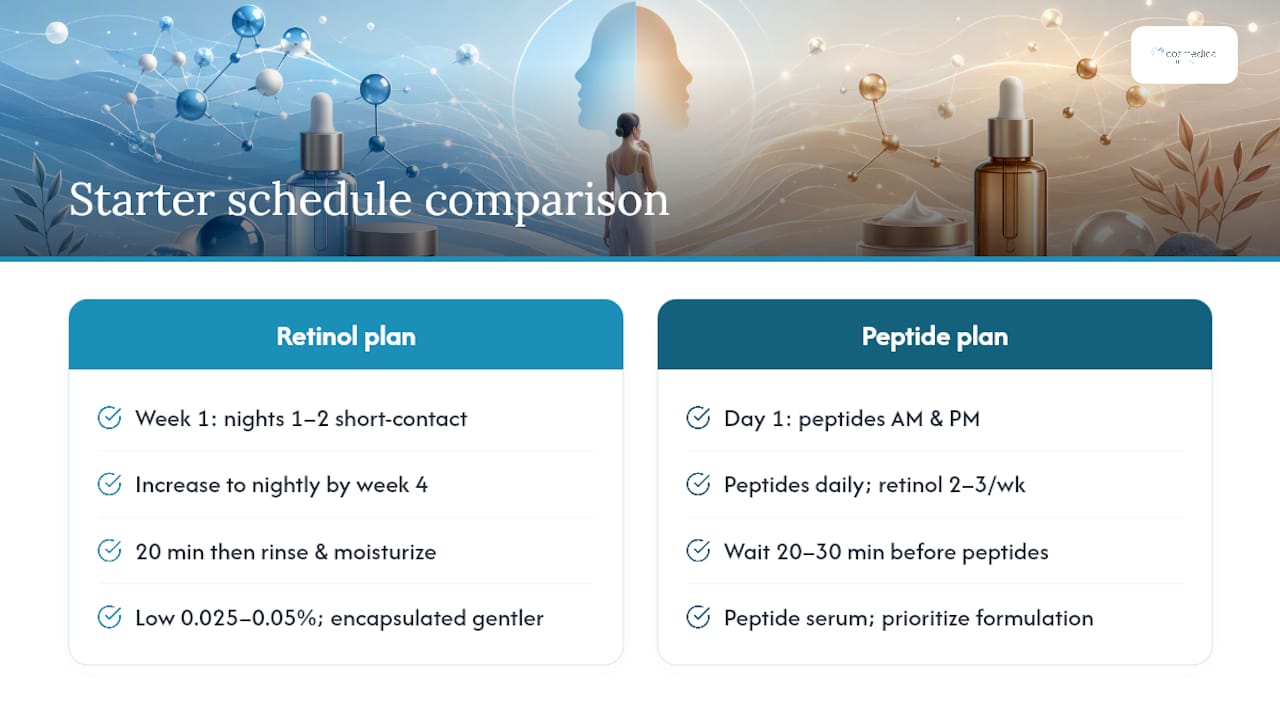
Schedule B: Peptide-first or combination. Use a peptide serum every morning and evening from day one. Introduce retinol two to three nights a week, waiting the full 20 to 30 minutes before layering peptides on top, and increase frequency only once skin shows no redness or flaking for a full week.
Watch for red flags that mean it’s time to stop and see a dermatologist: swelling, blistering, intense burning, or a rash that spreads beyond the treated area. Ordinary peeling and mild redness are expected. Those other symptoms are not.
One detail that gets overlooked constantly: formulation matters as much as the active ingredient itself. Encapsulated retinol releases more slowly and irritates less than raw retinol in the same concentration, and a peptide buried in a poorly designed vehicle may never penetrate deep enough to do anything. Consistency with a well-formulated product beats occasional use of a stronger one almost every time. Our collection of retinol serums sorts options by strength if you’re building either schedule.
How Long Until You See Results From Peptides or Retinol?
Patience looks different depending on which ingredient you’re using, so track progress on a realistic timeline rather than checking the mirror daily.
- 2 to 6 weeks: Retinol often shows smoother texture and slightly less visible pore congestion. Peptides may improve hydration and plumpness first.
- 8 to 12 weeks: Retinol users typically notice softer fine lines. Peptide users start seeing firmer-feeling skin as collagen support compounds.
- 3 to 6 months: Deeper wrinkle improvement shows up for both, though retinol usually gets there first, with peptides catching up as their cumulative, structural effects build.
Retinol tends to show epidermal, surface-level change sooner because it’s directly accelerating turnover. Peptides work on a slower, structural timeline, so judging them after two weeks is setting yourself up for disappointment. Take a monthly photo in the same lighting rather than relying on memory, and patch-test any new formula for 48 hours before applying it to your whole face.
What Does the Research Actually Say?
The consensus among dermatologists is fairly settled: retinol remains the best-studied topical anti-aging ingredient, with predictable side effects and a long track record. Peptides are the promising, gentler alternative, though the trials backing specific peptide types are often smaller and more varied in design.
A few standout studies shape that picture:
- A randomized, double-blind trial found that a cyclized hexapeptide-9 formulation outperformed retinol on wrinkle and barrier measures over 56 days, a genuinely notable result, though the researchers themselves called for replication and longer follow-up before drawing broad conclusions.
- Decades of retinoid research tie topical retinoids to measurable collagen synthesis and reduced collagen breakdown, the kind of long clinical track record peptides haven’t fully built yet.
- A clinical assessment of a low-dose retinol and pea-peptide formulation reported improvement across nine skin parameters over eight weeks with no irritation reported, suggesting that thoughtful formulation can narrow the tolerability gap.
Where the evidence still falls short: peptide types vary enormously, so a study on one peptide rarely tells you much about another, and most peptide trials remain smaller than the large-scale retinoid research already on record. If you’re managing a skin condition like active rosacea or cystic acne, loop in a dermatologist before building a new routine around either ingredient.
Why We Think the “Pick One” Framing Misses the Point
Most of the debate treats peptides and retinol like rival teams, but that framing doesn’t match how skin actually responds to consistent care. The real failure point for most people isn’t choosing the “wrong” ingredient. It’s quitting retinol during that rough first month because nobody warned them dryness and peeling were normal, temporary, and worth pushing through with the right support.
That’s exactly where pairing a peptide moisturizer with a lower-strength retinol night product tends to change outcomes. The peptide doesn’t compete with retinol. It buys you enough comfort to stay consistent long enough for retinol to actually do its job. Sunscreen isn’t optional here either. Skipping it while on retinol undoes progress faster than almost any other mistake we see people make.
Track your results with monthly photos, not daily mirror checks, and increase strength only after your skin proves it can handle what you’re already using.
Try Cosmedica-skincare’s Starter Routine for Peptides and Retinol
If you’re ready to put this into practice without guessing at concentrations or wondering which products actually work together, Cosmedica-skincare’s Super Serum Set pairs concentrated actives designed to complement each other rather than compete, which solves the exact layering confusion this article just walked through. Start with a patch test on your inner arm for two nights before applying anything new to your face, ease into retinol two to three nights a week before going nightly, and never skip sunscreen the morning after. If skin still feels tight, our 2.5% retinol night cream offers a milder entry point than higher-strength serums. Browse the full retinol collection to find the strength that matches where your skin is today, not where you wish it were.
Sources
- Retinol vs Peptides: Can You Combine Them for Faster Results? | Health & Aesthetics
- PubMed entry related to retinoid mechanisms and clinical use
This article is general information, not a substitute for advice from a qualified doctor. Consult a qualified healthcare professional about your own circumstances before acting on anything here.
FAQ
Do Peptides Actually Work for Wrinkles?
Yes, though more gradually than retinol. Peptides support collagen production and hydration, and one randomized trial found a specific peptide formulation matched or exceeded retinol on wrinkle measures over 56 days.
Which Is Best for Anti-Aging, Retinol or Peptides?
Retinol has the deeper, longer-running evidence base and tends to work faster, making it the stronger overall pick for anti-aging if your skin tolerates it. Peptides are the better choice when sensitivity, pregnancy, or reactive skin rules retinol out.
What Should You Not Layer With Peptides?
Avoid mixing peptides directly with very low pH products or applying them in the same layer as retinol. Waiting 20 to 30 minutes after retinol before applying peptides sidesteps most stability concerns.
What Do Koreans Use Instead of Retinol?
Many Korean skincare routines favor gentler actives like peptides, niacinamide, and centella asiatica alongside slow, gradual retinol introduction rather than skipping retinoids entirely. The broader philosophy leans on barrier support and consistency over aggressive potency.
Can I Use a Peptide Serum and a Retinol Serum in the Same Routine?
Yes, and this is one of the most effective combinations for both results and comfort. Apply retinol first, wait 20 to 30 minutes, then layer your peptide serum to support barrier recovery while retinol does its work.
Recommended
- Glycolic Acid vs. Retinol: Which is Better for Your Skin Type? – Cosmedica Skincare
- Examples of Retinol Products: Your Complete Guide – Cosmedica Skincare
- Hyaluronic Acid and Retinol: Can You Use Both? – Cosmedica Skincare
- Retinol Or Hyaluronic Acid First? The Simple Order That Makes Sense – Cosmedica Skincare