

Retinol Irritation Relief: Cosmedica's Repair First Restart
If your retinol is burning or your skin feels raw, stop the retinol and start barrier repair right now. Switch to a fragrance-free, ceramide-based moisturizer, skip every other active, and keep sun exposure to a minimum. If you see blistering, spreading rash, or pain that won’t quit, call a dermatologist instead of waiting it out.
TL;DR:
- Barrier damage symptoms include persistent redness, raw or shiny skin, and stinging with water or moisturizer, lasting approximately two to four weeks.
- Repair involves using ceramide, panthenol, and hyaluronic acid-rich products, with petrolatum as an occlusive layer to protect and seal the skin.
- During recovery, avoid actives like retinol, acids, vitamin C, and benzoyl peroxide, and only restart retinol after two weeks without stinging or irritation.
- Reintroduce retinol gradually, starting with low concentrations and short contact times, while buffering with a moisturizer to improve tolerability.
- Seek dermatologist consultation if symptoms include blistering, spreading rash, oozing, swelling, or escalating pain rather than waiting for natural resolution.
Table of Contents
- What Steps Give the Fastest Retinol Irritation Relief?
- Is This Normal Retinization or Actual Barrier Damage?
- What Ingredients Actually Repair a Damaged Barrier?
- How Do You Restart Retinol Without Repeating the Damage?
- When Should You See a Dermatologist Instead of Waiting?
- Cosmedica-skincare’s Take on Repair-First Formulations
- Which Moisturizers Actually Help During Recovery?
- Does Product pH Affect How Much Retinol Irritates Your Skin?
- Can Diet or Lifestyle Make Your Skin More Reactive to Retinol?
- Are There Retinol Alternatives That Cause Less Irritation?
- Why “No Pain, No Gain” Is the Wrong Way to Think About Retinol
- Rebuild Your Barrier With Cosmedica-skincare’s Repair-Focused Line
- Sources
- FAQ
What Steps Give the Fastest Retinol Irritation Relief?
The first 72 hours decide whether this becomes a two-week annoyance or a month-long setback. Your skin barrier is compromised right now, and every product choice either helps it patch itself back together or picks at the wound.
Here’s the priority order:
- Stop every active ingredient. That means retinol, exfoliating acids, vitamin C, and benzoyl peroxide, all off the table until skin calms down.
- Cool it down, briefly. A cool (not ice-cold) compress or a short splash of cool water for a few minutes can quiet the stinging without stripping what’s left of your barrier.
- Switch to bare-bones basics. A gentle, fragrance-free cleanser followed by a ceramide moisturizer applied while skin is still slightly damp locks in more hydration than applying it to dry skin.
- Seal raw patches. A thin layer of plain petrolatum over any shiny or cracked areas acts as a physical shield while new skin cells rebuild underneath.
- Sunscreen, every single morning. Retinol use increases sun sensitivity, and irritated skin burns even faster, so broad-spectrum SPF isn’t optional during recovery.
- Snap a photo today. You’ll want a baseline to compare against in a week, and it’s genuinely useful information if you end up needing a dermatologist’s opinion.
Skip makeup, skip exfoliating tools, and skip the temptation to “just try one more product” that promises a quick fix.
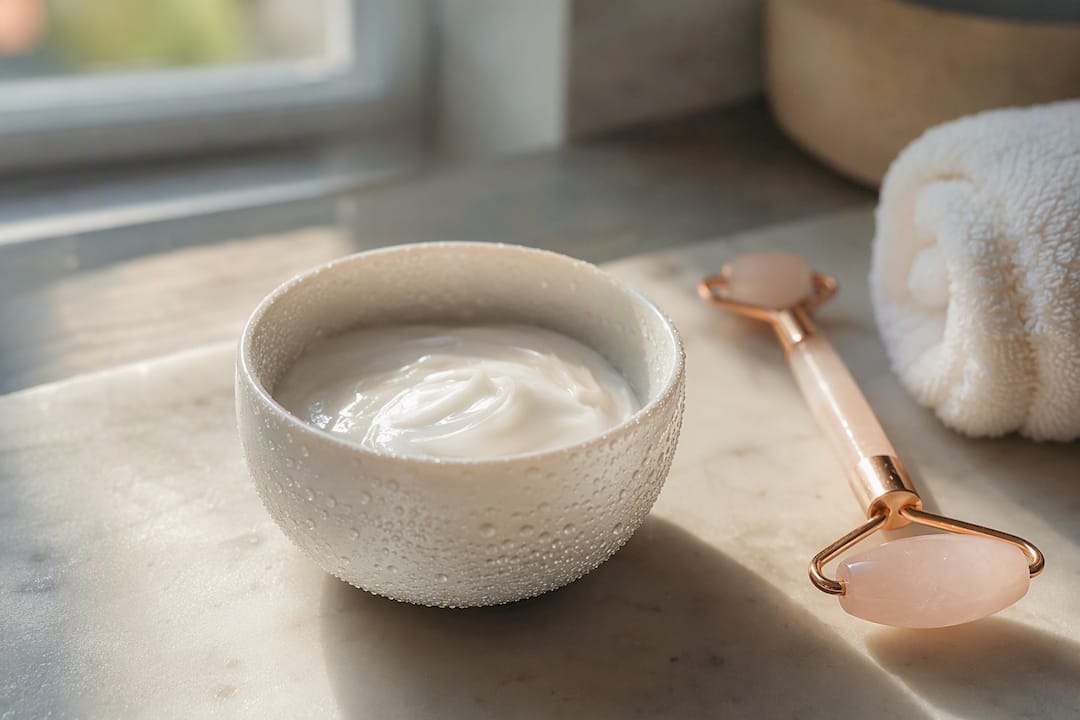
Pro Tip: Keep your moisturizer in the fridge for the first two or three days. The cool temperature on application gives an instant, if temporary, break from the stinging, and it feels genuinely soothing when your skin is at its angriest.
Is This Normal Retinization or Actual Barrier Damage?
Mild flaking and tightness are your skin adjusting, not a red flag. Burning that intensifies over hours or skin that looks shiny and raw is a different problem entirely, and it calls for a different response.
Board-certified dermatologists draw a fairly clear line here: normal purging involves dryness and light flaking that improves on its own within a week or two, even without changing your routine. Barrier damage looks and feels different. Water stings. Your moisturizer stings. Redness sticks around instead of fading day by day, and skin can look almost patent-leather shiny in the worst patches.
Use this quick check:
- Mild retinization: light flaking, mild tightness, no stinging with plain water. Expect improvement within days to two weeks.
- Barrier damage: burning with water or moisturizer, persistent redness, raw or shiny skin, visible cracking. Expect a recovery window of roughly two to four weeks with a focused repair routine.
If you’re not sure which camp you’re in, the water test settles it fast. Splash your face with plain water. If it stings, treat it as barrier damage and start repairing, not retinizing.
What Ingredients Actually Repair a Damaged Barrier?
Ceramides, panthenol, and hyaluronic acid do the heavy lifting here, and understanding what each one does helps you stop wasting money on products that sound soothing but do nothing structural.
Ceramides are the lipids that hold your skin’s outer layer together, and retinol use burns through them faster than your skin can replace them on its own. Replacing ceramides topically is closer to re-mortaring bricks than moisturizing in the traditional sense. Panthenol (provitamin B5) supports the skin’s own re-epithelialization process, essentially helping new surface cells knit together faster. Hyaluronic acid pulls water into the upper layers, and HOCl (hypochlorous acid) mists work as a gentle antimicrobial and anti-inflammatory step, useful if skin is cracked enough to worry about bacteria getting in.
A simple repair routine looks like this:
- AM: gentle cleanser, HOCl mist, ceramide moisturizer, mineral or broad-spectrum sunscreen.
- PM: gentle cleanser, ceramide moisturizer, then a thin layer of petrolatum or another occlusive over any dry or cracked spots.
For genuinely severe inflammation, some clinicians suggest a brief course of 1% hydrocortisone ointment, used sparingly, kept away from the eye area, and limited to about a week. Ointment formulations tend to carry fewer preservatives than creams, which matters when skin is already compromised. Skip AHAs, BHAs, benzoyl peroxide, and vitamin C entirely until the acute phase passes.
Pro Tip: Layer thinnest to thickest. Mist, then moisturizer, then occlusive. Piling on a thick cream before a lighter one just traps the wrong ingredients against irritated skin.
How Do You Restart Retinol Without Repeating the Damage?
Wait until you’ve gone two full weeks without stinging from plain water or your regular moisturizer before touching retinol again. That functional checkpoint matters more than counting days on a calendar, since everyone’s repair timeline runs a little differently.
Once you clear that bar, restart slow:
- Week 1: one application, lowest concentration available, roughly 0.025% to 0.05%.
- Weeks 2 to 3: two nights per week if there’s no stinging or flaking beyond mild.
- Week 4 onward: every other night, only if skin stays calm at the previous frequency.
Buffering tactics make a real difference here. The “sandwich method,” moisturizing before and after applying retinol, improves tolerability without measurably reducing effectiveness. Short-contact application (applying retinol for twenty to thirty minutes, then rinsing) is another option worth trying if even buffered application stings. Mixing a small amount of retinol directly into your moisturizer in your palm before applying dilutes it further still. Keep the ceramide and panthenol routine running in the background the entire time, and resist pairing retinol with any other active until your skin has proven it can handle the retinol alone.
Pro Tip: Browse low-concentration retinol options before you restart. Starting at the right strength the second time around is the single easiest way to avoid a repeat trip through recovery.
When Should You See a Dermatologist Instead of Waiting?
Some symptoms are beyond what a moisturizer and patience can fix. Blistering, spreading rash, swelling, increasing oozing, or pain that keeps escalating rather than easing are all reasons to book a dermatology or urgent care visit rather than waiting another day.
Bring these details to the appointment:
- A rough timeline of when symptoms started and how they’ve changed
- The exact products you were using, including concentration and frequency
- Photos from the past week showing progression
- Whether your regular moisturizer helps, does nothing, or makes it worse
A clinician might prescribe a short hydrocortisone ointment course, topical antibiotics if infection looks likely, or patch testing if the reaction pattern suggests an allergy rather than straightforward irritation. That last option matters more than people realize. Not every “retinol reaction” is actually retinol. Sometimes it’s a fragrance or preservative in the same product.
Cosmedica-skincare’s Take on Repair-First Formulations
Cosmedica-skincare builds its retinol and barrier-support lines around a repair-first philosophy: fragrance-free formulas, ceramide-forward moisturizers, and staged retinol concentrations designed so you’re not choosing between results and comfort. Product strength and supporting ingredients are calibrated for gradual introduction, not aggressive daily use from day one. That structure reflects broader dermatology guidance on retinoid dermatitis and severity-based management rather than a one-size-fits-all routine.
Which Moisturizers Actually Help During Recovery?
Not every “hydrating” moisturizer helps a damaged barrier, and some can sting simply from added fragrance or alcohol-based preheating agents. What you want is short and specific: ceramides high on the ingredient list, panthenol or allantoin for soothing, hyaluronic acid for water content, and zero added fragrance.
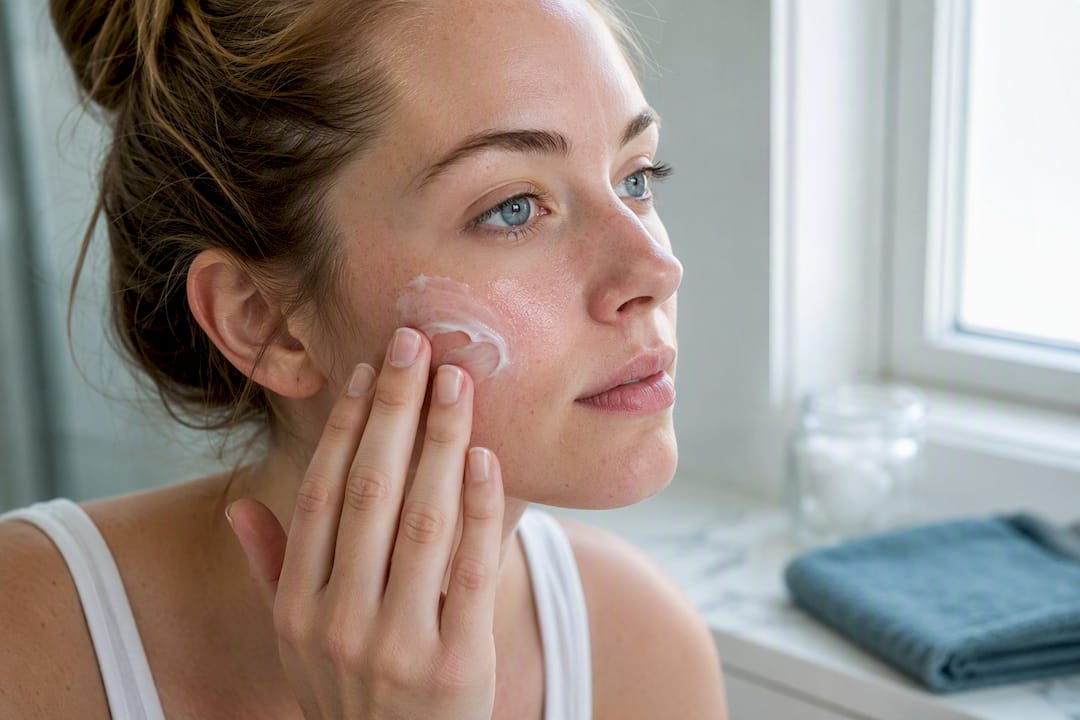
Texture matters more than most people expect. A lightweight lotion feels nice but often isn’t occlusive enough for genuinely raw skin, while a rich balm or cream with squalane or shea butter creates the seal that lets damaged skin rebuild underneath without losing moisture to the air. If your face feels tight an hour after moisturizing, the formula isn’t occlusive enough for where you are right now.
Cosmedica-skincare’s Moisturizers collection leans toward exactly this profile: fragrance-free, ceramide-rich formulas built for compromised skin rather than for layering under makeup. For genuinely cracked or flaking patches, a plain occlusive like petrolatum applied as a final step at night still outperforms fancier options, mostly because it does one job (seal moisture in) without adding anything your irritated skin has to process or react to. Save the fancier serums and treatment layers for once your barrier has actually rebuilt.
Does Product pH Affect How Much Retinol Irritates Your Skin?
Yes, and it’s one of the more overlooked variables in retinol tolerance. Retinol itself performs best in a slightly acidic to neutral formulation, but pairing it with a low-pH product (many exfoliating acids sit around pH 3 to 4) stacks two irritants that individually might be fine but together overwhelm the skin’s acid mantle.
Your skin’s natural surface sits around pH 4.5 to 5.5, and that acidity supports the enzymes responsible for shedding dead skin cells normally and maintaining the barrier’s lipid structure. Formulations that swing too far from that range, whether too acidic or too alkaline, can disrupt those enzymes and worsen sensitivity regardless of what active ingredient is involved.
This is part of why encapsulated or buffered retinol formulas tend to cause less irritation than raw, unbuffered retinol at the same percentage. The delivery system controls release and reduces the direct pH shock to skin. It’s also why layering retinol directly under or over a high-strength acid toner is one of the more common self-inflicted causes of “retinol burn” that actually has more to do with formulation stacking than the retinol concentration itself.
Can Diet or Lifestyle Make Your Skin More Reactive to Retinol?
Skin that’s already under stress from other directions tends to react harder to retinol, even at a concentration that was previously fine. Dehydration is the most direct link.
Alcohol intake and poor sleep both show up on skin as a compromised barrier before they show up anywhere else, since both interfere with the skin’s overnight repair processes. Diets low in essential fatty acids can also thin the lipid reserves ceramides depend on, making the barrier inherently more fragile before retinol ever enters the picture.
Hormonal shifts matter too. Many people report needing to dial back retinol frequency around their period or during other hormonal fluctuations, when skin runs more reactive across the board. None of this means diet fixes retinol irritation on its own, but it explains why the same product and routine can feel fine one month and brutal the next. If your skin suddenly starts reacting to something it previously tolerated, it’s worth asking what else changed before assuming the product itself is the problem.
Are There Retinol Alternatives That Cause Less Irritation?
Several retinoid derivatives and plant-based alternatives offer some of retinol’s benefits with a gentler irritation profile, though none carry quite the same depth of research behind them yet.
Retinaldehyde converts to retinoic acid in fewer steps than retinol, which some people tolerate better, though it can still cause similar dryness at higher strengths. Encapsulated retinol, where the molecule is wrapped in a delivery system that releases it gradually, reduces the surface-level irritation spike common with traditional formulas. Bakuchiol, a plant-derived compound, has become a popular substitute for people who can’t tolerate retinoids at all, though its research base is considerably thinner than retinol’s decades of clinical study.
For anyone specifically rebuilding tolerance after a bad reaction, staying within the retinol family but dropping concentration and frequency, rather than switching ingredients entirely, is usually the more reliable path back to results. Alternatives are worth exploring if repeated attempts at reintroduction keep failing, not as a first substitute the moment irritation shows up.
Why “No Pain, No Gain” Is the Wrong Way to Think About Retinol
Conventional retinol advice loves to frame irritation as proof the product is working, and that framing has done real damage to a lot of people’s skin barriers. Burning is not a badge of effectiveness. It’s a signal that your skin is losing the fight against inflammation faster than it can repair itself, and dermatologists have been clear that acute inflammation should prompt stopping and repairing, not pushing through.
Where most advice falls short is treating recovery as a fixed timeline instead of a symptom-based checkpoint. Two weeks is a reasonable average, but the real marker is whether water and moisturizer stop stinging, not whether a calendar page turned. Readers who restart on a schedule instead of a symptom check are the ones who end up back in the same cycle a month later.
If there’s one thing worth prioritizing above all else, it’s buffering. The sandwich method and short-contact application aren’t beginner training wheels you graduate out of. They’re legitimate long-term tools that let you keep using an effective ingredient without repeating the damage that got you here.
— Thomas
Rebuild Your Barrier With Cosmedica-skincare’s Repair-Focused Line
Once the acute stinging has settled, the products you reach for during reintroduction matter as much as the schedule you follow. Cosmedica-skincare’s Moisturizers collection is built around fragrance-free, ceramide-forward formulas designed specifically for skin that’s still rebuilding, not skin that’s already thriving. That distinction matters if you’ve been burned by “hydrating” products that turned out to have fragrance buried in the ingredient list.
If you’re recovering from real barrier damage, start at the lowest step in that system and hold there longer than feels necessary. For ongoing barrier support once your skin has stabilized, the Super Serum Set rounds out a routine built to keep your barrier resilient long after the irritation is gone. Browse the moisturizer collection today and rebuild from a foundation that won’t fight you on the way back.
This article is general information, not a substitute for advice from a qualified doctor. Consult a qualified healthcare professional about your own circumstances before acting on anything here.
Sources
- Retinol Burn: Symptoms, Causes, Treatment, and Prevention
- What to do when retinol damages your skin barrier - Prejuv
- What to know before using retinol
- RETINOL BURN: HOW TO PREVENT AND TREAT - RSB Skincare
FAQ
How Do You Calm Down Retinol Irritation Fast?
Stop the retinol, apply a cool compress for a few minutes, then switch to a fragrance-free ceramide moisturizer and seal cracked areas with a thin layer of petrolatum.
When Does Retinol Irritation Go Away?
Mild retinization typically improves within days to two weeks, while actual barrier damage generally needs two to four weeks of dedicated repair before it fully resolves.
What Does a Retinol Burn Look Like?
A retinol burn shows up as raw, shiny, or cracked skin with redness that doesn’t fade, often accompanied by stinging when water or moisturizer touches the area, distinct from the light flaking of normal adjustment.
How Do You Fix Skin After Retinol Damage?
Stop all actives, follow a barrier-repair routine centered on ceramides, panthenol, and occlusives like petrolatum, wear sunscreen daily, and only restart retinol once you go two weeks without stinging from plain water or moisturizer.