

Oil Cleansing for Acne: Emulsify, Double Cleanse, Who Should Skip
Oil cleansing can help acne-prone skin, but only under specific conditions: the right oil, careful emulsification, and a rinse-free finish. It works best for mild comedonal or oily-skin breakouts, not active cystic or fungal acne. Try it a few times a week with a non-comedogenic oil, always follow with a water-based cleanser, and stop if your skin gets worse within a short trial period. If you have cystic or fungal acne, talk to a dermatologist before starting.
TL;DR:
- Oil cleansing is effective for mild comedonal acne when using non-comedogenic oils, proper emulsification, and following with a water-based cleanser.
- Thick or heavy oils like coconut oil should be avoided, while oils high in linoleic acid such as jojoba, grapeseed, and sunflower are better tolerated.
- Proper technique, especially emulsifying the oil thoroughly until it turns milky, is crucial; incomplete rinsing can increase breakouts instead of reducing them.
- Oil cleansing is an adjunct, not a replacement, for syndet cleansers, particularly for active cystic or fungal acne, which require dermatologist consultation.
- A trial period of two to four weeks is advisable, with close monitoring for signs of increased redness, cysts, or new breakouts, and stopping if adverse effects occur.
Table of Contents
- What Oil Cleansing Is (And Who Should Actually Try It)
- How to Oil Cleanse Without Triggering a Breakout
- Choosing Oils and Ingredients for Acne-Prone Skin
- Risks, Red Flags, and When to Stop
- Your Follow-Up Routine: Second Cleanse, Moisturizer, Sunscreen
- What the Research and Dermatology Guidance Actually Say
- Where I Land on Oil Cleansing After Digging Through the Evidence
- Products That Fit an Acne-Safe Cleansing Routine
- Sources
- FAQ
What Oil Cleansing Is (And Who Should Actually Try It)
Oil cleansing works on a simple principle: like dissolves like. Oil binds to the sebum, sunscreen, and makeup sitting on your skin, then lifts it away without the stripping effect of a harsh detergent-based wash. That’s the appeal for acne-prone people who’ve over-cleansed their way into dry, irritated, still-breaking-out skin. Dermatology guidance generally favors gentle, slightly acidic syndet cleansers as the baseline for acne care, and oil cleansing fits in as a situational add-on, not a replacement for your actives.
So who’s a decent candidate? People with oily or combination skin, mild comedonal acne (blackheads, whiteheads), or skin that’s dehydrated from over-washing tend to see the most benefit. People who should think twice, or skip it entirely, include:
- Anyone with active cystic or nodular acne, where inflammation runs deep and oil residue can make things worse
- Anyone who suspects fungal (Malassezia) acne, since certain oils feed the yeast responsible
- Anyone with a known allergy or sensitivity to plant oils or nut-derived ingredients
- Anyone using strong retinoids or benzoyl peroxide who’s already dealing with a compromised barrier
If breakouts are painful, deep, or clustered in a way that looks more like cysts than clogged pores, see a dermatologist before adding another step to your routine. That single conversation can save you weeks of trial and error.
How to Oil Cleanse Without Triggering a Breakout
The technique matters more than the oil you pick. Most “oil cleansing made my acne worse” stories trace back to sloppy emulsification or an incomplete rinse, not the oil itself.
- Start dry. Apply a nickel-sized amount of oil to completely dry skin. Water-diluted oil doesn’t spread or bind to debris the same way.
- Massage for 30 to 60 seconds. Work it into your skin in slow, circular motions, focusing on areas with buildup. This is where the oil actually grabs onto sebum and sunscreen.
- Add water and emulsify. Wet your hands and continue massaging until the oil turns milky and cloudy. This step, emulsification, is the single most important part of the entire process. Skip it and you’re just smearing oil around your face.
- Rinse thoroughly. Use lukewarm water and rinse until your skin feels clean, not filmy. Check your jawline and hairline, both common spots for leftover residue.
- Follow with a second cleanser. A gentle, water-based syndet wash removes any last trace of oil and residue, which the Cleveland Clinic frames as the whole point of double cleansing: oil first to dissolve debris, water-based second to carry it away.
Start at two to three nights a week. If your skin tolerates it well after two weeks, no new breakouts, no tightness, no clogged pores, you can move to nightly use. Your skin should feel clean and slightly soft afterward, never greasy or stripped. And resist the urge to scrub. Oil cleansing works through dissolution, not friction, so pressing harder just irritates already-inflamed skin.
Pro Tip: Test emulsification on the back of your hand first. Massage a dab of oil with water until it turns milky and rinses off clean with no slick residue. If it won’t emulsify there, it won’t emulsify on your face either.
Choosing Oils and Ingredients for Acne-Prone Skin
Not all oils behave the same on acne-prone skin, and this is where most people go wrong. The oils worth using tend to be high in linoleic acid, a fatty acid linked to more fluid, less pore-clogging sebum. Oils low in linoleic acid and high in oleic acid tend to sit heavier and clog more easily.
Oils generally well-tolerated by acne-prone and oily skin include:
- Jojoba oil, which closely mimics human sebum and is widely considered non-comedogenic (worth a closer look at jojoba’s comedogenicity if you’re deciding between it and other options)
- Grapeseed oil, light, high in linoleic acid, and fast-absorbing
- Squalane, a stable, shelf-friendly version of the squalene your skin already produces
- Sunflower oil, another linoleic-acid-rich option that layers well with castor oil for extra pull
Ingredients to avoid or approach cautiously: coconut oil (highly comedogenic for most people despite its popularity), heavy esters, and isopropyl myristate, a common cosmetic ingredient known to clog pores in sensitive individuals. When you’re comparing oils side by side, jojoba versus rosehip is a useful place to start.
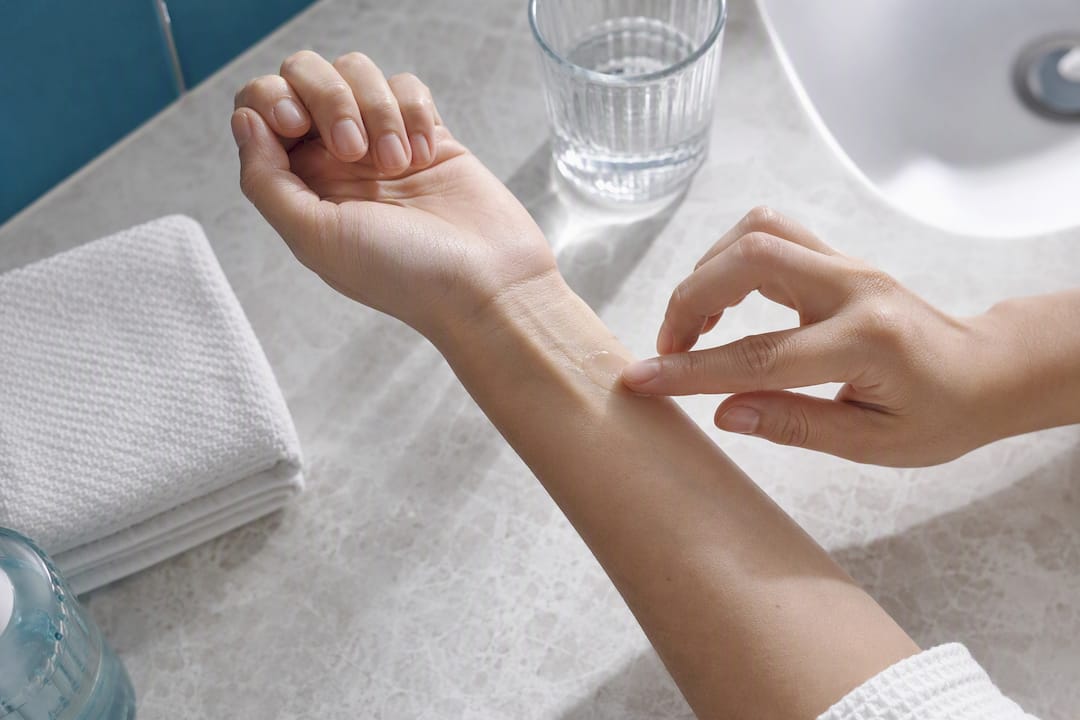
Read labels for “non-comedogenic” and fragrance-free formulations, and patch test any new oil on your inner forearm for 48 hours before it touches your face.
Risks, Red Flags, and When to Stop
Most oil cleansing failures come down to one thing: incomplete emulsification. If oil doesn’t fully turn milky before you rinse, the leftover residue mixes with sweat, sunscreen, and makeup overnight, and that combination is a common trigger for new breakouts. This is likely the biggest reason people report “oil cleansing made my skin worse” instead of better.
There are two contraindications worth taking seriously. Oil cleansing can worsen fungal acne, since Malassezia yeast feeds on certain fatty acids, and dermatology sources generally consider it a poor fit for active cystic acne, where inflammation sits too deep for surface-level cleansing to help.
Watch for these warning signs during your trial:
- New whiteheads or blackheads appearing in areas you didn’t have them before
- Increased redness, tightness, or a stinging sensation after rinsing
- Breakouts clustering along your jaw or hairline, often a sign of missed residue
Give any new oil cleansing routine a two to four week window. If inflammatory lesions increase noticeably or cysts show up, stop immediately and consider a dermatologist visit rather than pushing through.
Your Follow-Up Routine: Second Cleanse, Moisturizer, Sunscreen
Oil cleansing is step one, never the whole routine. A water-based second cleanse, ideally a syndet (synthetic detergent) formula rather than a traditional soap, removes residual oil without disrupting your skin’s natural pH. If you’re using stronger actives like salicylic acid or benzoyl peroxide, pick a second cleanser gentle enough not to compound irritation.
After cleansing, your skin needs a few essentials:
- A moisturizer with ceramides and humectants to rebuild the barrier without clogging pores
- Non-comedogenic labeling on anything that stays on your skin overnight
- Sunscreen every morning, especially important if you’re using retinoids or exfoliating acids that increase sun sensitivity
Double cleanse at night only. Doing it in the morning too is generally unnecessary and can push oily or acne-prone skin toward over-cleansing, which ironically triggers more oil production.
What the Research and Dermatology Guidance Actually Say
The clinical picture here is more modest than social media suggests. Dermatology guidance, including the syndet-forward approach outlined in NCBI’s clinical guidance on acne skin care, still treats non-oil cleansers as the safer default for active acne. That’s not a dismissal of oil cleansing, just an honest ranking of where the stronger evidence sits.
A small trial found that a cleansing oil reduced blemishes and clogged pores for some oily and acne-prone users, though the overall evidence base remains limited.
Broader reviews of dermocosmetic adjuncts in acne care support the idea that gentle cleansers and complementary formulations can reduce surface oiliness and support barrier repair, which lines up with what oil cleansing does well when executed carefully. The practical takeaway: a cautious trial makes sense for the right candidate, but it’s an adjunct, not a substitute for proven topical acne treatments.
Where I Land on Oil Cleansing After Digging Through the Evidence
Most of the internet treats oil cleansing like a miracle or a menace, and it’s neither. The technique itself is sound chemistry. Where it falls apart is execution: people rush the emulsification step, skip the second cleanse, or pick an oil that’s wrong for their skin type, then blame the method instead of the mistake.
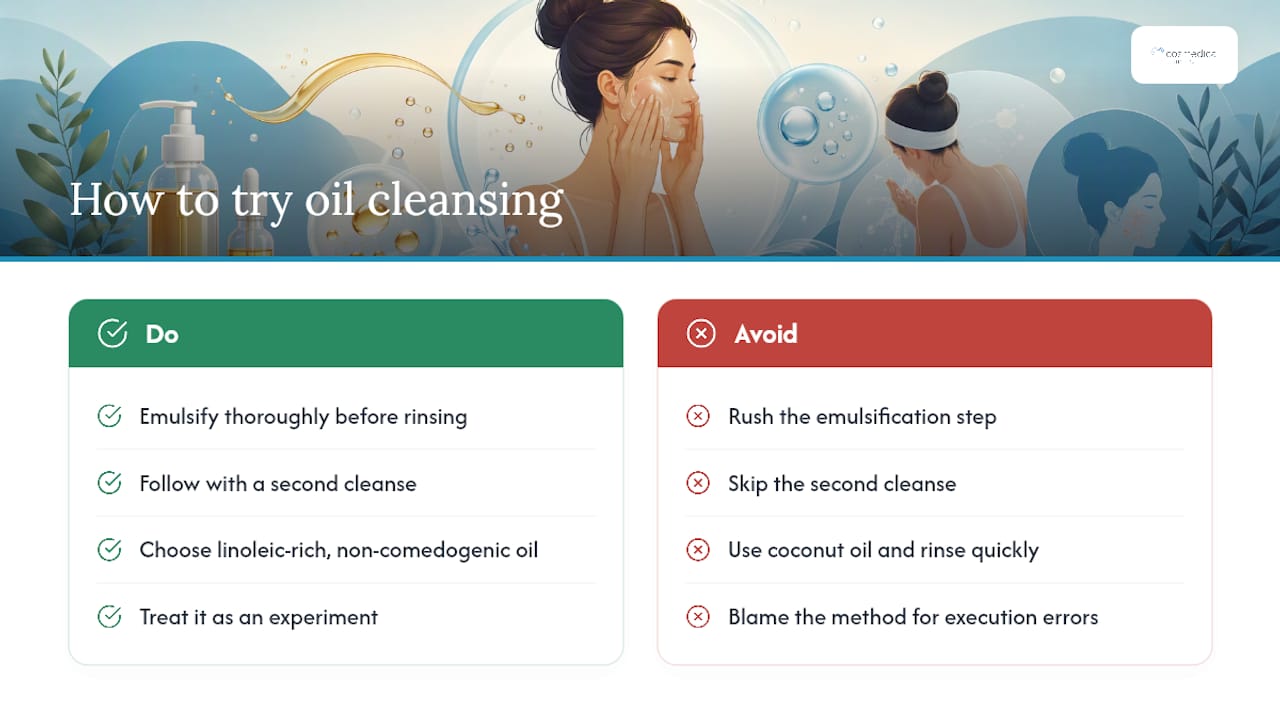
What gets underestimated is how much the oil choice matters versus the ritual of cleansing itself, such as in the Derma Cow Tallow serum + marula oil … | PRYM Wellness product. A linoleic-rich, non-comedogenic oil paired with a proper double cleanse behaves nothing like coconut oil smeared on and rinsed too fast. At Cosmedica-skincare, our approach to formulating for oily and acne-prone skin starts from that same logic: dermatologist-tested, non-comedogenic ingredients that support the skin barrier instead of feeding breakouts.
If you try oil cleansing, treat it as an experiment with a clear exit plan, not a permanent upgrade to your routine.
— Thomas
Products That Fit an Acne-Safe Cleansing Routine
If you’re building out the follow-up side of your routine, we designed our lineup with acne-prone and oily skin in mind, dermatologist-tested and formulated without heavy comedogenic oils. The Super Serum Set pairs well after a proper double cleanse, giving your skin hydration and active ingredients without the greasy residue that undoes all that careful rinsing. For the moisturizing step, our non-comedogenic moisturizer collection focuses on ceramides and barrier support rather than pore-clogging fillers. Browse the full skincare lineup to build out a routine that matches what your skin actually tolerates, and if you’re shopping for someone else dealing with breakouts, our gift sets make a thoughtful, low-pressure starting point.
Sources
- Skin care advice for people with acne vulgaris - NCBI Bookshelf
- Double cleansing explained - Cleveland Clinic
- Dermocosmetics and adjunctive care in acne (Journal review) - PMC
FAQ
Is oil cleansing good for acne?
It can help mild comedonal or oily-skin acne when done with a non-comedogenic oil and followed by a water-based cleanser, but dermatology guidance still favors syndet cleansers as the primary approach for active acne.
Which cleansing oil is best for acne?
Jojoba, grapeseed, squalane, and sunflower oil are generally well-tolerated because they’re lighter and higher in linoleic acid, which is linked to less pore-clogging sebum.
What naturally kills acne-causing bacteria or reduces breakouts?
No single natural ingredient reliably “kills” acne. Gentle cleansing, barrier-supporting moisturizers, and proven topicals like salicylic acid or benzoyl peroxide have the strongest track record for reducing breakouts.
Why am I breaking out after oil cleansing?
The most common cause is incomplete emulsification, leftover oil residue mixing with sweat and makeup overnight, which can trigger new blemishes. Using a heavy, comedogenic oil like coconut oil or skipping the second cleanse are close runners-up.