

Retinol with Vitamin C: How to Use Both Safely
Yes, you can use retinol with vitamin C, and for most skin types, the combination actually works better than either ingredient alone. The rule dermatologists repeat most often: vitamin C in the morning, retinol at night. If you only have one routine slot and want to use both after dark, you can, but you need spacing and a light hand.
Here’s the one thing that isn’t optional. Retinol makes your skin more sensitive to UV light, so sunscreen stops being a “nice to have” and becomes the whole reason the routine works at all.
- AM: Cleanser → vitamin C serum → moisturizer → SPF 30 or higher
- PM: Cleanser → retinol (pea-sized amount) → hydrating moisturizer
Dermatologists interviewed by Prevention generally recommend this AM/PM split specifically to reduce irritation while still getting the benefits of both. That guidance lines up with a clinical study on combined use, which found that pairing 0.5% retinol with a 30% vitamin C moisturizer produced measurable improvements in photoaging signs and lipid barrier strength over 12 weeks.
Key Takeaways
Vitamin C in the morning and retinol at night is the safest, most dermatologist-backed way to use both actives without overwhelming your skin.
| Point | Details |
|---|---|
| Follow the AM/PM split | Apply vitamin C in the morning under sunscreen and retinol at night on dry skin. |
| Start low, build slowly | Begin retinol at low concentration, two to three nights a week, before going nightly. |
| Sunscreen is mandatory | Retinol increases sun sensitivity, so daily SPF 30+ is non-negotiable, not optional. |
| Patch test first | Test new products for 48 hours on your forearm before applying to your face. |
| Choose tolerance-minded formulas | Cosmedica-skincare’s vitamin C and retinol lines are formulated at beginner-friendly starting strengths. |
Where to Learn More
For deeper reading beyond this guide, the American Academy of Dermatology and Cleveland Clinic both offer detailed, patient-facing guidance on retinoid safety. The peer-reviewed review on PMC covers the underlying mechanisms in more depth. If your skin reacts in ways that don’t resolve with the troubleshooting steps above, a dermatologist can tailor the plan to your specific skin history.
This article is general information, not a substitute for advice from a qualified doctor. Consult a qualified healthcare professional about your own circumstances before acting on anything here.
Table of Contents
- Can You Use Retinol and Vitamin C Together Safely?
- What Does Vitamin C Actually Do for Your Skin?
- What Does Retinol Do and Why Only at Night?
- What Are the Risks of Combining These Actives?
- How to Layer Retinol and Vitamin C in Your Routine
- How Do You Choose the Right Strength and Formula?
- What Should You Avoid Mixing with Retinol and Vitamin C?
- How Do You Build a Starter Schedule Without Wrecking Your Skin?
- What Does the Research Actually Say?
- Sources
- FAQ
Can You Use Retinol and Vitamin C Together Safely?
Short answer: yes, and the science backs it up. The confusion usually comes from old skincare forum myths claiming the two ingredients “cancel each other out” or destabilize on the skin. That’s mostly outdated thinking based on early, unstable vitamin C formulas.
Modern vitamin C serums are formulated to hold their potency, and modern retinol products (especially encapsulated versions) are gentler than the retinoids of a decade ago. The real risk isn’t chemical incompatibility. It’s simply overloading your skin with two active ingredients that each cause some degree of dryness or sensitivity on their own. Manage that with timing and concentration, and you’re in good shape.
What Does Vitamin C Actually Do for Your Skin?
Think of vitamin C as your skin’s morning bodyguard. It’s an antioxidant, which means it neutralizes the free radicals generated by UV exposure and pollution before they can break down collagen. It also makes your sunscreen work harder, supports collagen production, and fades dark spots and uneven tone over time.
Here’s what consistent use typically delivers:
- Reduced appearance of hyperpigmentation and sun spots
- A more even overall skin tone
- A temporary “glow” from improved light reflection
- Added defense against environmental stressors like pollution
Not all vitamin C is created equal. L-ascorbic acid is the gold-standard, most-studied form, but it’s also the most likely to irritate sensitive skin and the least stable once exposed to light and air. Derivatives like sodium ascorbyl phosphate or ascorbyl glucoside are gentler and more stable, though generally less potent. If your skin flushes easily, start with a derivative rather than pure L-ascorbic acid.
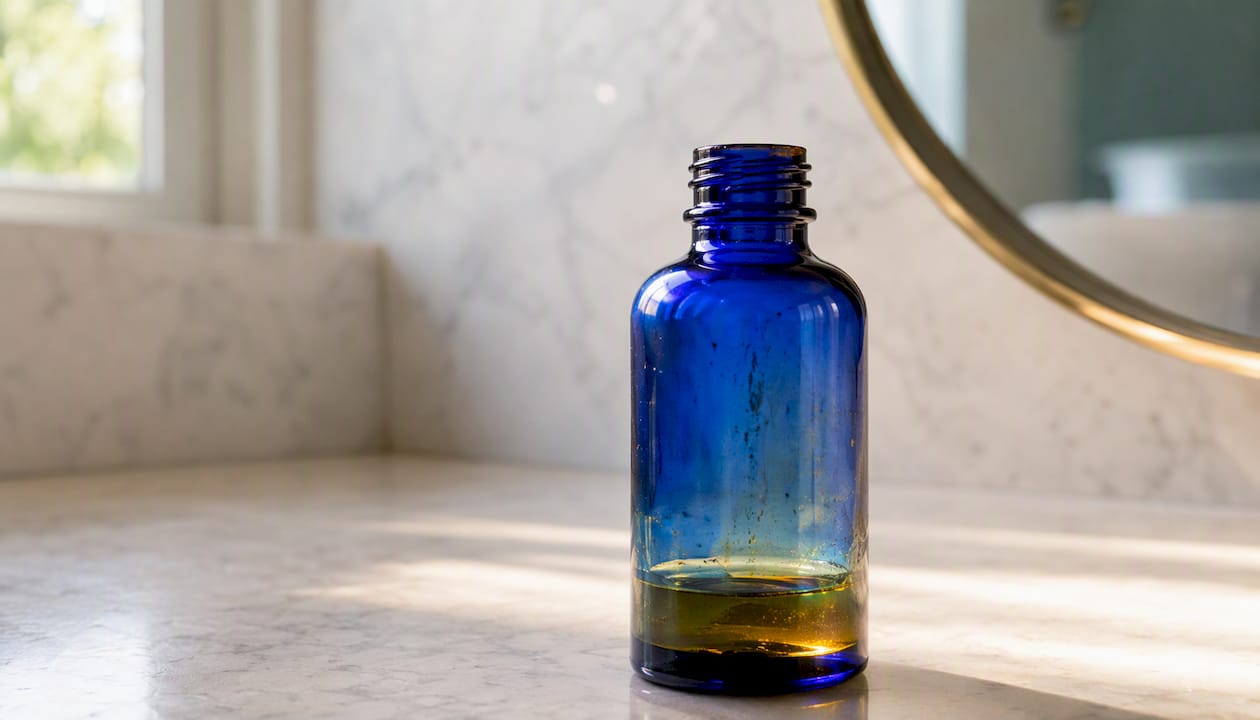
Packaging matters more than people realize. Vitamin C degrades in clear jars sitting on a sunny bathroom shelf. Look for opaque, airtight, pump-style bottles.
Pro Tip: If your vitamin C serum turns brown or orange, it has oxidized and lost most of its effectiveness. Toss it and buy a fresh, dark-bottled version.
What Does Retinol Do and Why Only at Night?
Retinol works by speeding up cell turnover, which means dead skin sheds faster and fresh cells surface sooner. That process stimulates collagen production, softens fine lines, smooths texture, and helps unclog pores prone to acne.
It’s a slow build, not an overnight fix:
- Weeks 1 to 4: Skin adjusts; mild flaking or sensitivity is common
- Weeks 5 to 8: Texture starts smoothing out; breakouts may temporarily increase (this is often “purging,” not a bad reaction)
- Weeks 9 to 12: Fine lines and tone improvements become visible
Clinical trials tracking combined vitamin C and retinol regimens found improvements in tone and texture showing up at these same 4, 8, and 12 week checkpoints, which is a useful benchmark for setting your own expectations.
Retinol degrades in sunlight, which is the practical reason it’s a nighttime ingredient. It’s also worth knowing the difference between over-the-counter retinol and prescription retinoids like tretinoin. OTC retinol is milder and converts to active retinoic acid more slowly in the skin, making it the more forgiving starting point. Encapsulated or time-release retinol formulas slow that conversion even further, which is why they’re often recommended for beginners.
What Are the Risks of Combining These Actives?
The most common side effects from either ingredient are dryness, redness, flaking, and increased sun sensitivity. Layer both actives carelessly, and you can compound those effects: what would have been mild dryness from retinol alone becomes real irritation when your skin is also processing an acidic vitamin C serum.
People with rosacea, eczema, or generally reactive skin need to move slower than someone with resilient, oil-prone skin. That’s not a reason to avoid the combination. It’s a reason to introduce it gradually.
Barrier disruption from over-exfoliation and active overload is one of the most common preventable skincare mistakes, and it’s almost always fixable by simply reducing frequency, not by cutting the ingredient entirely.
- Patch test any new product on your inner arm for 48 hours before applying it to your face
- Start retinol at two to three nights per week, not nightly
- Cut back immediately if you notice persistent redness, stinging, or peeling that doesn’t calm down within a day
- See a dermatologist if irritation lasts more than a week or looks like a rash rather than typical flaking
Pro Tip: If your skin is stinging within seconds of applying vitamin C, that’s not “it’s working.” That’s irritation. Switch to a gentler derivative.
How to Layer Retinol and Vitamin C in Your Routine
The cleanest approach separates the two by time of day entirely. Here’s the AM sequence:
- Cleanse with a gentle, non-stripping cleanser
- Apply vitamin C serum to dry skin and let it absorb for a minute or two
- Follow with a lightweight moisturizer
- Finish with broad-spectrum SPF 30 or higher, reapplied every two hours if you’re outdoors
And the PM sequence:
- Cleanse to remove sunscreen, makeup, and the day’s buildup
- Wait until skin is fully dry (damp skin absorbs retinol faster, which can increase irritation)
- Apply a pea-sized amount of retinol across the entire face, avoiding the eye area and corners of the mouth
- Follow with a hydrating moisturizer to seal in moisture and buffer the retinol
- Optional: apply a richer occlusive balm over dry-prone areas like cheeks or around the nose
If your schedule genuinely only allows one routine, you can apply both at night, but with rules. Use a lower-strength vitamin C, apply it first, and wait about 30 minutes before applying retinol. This wait time lets your skin’s pH normalize, since vitamin C works best in a more acidic environment and some formulators worry that layering too quickly interferes with absorption. This same-night approach also demands starting slow, ideally two nights a week at first, while you watch how your skin responds.
Wondering what goes first between vitamin C and retinol? Vitamin C always goes first in a same-night routine, since it’s the lighter, more water-based product, followed by heavier retinol formulas. And regardless of which routine you follow, sunscreen the next morning is non-negotiable.

Pro Tip: Pat a hyaluronic acid serum onto damp skin right before your moisturizer. It cushions the retinol’s drying effect without diluting its potency, and it plays well layered under either your AM or PM routine. If you want more detail on pairing hydrators with retinol, this breakdown of hyaluronic acid and retinol compatibility is worth a read.
How Do You Choose the Right Strength and Formula?
Concentration is where most beginners get it wrong. Higher isn’t better if your skin can’t tolerate it. Cosmopolitan’s roundup of dermatologist advice on formulation choices points to starting conservative on both fronts and building up over time.
For vitamin C, most people do well starting around 10% to 15% concentration. If you have sensitive or reactive skin, look for a gentler derivative rather than jumping straight to L-ascorbic acid at high strength.
Encapsulated versions release more slowly into the skin and tend to cause less flaking during the adjustment period.
| Skin Type or Experience Level | Recommended Starting Point |
|---|---|
| First-time retinol user | Encapsulated retinol, 2 to 3 nights a week |
| Sensitive or reactive skin | Vitamin C derivative (not L-ascorbic acid), encapsulated retinol |
| Experienced, tolerant skin | 0.5% retinol, 15% L-ascorbic acid vitamin C |
| Oily or acne-prone skin | 0.5% retinol nightly (once tolerated), 10 to 15% vitamin C |
Packaging is part of the product’s performance. Vitamin C needs opaque, airtight bottles to stay stable. Retinol should be in similarly protective packaging, since light and air degrade it too. When reading labels, look for words like “encapsulated” or “time-release” on retinol products, and check that your vitamin C ingredient list places ascorbic acid or a named derivative near the top.
Cosmedica-skincare’s vitamin C and retinol formulations are built around this tolerance-first philosophy, with concentrations designed for the beginner-to-intermediate range shown in the chart above rather than aggressive, high-percentage formulas that skip the adjustment period entirely.
Pro Tip: If you’re not sure which vitamin C form is in your serum, check the second or third ingredient on the list. If it just says “vitamin C” with no chemical name, that’s usually a marketing shortcut, not a real answer.
What Should You Avoid Mixing with Retinol and Vitamin C?
A few combinations genuinely do increase irritation risk, and they’re worth flagging clearly:
- Strong leave-on acids (glycolic, lactic, or salicylic acid) used on the same night as retinol, since the compounded exfoliation can wreck your barrier
- Benzoyl peroxide layered directly with retinol, which can destabilize some retinol formulas and dry out skin fast
- Heavy-duty exfoliating treatments used right after a vitamin C application, since skin is already primed to be more reactive
You don’t need to permanently avoid every other active ingredient once you’re using retinol and vitamin C. Manage timing and frequency instead of cutting entire ingredient categories out of your routine. Alternate nights for acids and retinol, for example, rather than banning acids altogether.
Pro Tip: If you love a weekly exfoliating treatment, save it for a night you’re skipping retinol, and keep at least 24 hours between the two.
How Do You Build a Starter Schedule Without Wrecking Your Skin?
Here’s a realistic six to eight week plan for introducing both actives if you’re starting from scratch, guided by advice on how to build a minimal effective skincare routine:
- Week 1: Patch test both products on your inner forearm for 48 hours. Introduce vitamin C only, every morning.
- Weeks 2 to 3: Once vitamin C is well tolerated, add retinol at night, every third night.
- Weeks 4 to 5: If skin looks calm (no persistent redness or peeling), move retinol to every other night.
- Weeks 6 to 8: Progress to nightly retinol if your skin has adjusted well, keeping vitamin C in the morning throughout.
If you hit a snag, here’s how to troubleshoot it:
- Peeling or flaking: Cut retinol back a night or two per week and add a richer moisturizer
- Redness that lingers past 24 hours: Pause retinol entirely for 3 to 5 days, then reintroduce at a lower frequency
- Purging (small breakouts in usual acne zones): This typically resolves within 4 to 6 weeks; if it’s spreading to new areas, stop and reassess
- Persistent irritation past two weeks despite adjustments: Check in with a dermatologist rather than pushing through it
What Does the Research Actually Say?
The science leans supportive, with caveats around dosing and timing. A peer-reviewed review of topical antioxidants and retinoids outlines how these ingredient classes work together mechanistically and highlights tolerability strategies that echo what dermatologists recommend in practice.
The clinical data adds specifics: pairing 0.5% retinol with a 30% vitamin C moisturizer over 12 weeks led to measurable reductions in dark spots, wrinkles, and elasticity loss, along with improved lipid barrier strength.
Authoritative bodies back the same framework:
- The American Academy of Dermatology stresses that retinoids increase sun sensitivity and daily sunscreen is required
- Cleveland Clinic lists dryness, peeling, and sensitivity as typical retinol side effects, all manageable with proper moisturizing and sun protection
The takeaway is consistent across every source: combined use works when it’s dosed conservatively and scheduled around your skin’s tolerance, not rushed.
A Practical Note on Getting Started
Start with whichever active your skin already tolerates and add the second one only after a few weeks of stability. If you’re prone to sensitivity around the eyes or mouth, a thin layer of a fragrance-free balm over those zones before retinol prevents most of the flaking people blame on the ingredient itself, and a gentler vitamin C derivative beats forcing L-ascorbic acid before your skin is ready.
A Simple Way to Start This Routine
There are plenty of ways to piece together a vitamin C and retinol routine from different brands, but matching concentrations and packaging quality across separate purchases takes trial and error most people don’t have patience for. Cosmedica-skincare built its vitamin C and retinol lines specifically around the tolerance-first concentrations covered above, so you’re not guessing whether a 15% vitamin C serum or a 0.5% retinol is too aggressive for where your skin is right now.
If you want the full AM and PM pairing in one purchase, the Super Serum Set bundles complementary serums built for exactly this kind of morning antioxidant, night retinol split. For readers ready to start with retinol specifically, the 2.5% Retinol Facial Serum works well once you’ve built up tolerance using the starter schedule above. Check either page for current formulation details and pick the strength that matches where your skin actually is, not where you wish it were.
Sources
- Can You Use Retinol and Vitamin C Together? Experts Explain
- What Happens to Your Skin When You Use Vitamin C and Retinol Together
- Topical antioxidants and retinoids review (PMC5605218)
- Retinoid and retinol guidance — American Academy of Dermatology
- Retinol — Cleveland Clinic
FAQ
What Shouldn’t You Mix with Retinol?
Avoid using strong leave-on acids like glycolic, lactic, or salicylic acid on the same night as retinol, and be cautious combining it directly with benzoyl peroxide, since both combinations raise irritation risk significantly.
What Goes First, Retinol or Vitamin C?
Vitamin C goes first if you’re using both in the same routine, since it’s lighter and water-based; wait about 30 minutes before applying retinol on top.
Can You Use Retinol and Vitamin C Together Every Day?
Vitamin C can typically be used daily in the morning, but retinol should start at two to three nights a week and build toward nightly use only as your skin adjusts.
How Long Until You See Results from Retinol and Vitamin C?
Expect initial texture improvements around 4 to 8 weeks, with more visible changes in tone, spots, and fine lines by 12 weeks of consistent use.
Should You Avoid This Combination During Pregnancy?
Retinoids are generally advised against during pregnancy, so anyone pregnant or trying to conceive should skip retinol and check with a doctor about which vitamin C products are safe to continue.
Does Cosmedica-skincare Make Products for This Routine?
Yes. Cosmedica-skincare offers dedicated vitamin C and retinol formulations designed at tolerance-friendly starting strengths for exactly this AM/PM pairing.