

Explain Premature Aging: A Practical Skin Guide
Premature skin aging means your skin shows wrinkles, sagging, dark spots, or dullness earlier than expected for your age, and the encouraging part is that most of it comes from things you can actually control. It isn’t mostly genetics or bad luck. Roughly 90% of visible skin aging comes from photoaging, the cumulative damage from sun exposure over years. That single stat reframes the whole conversation: the two most powerful things you can do starting today are wearing a broad-spectrum sunscreen with SPF 30 or higher every single day and moisturizing consistently. Everything else in your routine, from vitamin C to retinol, builds on that foundation. Skip it, and you’re basically bailing water out of a boat with a hole in it.
Key Takeaways
Premature skin aging is largely preventable, and daily broad-spectrum sunscreen paired with consistent moisturization does more for your skin than any single expensive treatment.
| Point | Details |
|---|---|
| Sunscreen is non-negotiable | Apply broad-spectrum SPF 30+ daily, reapplying every two hours outdoors, since photoaging is a major driver of visible aging. |
| Moisturize every day | Humectants like hyaluronic acid and glycerin keep the skin barrier strong and reduce dryness-related dullness. |
| Add actives gradually | Introduce one new ingredient, like niacinamide or lactic acid, at a time to avoid irritation. |
| Lifestyle matters as much as products | Sleep, diet, alcohol, and stress all influence how fast collagen breaks down. |
| Watch for red flags | Sudden or asymmetrical skin changes call for a board-certified dermatologist, not a new serum. |
| Cosmedica-skincare supports the basics | The Niacinamide + Zinc Serum, Lactic Acid Treatment, Eye Gel, and Super Serum Set map directly to a prevention-first routine. |
Table of Contents
- What Causes Premature Aging in Skin?
- What Are the Signs of Premature Aging?
- How Do You Prevent Premature Skin Aging?
- Simple AM and PM Skincare Routine
- Which Ingredients Actually Slow Visible Aging?
- Lifestyle Habits That Slow Premature Aging
- What In-Office Treatments Help With Premature Aging?
- When Should You See a Dermatologist?
- How Do You Choose Safe, Effective Skincare Products?
- Why Simple, Consistent Routines Beat Complex Ones
- How Cosmedica-Skincare Fits Into Your Routine
- Sources
- FAQ
What Causes Premature Aging in Skin?
Dermatologists split aging into two buckets: intrinsic aging, which is the slow, genetically programmed clock ticking in the background, and extrinsic aging, which is everything from outside that speeds the clock up. Premature aging is almost always extrinsic aging showing up ahead of schedule.
The biggest extrinsic driver by far is ultraviolet light, but it’s not the only wavelength doing damage. Photoaging results from chronic exposure across UV, visible (HEV), and infrared wavelengths, and the effects differ depending on your skin phototype. Add to that list: smoking, heavy alcohol use, poor sleep, chronic stress, pollution, and a diet heavy in refined sugar. Each of these accelerates collagen and elastin breakdown, ramps up oxidative stress, and slows the rate at which your skin replaces old, damaged cells with fresh ones.
- Ultraviolet (UVA/UVB) exposure: the single largest contributor to visible aging
- Visible and infrared light: contribute to pigmentation changes, especially in deeper skin tones
- Smoking: constricts blood vessels and breaks down collagen
- Poor sleep and chronic stress: raise cortisol, which degrades skin structure over time
- Pollution and a high-sugar diet: fuel oxidative stress and glycation of collagen fibers
Pro Tip: Before you spend money on an aggressive treatment or a trendy serum, ask yourself if you’re already doing the boring stuff daily. Consistent photoprotection beats an occasional expensive procedure almost every time.
What Are the Signs of Premature Aging?
Your skin tells the story before you ever step into a dermatologist’s office. The signs cluster into a few predictable categories, and where they show up often hints at the cause.
- Fine lines and deeper wrinkles: typically first around the eyes (crow’s feet) and forehead from repeated muscle movement combined with sun damage
- Age spots (solar lentigines): flat brown patches on the cheeks, backs of the hands, and chest, direct evidence of cumulative UV exposure
- Uneven tone and hyperpigmentation: blotchy patches that often worsen with visible light exposure, particularly in medium to deep skin tones
- Dryness and rough texture: a weakened moisture barrier that makes skin look dull rather than radiant
- Loss of elasticity and sagging: reduced collagen and elastin, most noticeable along the jawline and neck
- Under-eye bags and hollowing: thinning skin and fat pad shifts that show earliest in that delicate eye area
Most of these develop gradually. If you notice a sudden change, or something that looks asymmetrical, that’s a different story and worth a professional look rather than a shelf full of new products.
How Do You Prevent Premature Skin Aging?
Prevention starts with two habits, and dermatologists are remarkably consistent on this point. Board-certified dermatologists recommend applying a broad-spectrum, water-resistant sunscreen daily to every inch of skin not covered by clothing, rain or shine, winter or summer. A 2023 international consensus backs this up, ranking high-factor broad-spectrum sunscreen, niacinamide, and topical antioxidants as the foundational ingredients that matter across every skin type and tone.
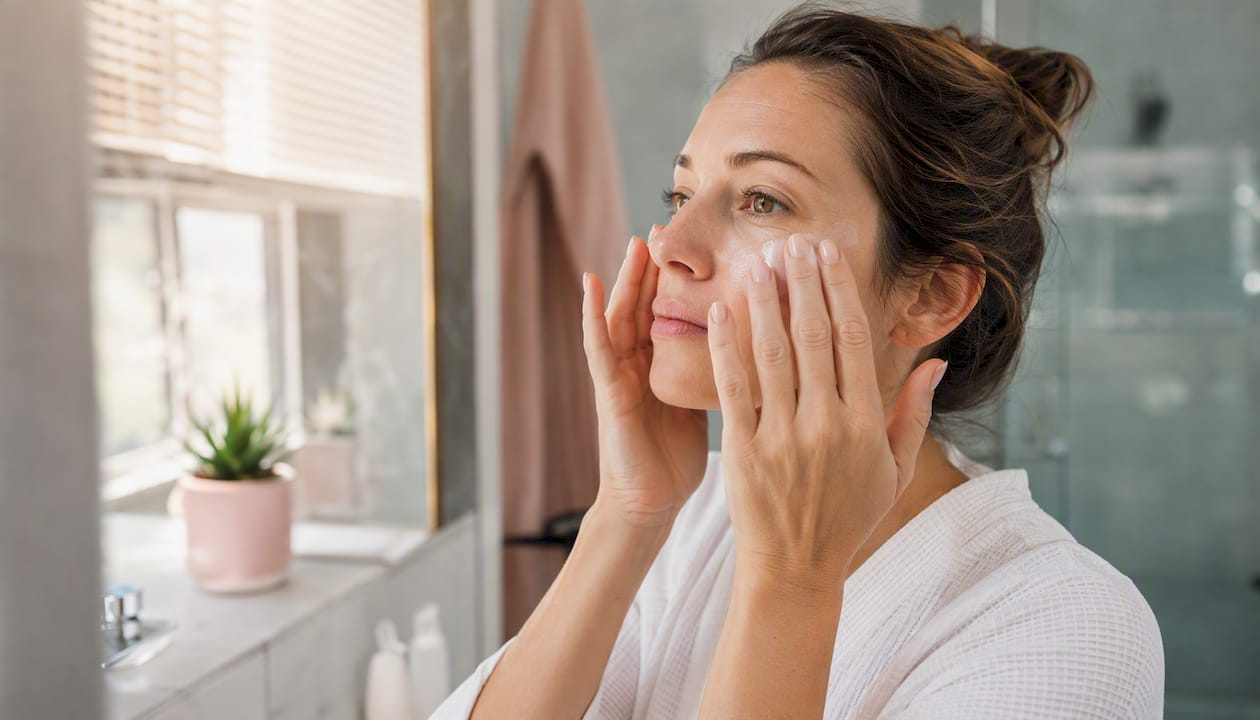
Sunscreen only works if you use enough of it and reapply. That’s a shot glass worth for your face and body, reapplied every two hours if you’re outside, and immediately after swimming or heavy sweating. If you have a deeper skin tone (Fitzpatrick IV through VI), look specifically for a tinted sunscreen containing iron oxide, since standard mineral formulas don’t block visible light nearly as well, and visible light is a real driver of hyperpigmentation in darker complexions.
Moisturizer is the quieter half of the equation but no less important. Daily moisturization, including humectants like hyaluronic acid and glycerin, helps skin hold onto water and keeps the barrier intact, which is what makes skin look plump and even rather than crepey. Look for a non-comedogenic formula so it won’t clog pores, and layer it over serums, not under them.
- Choose broad-spectrum (UVA + UVB) coverage, never UVB-only
- Confirm SPF 30 or higher, water resistance if you’re active outdoors
- Add a hat and sunglasses during peak sun hours (10 a.m. to 4 p.m.)
- Cover exposed skin with clothing when possible, especially the chest and hands
Simple AM and PM Skincare Routine
A structured “skin health pyramid” from the international consensus puts protection and antioxidant repair at the base, moisturizing and mild exfoliation in the middle, and stimulating ingredients like peptides at the top. That order matters more than people think. Build your routine in that sequence rather than jumping straight to the fanciest serum on the shelf.
Morning routine:
- Gentle cleanser to remove overnight buildup without stripping the skin
- Antioxidant serum, ideally vitamin C, to fight environmental damage before you head out the door
- Niacinamide serum if you’re using one, layered under moisturizer
- Moisturizer to lock in hydration
- Broad-spectrum SPF 30+ as the final, non-negotiable step
Evening routine:
- Cleanse again to remove sunscreen, makeup, and pollution residue
- Targeted active: a retinoid a few nights a week, or a lactic acid treatment on alternating nights
- Rich moisturizer to support repair while you sleep
If you’re just adding retinol for the first time, start two or three nights a week and build up slowly. Cosmedica-skincare’s 10% Niacinamide + Zinc Treatment Serum fits well as an AM step for calming redness and refining tone, while the 5% Lactic Acid Treatment + Hylasyn works better as an evening exfoliant used once or twice a week, not nightly. Under-eye concerns get their own step: a targeted eye gel like the Brightening Eye Treatment Gel layers on after moisturizer, morning or night, and doesn’t need to compete with your other actives.
Which Ingredients Actually Slow Visible Aging?
Not every ingredient deserves a spot in your routine, and knowing what each one actually does keeps you from wasting money.
- Niacinamide: calms redness, strengthens the skin barrier, and evens tone with minimal irritation risk, which makes it safe for nearly everyone
- Vitamin C: a strong antioxidant that protects against environmental damage and brightens uneven tone, best used in the morning under sunscreen
- Retinoids/retinol: speed up cell turnover and rebuild collagen, but they can cause dryness and sun sensitivity, so nighttime use only and a gradual start
- Bakuchiol: a plant-derived alternative to retinol with a gentler irritation profile, suitable for people who are pregnant
- AHAs/BHAs (like lactic acid): exfoliate dead skin and smooth texture, but should be used with caution in deeper skin tones, since aggressive AHA use raises the risk of post-inflammatory hyperpigmentation in Fitzpatrick IV through VI
- Peptides: signal skin to produce more collagen, generally low-irritation but slower to show results
One rule that trips people up constantly: don’t stack a retinoid and an AHA on the same night. That combination is a fast track to redness and a compromised barrier. Alternate them instead.
Lifestyle Habits That Slow Premature Aging
Topical products only do so much if the rest of your life is working against your skin. Smoking, excessive alcohol, poor sleep, high-sugar diets, and chronic stress are all linked to accelerated visible aging, and the mechanism is straightforward: these habits speed up collagen breakdown and slow the repair work your skin does overnight.
- Quit smoking, or at minimum cut back significantly; it constricts blood flow to skin
- Keep alcohol moderate; dehydration shows up fast on the surface
- Aim for sufficient sleep each night, since that’s when skin does most of its repair
- Swap a sugary snack for a handful of berries; antioxidants help counter oxidative stress
- Add a daily 20-minute walk; regular movement supports circulation and stress regulation
- Build in a stress-management habit, even something as simple as five minutes of quiet breathing
Think of lifestyle and topicals as two halves of the same job. A great serum can’t outrun chronic sleep deprivation, and clean living alone can’t replace sunscreen.
What In-Office Treatments Help With Premature Aging?
For visible signs that skincare alone won’t fully resolve, dermatology offices offer several options, each targeting a different problem.
- Chemical peels: improve texture and pigment, with downtime ranging from none to a week depending on strength
- Laser treatments: target pigment and fine lines, though certain lasers carry a higher risk of post-inflammatory hyperpigmentation in deeper skin tones and require an experienced provider
- Neuromodulators (like Botox): soften expression lines such as crow’s feet, with results lasting three to four months
- Dermal fillers: restore lost volume in cheeks and under-eye hollows
- Microneedling: stimulates collagen production with minimal downtime, generally considered safer across a range of skin tones than aggressive lasers
Before any procedure, most providers ask you to pause retinoids for several days and stay diligent with sunscreen beforehand and afterward. If you have a deeper phototype, ask directly about the provider’s experience treating your skin tone. Not every laser or peel is appropriate for every complexion, and an inexperienced provider is where PIH complications tend to happen.
When Should You See a Dermatologist?
Most premature aging is something you manage at home, but certain changes deserve a professional opinion rather than a guess.
- A dark spot that changes shape, color, or size quickly
- Asymmetrical discoloration that doesn’t match anything you’ve seen before
- A new growth that bleeds, itches persistently, or won’t heal
- Sudden, severe irritation after starting a new product
- Skin changes that seem out of proportion to your age or sun history
A dermatology visit typically includes a full skin exam, a conversation about your history and current products, and, sometimes, a biopsy if something looks suspicious. Choose a board-certified dermatologist, and bring photos of how the area has changed over time along with a list of what you’re currently using. That context speeds up the visit considerably.
How Do You Choose Safe, Effective Skincare Products?
Reading a label the right way saves you money and irritation. Look for “broad-spectrum” on the front of any sunscreen, confirm SPF 30 or higher, and check for water resistance if you’ll be sweating or swimming. For daily moisturizers, non-comedogenic and fragrance-free options are the safer default, especially if your skin is reactive.

Common mistakes worth avoiding: layering four new active ingredients into your routine in the same week (your skin can’t tell what’s causing the reaction), chasing “miracle” claims on pricey serums with no real ingredient backing, and skipping the patch test before trying anything new. A patch test on your inner forearm for 48 hours catches most reactions before they hit your face.
For a simple, low-risk starting combination, pair a niacinamide serum with daily SPF, add a lactic acid treatment once or twice a week at night, and use an eye gel for puffiness or dark circles as needed. That’s a complete, sensible routine without overwhelming your skin or your budget.
Why Simple, Consistent Routines Beat Complex Ones
The skincare industry loves selling complexity: ten-step routines, exotic ingredients, treatments that promise overnight transformation. After going through the actual dermatology guidance on this topic, I keep landing on the same conclusion. The people who see the best long-term results aren’t the ones with the most elaborate shelf of products. They’re the ones who show up every single day for sunscreen and moisturizer, then add one or two targeted actives once that foundation is solid.
That’s not a marketing angle, it’s what the consensus dermocosmetic pyramid actually recommends: protection and repair first, exfoliation and stimulation later. Cosmedica-skincare builds around that same logic, with cruelty-free, dermatologist-tested formulas designed for daily prevention rather than dramatic, one-time fixes. Realistic expectations matter here too. Skincare slows and softens premature aging; it doesn’t erase decades in a weekend.
How Cosmedica-Skincare Fits Into Your Routine
You don’t need eight products to protect your skin well, you need the right two or three used consistently. Cosmedica-skincare builds its lineup around exactly the prevention-first approach dermatologists recommend, so you’re not guessing which serum actually earns a spot in your routine.
Start with the 10% Niacinamide + Zinc Treatment Serum for daily tone-evening and barrier support, gentle enough for morning or evening use. Add the 5% Lactic Acid Treatment + Hylasyn once or twice a week at night for texture, starting low if you’re new to exfoliating acids. The Brightening Eye Treatment Gel handles the delicate under-eye area separately from your face routine, and if you’d rather not build a routine piece by piece, the Super Serum Set bundles the essentials together at a lower cost than buying each item separately. Patch test any new active for 48 hours before applying it to your full face. Browse the complete routine collection to see how these pieces fit together, and build your routine from there.
Sources
- American Academy of Dermatology — sunscreen & dermatologist guidance
- Mayo Clinic — wrinkle creams and topical anti-aging ingredients
- Cleveland Clinic — Premature aging: signs, causes & prevention
- Harvard Health — skin care for aging skin
This article is general information, not a substitute for advice from a qualified doctor. Consult a qualified healthcare professional about your own circumstances before acting on anything here.
FAQ
What Is Premature Skin Aging?
It’s the early appearance of wrinkles, dark spots, sagging, or dryness before what’s typical for your age, and it’s largely driven by sun exposure and lifestyle factors rather than genetics alone.
What Are the Main Causes of Premature Aging?
UV and visible light exposure cause the majority of visible aging, with smoking, alcohol, poor sleep, chronic stress, and a high-sugar diet acting as major modifiable contributors.
Can You Reverse Premature Skin Aging?
You can significantly improve texture, tone, and firmness with consistent sunscreen use, targeted actives like retinoids or lactic acid, and in-office treatments, though full reversal to a younger skin state isn’t realistic.
Which Skincare Ingredients Work Best for Prevention?
Broad-spectrum sunscreen, niacinamide, and antioxidants like vitamin C form the foundation, with retinoids or bakuchiol added later for texture and collagen support.
When Should I See a Dermatologist About Aging Skin?
See a board-certified dermatologist for any sudden, asymmetrical, or rapidly changing skin spot, or if a new product causes severe, persistent irritation.