

Stop Flares: 3 Step Rosacea Skincare Routine for Barrier Repair
The simplest effective rosacea skincare routine is: a very gentle cleanse, a barrier-repair moisturizer, and a mineral sunscreen every morning, with prescription topicals layered in if you have them. Avoid known irritants like alcohol and fragrance, and patch-test anything new before it touches your whole face. If flares keep happening despite a clean routine, that’s your cue to see a dermatologist.
TL;DR:
- Gentle cleansing with lukewarm water and fingertips helps prevent triggers and should be followed by a barrier repair moisturizer before applying mineral sunscreen.
- Avoid known irritants such as alcohol, fragrance, witch hazel, menthol, eucalyptus oil, and camphor to reduce the risk of flares, and patch-test new products thoroughly.
- Over-cleansing and combining strong actives can worsen rosacea, so minimize exfoliation and skip multiple treatments at night to support skin repair.
- Prescriptions like azelaic acid, metronidazole, ivermectin, and vasoconstrictors are common, but retinoids should be avoided during active inflammation unless supervised by a dermatologist.
- Seasonal changes require adjusting routines, with richer moisturizers in winter and strict sun protection in summer, since environmental triggers significantly affect rosacea severity.
Table of Contents
- Building a Morning Rosacea Skincare Routine
- Your Evening Rosacea Skincare Routine for Barrier Repair
- What to Avoid: Ingredients and Habits That Trigger Rosacea
- Active Ingredients, Prescriptions, and Retinoid Caution
- How to Introduce New Products Without Triggering a Flare
- When to See a Dermatologist About Rosacea
- Lifestyle and Dietary Factors That Affect Rosacea
- Adjusting Your Rosacea Routine by Season
- Managing Rosacea Flare-Ups and Triggers Effectively
- How Cosmedica-Skincare Approaches Sensitive and Rosacea-Prone Skin
- Simple Swaps to Try From Cosmedica-Skincare
- A Publisher’s Take on the Retinoid Obsession in Rosacea Care
- Sources
- FAQ
Building a Morning Rosacea Skincare Routine
Mornings set the tone for how your skin handles the day, and rosacea-prone skin needs a lighter touch than most routines assume. The goal is to reduce friction, in every sense of the word, before your face meets the outside world.
Start with lukewarm water, never hot. Hot water dilates blood vessels that are already working overtime in rosacea-prone skin, which is part of why the American Academy of Dermatology points to gentle cleansing as a foundation of daily care. Use your fingertips only. Skip the washcloth, the cleansing brush, and anything textured. Scrubbing is one of the most common ways people accidentally provoke a flare without realizing the cleanser itself wasn’t the problem.
From there, the order matters:
- Cleanse with a fragrance-free, non-foaming formula, using fingertips in gentle circular motions for about 30 seconds.
- Apply any prescription topical your dermatologist has prescribed, letting it absorb for a few minutes before the next step.
- Layer on a barrier-repair moisturizer while skin is still slightly damp.
- Finish with a mineral sunscreen, SPF 30 or higher.
A few product-format notes worth knowing:
- Creams and lotions tend to sit better on rosacea skin than gels or foaming washes, which often contain surfactants that strip the surface.
- Mineral sunscreens built on zinc oxide or titanium dioxide are generally better tolerated than chemical filters, and tinted versions help avoid the chalky white cast that can make mineral formulas hard to wear on deeper skin tones.
- If a sunscreen stings on application, that’s a signal to switch formulas, not to push through it.
Your Evening Rosacea Skincare Routine for Barrier Repair
Evenings are about undoing the day’s damage, not adding new stress to already-reactive skin. The instinct to “deep clean” at night is exactly what dermatologists warn against for rosacea.
Remove makeup and sunscreen with an oil-in-gel remover or a micellar water, whichever your skin tolerates better. Both dissolve product without the tugging that a washcloth or exfoliating pad causes. If you wear minimal makeup, you may not need a separate removal step at all.
- Remove makeup and sunscreen with a gentle, non-stripping formula.
- Follow with a single gentle cleanse, only if your skin still feels like it needs it.
- Pat dry, don’t rub.
- Apply a barrier-repair moisturizer formulated with ceramides, glycerin, hyaluronic acid, or niacinamide.
That second cleanse is worth questioning every night. A prospective case-control study comparing 100 rosacea patients with 100 controls found that cleansing habits and hot bath use were linked to rosacea features, which supports a “less is more” approach: over-cleansing and under-cleansing both show up in patient complaints.
A short list of what to skip at night:
- Stacking multiple strong actives (a retinoid plus an exfoliating acid, for example) in the same session.
- Sleeping in sunscreen or makeup, even “just this once.”
- Reaching for a hot shower right before bed if steam tends to flush your face.
Barrier-repair moisturizers do double duty here. One referenced observation found that moisturizing alongside topical rosacea treatment reduced dryness within 15 days compared to treatment alone, which is a real argument for never skipping this step, even when you’re tired.
What to Avoid: Ingredients and Habits That Trigger Rosacea
Some ingredients cause trouble often enough that avoiding them by default just makes sense. Alcohol, fragrance, witch hazel, menthol, eucalyptus oil, and camphor top that list for most people with rosacea.
A significant portion of rosacea patients report that certain skincare products aggravate their condition. National Rosacea Society surveys of over 1,000 patients found alcohol was the most frequently cited irritant at 66%, followed by witch hazel at 30%, fragrance at 30%, menthol at 21%, peppermint at 14%, and eucalyptus oil at 13%.
Beyond ingredients, mechanical and behavioral habits matter just as much:
- Scrubs, rough washcloths, and exfoliating brushes create friction that can trigger visible redness within minutes.
- Hot water, whether from washing your face or a long shower, dilates blood vessels.
- Hot drinks, alcohol, and spicy foods are common triggers, though which ones affect you personally varies quite a bit from person to person.
One label trap worth knowing: “hypoallergenic” isn’t a regulated term, so it doesn’t guarantee anything. Look for “fragrance-free” specifically, which is a more reliable indicator than a vague marketing claim.
Active Ingredients, Prescriptions, and Retinoid Caution
Not every active ingredient is off-limits with rosacea, but the safe list is shorter than it is for general sensitive skin, and the exceptions matter.
Niacinamide and low-dose azelaic acid formulations are the two over-the-counter actives most often tolerated well. Niacinamide calms inflammation and helps reinforce the skin barrier, while azelaic acid targets redness directly without the abrasiveness of stronger acids.
On the prescription side, dermatologists commonly reach for:
- Topical metronidazole, prescription-strength azelaic acid, or ivermectin for inflammatory bumps and background redness.
- Vasoconstrictors like brimonidine or oxymetazoline, used as directed, to temporarily reduce visible flushing.
- Oral antibiotics or laser therapy when topical treatment and self-care aren’t enough on their own, according to Mayo Clinic.
Retinoids deserve their own caution flag. Medical guidance is consistent on this: retinoids often irritate skin during an active flare and should generally be avoided until inflammation is under control. If your dermatologist agrees a retinoid makes sense for you, that typically means starting at low strength, low frequency, and only with supervision, not self-directed trial and error.
How to Introduce New Products Without Triggering a Flare
Rosacea-prone skin doesn’t forgive guesswork, so testing new products deserves an actual process instead of hope.
Patch-test on your jawline or behind your ear first, applying a small amount and waiting 24 to 72 hours before judging the result. This step alone catches most reactions before they reach your whole face.
- Apply a small amount to your test area and wait the full 24 to 72 hours.
- If there’s no stinging, burning, or redness, introduce the product to your full routine, one at a time.
- Space new introductions 3 to 4 days apart so you can tell exactly which product caused any reaction.
- Log the product, the time you applied it, and anything you noticed, however minor.
Pro Tip: Photograph your skin before and after trying something new, and jot down what else was happening that day, like weather, stress, or a workout. Rosacea reactions are often delayed and easy to blame on the wrong culprit if you’re relying on memory alone.
When to See a Dermatologist About Rosacea
Self-care handles a lot, but certain signs mean it’s time for a professional opinion rather than another product swap.
See a dermatologist if you notice new persistent bumps that don’t resolve, eye irritation or dryness (a sign of ocular rosacea), lesions that are spreading or painful, or simply no improvement after weeks of a genuinely gentle routine.
- A dermatologist typically evaluates which rosacea subtype you have, since treatment differs between flushing-dominant and bump-and-pustule presentations.
- They may assess Demodex mite density through dermoscopy, since higher density correlates with certain rosacea features.
- Expect questions about prior steroid cream use, which can worsen rosacea over time even though it calms other skin conditions.
Likely next steps include a prescription topical, low-dose oral doxycycline for papulopustular rosacea, or a referral for laser therapy if visible blood vessels (telangiectasia) persist despite everything else.
Lifestyle and Dietary Factors That Affect Rosacea
What happens outside your skincare routine often decides whether that routine actually works. Rosacea responds to internal and environmental triggers just as strongly as it responds to topical products, which is why two people using identical routines can have very different results.
Alcohol is one of the most consistently reported triggers, and red wine in particular gets singled out often, likely due to both its alcohol content and its histamine load. Spicy food is a close second for many patients, triggering the same flushing response as heat, though the exact threshold varies from person to person. Hot beverages, even without spice, can trigger flushing purely from temperature.
Stress deserves more attention than it usually gets. The vascular response involved in rosacea flushing is closely tied to your nervous system, so an intense work week or a poor night’s sleep can show up on your face before you’ve made a single skincare change. Exercise is a trickier case: it’s genuinely good for your skin and your health overall, but the same heat and heart rate elevation that make a workout effective can also trigger visible flushing. Cooling your face during and after exercise, rather than skipping workouts entirely, tends to be the better trade-off.
Sun exposure sits at the top of the list of manageable triggers, since it’s one of the few you can control almost entirely through sunscreen and shade. Wind and cold matter too, particularly for people who notice flares hiking or skiing, where a physical barrier like a scarf can help as much as any product.

Adjusting Your Rosacea Routine by Season
Rosacea doesn’t stay static through the year, and a routine that works in July can backfire by January.
Winter tends to demand richer moisturizers and less frequent cleansing, since cold air and indoor heating both pull moisture out of the skin barrier. This is often the season where people over-correct with heavier products, layering more actives to fight dryness, which can backfire if those additions include anything with alcohol or fragrance.
Summer brings the opposite problem: heat and humidity that can make even barrier-friendly moisturizers feel too heavy, alongside more direct sun exposure. This is the season to be strictest about reapplying mineral sunscreen, since sweat and swimming both shorten how long a single application lasts.
Spring and fall are transition seasons, and transitions are often when flares spike, simply because skin hasn’t adjusted to the new temperature and humidity levels yet. Introducing seasonal product swaps gradually, the same way you’d patch-test a new product, tends to cause fewer surprises than switching your entire routine overnight.
Air conditioning and forced-air heating both dry out indoor environments regardless of season, so a humidifier in the bedroom is a low-effort adjustment that pays off across the calendar year.
Managing Rosacea Flare-Ups and Triggers Effectively
Every person with rosacea eventually builds a personal trigger map, and the process of building it is more valuable than any single product swap.
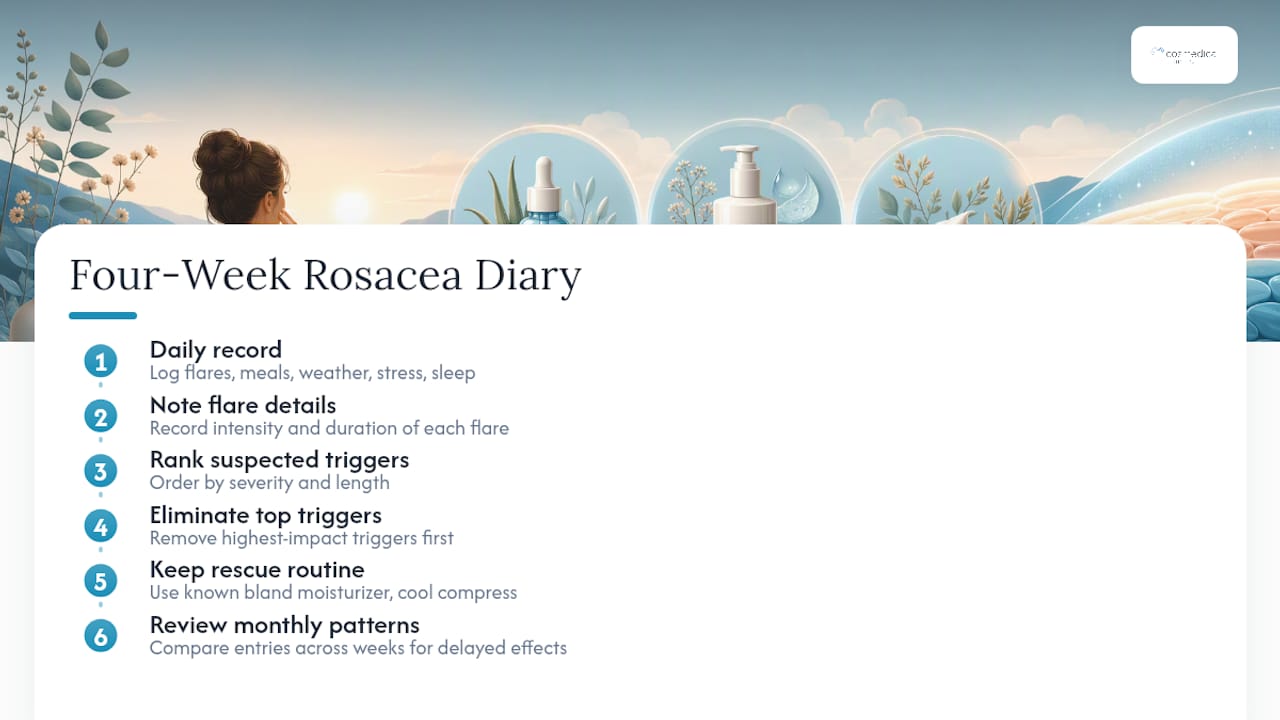
Start by ranking your suspected triggers instead of treating them all as equally urgent. A trigger that causes a mild, hour-long flush deserves a different response than one that causes days of visible bumps. Rank by intensity and duration, then start eliminating the highest-impact ones first rather than trying to control everything at once.
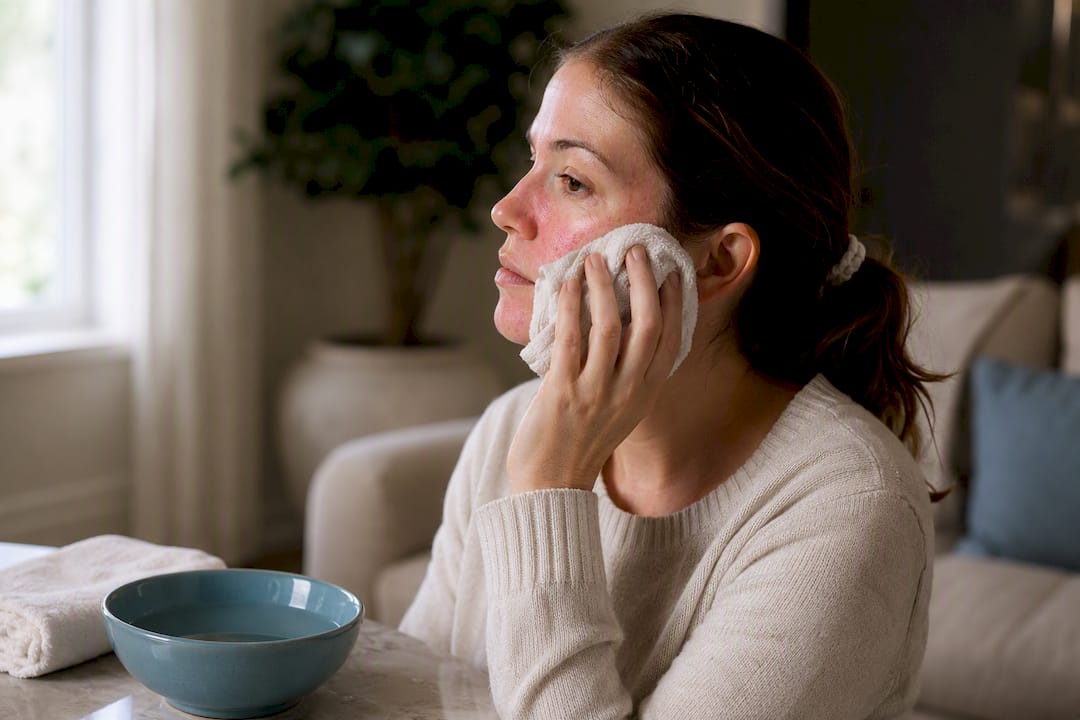
Keep your rescue routine separate from your daily one. When a flare hits, that’s not the moment to test a new anti-inflammatory serum. Stick to what you already know is safe: a bland moisturizer, a cool (not cold) compress, and patience. Adding anything untested during an active flare makes it nearly impossible to tell what helped and what made things worse.
Track patterns across weeks, not days. A single spicy meal that didn’t cause a flare doesn’t mean spicy food is off your trigger list, since rosacea responses can be cumulative and delayed. The same logic applies to stress and sleep. A rosacea diary that notes flares alongside meals, weather, and stress levels over a month tends to reveal patterns that a single bad day never will.
How Cosmedica-Skincare Approaches Sensitive and Rosacea-Prone Skin
Cosmedica-skincare formulates with the same priorities dermatology guidance points to: fragrance-free where possible, minimal irritant lists, and ingredients that support the skin barrier rather than strip it. Every product is cruelty-free and developed with an emphasis on gentle, dermatologist-aligned formulation rather than aggressive actives.
That means favoring barrier-supporting ingredients like hyaluronic acid and niacinamide over harsh surfactants or high-percentage acids that rosacea-prone skin tends to reject. For readers who want a curated starting point, our guide to products that actually work for rosacea breaks down specific picks by routine step.
Simple Swaps to Try From Cosmedica-Skincare
Cosmedica-skincare is a practical starting point if you’re rebuilding a routine around the exact priorities dermatologists recommend: gentle cleansing, barrier repair, and daily mineral-compatible protection, without guessing which formulas are safe. Our gentle cleanser built for sensitive skin skips the foaming surfactants that tend to strip reactive skin, and our guide to barrier repair ingredients explains why ceramides and squalane belong in your evening step.
For the moisturizer stage, our moisturizer collection is built around hydration and barrier support, the same qualities that make a moisturizer work well underneath sunscreen or prescription topicals. If you’re curious about a gentle niacinamide option for redness and inflammation, our 10% Niacinamide + Zinc Treatment Serum is worth patch-testing before adding to a full routine.
One important boundary: none of these products replace prescription treatment. If you’re using a topical from your dermatologist, coordinate with them before adding anything new, and always patch-test first. Ready to start? Browse the moisturizer collection and build your routine one step at a time.
A Publisher’s Take on the Retinoid Obsession in Rosacea Care
Most rosacea content online spends an outsized amount of energy on which serum or acid will finally “fix” the redness. That’s backwards. The research keeps pointing to the boring stuff: cleansing frequency, water temperature, and moisturizer consistency, as the actual levers that move the needle. The case-control data linking hot baths and cleansing habits to rosacea features didn’t find some miracle ingredient. It found that basic mechanical habits, done consistently, correlate with better outcomes than any single product swap.
The retinoid conversation is where I’d push back hardest against the general skincare culture. Retinol gets marketed as a near-universal fix for texture, aging, and tone, and for most skin types that reputation is earned. For active rosacea, it’s often the opposite of helpful, which is why medical guidance is specific about waiting for inflammation to calm down first. Chasing a trend ingredient because it worked for a friend without rosacea is one of the more avoidable ways people extend their own flares.
If there’s one underrated truth in this whole topic, it’s that consistency beats intensity. A boring routine you follow every single day, without swapping in the newest trending serum every few weeks, tends to outperform an aggressive routine you abandon after a bad reaction. Rosacea-prone skin rewards patience in a way that other skin concerns simply don’t.
— Thomas
This article is general information, not a substitute for advice from a qualified doctor. Consult a qualified healthcare professional about your own circumstances before acting on anything here.
Sources
- Rosacea
- American Academy of Dermatology (AAD) rosacea tips
- Retinol for rosacea — Medical News Today
- Investigation of skincare habits and possible rosacea triggers of patients with rosacea: A prospective case–control study (PMC)
- Rosacea: Diagnosis and treatment — Mayo Clinic
FAQ
What should you never put on rosacea-prone skin?
Avoid products containing alcohol, fragrance, witch hazel, menthol, eucalyptus oil, or camphor, since these were the most commonly reported irritants in National Rosacea Society surveys of rosacea patients.
Does moisturizer go on before or after sunscreen?
Apply moisturizer first, letting it absorb, then follow with mineral sunscreen as your final morning step; if you use a prescription topical, that goes on before the moisturizer.
Should you wash your face every day if you have rosacea?
Yes, but gently and no more than needed. Both excessive and inadequate cleansing have been linked to rosacea symptoms, so a single gentle cleanse morning and night, using lukewarm water and fingertips, tends to work best.
What ingredients are generally well tolerated in a rosacea skincare routine?
Niacinamide, low-dose azelaic acid, ceramides, glycerin, and hyaluronic acid are commonly tolerated well because they support the skin barrier rather than stripping it, unlike alcohol-based or heavily fragranced formulas.
When should retinoids be introduced into a rosacea routine?
Only after an active flare has calmed down, and ideally under dermatologist supervision starting at low strength and low frequency, since medical guidance links retinoids to irritation during active inflammation.