

5 Clinician Backed Moves for a Mature Skin Routine That Works
A mature skin routine really comes down to five moves: broad-spectrum SPF 30+ every morning, an antioxidant like vitamin C layered underneath it, gentle cleansing that doesn’t strip your barrier, a retinoid at night, and a moisturizer built on hyaluronic acid and ceramides. Introduce any new active slowly. Visible change from a retinoid usually takes about three months, and sunscreen remains the single highest-leverage thing you’ll do for your skin this year.
TL;DR:
- Using a broad-spectrum SPF 30+ daily is the most impactful step, but most people under-apply it, so generous reapplication is essential outdoors.
- Introduce retinoids gradually, starting with applying every third night and progressing to nightly use over several months to minimize irritation.
- Chemical exfoliants like lactic acid and mandelic acid support cell turnover, but harsh physical scrubs should be avoided to prevent microtears in aging skin.
- Supporting ingredients such as niacinamide, peptides, hyaluronic acid, and ceramides play a crucial role in barrier repair and hydration, especially when layered with occlusives at night.
- A simplified routine with core products—a gentle cleanser, vitamin C serum, moisturizer, and sunscreen—delivers consistent results without overwhelming the skin.
Table of Contents
- Your Daily Mature Skin Routine, Step by Step
- The Ingredients Worth Building a Routine Around
- How to Introduce Retinoids and Acids Without Wrecking Your Barrier
- Targeted Fixes for Pigmentation, Wrinkles, and Under-Eye Concerns
- What the Research Actually Says About Preventing Skin Aging
- How Long Results Actually Take (and When to See a Dermatologist)
- Hydration Tricks Mature Skin Needs That Younger Skin Doesn’t
- Why Your Routine Needs to Change With the Seasons
- Common Irritants Hiding in Skincare Products for Mature Skin
- Why Simplicity Beats a Ten-Step Routine
- Build Your Routine With a Starter Set That Covers the Basics
- Sources
- FAQ
Your Daily Mature Skin Routine, Step by Step
Let’s get practical. A mature skin routine doesn’t need twelve steps and a shelf full of serums, it needs the right five or six things applied in the right order, consistently. Here’s what that actually looks like morning and night.
Morning routine:
Start with a gentle, low-foam or cream cleanser. Your goal here isn’t a squeaky-clean feeling, it’s removing overnight buildup without disturbing your skin’s lipid barrier, which gets thinner and more fragile with age. Follow with an antioxidant serum, and vitamin C is the gold standard because it neutralizes free-radical damage from pollution and UV exposure before it accumulates into visible aging. Look at the ingredient list: L-ascorbic acid is the most researched form but oxidizes fastest, while derivatives like magnesium ascorbyl phosphate (MAP) are gentler and more stable, a smart trade for sensitive or reactive skin.
Next comes moisturizer, ideally one combining hyaluronic acid (a humectant that pulls water into the skin, working like a sponge) with ceramides that reinforce the barrier holding that water in. Finish with broad-spectrum SPF 30 or higher, and apply generously. Most people use less than a quarter of the amount dermatologists recommend, roughly a nickel-sized dollop for the face alone. Reapply every two hours if you’re outdoors, and don’t skip this step on cloudy days.
Evening routine:
If you wore heavy sunscreen or makeup, double cleanse: an oil or balm cleanser first to dissolve product, then your regular gentle cleanser. Otherwise, one cleanse is plenty. Next is your treatment layer, typically a retinol serum, which is where most of the structural improvement happens over time. Follow with a richer, more occlusive moisturizer than you use in the morning since skin repairs itself overnight and benefits from extra lipid support. A separate eye product is optional but helpful if you’re targeting fine lines or puffiness specifically.
Wait roughly 60 seconds between layers so each product absorbs before the next goes on, and always apply thinnest-to-thickest, water-based serums before richer creams and oils.
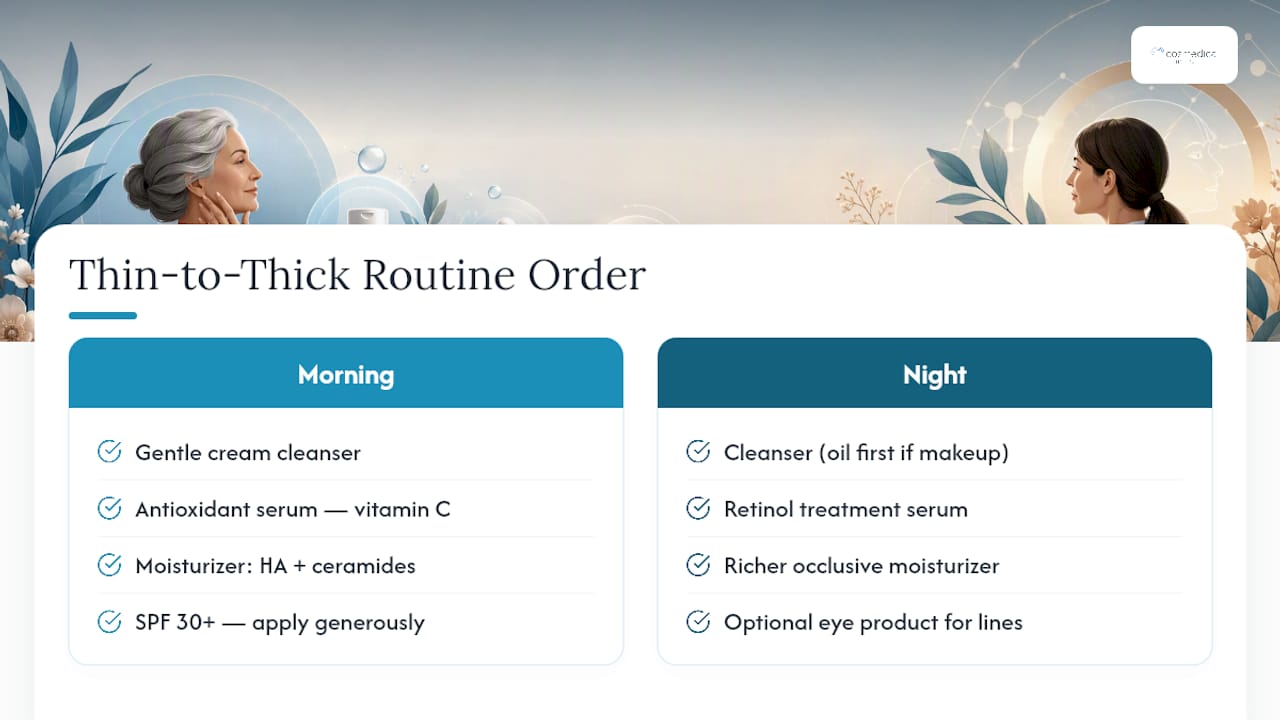
If that feels like a lot, simplify. A four-product minimum, cleanser, vitamin C serum, moisturizer, and SPF in the morning, then cleanser, retinoid, and moisturizer at night, covers the essentials. Everything else is optimization, not necessity.
Form matters more than people realize. Very dry or thin skin tends to do better with cream-based serums and facial oils layered under moisturizer, while normal-to-oily mature skin often prefers lightweight serums that won’t feel heavy or clog pores. The full anti-aging skincare routine breakdown walks through additional product pairing if you want more detail.
Pro Tip: If your skin feels tight or flaky within an hour of moisturizing, you’re either under-applying or your moisturizer lacks enough occlusive content. Add a thin layer of facial oil or petrolatum-based balm on top as a temporary patch while you find a better long-term match.
The Ingredients Worth Building a Routine Around
Not every ingredient earns shelf space in a mature skin routine. These five categories do the heavy lifting, and understanding what each one actually does helps you stop buying products based on marketing alone.
- Retinoids stimulate collagen production and improve fine lines and texture over time, according to Harvard Health’s dermatology guidance, which recommends starting with lower concentrations and building tolerance gradually rather than jumping to prescription strength. Pregnant or breastfeeding readers should avoid retinoids entirely and ask a doctor about alternatives.
- Vitamin C fights oxidative stress and helps brighten uneven tone. L-ascorbic acid works at concentrations between 10% and 20% but degrades quickly once opened, so buy smaller bottles and store them away from light and heat.
- Niacinamide and peptides support barrier function and can improve the look of enlarged pores and mild discoloration; growth-factor formulations are newer and show promise but the research base is thinner than for retinoids or vitamin C.
- Hyaluronic acid, glycerin, and ceramides handle hydration and barrier repair. Clinical reviews point to these three as foundational for reducing water loss and restoring plumpness in aging skin, which is why nearly every dermatologist-recommended moisturizer contains at least one of them.
- Chemical exfoliants like lactic acid, mandelic acid, and PHAs offer gentler cell turnover than physical scrubs. Harvard Health’s exfoliation guidance specifically warns against harsh scrubbing on an aging skin barrier, since microtears from physical abrasion heal more slowly than they did at twenty.
Roughly 90% of visible skin aging traces back to cumulative sun exposure rather than chronology alone, a figure that puts every one of these ingredients in perspective. None of them matter much if sunscreen isn’t already happening daily.
For a deeper look at hyaluronic acid specifically, including why it behaves differently on mature skin than on younger, oilier skin, the hyaluronic acid explainer covers the mechanism in more detail.
How to Introduce Retinoids and Acids Without Wrecking Your Barrier
Jumping straight into nightly retinoid use is the single most common mistake mature skin routine beginners make, and it’s the reason so many people conclude “retinol doesn’t work for me” after a week of redness and flaking.
- Weeks 1 to 2: Apply retinoid every third night only, and always after moisturizer if your skin is sensitive. This buffering technique dilutes the active slightly and slows absorption, reducing irritation while still delivering benefit.
- Weeks 3 to 4: Move to every other night if skin tolerates the every-third-night schedule without redness, tightness, or peeling.
- Month 2 onward: Progress to nightly use only if your skin shows no ongoing irritation. Many people plateau comfortably at three to four nights a week indefinitely, and that’s fine.
- When adding chemical exfoliants: Never layer a retinoid and an AHA/PHA on the same night early on. Alternate nights instead, retinoid on one, exfoliant on another, until you know how your skin handles both.
If irritation persists past the buffering stage, bakuchiol is a plant-derived alternative with a gentler tolerability profile, and peptide serums can offer some firming benefit without the retinoid learning curve at all.
Pro Tip: Stop immediately and consult a dermatologist if you notice persistent burning that doesn’t fade within an hour, swelling, or blistering. Mild flaking and pink tone in the first two weeks is normal; anything beyond that is your skin asking you to slow down.
Targeted Fixes for Pigmentation, Wrinkles, and Under-Eye Concerns
Different concerns call for different emphasis within your mature skin routine, even though the foundation stays the same.
- Pigmentation: Morning sunscreen is non-negotiable here since UV exposure directly worsens dark spots. Layer vitamin C, niacinamide, or azelaic acid to fade existing discoloration. Stubborn spots that don’t respond after several months may warrant a dermatologist conversation about hydroquinone or in-office treatments.
- Wrinkles and firmness: Consistent retinoid use paired with peptides and a solid hydrator does most of the visible work over time. For deeper static lines or significant volume loss, procedural options including neuromodulators, fillers, and energy-based devices can stimulate new collagen formation, though these require individualized risk counseling from a licensed provider rather than a one-size-fits-all recommendation.
- Under-eye concerns: Caffeine-based eye creams can temporarily reduce puffiness, and peptides may help with fine crepiness over time. Sleep position and salt intake affect morning puffiness more than most eye creams do. Persistent dark circles or significant hollowing are better addressed with a clinician who can evaluate whether filler or a surgical consult makes sense.
What the Research Actually Says About Preventing Skin Aging
The evidence here is less about miracle ingredients and more about consistent, boring fundamentals. Chronic sun exposure accounts for roughly 90% of visible skin aging, which makes daily sunscreen the highest-return action in this entire article by a wide margin.
Beyond sun protection, a few lifestyle factors move the needle measurably. Smoking accelerates collagen breakdown and visibly ages skin faster than sun exposure alone in smokers. Sleep quality affects skin barrier repair, since most cellular renewal happens overnight. Menopause reduces estrogen, which in turn reduces the skin’s natural moisture retention, making barrier-supportive moisturizers more important, not less, in your 50s and beyond.
A short prevention checklist worth pinning somewhere visible:
- Apply SPF 30+ every single morning, rain or shine
- Never smoke, and limit alcohol, which dehydrates skin over time
- Prioritize seven or more hours of sleep
- Choose a moisturizer with ceramides once you notice increased dryness
How Long Results Actually Take (and When to See a Dermatologist)
Patience is part of the routine. Hydration improvements from a good moisturizer show up within two to four weeks. Pigmentation fading from vitamin C or niacinamide takes eight to twelve weeks minimum. Retinoid-driven collagen remodeling, the kind that softens fine lines, takes roughly three months to become noticeable and continues improving for months beyond that. Procedural results vary widely by treatment type.
See a dermatologist if irritation is severe and persistent, if pigmentation changes suddenly rather than gradually, or if you notice any lesion that’s new, changing, or unusual, since that needs a biopsy, not a serum. Before your appointment, track what you’ve been using, snap photos in consistent lighting every few weeks, and write down your specific goals so the visit is efficient rather than a guessing game.
Hydration Tricks Mature Skin Needs That Younger Skin Doesn’t
Mature skin loses water faster than it did a decade ago, largely because oil production slows and the barrier thins. That means the humectant-only approach that worked at thirty often falls short now.
Facial oils layered over a hydrating serum can seal in moisture far more effectively than serum alone, particularly squalane or marula oil, which mimic skin’s natural lipids without feeling greasy. Occlusives, think petrolatum-based balms or thicker ceramide creams, matter more at night when your skin is actively repairing and most vulnerable to water loss through evaporation.
A layering trick worth adopting: apply hyaluronic acid serum to slightly damp skin, since it needs water to draw from, then seal it immediately with a ceramide moisturizer or facial oil before that water evaporates. Skipping the seal step is why some people find hyaluronic acid “doesn’t work,” when really it’s dehydrating them further by drawing moisture up and then losing it to the air.
If your skin feels persistently tight despite moisturizing, consider adding a humidifier at night, especially during dry winter months or in climate-controlled offices. Internal hydration matters too, though it’s a smaller lever than topical care.

Why Your Routine Needs to Change With the Seasons
A mature skin routine that stays identical year-round is working against you. Skin barrier needs shift with humidity and temperature, and aging skin has less resilience to buffer those swings than it once did.
In winter, indoor heating and cold outdoor air strip moisture fast. This is the season to size up your moisturizer, add a facial oil, and consider layering an occlusive at night even if you skip it in summer. Retinoid irritation often worsens in winter too, since dry air compounds flaking, so some people benefit from dialing back frequency slightly until spring.
Summer calls for lighter textures and more vigilant sunscreen reapplication, since longer daylight hours mean more cumulative UV exposure even on routine errands. Humidity can also make heavier creams feel uncomfortable, so switching to a gel-cream moisturizer for a few months isn’t a downgrade, it’s an adjustment to what your skin actually needs.
Common Irritants Hiding in Skincare Products for Mature Skin
Aging skin has a thinner, less resilient barrier, which means ingredients that were merely inconvenient at thirty can trigger real irritation now. Fragrance, both synthetic and “natural” essential oils, is the most common offender and shows up in products marketed as luxurious or spa-like. Denatured alcohol, often listed high on ingredient lists in toners and lightweight gels, can strip lipids and worsen dryness.
Sulfates like sodium lauryl sulfate in cleansers create that squeaky-clean feeling by stripping oil your barrier actually needs. Look for cleansers labeled sulfate-free instead. Physical exfoliating beads and walnut-shell scrubs are another common irritant category, since they cause microtears that heal slower on mature skin, one more reason chemical exfoliants tend to be the better choice.
Reading labels for these five culprits, fragrance, denatured alcohol, sulfates, physical scrub particles, and high concentrations of essential oils, catches most irritants before they reach your skin. The ingredients-to-avoid guide breaks down specific formulation red flags in more depth if you want to audit your current shelf.
Why Simplicity Beats a Ten-Step Routine
The mature skin routines that actually stick aren’t the elaborate ones, they’re the boring, repeatable ones. We built our approach at Cosmedica-skincare around dermatologist-tested formulations specifically because consistency with three good products beats sporadic use of ten trendy ones every time.
What we see get overlooked constantly: people chase new actives before their skin has tolerated the ones they already have. Adding vitamin C, a new retinoid, and an acid exfoliant in the same week isn’t ambition, it’s a setup for irritation that sets your barrier back further than doing nothing at all. Pair fewer, well-matched products and give each one a real trial period before judging it or adding the next thing.
— Thomas
Build Your Routine With a Starter Set That Covers the Basics
If narrowing down a mature skin routine to the essentials still feels like a lot of separate purchases, the Super Serum Set bundles the core building blocks in one order: an antioxidant-rich serum for morning use, a hydrating and barrier-supporting serum for evenings, and a moisturizer formulated with hyaluronic acid to lock both in. Unlike piecing together individual bottles from different brands and guessing at compatibility, this set is designed to layer correctly from day one.
It suits mature skin specifically because every formulation is dermatologist-tested and cruelty-free, with an emphasis on hydration and barrier repair rather than harsh, fast-acting actives that mature barriers tolerate poorly. Apply the antioxidant serum after cleansing in the morning, under sunscreen, and the hydrating serum at night before moisturizer. Give it a full eight weeks before judging results, since that’s roughly when hydration and tone improvements become visible. Explore the full serum set to see exactly what’s included and get started this week.
Sources
- Role of ultraviolet radiation in skin aging (PMC)
- Skin care for aging skin: Minimizing age spots, wrinkles, and undereye bags - Harvard Health
- Decoding Skin Aging: A Review of Mechanisms, Markers, and Modern Therapies - MDPI Cosmetics
FAQ
What is the best skincare routine for aging skin?
The best mature skin routine combines daily broad-spectrum SPF 30+, a vitamin C serum in the morning, a retinoid at night, and a moisturizer with hyaluronic acid and ceramides, introduced gradually to avoid irritation.
How can I make my skin look younger without procedures?
Consistent sunscreen use, a tolerated retinoid, and barrier-supporting moisturizers deliver the most visible improvement over three to six months; there’s no topical shortcut that replicates procedural results overnight.
Which skincare line is best for mature skin?
Look for a line built specifically around dermatologist-tested, barrier-focused formulations rather than trend-driven actives. Cosmedica-skincare’s serum and moisturizer sets are formulated with mature skin’s hydration and tolerability needs in mind.
What is a simple skincare routine for aging skin?
At minimum: gentle cleanser, vitamin C serum, moisturizer, and SPF in the morning, then cleanser, retinoid, and a richer moisturizer at night. That four-to-six-product structure covers every essential without added complexity.