

The science behind skin serums: Hydration, brightening, and anti-aging
TL;DR:
- Serums are concentrated formulas designed to deliver active ingredients deeply into the skin, unlike heavier moisturizers. Choosing the right serum depends on understanding its type—hydration, brightening, or anti-aging—and ensuring compatibility with your skin barrier for optimal results. Proper layering and routine consistency are essential, as routine design impacts efficacy more than ingredient strength alone.
Walk down any skincare aisle or scroll through a beauty retailer, and you’ll find dozens of serums all promising glowing, youthful, hydrated skin. But here’s the thing: not all serums are built the same, and picking the wrong one for your skin goal is one of the most common (and expensive) mistakes people make. The real difference lies in the active ingredients, how they’re formulated, and whether they match what your skin actually needs. Once you understand those basics, choosing between a hydration serum, a brightening serum, and an anti-aging serum becomes a lot less overwhelming and a lot more exciting.
Table of Contents
- What are skin serums and why do they matter?
- Understanding different types of skin serums: Hydration, brightening, and anti-aging
- How ingredients and skin barriers affect serum performance
- How to use and layer serums for best results
- What most people miss about serums: The real difference is not just ingredients
- Find your perfect serum with Cosmedica Skincare
- Frequently asked questions
Key Takeaways
| Point | Details |
|---|---|
| Serums deliver targeted results | Serums focus on specific skin concerns using concentrated actives for hydration, brightening, or anti-aging. |
| Layer from thinnest to thickest | Proper serum layering and timing ensure maximum effectiveness and minimize irritation. |
| Ingredient and skin context matter | Serum benefit depends on both ingredient type and the health of your skin’s barrier. |
| Combine serums and moisturizers | Serums boost active benefits but require moisturizers to seal in hydration and optimize outcomes. |
| Customize your serum routine | Personalize your regimen for your skin’s needs, separating strong actives and prioritizing barrier care. |
What are skin serums and why do they matter?
Let’s start with the basics. A serum is a lightweight, concentrated formula designed to deliver a high dose of active ingredients directly into your skin. Think of it as the workhorse of your skincare routine. Unlike heavier creams or lotions, serums are formulated with smaller molecules, which means they can penetrate deeper into the epidermis (the outermost layer of your skin) and get to work faster.
The most common misconception we hear is that serums and moisturizers are interchangeable. They’re really not. The biggest difference comes down to what each product is designed to do. Serums are built around concentrated active ingredients, while moisturizers focus on emollients (ingredients that soften and smooth the skin’s surface) and occlusives (ingredients that form a protective barrier to prevent moisture loss). Serums go deep; moisturizers seal the deal.
Here’s a quick comparison to make it clearer:
| Feature | Serum | Moisturizer |
|---|---|---|
| Texture | Lightweight, watery or gel-like | Thicker, cream or lotion |
| Active ingredient concentration | High | Moderate to low |
| Primary function | Target specific concerns | Hydrate and protect surface |
| Absorption speed | Fast | Slower |
| Best used | Before moisturizer | After serum |
| Replaces the other? | No | No |
As Good Housekeeping’s Beauty Lab puts it, anti-aging serums are higher-concentration active treatment liquid formulas designed to soften lines, brighten dark spots, and improve firmness and texture over time, which clearly separates them from what your standard moisturizer is doing.
A few myths worth clearing up right now:
- Myth: All serums do the same thing. Not even close. A hydrating serum and a retinol serum have completely different jobs, different ingredients, and different ideal skin types.
- Myth: Serums replace your moisturizer. Serums lack the emollients and occlusives that moisturizers provide, so you still need both in your routine. We have a great moisturizers overview if you need help choosing the right companion product.
- Myth: More active ingredients always means better results. Higher concentrations can actually cause irritation, especially on sensitive or compromised skin.
A note worth remembering: A serum is only as effective as its compatibility with your skin barrier. Using the right serum on a disrupted or dehydrated barrier is like trying to water a plant through a plastic bag — the goodness just can’t get in.
If you’re just starting out with exploring serums, the most important step is identifying your primary skin concern before you buy. That single decision will narrow the field significantly.
Understanding different types of skin serums: Hydration, brightening, and anti-aging
Now that you know what serums are and why they matter, let’s dive into the main categories and what makes each unique.
Hydration serums
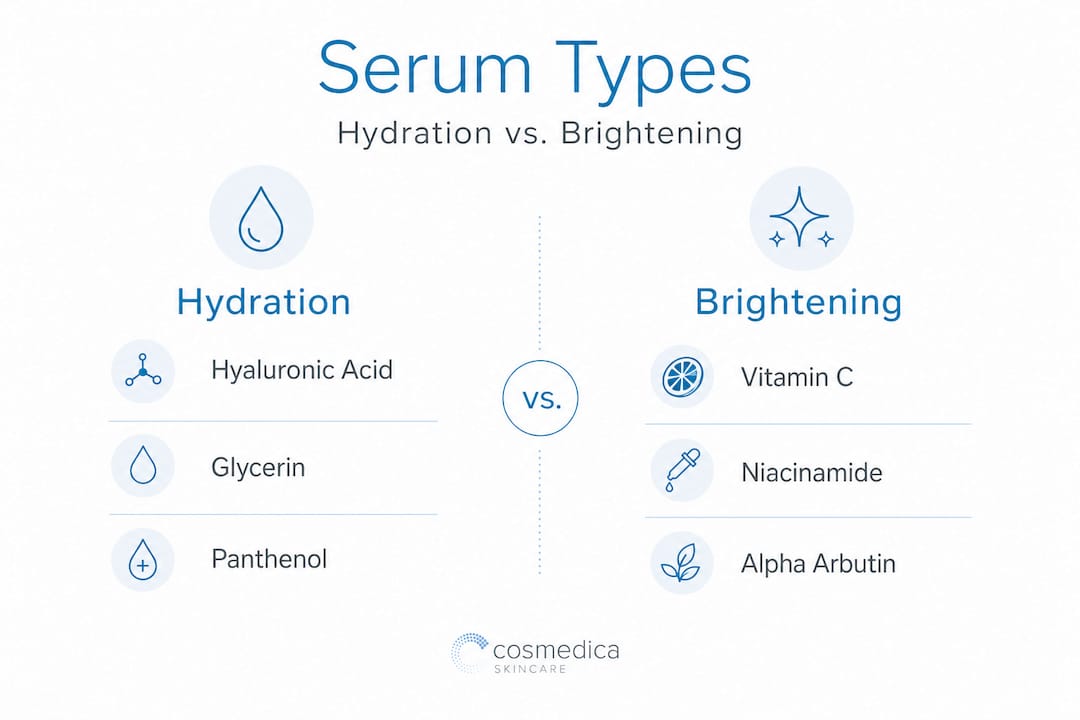
Hydration serums are built around humectants, which are ingredients that attract water molecules and hold them in the skin. The most famous humectant is hyaluronic acid (HA), a naturally occurring substance in the body that can hold up to 1,000 times its weight in water. Think of it as a tiny sponge sitting in your skin, pulling in moisture from the environment and from deeper layers of your dermis.
Other common humectants you’ll find in hydrating serums include glycerin, panthenol (a form of vitamin B5), and sodium PCA. According to guidance on achieving that coveted “juicy skin” look, humectants like hyaluronic acid and glycerin are the key moisture-binding ingredients that improve the look and feel of dehydrated skin. If your skin feels tight, looks dull, or you notice fine lines that seem more visible when your skin is dry, a hydration serum is often your best first move.
You can explore a dedicated range of hyaluronic acid serums to find formulas suited to your skin type, whether that’s oily, combination, or dry.
Brightening serums
Brightening serums work differently. Their goal is to even out skin tone, reduce the appearance of dark spots (hyperpigmentation), and restore luminosity to dull skin. The star ingredient here is almost always vitamin C, specifically in its most potent form, L-ascorbic acid.
Vitamin C is an antioxidant, meaning it neutralizes free radicals (unstable molecules that damage skin cells and accelerate aging). It also inhibits melanin production, which is what makes it so effective at fading discoloration and brightening overall tone. Wirecutter’s vitamin C serum testing confirms that brightening serum testing considers sensory attributes alongside dark spot improvement and brightening outcomes, which is a good reminder that a great formula should feel good on skin too.
Other brightening actives to look for include niacinamide (vitamin B3), kojic acid, and alpha arbutin. These work well alongside or in place of vitamin C, particularly for sensitive skin that may not tolerate high concentrations of L-ascorbic acid.
Browse vitamin C skincare and skin brightening products to find brightening options matched to your skin sensitivity level.
Anti-aging serums
Anti-aging serums are arguably the most scientifically complex category. They target multiple concerns at once: fine lines, loss of firmness, uneven texture, and deep-set wrinkles. The key actives in this category include retinoids (like retinol, a derivative of vitamin A), peptides (short chains of amino acids that signal the skin to produce more collagen), and growth factors.
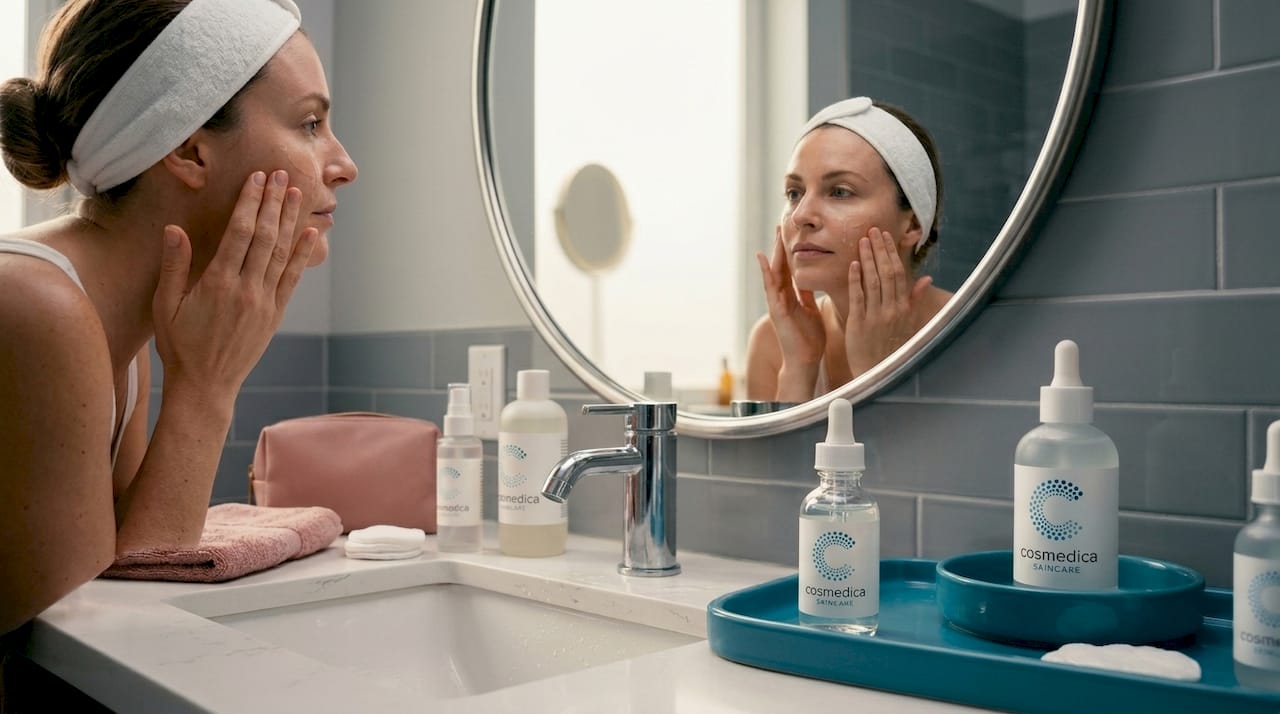
Retinol, in particular, has one of the strongest bodies of clinical evidence behind it. It speeds up cell turnover, encourages collagen production, and can visibly reduce fine lines with consistent use over months. Peptides are a gentler option that can work synergistically with retinol for those who prefer to ease into the category.
Here’s a quick reference for the three serum types:
| Serum type | Key ingredients | Primary benefit | Best for |
|---|---|---|---|
| Hydration | Hyaluronic acid, glycerin, panthenol | Moisture and plumpness | Dry, dehydrated, sensitive skin |
| Brightening | Vitamin C, niacinamide, kojic acid | Even tone, luminosity | Dull skin, dark spots, hyperpigmentation |
| Anti-aging | Retinol, peptides, growth factors | Firmness, texture, fine lines | Mature skin, early aging prevention |
Pro Tip: If you have multiple skin concerns (because, honestly, who doesn’t?), start with one serum targeted to your most pressing issue and layer in others gradually. Introducing too many actives at once is one of the fastest ways to irritate your skin and set your routine back by weeks.
How ingredients and skin barriers affect serum performance
With the core types covered, let’s look at how ingredient choice and skin context influence serum effectiveness.
Here’s something most articles skip over: how well a serum works isn’t just about the formula in the bottle. It’s heavily influenced by the state of your skin barrier at the time of application. Your skin barrier, made up of lipids (natural fats) and proteins in the outermost layer of skin, acts as the gatekeeper for everything you apply topically.
When your barrier is healthy, it allows serums to absorb well and deliver their actives efficiently. When it’s damaged (from over-exfoliation, harsh weather, or stress), even the best serum can cause irritation or simply sit on the surface without penetrating properly. This is especially relevant after in-office skin procedures.
Here’s a practical framework for serum performance based on barrier status:
- Healthy barrier: Most serums absorb well. You can use active-rich formulas like retinol and vitamin C with minimal reaction.
- Mildly compromised barrier: Stick to hydrating and barrier-repairing serums with ceramides, hyaluronic acid, and panthenol. Pause strong actives temporarily.
- Post-procedure skin (microneedling, laser, chemical peel): Prioritize barrier support first. Clinical research on post-microneedling care supports using hyaluronic acid alongside antioxidant combinations like vitamin C, E, and ferulic acid to support recovery.
- Severely compromised barrier: Use only the gentlest, fragrance-free formulas. Anything with acids, retinol, or high-concentration vitamin C can cause stinging and worsen inflammation.
Understanding hyaluronic acid application is a great way to learn how this hero ingredient fits into barrier-supportive routines, especially for post-procedure skin.
Additionally, clinical evidence for hyaluronic acid shows that this ingredient supports hydration, skin brightness, and multiple physical outcomes when used consistently. This makes it one of the safest and most broadly effective serums ingredients regardless of skin barrier status, a major reason we include it across so many of our formulations.
The benefits of hyaluronic acid go well beyond basic hydration, touching on everything from plumpness and elasticity to support for compromised or stressed skin.
Pro Tip: Apply your hydrating serum to slightly damp skin right after cleansing. Hyaluronic acid needs moisture to attract and bind, so giving it a little water to work with amplifies its effect noticeably.
How to use and layer serums for best results
Understanding barrier science sets the stage for practical layering — here’s how to sequence your serums for maximum benefit.
The golden rule of serum layering is simple: thin to thick, water-based before oil-based. Lighter, water-based formulas need direct access to the skin to absorb properly. If you apply a heavier oil-based product first, it creates a barrier that prevents your thinner serum from penetrating. The result? You’re essentially wearing the product on the surface, not getting its active benefits where they count.
Here’s a step-by-step layering sequence that works for most routines:
- Cleanse your face thoroughly to remove dirt, oil, and sunscreen. Your skin should be a clean canvas.
- Tone (optional) to balance skin pH and prep the surface for better serum absorption.
- Apply your thinnest serum first. Typically, this will be a hydrating serum like hyaluronic acid, which is lightweight and water-based.
- Wait 30 to 60 seconds between layers. This allows each product to partially absorb and reduces the chance of pilling (when products ball up on the skin surface).
- Apply any treatment serum next (vitamin C in the morning, retinol in the evening).
- Follow with moisturizer to lock in your serum layers and support the skin barrier.
- Apply SPF in the morning as the final step. This is non-negotiable, especially when using vitamin C or retinol.
As layering guidance from experts confirms, applying thinner products first and allowing proper absorption time reduces both pilling and irritation significantly.
Common mistakes that undermine your serum routine:
- Skipping moisturizer after your serum. Serums don’t seal in moisture, and without a moisturizer, hydration evaporates quickly.
- Rushing application. Layering too fast causes products to mix before they absorb, leading to pilling and reduced effectiveness.
- Using incompatible actives together. Vitamin C (low pH) and niacinamide were once thought to be incompatible, but current research suggests they can coexist at moderate concentrations. However, pairing retinol with AHAs (alpha hydroxy acids like glycolic acid) in the same application is still best avoided due to potential irritation.
- Applying too much product. A few drops are genuinely enough for most serums. More product does not equal more results; it usually just leads to wasted formula and potential congestion.
Pro Tip: Separate your strongest actives by time of day or day of the week. Use vitamin C in the morning (it works synergistically with SPF to protect against UV damage) and retinol at night (it increases sun sensitivity). If you’re using an AHA exfoliant, consider using it only two to three evenings a week, alternating with your retinol nights.
For specific guidance on solutions for dry skin, or if you want targeted anti-aging serum tips, we’ve put together resources that dig even deeper into these routines.
What most people miss about serums: The real difference is not just ingredients
Here’s our honest take after years of working in skincare: most people obsess over ingredient labels when they should be thinking about context.
It’s tempting to buy the serum with the highest vitamin C percentage or the most retinol and expect proportionally better results. But skincare doesn’t work that way. A 20% vitamin C serum on a sensitized, over-exfoliated skin barrier won’t outperform a well-formulated 10% serum applied to healthy, well-hydrated skin. In fact, it’ll likely make things worse.
The uncomfortable truth is that routine design matters more than individual product strength. We’ve seen people with genuinely great serums fail to see results because they were using them in the wrong order, at the wrong time, or on a barrier that simply wasn’t ready to receive them. That’s not a product failure. That’s a system failure.
Many popular guides recommend separating strong actives by timing, and layering guidance makes clear that pairing retinoids, acids, and vitamin C in the same application step is a recipe for irritation rather than acceleration. This is real, practical advice that gets glossed over when brands just want to sell you the next hero ingredient.
We also want to challenge the idea that more serums equals better skin. Adding five new actives to your routine at once makes it nearly impossible to know what’s working, what’s causing a reaction, or what to cut when things go sideways. Start with one well-chosen serum. Use it consistently for at least four to six weeks. Then assess.
And finally, consider your skin’s needs across seasons and life stages. The same serum that worked beautifully in summer humidity might feel insufficient in dry winter months when your barrier needs extra support. Knowing types of hyaluronic acid and how different molecular weights penetrate the skin differently is the kind of nuanced knowledge that actually changes results.
Serums are tools, and like any tool, their effectiveness depends entirely on how, when, and in what condition you use them.
Find your perfect serum with Cosmedica Skincare
Ready to apply what you’ve learned? At Cosmedica Skincare, we’ve built our serum lineup around exactly the science we just covered: the right actives, in the right concentrations, formulated to work with your skin rather than against it. Whether you’re chasing deep hydration, a brighter complexion, or firmer, more youthful looking skin, our Super Serum Set is a great place to start. It bundles the most popular formulas together so you can experience multiple benefits without the guesswork. Browse the full explore all products collection, or if you’re shopping for someone special, check out our curated gifts for skincare lovers selection. Affordable, cruelty-free, and formulated for real results.
Frequently asked questions
Do I need a moisturizer if I use a serum?
Yes, serums deliver actives but lack the emollients needed to lock in moisture, so a moisturizer is essential after serum application. As Good Housekeeping’s Beauty Lab notes, serums are concentrated liquid formulas, not replacements for the sealing function of a moisturizer.
Which serum should I use for dry skin?
Look for hydration-focused serums featuring humectants like hyaluronic acid and glycerin to improve skin plumpness and feel. Humectant-rich formulas are specifically designed to bind moisture to the skin, making them ideal for dry and dehydrated skin types.
Can I use multiple serums in one routine?
Yes, but layer from thinnest to thickest and separate strong actives by timing to prevent irritation or pilling. Following proper layering order and allowing absorption time between products makes using multiple serums both safe and effective.
How soon will I see results from a serum?
Hydration benefits are often noticeable quickly (sometimes within a single application), but brightening and anti-aging results may require weeks of consistent use. Anti-aging serums work to improve firmness, texture, and brightness over time, so patience and consistency are key.
Are oral supplements of hyaluronic acid as effective as topical serums?
Clinical studies show oral hyaluronic acid can improve hydration and elasticity from within, but topical serums target surface moisture and are most useful for visible plumpness. A randomized controlled trial found meaningful skin improvements from oral supplementation, though topical and oral approaches serve complementary rather than identical roles.