

Healthy skin habits list: Evidence-based routines for radiant skin
TL;DR:
- Consistent, core habits of gentle cleansing, moisturizing, and daily SPF outperform complex routines. Tailor your skincare based on your skin type, focusing on simplicity and patch testing new products. Building healthy habits and personalized lifestyle choices leads to better, long-term skin results without product overload.
Skincare advice is everywhere, and most of it contradicts itself. One source tells you to exfoliate daily, another says never. One expert swears by a ten-step routine, another insists three products are all you need. If you’ve ever stood in front of your bathroom mirror feeling genuinely confused about what your skin actually needs, you’re not alone. The good news? Science cuts through the noise. A focused, evidence-backed list of daily habits consistently outperforms complicated multi-product regimens, and the best part is that natural, cruelty-free products fit beautifully into this kind of streamlined routine.
Table of Contents
- Essential healthy skin habits: What matters most
- Timing and technique: How and when to apply each habit
- Smart customization: Tailoring habits for different skin types
- Diet and lifestyle: How what you eat and do affects your skin
- Why simple, consistent routines beat trendy product overload
- Discover cruelty-free skincare solutions for your routine
- Frequently asked questions
Key Takeaways
| Point | Details |
|---|---|
| Stick to the basics | Gentle cleansing, moisturizing, and sunscreen are the key habits for healthy skin. |
| Timing matters | Moisturize within three minutes after bathing and apply sunscreen every morning for best results. |
| Customize with care | Simple routines can be adapted for sensitive or acne-prone skin by using gentle, tailored products. |
| Diet impacts skin | Foods like high-glycemic carbs and dairy may worsen acne, so track your diet for potential triggers. |
| Consistency wins | Regular routines help avoid irritation and achieve lasting improvements, while frequent product changes can backfire. |
Essential healthy skin habits: What matters most
Before we get into the nuances of timing and technique, let’s ground everything in what dermatologists actually recommend. The foundational habit stack isn’t glamorous. It’s not a ten-step Korean beauty protocol or a viral TikTok trend. According to a dermatologist guide on skincare, the core evidence-based approach is: cleanse gently, moisturize, and use daily broad-spectrum sunscreen (SPF 30+). That’s it. Everything else builds on this foundation.
Let’s break down what each of these habits really means in practice:
- Gentle cleansing: Use a mild, fragrance-free cleanser that removes dirt, oil, and makeup without stripping your skin’s natural moisture barrier (the lipid barrier, which is your skin’s first line of defense). Harsh cleansers disrupt this barrier and trigger more oil production, which is counterproductive. Twice a day is typically enough, morning and night.
- Consistent moisturizing: Moisturizer works by sealing hydration into the outermost layer of skin, the epidermis. Think of it like putting a lid on a cup of water. Without that lid, moisture evaporates. Even oily skin types benefit from lightweight moisturizers because dehydrated skin overcompensates by producing more sebum.
- Daily broad-spectrum sunscreen: UV radiation is the number one external cause of premature aging, hyperpigmentation, and skin cancer. Broad-spectrum means the formula protects against both UVA rays (which cause aging) and UVB rays (which cause burning). SPF 30 blocks about 97% of UVB rays, which is why it’s the minimum recommendation. You can find trusted sun protection advice through established health organizations.
- Avoiding aggressive exfoliation: Scrubbing your skin feels satisfying, but mechanical exfoliation with rough beads or abrasive sponges creates micro-tears in the skin surface. These micro-tears increase inflammation and can worsen conditions like acne and rosacea. If you exfoliate, do it gently and no more than two to three times per week.
“Consistency is what separates people who see results from people who keep searching for the next miracle product. The basics, done well and done daily, are the miracle.”
If you’re working on building an anti-aging skincare routine, these core habits are the non-negotiables. Everything from retinol serums to vitamin C treatments works better on a foundation of healthy, well-moisturized, protected skin.
Now that we’ve set the evidence-backed foundation, let’s look at how to practice these core habits every day in the right order and at the right time.
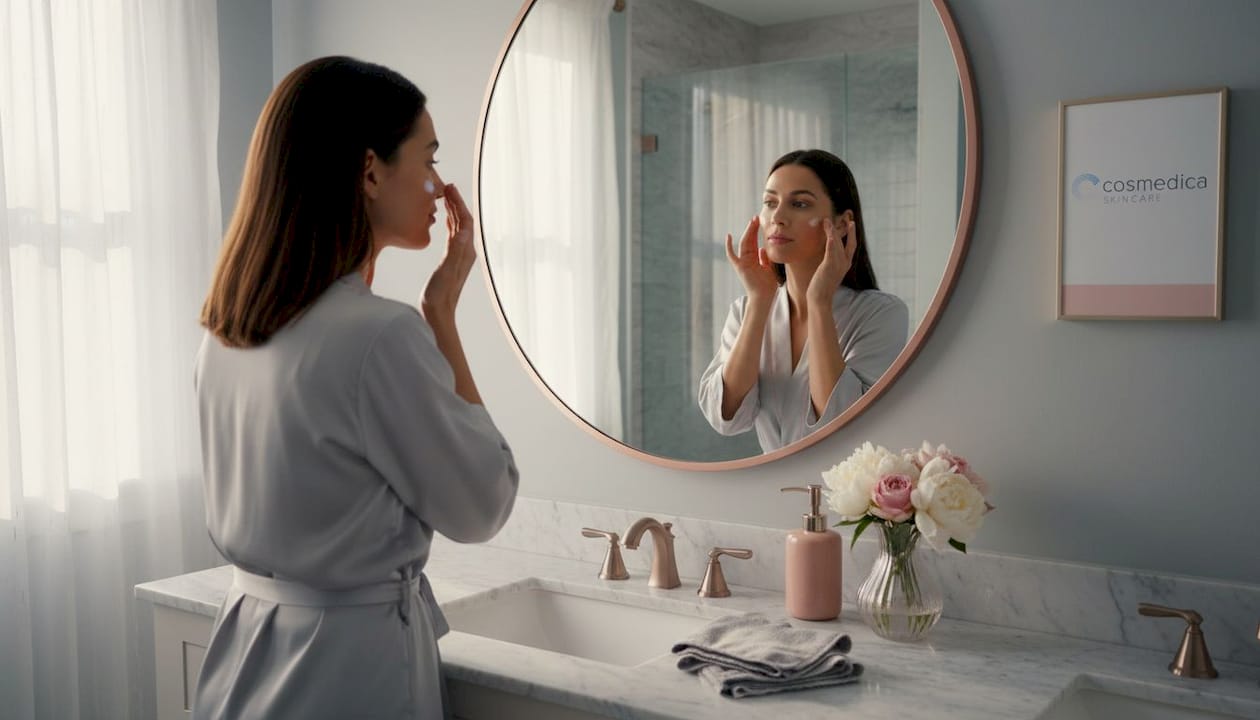
Timing and technique: How and when to apply each habit
Doing the right things in the wrong order, or at the wrong time, reduces how effective they are. The sequence and timing of your routine actually matters more than most people realize. Here’s how to structure your day for maximum skin benefit:
- Morning cleanse: A gentle rinse or light cleanse in the morning removes any sweat or product residue from overnight. You don’t necessarily need a full-strength cleanser in the morning unless your skin is very oily. Lukewarm water is your friend because hot water strips natural oils faster.
- Apply treatments: If you’re using vitamin C serum or other antioxidant treatments, apply them right after cleansing on clean, slightly damp skin. Antioxidants work best in the morning because they help neutralize free radicals from UV and pollution exposure throughout the day.
- Moisturize within three minutes: Moisturizing right after bathing locks in moisture before it evaporates, which is especially important for anyone dealing with dry or sensitive skin. The three-minute window is real. Waiting longer means your skin has already started to lose the water that washing or bathing added.
- Sunscreen last, every single morning: Sunscreen should be the final step in your morning routine, applied over your moisturizer. And yes, this means every day, not just beach days. UV rays penetrate clouds and windows, so skipping sunscreen on overcast days or while working indoors is one of the most common mistakes people make.
- Evening cleanse: This is where you remove all the sunscreen, makeup, pollution, and sebum that accumulated during the day. Double cleansing (an oil-based first step followed by a water-based cleanser) is particularly effective if you wear heavy makeup or SPF formulas.
- Evening moisturizer or treatment: Night is when your skin goes into repair mode. This is the ideal time to apply richer moisturizers, retinol, or peptide treatments.
Pro Tip: Always remove your makeup before bed, no exceptions. Sleeping in makeup clogs pores, disrupts your skin’s natural overnight repair cycle, and can cause irritation and breakouts even in people who don’t normally experience acne. A gentle micellar water or cleansing balm makes this step fast and easy, even when you’re exhausted.
The technique matters just as much as the timing. Never tug or pull at your skin when cleansing. Use your fingertips in soft, circular motions, and always pat dry with a clean towel rather than rubbing. For anyone managing acne-prone routines, resisting the urge to pop or pick is one of the most impactful habits you can build. Picking causes inflammation, spreads bacteria, and often results in post-inflammatory hyperpigmentation that can last months.
Following this step-by-step glowing skin guide approach gives your products the best possible environment to do their job. With the daily core habits mapped out, let’s now look at how to adapt these habits to your unique skin needs.
Smart customization: Tailoring habits for different skin types
Your skin is individual. What works beautifully for your friend’s combination skin might cause irritation or breakouts for your sensitive or acne-prone complexion. The good news is that the foundational habits stay the same, but the products and frequency you use can be adjusted without overcomplicating your routine.
Sensitive skin tends to react to fragrance, alcohol, harsh preservatives, and physical exfoliants. If your skin flushes, stings, or breaks out easily, the game plan is simplicity and patience. Focus on fragrance-free formulas, reduce exfoliation to once a week or skip it entirely, and look for soothing ingredients like niacinamide, ceramides, and gentle hydration options like hyaluronic acid. Hyaluronic acid is a humectant, which means it pulls moisture from the environment and from deeper skin layers toward the surface, working like a sponge for your skin without adding irritating ingredients.
Acne-prone skin benefits from simplicity and consistency above almost everything else. Research shows that for acne-prone skin, the right approach is to cleanse, treat with appropriate actives (like salicylic acid or benzoyl peroxide), moisturize with a non-comedogenic formula, and protect with broad-spectrum sunscreen. The key is not to overload your skin with too many new or harsh products at once. Each new product introduces variables, and if you break out, you won’t know what caused it.
Eczema and rosacea often require medical guidance alongside lifestyle and product adjustments. Both conditions involve a compromised skin barrier, so barrier-focused care is priority one. Look for ceramide-rich formulas in your moisturizer collection, avoid known triggers (more on that in the next section), and work with a dermatologist when flares are frequent or severe.
Here’s a quick comparison to make customization clearer:
| Skin concern | Cleansing | Exfoliation | Moisturizer | Special notes |
|---|---|---|---|---|
| Normal/combination | Twice daily, mild cleanser | 2 to 3x per week | Lightweight, daily | Balanced approach works well |
| Sensitive | Once or twice, fragrance-free | Once weekly or skip | Ceramide or hyaluronic acid | Patch test new products |
| Acne-prone | Twice daily, salicylic acid cleanser | 1 to 2x per week | Non-comedogenic, oil-free | Introduce actives one at a time |
| Dry skin | Once daily or gentle twice | Once weekly max | Rich, occlusive formula | Apply within three minutes of bathing |
| Eczema/rosacea | Once daily, very gentle | Avoid or rarely | Barrier repair, fragrance-free | See a dermatologist for flares |
One thing we want to emphasize: no matter your skin type, patch testing any new product before full application is a smart habit. Apply a small amount to your inner wrist or behind your ear and wait 24 to 48 hours before using it on your face. This simple step can save you from a frustrating reaction. Understanding how to personalize your habits sets the stage for the next layer of skin health: what you eat and how you live.
Diet and lifestyle: How what you eat and do affects your skin
Your skin doesn’t exist in isolation. It’s connected to everything happening inside your body, and that means your diet, sleep, stress levels, and daily habits all show up on your face. This isn’t about being perfect. It’s about understanding the relationship between your lifestyle and your skin so you can make informed choices.
The diet connection is more significant than many people realize. Research in the field shows that diet interacts with skin conditions in meaningful ways. High-glycemic foods, which are foods that spike blood sugar quickly like white bread, sugary drinks, and processed snacks, are often linked to worsening acne. Dairy is another commonly cited trigger, particularly skim milk, possibly because of the hormones naturally present in milk. The connection isn’t universal, meaning not every person with acne will react to these foods, but it’s worth paying attention to.
For rosacea, triggers tend to be more individualized. Common ones include alcohol (especially red wine and beer), spicy foods, very hot beverages, and extreme temperatures. Keeping a simple food diary for two to three weeks can reveal patterns you wouldn’t notice otherwise.
Here’s a breakdown of dietary patterns and their common effects on skin:
| Food category | Potential effect on skin | Who it affects most |
|---|---|---|
| High-glycemic foods | May worsen acne, increase inflammation | Acne-prone skin types |
| Dairy (especially skim milk) | Linked to increased breakout frequency | Acne-prone skin types |
| Alcohol | Can trigger rosacea flares, dehydrates skin | Rosacea, sensitive skin |
| Spicy foods | Common rosacea trigger, can cause flushing | Rosacea |
| Omega-3 rich foods (fish, flaxseed) | Anti-inflammatory, supports barrier function | All skin types |
| Antioxidant-rich foods (berries, leafy greens) | May help protect against oxidative damage | All skin types |
| Hydrating foods (cucumber, watermelon) | Contributes to overall skin hydration | All skin types |
“What you feed your body, you feed your skin. Hydration, anti-inflammatory foods, and stable blood sugar create an environment where healthy skin can thrive.”
Lifestyle factors are equally important. Sleep is when your skin literally repairs itself. During deep sleep, your body increases production of growth hormone, which stimulates cell regeneration and collagen production. Chronic sleep deprivation shows up as dullness, increased fine lines, and puffiness. Most adults need seven to nine hours for optimal skin repair.
Stress is another significant factor. Cortisol, the stress hormone, triggers increased oil production and inflammation, both of which contribute to breakouts. Building stress management practices into your week, whether that’s exercise, meditation, journaling, or simply spending time outside, has real benefits for your skin.
Small hygiene habits matter more than people expect. Changing your pillowcase at least twice a week reduces the transfer of oil, bacteria, and old product residue back onto your face while you sleep. Cleaning your phone screen regularly is another underrated habit, since phones carry a surprising amount of bacteria and come into contact with your cheek and jawline frequently. For more on enhancing skin hydration through both products and habits, our hyaluronic acid guide covers the topic in depth.
And don’t underestimate the value of post-care tips after skin treatments or procedures, since proper aftercare habits accelerate healing and maintain results. By integrating smart dietary and lifestyle choices, your habit stack becomes more holistic and powerful. Now let’s talk about something that gets less attention but might be the most important insight of all.
Why simple, consistent routines beat trendy product overload
Here’s our honest take, and it’s not what the skincare industry wants you to hear: most people don’t need more products, they need more consistency with fewer products.
We’ve watched the skincare culture drift toward adding more and more. A new serum drops and suddenly everyone’s layering it over three other actives. A celebrity shares their twelve-step routine and the comments fill with people planning to replicate it step for step. The problem is that more complexity doesn’t equal more results. It usually equals more irritation, more confusion, and more money spent chasing something that a good three-step routine could have delivered months ago.
The science of skin care routines consistently shows that barrier-focused habits done consistently outperform complicated regimens that change frequently. Changing multiple products at once makes it nearly impossible to identify what’s helping, what’s hurting, or what triggered a breakout. This matters especially for acne-prone skin, where introducing several new products simultaneously can worsen breakouts and make it impossible to pinpoint the cause.
Think of it this way: your skin has a memory. Every time you switch products, you’re essentially restarting the clock. Active ingredients like retinol typically take six to twelve weeks to show visible results. Vitamin C needs consistent daily use for four to six weeks before brightening effects become obvious. If you’re switching things up every two or three weeks because you’re impatient, you’re never giving anything enough time to actually work.
Our suggestion? Commit to your core routine for at least two full weeks before evaluating whether something is or isn’t working. Give actives a full month. Track what you’re using with simple notes on your phone, noting any changes in your skin’s texture, clarity, and hydration. This approach turns skincare from a guessing game into something you can actually learn from.
Pro Tip: Track changes for at least two weeks before swapping or adding products. If your skin seems worse after adding something new, remove that one product first and give your skin a week to stabilize before drawing any conclusions.
The brands and products that genuinely deserve your loyalty are the ones that keep ingredients simple, transparent, and effective. Complexity in a formula isn’t a feature. Efficacy is.
Discover cruelty-free skincare solutions for your routine
Now that you know which habits matter most, the next step is finding products that actually support this kind of clean, consistent approach. At Cosmedica Skincare, everything we formulate is built around the same evidence-backed philosophy we’ve covered here: gentle, effective, and designed to work with your skin rather than against it. Our cruelty-free hyaluronic acid collection makes the hydration step simple and affordable, while our range of moisturizers covers everything from lightweight daily options to richer barrier-repair formulas. Whether you’re building your first real routine or refining one that’s already mostly working, we have the natural, dermatologist-tested tools to help you stay consistent and see results you’ll actually notice.
Frequently asked questions
What are the most important daily habits for skin health?
Gentle cleansing, consistent moisturizing, and daily broad-spectrum sunscreen are the core evidence-based habits for healthy skin, and dermatologists consistently recommend this trio above all other steps.
How can I adapt skin habits for acne-prone or sensitive skin?
For acne-prone skin, keep it simple: cleanse, treat with appropriate actives, moisturize with a non-comedogenic formula, and apply sunscreen daily. Avoid overloading with new products all at once, since it makes identifying irritation much harder.
How does diet affect skin health and breakouts?
High-glycemic foods and dairy are frequently linked to worsening acne, while rosacea triggers like spicy food and alcohol vary more from person to person, making a personal food diary a useful tool.
Why is consistency important in skin care routines?
Consistent routines let you actually see what’s working, reduce irritation, and strengthen your skin barrier over time. Changing products too frequently makes it nearly impossible to know what’s helping or causing a reaction, especially for acne-prone skin.