

The Real Role of Serums in Skincare Explained
TL;DR:
- Serums are concentrated delivery systems designed to penetrate deeply into the skin, providing more active ingredients than moisturizers. Applying serums before moisturizer significantly enhances absorption and skin benefits, especially when used consistently over time. They serve different functions; serums target cellular concerns while moisturizers protect and seal in efficacy, so both are essential for optimal skincare results.
If your serum is sitting on the bathroom shelf because you’re not quite sure what it actually does, you’re not alone. The role of serums in skincare is one of the most misunderstood topics in beauty, and that confusion costs people real results. Serums aren’t glorified moisturizers or optional add-ons. They are concentrated delivery systems engineered to push active ingredients deeper into your skin than any cream or cleanser can. Get this right, and your entire routine changes.
Table of Contents
- Key takeaways
- What serums actually are and why they work differently
- Clinical benefits of skincare serums, backed by research
- How to use serums effectively in your routine
- Serum vs moisturizer: different jobs, one team
- My honest take on how most people use serums wrong
- Explore Cosmedica-skincare’s serum range
- FAQ
Key takeaways
| Point | Details |
|---|---|
| Serums are delivery systems | They carry active ingredients deeper than creams, with up to 10x the concentration of actives compared to moisturizers. |
| Layering order matters | Applying serum before moisturizer gives significantly higher absorption rates than applying it after. |
| Ingredient matching is key | Antioxidant, peptide, and hydrating serums target different concerns. Choosing wrong means missing results. |
| Serums and moisturizers work together | Serums deliver actives; moisturizers seal them in. Neither replaces the other. |
| Consistency beats intensity | Clinical improvements in hydration, texture, and wrinkle depth appear after several consistent weeks of use. |
What serums actually are and why they work differently
Most people think of skincare products as sitting on the surface of the skin. Cleansers wash it, moisturizers coat it, sunscreens protect it. Serums do something fundamentally different. They are engineered to go into the skin.
The science behind this starts with molecular size. Serum formulations use much smaller molecules than creams or lotions, which means they can slip past the outer layers of the epidermis and deliver their payload where it counts. Face serums contain 10 times the concentration of active ingredients compared to creams, enabling faster and deeper effects on concerns like wrinkles, hydration, and pigmentation. That’s not a small difference. That’s a different category of product entirely.
Serums also split into two main types, and knowing which you’re using matters:
- Water-based serums typically contain ingredients like hyaluronic acid, niacinamide, and vitamin C. They absorb quickly, feel lightweight, and work best applied directly after cleansing on damp skin.
- Oil-based serums use a lipid carrier to deliver fat-soluble actives like retinol, squalane, or certain antioxidants. They feel slightly richer and are generally best suited for evening use or drier skin types.
Historically, serums were clinical products used in dermatology offices. Modern formulation science has brought that technology into at-home products, with advances in encapsulation, pH optimization, and delivery chemistry making today’s serums far more stable and effective than even a decade ago.
Think of a serum as a precision tool. A moisturizer is like painting a wall. A serum is like injecting color directly into the plaster.
Clinical benefits of skincare serums, backed by research
The benefits of skincare serums are not just marketing language. There is real clinical evidence behind what well-formulated serums can do, and it’s worth knowing the specifics.
Hydration and barrier repair
One of the most well-documented roles of a serum is delivering intense, functional hydration that goes beyond surface moisture. A biomimetic collagen tripeptide serum with niacinamide and plant extracts showed a 72.5% increase in hydration and a 93.7% reduction in dryness after four weeks of twice-daily use. That same study recorded wrinkle depth reductions of 20 to 32% with no adverse effects. These aren’t anecdotal numbers. They are clinically measured outcomes.
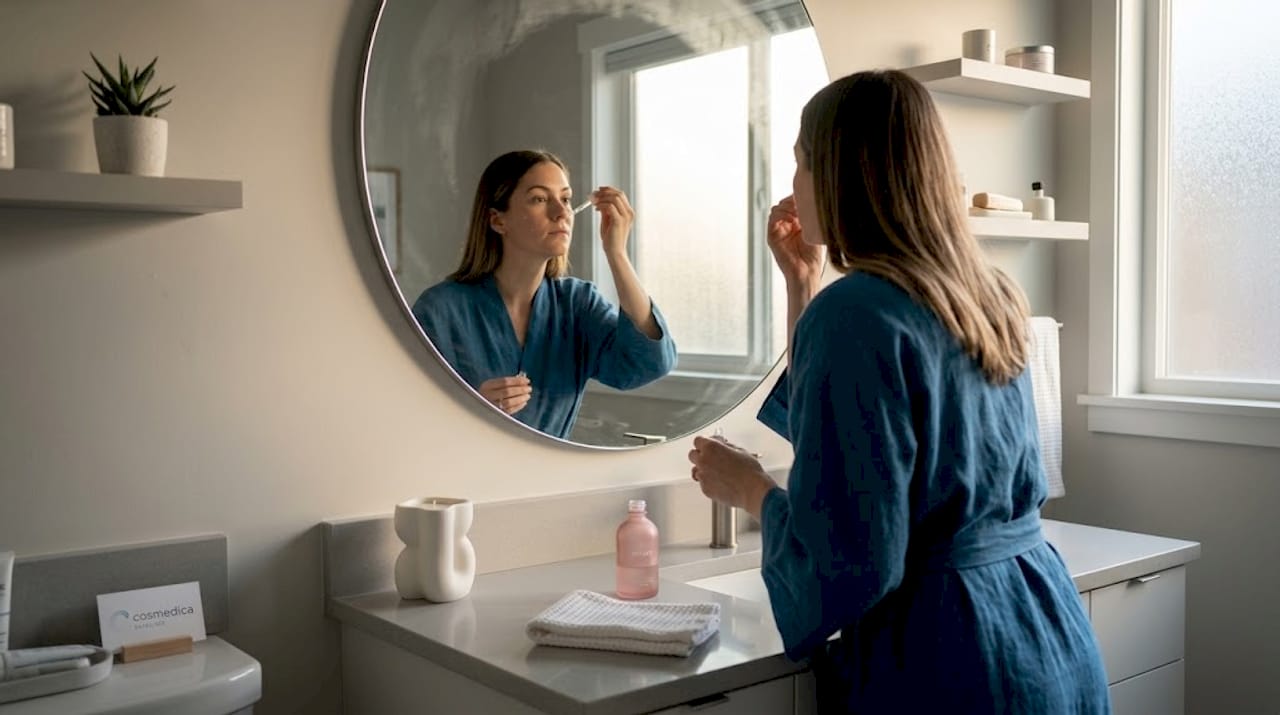
Niacinamide promotes ceramide synthesis, reduces inflammation, and strengthens the lipid barrier, which is the skin’s natural shield against moisture loss and environmental stress. It’s one of the most versatile ingredients in skincare, and serums are the best vehicle for delivering it effectively because of their concentration and penetration depth.
Antioxidant protection
If you spend time outdoors, an antioxidant serum is one of the most underutilized tools you have. UV radiation triggers oxidative stress in skin cells, which accelerates aging, breaks down collagen, and increases the risk of longer-term skin damage.
Research published in the Journal of Clinical and Aesthetic Dermatology found that an advanced antioxidant serum provided 72 to 354% less UV-induced erythema across different exposure levels compared to untreated skin. The same formulation significantly reduced MMP-9 (an enzyme that degrades collagen), thymine dimers (markers of DNA damage), and sunburn cell formation. Not all antioxidant serums perform equally, though. The study found that a multi-antioxidant formula combining water-soluble, enzymatic, and lipid-soluble antioxidants dramatically outperformed a standard encapsulated vitamin C serum. Formulation matters.
Anti-aging effects
Retinoids, peptides, and vitamin C support collagen production, reduce fine lines, and improve skin resilience. Collagen production begins declining after age 25, which makes starting a targeted serum routine earlier than you’d expect a genuinely smart move. The Cosmedica-skincare science of skin serums page breaks down how these actives work together across different skin goals.
Here’s a quick reference for matching serum types to skin concerns:
| Skin Concern | Recommended Serum Type | Key Ingredients |
|---|---|---|
| Dehydration and dryness | Hydrating serum | Hyaluronic acid, niacinamide, peptides |
| Dullness and uneven tone | Brightening serum | Vitamin C, kojic acid, tranexamic acid |
| Fine lines and wrinkles | Anti-aging serum | Retinol, peptides (Matrixyl), vitamin C |
| UV and environmental damage | Antioxidant serum | Vitamin C, vitamin E, ferulic acid, PQQ |
| Oiliness and blemishes | Clarifying serum | Niacinamide, salicylic acid, zinc |
Pro Tip: Over 90% of serum users in clinical testing reported lightweight feel and rapid absorption. If your serum feels heavy or greasy, it may not be formulated correctly for your skin type. A well-made serum should disappear into skin within 30 to 60 seconds.
How to use serums effectively in your routine
Getting the most from a serum is less about which product you buy and more about how you apply it. The right steps in the right order make a measurable difference in how much active ingredient actually reaches your skin.
Here is the sequence that gives serums the best chance to work:
-
Cleanse thoroughly. Your serum needs a clean surface to penetrate. Residual sunscreen, makeup, or excess oil creates a physical barrier that dilutes absorption. Double cleansing in the evening is worth it.
-
Apply toner if you use one. A hydrating toner prepares the skin and can actually improve serum absorption on damp skin. Think of it as pre-soaking fabric before applying dye.
-
Apply your serum while skin is still slightly damp. Serums work best on freshly cleansed skin while the surface is receptive. Dispense two to three drops into your palms, press gently onto the face, and avoid rubbing. Pressing keeps the formula at the surface while it absorbs rather than spreading it unevenly.
-
Wait 30 to 60 seconds before your next step. This brief pause lets the serum fully absorb and prevents it from being diluted or displaced by your moisturizer. Thin to thick product layering with short wait times prevents pilling and optimizes delivery of every layer.
-
Seal with moisturizer. The moisturizer’s job is to lock in what the serum delivered and protect the barrier. It should come after, not before.
-
Finish with SPF in the morning. Antioxidant and vitamin C serums work synergistically with sunscreen to neutralize free radicals before and after UV exposure.
Applying serum before moisturizer delivers 89% absorption of the active ingredients. Apply it after a heavy moisturizer or oil, and that drops to 42%. The order isn’t optional. It’s science.
Using multiple serums at once
Many people use two or three serums targeting different concerns. The key is applying the thinnest, lowest molecular weight serum first (like a niacinamide or peptide serum), then layering toward heavier formulas. Avoid combining actives that can irritate each other, like retinol with high-concentration vitamin C or exfoliating acids, in the same application. Save retinol for evenings, vitamin C for mornings, and use barrier-supporting serums (niacinamide, hyaluronic acid) whenever needed.
Pro Tip: If you notice your products pilling up into little balls on your skin, you’re either layering too fast or applying too much product. Less is more with serums. Two to three drops is the right amount for most face serums.
Serum vs moisturizer: different jobs, one team
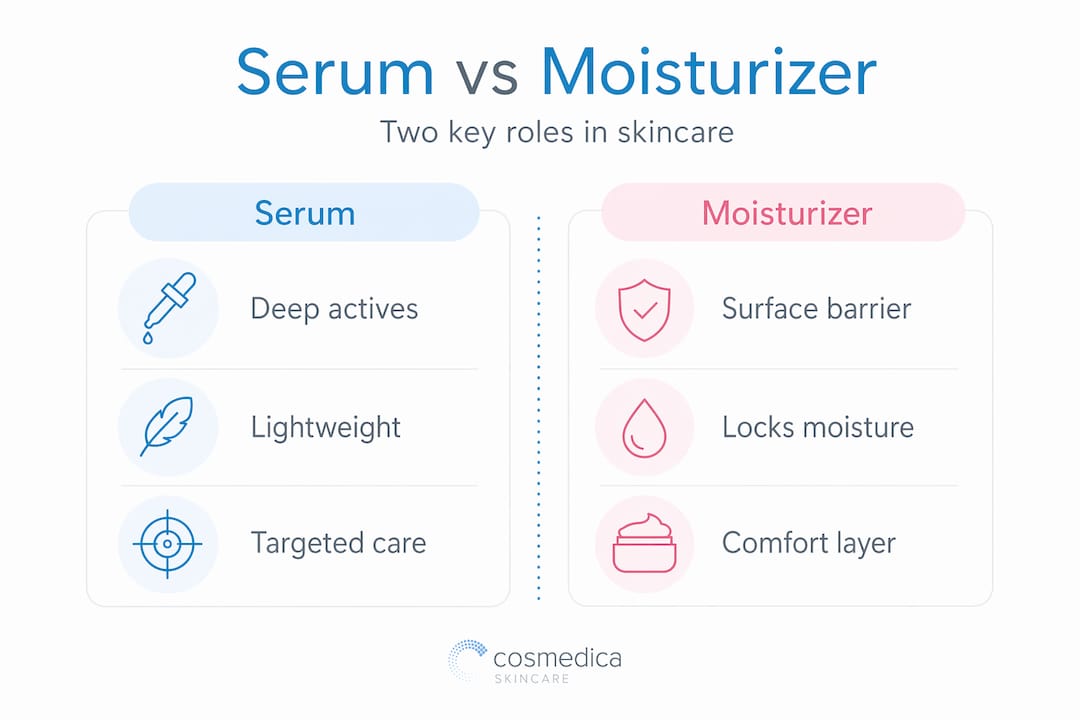
This is where a lot of confusion lives. People ask whether they need both, or whether a great serum can replace a moisturizer. The short answer is no. They do completely different things, and they work better together than either does alone.
Here’s how they compare:
| Feature | Serum | Moisturizer |
|---|---|---|
| Primary function | Delivers active ingredients deep into skin | Hydrates surface and seals in moisture |
| Molecular size | Small, penetrates deeply | Larger molecules, works on outer layers |
| Texture | Lightweight, watery or slightly gel-like | Cream, lotion, or balm consistency |
| Key ingredients | Retinol, vitamin C, peptides, niacinamide | Ceramides, glycerin, occlusives, shea butter |
| Application order | Before moisturizer | After serum |
| Can it replace the other? | No | No |
A serum, no matter how concentrated or expensive, does not provide the occlusive protection your skin needs to retain moisture throughout the day or night. Without a moisturizer to follow, the active ingredients a serum delivers are more vulnerable to evaporation and environmental stress before they can fully work.
On the flip side, a moisturizer without a serum underneath it is doing basic maintenance. It keeps the surface comfortable but it isn’t targeting collagen loss, free radical damage, or uneven pigmentation at the cellular level.
The smartest routine uses both. The serum does the targeted treatment work. The moisturizer protects and preserves.
My honest take on how most people use serums wrong
I’ve talked to a lot of people about their skincare routines over the years, and the most common serum mistake I see isn’t using the wrong product. It’s expecting results from a product that was never matched to the actual concern.
Someone with visible sun damage reaching for a hyaluronic acid serum will feel hydrated, but they won’t see the pigmentation shift they’re hoping for. Someone using a strong retinol serum every night without a barrier-supporting serum alongside it often ends up with irritated, compromised skin that sees more setbacks than progress. And then they blame the retinol.
What I’ve found actually works is treating your serum slot like a prescription rather than a purchase. Start with the question: what specifically am I trying to change? Fine lines around the eyes call for a peptide serum like a Matrixyl 3000 formula. UV-related dullness and early pigmentation calls for a layered antioxidant approach. Active breakouts need a clarifying serum, not a brightening one.
The second thing I’d tell you is this: give it time. Most of the clinical studies showing real wrinkle reduction, barrier improvement, and pigmentation change run for four weeks minimum. If you’re swapping serums every two weeks because you “don’t see anything,” you’re essentially never finishing a course of treatment. That’s like stopping a medication halfway through and wondering why it didn’t work.
And finally, not all vitamin C serums are equal. Not all niacinamide serums are equal. Formulation quality and ingredient quality determine outcomes far more than the ingredient name on the front of the label. A cheaper vitamin C in an unstable formula will oxidize before it penetrates. Look for encapsulated or stabilized versions when potency matters.
Patience, precision, and the right match for your skin. That combination works every time.
— Thomas
Explore Cosmedica-skincare’s serum range
Now that you understand what serums can do and how to use them, the next step is finding the right ones for your skin. At Cosmedica-skincare, we’ve built our serum collection around the exact actives discussed here: peptides, niacinamide, vitamin C, retinol, and hyaluronic acid, all in formulations that are cruelty-free, dermatologist-tested, and designed for real results.
If you’re just starting out or want to try a few targeted formulas together, the Trio Facial Serum Kit is one of our best-selling ways to experience what a complete serum routine actually feels like. For those focused on anti-aging specifically, our anti-aging facial care collection brings together serums and treatments built around clinical-grade retinol and collagen-supporting peptides.
Looking for a gift for someone who’s serious about their skin? Our gifts for skincare lovers collection features curated sets that make it easy to give a genuinely useful, thoughtful present. Browse our full serums collection to find a formula matched to your specific skin concern.
FAQ
What does a serum actually do for your skin?
A serum delivers concentrated active ingredients, like retinol, vitamin C, or peptides, deep into the skin thanks to its small molecular size. It targets specific concerns like wrinkles, dullness, or dehydration more effectively than a moisturizer alone can.
Should I use a serum before or after moisturizer?
Always apply serum before moisturizer. Research shows serum applied first achieves 89% absorption of active ingredients, compared to just 42% when applied after a heavy cream or oil.
Can a serum replace my moisturizer?
No. Serums and moisturizers serve different functions. Serums deliver targeted actives deep into the skin, while moisturizers protect the barrier and seal in hydration. Using both together gives you treatment and protection at the same time.
How long does it take to see results from a serum?
Most clinical studies on serum benefits run for a minimum of four weeks of consistent use. A four-week study on a peptide and niacinamide serum showed measurable improvements in hydration, texture, and wrinkle depth with twice-daily application.
Which serum is best for aging skin?
Serums containing retinoids, peptides (like Matrixyl 3000), and stabilized vitamin C are the most evidence-backed choices for aging concerns. Retinol supports cell turnover, peptides signal collagen production, and vitamin C neutralizes the free radical damage that accelerates visible aging.