

The Top Skincare Myths Debunked for Every Skin Type
TL;DR:
- Many common skincare myths, such as the necessity of daily sunscreen and drinking water for skin hydration, are debunked by science. Effective skincare relies on consistent use of properly formulated products and understanding individual skin needs, not hype or quick fixes. Consulting a professional is recommended for persistent skin concerns, as myths often persist due to marketing rather than evidence.
We’ve all been there: standing in the skincare aisle, convinced that drinking more water will fix dry skin or that sunscreen is only for beach days. These are exactly the kinds of skincare myths debunked repeatedly by dermatologists, yet they keep circulating because they sound reasonable. The truth is, common skincare misconceptions can quietly sabotage your routine, waste your money, and sometimes even damage your skin. Let’s cut through the noise and look at what the science actually says.
Table of Contents
- Key takeaways
- 1. Skincare myths debunked: sunscreen is only for sunny days
- 2. Drinking water alone won’t hydrate your skin
- 3. Toothpaste and alcohol do not fix acne
- 4. You should not exfoliate every single day
- 5. “Natural” does not automatically mean safe or effective
- 6. Pores cannot be permanently shrunk
- 7. Expensive products are not automatically more effective
- 8. Popular ingredients are not magic bullets for every skin type
- My take on why skincare myths refuse to die
- Build your routine on science, not social media trends
- FAQ
Key takeaways
| Point | Details |
|---|---|
| Daily sunscreen is non-negotiable | UV rays damage skin even on cloudy days, indoors, and year-round, so SPF 30+ is always necessary. |
| Topical moisturizers beat water intake alone | Drinking water supports health but cannot replace barrier-repairing moisturizers for visibly hydrated skin. |
| DIY acne remedies can backfire | Toothpaste and alcohol disrupt the skin barrier; proven OTC actives like salicylic acid are far safer. |
| Exfoliation frequency depends on skin type | Most people do best with 1 to 3 times per week, not daily, to avoid barrier damage. |
| Popular ingredients need proper formulation | Concentrations and consistent use matter more than chasing the most hyped ingredient on social media. |
1. Skincare myths debunked: sunscreen is only for sunny days
This might be the most persistent myth out there. Clouds block light, not ultraviolet radiation. UVA rays, the ones responsible for premature aging and deeper skin damage, penetrate clouds and glass with startling efficiency. Even sitting near a window on an overcast day means UV exposure is happening in real time.
Dermatologists recommend reaching for SPF 30 or higher every single morning, rain or shine, as a non-negotiable step. The mistake most people make is not just forgetting sunscreen but applying too little of it. A common guideline is roughly a quarter-sized dollop for just your face and neck. Less than that and you are getting a fraction of the labeled protection.
Here is what proper sunscreen use actually looks like:
- Apply every morning, even in winter or when you plan to spend the day indoors.
- Use enough product. Under-application is one of the biggest reasons sunscreen “doesn’t seem to work.”
- Reapply every two hours when you are outdoors, after swimming, or after heavy sweating.
- Mineral and chemical sunscreens both work. The best one is the one you will actually use consistently.
Pro Tip: Set a phone reminder to reapply if you are going to be outside for more than two hours. Skincare habits stick when they become automatic.
2. Drinking water alone won’t hydrate your skin
This is one of the top skincare lies that sounds so logical it almost has to be true. We are told to drink eight glasses of water a day. Surely that keeps skin plump and dewy, right? Not quite.
Dermatologists consistently explain that topical moisturizers are needed for true skin hydration because the skin’s barrier, made up of lipids, ceramides, and proteins, requires direct care that water consumption alone simply cannot provide. Think of your skin barrier like a brick wall. The bricks are skin cells and the mortar holding them together is made of lipids. Drinking water can help with overall body hydration, but it does not rebuild that mortar.
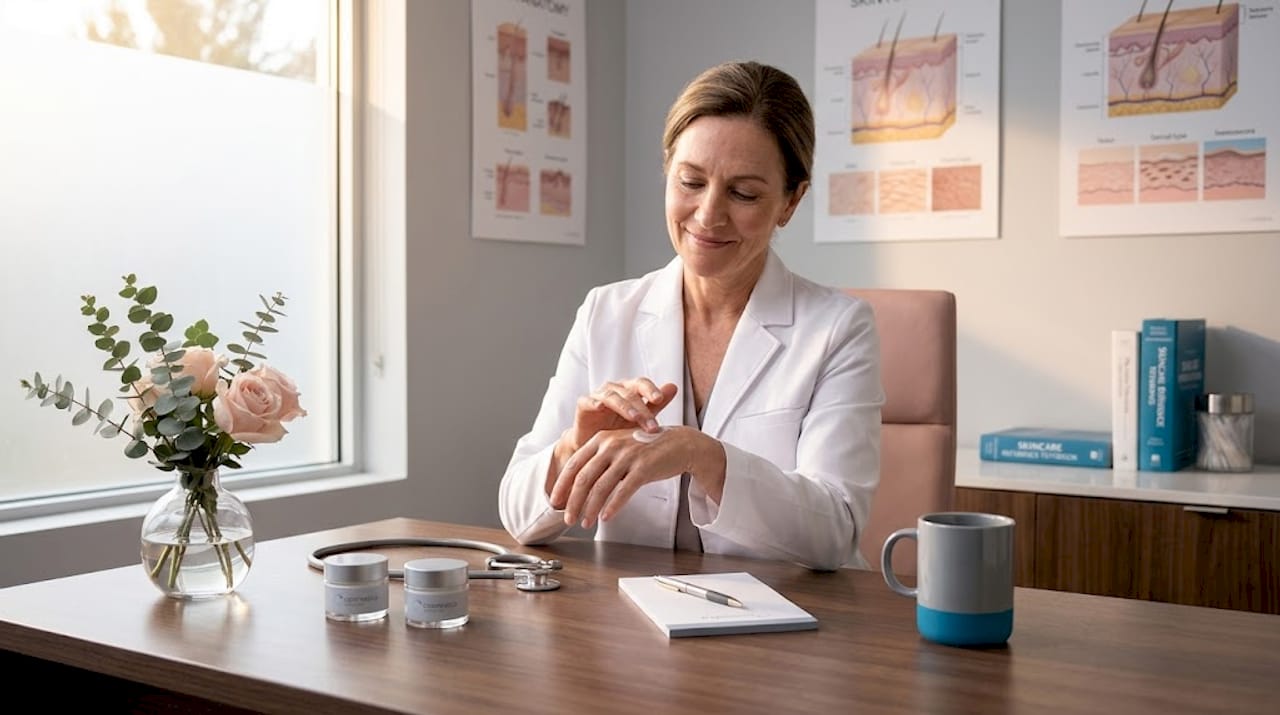
There is also an important distinction hiding in plain sight. Dry and dehydrated skin are two completely different conditions that need completely different treatments.
| Condition | Cause | What actually helps |
|---|---|---|
| Dry skin | Lipid deficiency in the skin barrier | Occlusive and emollient moisturizers, oils, ceramides |
| Dehydrated skin | Water deficiency in the skin’s cells | Humectants like hyaluronic acid, glycerin, followed by a moisturizer to seal them in |
If your skin feels tight after washing, looks dull, or shows fine lines that smooth out when you press it gently, you may be dealing with dehydration. If it flakes, feels rough, and reacts to almost everything, that is dry skin. Treating both with just water is like trying to fill a leaky bucket: the root problem does not get addressed.
For dehydrated skin, learn how to use hyaluronic acid correctly, which means applying it on damp skin and sealing it with a moisturizer on top.
3. Toothpaste and alcohol do not fix acne
DIY skincare hacks spread faster than almost any other beauty content online. Toothpaste on a pimple overnight. Rubbing alcohol as a toner. Lemon juice for dark spots. These feel satisfying because they use things already in your home, but the reality is that harsh DIY remedies irritate skin and can make breakouts significantly worse.
Toothpaste contains menthol, fluoride, and abrasives that were designed to clean teeth, not interact with living skin cells. Rubbing alcohol strips the skin’s acid mantle and disrupts the microbiome, which can trigger more oil production and more breakouts as a rebound effect. Lemon juice is highly acidic and can cause chemical burns, especially in sun-exposed skin.
What actually works for acne, backed by consistent evidence:
- Benzoyl peroxide (2.5% to 5%) kills the bacteria responsible for most inflammatory breakouts. It is available over the counter and works well even at lower concentrations.
- Salicylic acid (0.5% to 2%) is a beta-hydroxy acid that gets inside pores and dissolves the debris that causes clogs. Great for blackheads and whiteheads.
- Niacinamide helps regulate sebum production and calm redness without the irritation of stronger actives.
- Retinoids (either OTC retinol or prescription tretinoin) address acne at the cellular level by speeding up cell turnover and preventing pore congestion.
One rule that matters just as much: stacking too many actives at once, say benzoyl peroxide, retinol, and a strong exfoliant all in the same routine, causes barrier damage and can trigger more breakouts than you started with.
Pro Tip: If you are new to acne treatments, start with one active at a time. Add the next one only once your skin has adjusted over three to four weeks. Patience here saves a lot of frustration.
For persistent acne that does not respond to OTC options, a consultation with a professional who offers clinical treatments like chemical peels can help identify the right path forward.
4. You should not exfoliate every single day
This is a myth driven by the idea that more is always better. If exfoliation brightens skin and removes dead cells, why not do it daily? Because skin needs time to rebuild what it loses.
Daily exfoliation is too aggressive for most skin types. It strips the protective layer that keeps irritants out and moisture in. When that barrier is compromised, skin becomes reactive, red, and paradoxically dull because the newer cells underneath are not yet ready to be exposed.
How often should you actually exfoliate? It depends on your skin:
- Oily or acne-prone skin: 2 to 3 times per week with a chemical exfoliant like salicylic acid.
- Normal or combination skin: 1 to 2 times per week, alternating between a gentle AHA and a hydrating mask if needed.
- Dry or sensitive skin: Once per week at most, using the mildest available option. Physical scrubs should generally be avoided in favor of gentle enzymatic or low-percentage AHA formulas.
- Signs to stop immediately: Stinging during application, persistent redness after use, skin that feels tight and raw, or new sensitivity to products that used to feel fine.
Think of exfoliation like pruning a plant. Done at the right frequency, it encourages fresh growth. Done too aggressively or too often, it causes damage that takes time to recover from.
5. “Natural” does not automatically mean safe or effective
This one deserves a spotlight because the word “natural” has become a powerful marketing signal that does not always reflect reality. The truth is that natural ingredients can cause irritation and allergic reactions just as synthetic ones can. Origin is not the same as safety.
Essential oils, which often appear in “clean” or “natural” formulas, are among the most common contact allergens in skincare. Citrus extracts are photosensitizing. Cinnamon, lavender, and peppermint can all disrupt the skin barrier when used in the wrong concentration or on already compromised skin.
Meanwhile, many synthetic ingredients, including niacinamide, peptides, and hyaluronic acid, are some of the most evidence-backed, gentle, and skin-compatible actives available. The question to ask is never “Is this natural?” The real questions are: Is this ingredient well-studied? Is the concentration appropriate for my skin? Is the formulation designed to be stable and skin-compatible?
The science of skin serums goes deeper than ingredient labels. A great serum works because of how its actives are delivered, stabilized, and combined, not just because of what is listed on the front of the bottle.
6. Pores cannot be permanently shrunk
This one circulates constantly on social media, and it is genuinely one of the top skincare lies worth addressing directly. Countless products promise to “minimize,” “tighten,” or “erase” pores. The reality? Pore size is genetically determined and cannot be permanently changed by any topical product.
What you can do is make pores appear smaller and less noticeable. Clogged pores stretch and look larger. Keep them clean and clear and they return to their baseline size. Certain ingredients genuinely help with this:
Retinoids increase cell turnover and prevent dead skin from accumulating inside pores. Over time, this can make pores look significantly less prominent. Niacinamide reduces sebum production, which keeps pores from filling up as quickly. BHAs like salicylic acid dissolve the debris inside pores rather than just clearing the surface.
So the myth vs fact skincare version of this is simple: no product will give you different genetics, but the right routine can definitely improve what you are working with.
7. Expensive products are not automatically more effective
Price and efficacy are not the same thing, and this is one of the most practically useful pieces of debunking skincare advice you can take with you. A moisturizer with 5% niacinamide at $15 can outperform a “luxury” moisturizer at $120 that contains only a trace amount of the same active buried in a long ingredient list.
What actually determines whether a product works:
The concentration of the active ingredient needs to be within a therapeutic range. Too low and it does nothing visible. Too high and it can cause irritation without extra benefit. The formulation around the active matters enormously. Vitamins like retinol and vitamin C degrade quickly in light and air, so stable delivery systems are critical. A good amber glass bottle is not vanity; it protects the product. Consistency over time is where most people miss the mark. Clinicians expect gradual improvements over weeks to months, not days. Switching products every few weeks because you are not seeing instant results means you never give anything enough time to work.
The best routine you can build is a simple, consistent one using well-formulated products at effective concentrations, regardless of price point.
8. Popular ingredients are not magic bullets for every skin type
This connects directly to what we would call the “buzzy ingredient” trap, and it is a big one in the current content era. Hyaluronic acid, collagen creams, niacinamide, vitamin C serums, peptides. These are real, beneficial ingredients with genuine research behind them. But overhyped ingredients disappoint when expectations outpace reality.
Take collagen creams as a clear example. Collagen molecules are too large to penetrate the skin when applied topically. A cream that claims to “restore your collagen” cannot deliver collagen to the dermis through the epidermis. What it can do is support conditions that help your skin produce more of its own, which is meaningfully different.
Hyaluronic acid is genuinely excellent at drawing moisture into the skin, but the way most people understand it is not quite right. The idea that it “deeply penetrates” to hydrate from within is oversimplified. Most HA molecules stay on the surface of the skin and hold water there, which is still useful, just not the dramatic skin-transformation story sold in many ads. Learn more about hyaluronic acid facts to set realistic expectations.
Pro Tip: When a product features a “hero ingredient,” look for it in the top half of the ingredient list. If it appears near the bottom after the preservatives, it is likely present in amounts too low to have any visible effect.
Also, correct dosing matters more than chasing higher percentages. With niacinamide, for example, studies show effective results at concentrations between 4% and 10%. Going higher does not improve results and may increase the risk of flushing and irritation for sensitive skin.
My take on why skincare myths refuse to die
I’ve been following skincare research closely for years, and what strikes me most about this space is not the myths themselves. It’s why they survive so stubbornly.
Quick fixes and dramatic before-and-afters get clicks, sales, and engagement. The reality that good skin takes four to eight weeks of consistent routine work is genuinely less exciting to share. So the cycle continues: people buy into a promise, give it two weeks, see nothing, and move on to the next trending product. That habit of product-hopping keeps most people stuck.
What I’ve seen work, consistently and for all skin types, is a short routine with a few well-chosen products, given genuine time to perform. Three or four products used faithfully for two to three months beats a shelf of fifteen products that never get a real chance.
I’ve also seen over-layering actives cause more skin problems than the issues people were originally trying to address. Two exfoliating acids in the same routine, a retinol and a strong vitamin C at the same time, benzoyl peroxide on top of a compromised barrier. When your skin starts reacting, the answer is almost never “add another product.” Pause, simplify, and let the barrier recover first. That insight from dermatologist-backed guidance is one of the most practical pieces of advice I can share.
And please, if your skin concerns are persistent, see a professional. Not a content creator. A professional who can actually look at your skin.
— Thomas
Build your routine on science, not social media trends
Once you have cleared away the noise of common skincare misconceptions, building a great routine becomes a lot simpler and more satisfying. At Cosmedica-skincare, every product is formulated with this kind of evidence-backed thinking in mind. No hype, no mystery ingredients, just clean, cruelty-free formulas that actually do what they say.
If hydration has been your challenge, the Intense Hydration Skin Care Kit is a great place to start, with everything you need to support a compromised skin barrier. For those navigating breakouts or uneven texture, our Niacinamide + Zinc Serum delivers the kind of targeted care that works with your skin rather than against it. You can also browse our full serums collection to find the right active for your specific concern, whether that’s brightening, anti-aging, or calming redness.
FAQ
Does sunscreen need to be reapplied indoors?
Reapplication indoors is generally unnecessary unless you are sitting directly next to a window for extended periods, since UVA rays do penetrate glass. Apply once in the morning and you are covered for typical indoor activity.
Can drinking more water clear up skin?
Drinking water supports general health and can help mildly dehydrated skin feel less tight, but it cannot replace topical moisturizers for addressing dryness or repairing a compromised skin barrier.
Are skincare myths true about natural ingredients being safer?
No. Natural ingredients are not automatically safer or gentler. Many plant-based extracts, essential oils, and citrus ingredients are among the most common causes of contact dermatitis and photosensitivity reactions in skincare users.
How do I know if I’m over-exfoliating?
Key signs include stinging or burning during application, persistent redness, increased sensitivity to products you have used before, and skin that feels raw or tight. If any of these appear, stop exfoliating and focus on barrier repair for at least one to two weeks.
Does a higher percentage of an active mean better results?
Not necessarily. Effective concentrations vary by ingredient and too high can cause irritation without added benefit. Niacinamide works well between 4% and 10%, and going beyond that threshold does not improve outcomes for most people.