

Double Cleansing: What It Is and How It Works
Double cleansing is a two-step facial wash: an oil-based cleanser goes on first to dissolve makeup, sunscreen, and excess sebum, then a water-based cleanser follows to sweep away sweat, dirt, and any leftover residue. Think of it like pre-washing a greasy pan before the real scrub. The method is rooted in East Asian skincare traditions and has been widely adopted in Western routines over the past decade.
Here’s who it’s genuinely built for:
- Makeup wearers and sunscreen users who need more than one pass to fully clear their skin at night
- Oily or congested skin types where a single cleanse often leaves pores feeling less than clean
- Anyone in a humid or polluted environment where grime builds up throughout the day
And here’s who should pause before jumping in:
- People with dry, sensitive, or eczema-prone skin who risk stripping their barrier with extra cleansing steps
- Anyone currently using strong retinoids or recovering from a skin procedure, where less is more
Key Takeaways
Double cleansing works best as an evening method for makeup wearers and oily skin types, using a gentle oil-based first step followed by a mild water-based cleanser, with caution for dry or sensitive skin.
| Point | Details |
|---|---|
| Method order | Oil-based cleanser first, water-based cleanser second — always in that sequence. |
| Who benefits most | Oily, acne-prone skin and daily makeup or SPF wearers see the clearest gains. |
| Who should be cautious | Dry, sensitive, eczema-prone, or barrier-compromised skin risks irritation with extra cleansing. |
| Technique matters | Massage oil into dry skin for a brief period, emulsify with lukewarm water until milky, then rinse. |
| Cosmedica-skincare | Fragrance-free, non-comedogenic cleansers and hydrating moisturizers from Cosmedica-skincare pair well with a double cleanse routine. |
Table of Contents
- What is double cleansing, exactly?
- How to double cleanse step by step
- How to choose cleansers for your skin type
- What are the real benefits of double cleansing?
- Does everyone need to double cleanse?
- Common mistakes and signs you’re over-cleansing
- What dermatologists and clinical research actually say
- Our take: try it for two to four weeks, then decide
- Ready to build your double cleansing routine?
- Sources
- FAQ
What is double cleansing, exactly?
The science behind the method is straightforward: oil dissolves oil, a principle also found in effective cleansing formulas like the QAI Cleanse Shampoo. Your skin accumulates oil-based debris all day — SPF, foundation, sebum, pollution particles — and a water-based cleanser alone often can’t fully cut through it. The first oil-based step breaks that layer down, and the second water-based step clears what’s left, including sweat and water-soluble grime.
According to the Cleveland Clinic, double cleansing is a two-step evening regimen where the oil-based cleanser handles makeup, sunscreen, and sebum, while the water-based cleanser removes sweat, dirt, and remaining residue. Dermatologists consistently frame it as an evening practice, not a morning one, because that’s when the skin actually needs it.
The method has long roots in Korean and Japanese skincare culture, where layering lightweight products on a thoroughly clean base is standard practice. It gained mainstream traction in the U.S. as SPF use increased and long-wear makeup formulas became harder to remove with a single wash.
A few things worth knowing upfront:
- The two cleansers don’t need to be from the same brand or even the same format
- Cleansing balms and micellar water can both serve as the first step if a traditional oil cleanser doesn’t suit your skin
- The method is almost always an evening-only routine — mornings rarely need more than a gentle rinse or single gentle wash
How to double cleanse step by step
Getting the technique right matters as much as choosing the right products. Here’s how to do it properly.
-
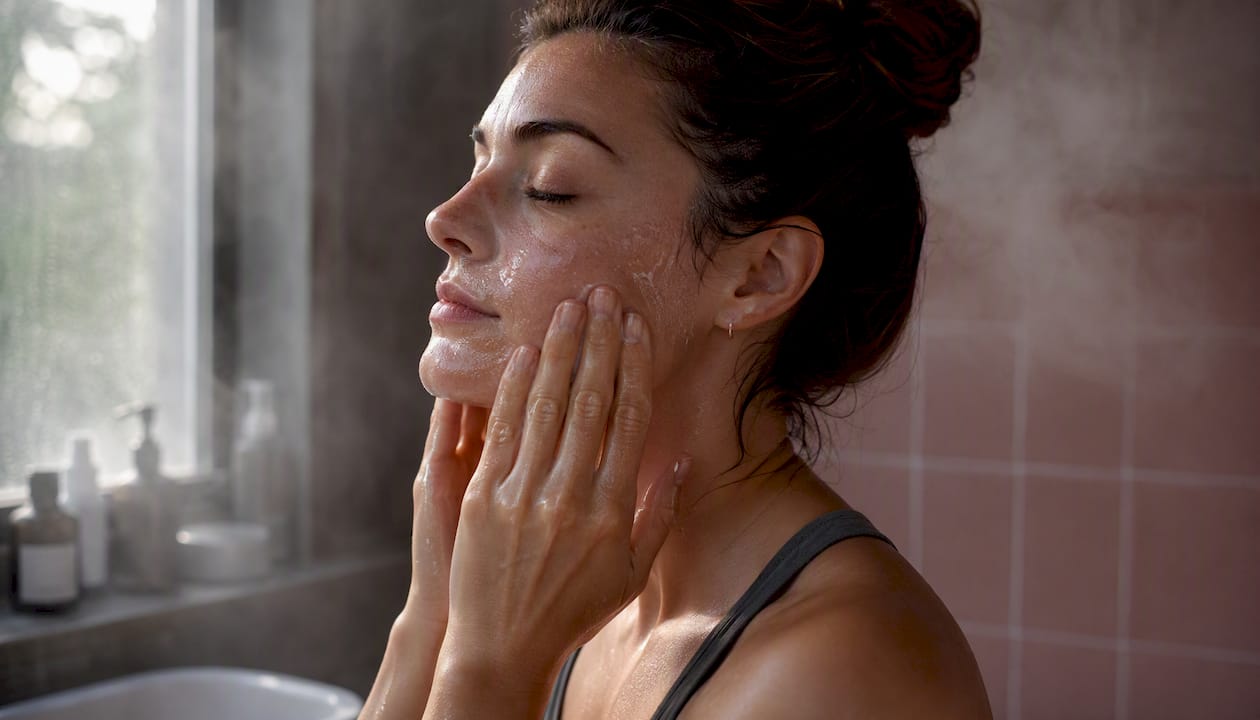
Start with dry skin. Apply your oil-based cleanser, cleansing balm, or micellar water directly to a dry face. No water first. Massage gently in circular motions for at least 30 seconds, working around the nose, chin, and hairline where makeup and sunscreen tend to cling.
-
Emulsify before rinsing. Add a small amount of lukewarm water to your hands and work it into the oil on your face until the texture turns milky white. This step is what separates a clean rinse from a greasy one. According to InStyle’s technique guidance, fully emulsifying before rinsing prevents residue and improves removal of waterproof makeup.
-
Rinse thoroughly with lukewarm water. Hot water strips barrier lipids and can leave skin tight and reactive. Lukewarm is the sweet spot every time.
-
Apply your water-based cleanser to damp skin. Massage gently for 30–60 seconds, then rinse again with lukewarm water. A gel, foam, or cream cleanser can be chosen depending on your skin type.
-
Pat dry with a clean towel. No rubbing. Press the towel gently against your face and let the skin stay slightly damp.
-
Follow immediately with your next skincare step. Serums and moisturizers absorb better on clean, slightly damp skin, so don’t wait.
Pro Tip: If you’re using a retinol night cream or another active treatment, keep the double cleanse gentle — two mild cleansers back-to-back, not two exfoliating ones. Stacking actives on top of an already-sensitized barrier is where most people run into trouble.
A note on timing: if you’re using retinoids or chemical peels, the American Academy of Dermatology recommends minimizing mechanical and surfactant exposure during active treatment. On those nights, a single gentle cleanse may be the smarter call.
How to choose cleansers for your skin type
The right pairing makes or breaks the double cleansing method. Here’s how to match your cleansers to what your skin actually needs.
Oily and acne-prone skin
Look for a non-comedogenic oil cleanser or lightweight cleansing balm as your first step — jojoba oil and squalane-based formulas tend to work well without clogging pores. For the second step, a gentle gel or low-foam cleanser with salicylic acid can help keep pores clear. Avoid heavy mineral oils in the first step, which can sit on the skin rather than dissolve debris.
- First step: lightweight cleansing oil, micellar water, or non-comedogenic balm
- Second step: gel or foam cleanser with gentle surfactants; salicylic acid optional
- Avoid: heavy fragrances, high-concentration alcohol, abrasive scrubs
Dry and sensitive skin
This is where caution is most warranted. Board-certified dermatologists advise that dry or sensitive skin types risk barrier damage from double cleansing and should either skip the second step on some nights or use a cream-based cleanser that doesn’t foam aggressively.
- First step: cream-based cleansing oil or gentle micellar water
- Second step: a mild, fragrance-free cream or milk cleanser — or skip it entirely on low-makeup days
- Prioritize: ceramides, glycerin, and low-foam surfactants in both steps
- Avoid: sulfates, heavy fragrances, and anything that leaves skin feeling “squeaky clean”
Combination skin
A lighter first step works best here — micellar water or a balancing cleansing oil that won’t over-strip the drier areas. Follow with a gentle gel cleanser that addresses the oilier T-zone without drying out the cheeks.
- First step: micellar water or a balancing cleansing oil
- Second step: gentle gel cleanser, pH-friendly
Normal skin
You have the most flexibility. Focus on keeping both cleansers gentle and pH-friendly rather than chasing any specific active ingredient. A cleansing oil followed by a mild cream or gel cleanser covers most bases.
Not sure which category your skin falls into? A skin quiz can help you narrow it down before you shop.
What are the real benefits of double cleansing?
When done correctly and for the right skin type, the benefits of double cleansing are concrete and worth the extra two minutes.
- More thorough makeup and sunscreen removal. One round of cleansing often isn’t enough to fully remove long-wear foundation or SPF 50+ sunscreen. The oil-based first step dissolves what water-based cleansers can’t reach.
- Cleaner pores. The second cleanse penetrates deeper to clear pores of residual oil and grime, which can reduce the appearance of congestion over time.
- Better product absorption. When skin is genuinely clear of residue, serums, moisturizers, and treatments absorb more effectively. Think of it as clearing the path before laying down what actually feeds your skin.
- Reduced breakouts from leftover makeup. Sleeping in even trace amounts of foundation or SPF is a known contributor to clogged pores and breakouts, especially for oily skin types.
The benefits are largest on heavy makeup days, in humid or polluted environments, and for skin that tends toward oiliness or congestion. On a light SPF and no-makeup day, a single gentle cleanse often does the job just as well.
Does everyone need to double cleanse?
Short answer: no. And dermatologists are pretty clear about this. The Cleveland Clinic notes that double cleansing is usually not necessary for most people, and that over-washing is a more common problem than under-washing for many skin types.
Here’s a practical framework:
- Evening use only. Because skin isn’t exposed to makeup or sunscreen during sleep, mornings rarely need more than a gentle single cleanse or even just a water rinse. Dermatologists at Jane Yoo MD consistently recommend reserving double cleansing for the evening.
- Nightly for heavy makeup or oily skin. If you wear full-coverage makeup or SPF 50 daily, a nightly double cleanse makes sense.
- Alternate nights or as-needed for others. Light makeup days, dry skin, or sensitive skin types may only need the double cleanse two or three times a week.
- Skip it entirely if you have dry, sensitive, eczema-prone, or rosacea-affected skin, or if your barrier is already compromised from a recent procedure or active retinoid use.
The goal is a clean base, not a stripped one. Your daily skincare routine should feel comfortable at every step — if cleansing leaves your skin tight, red, or dry, that’s a sign to scale back.
Common mistakes and signs you’re over-cleansing
The double cleansing method is gentle by design, but it’s easy to get wrong. These are the mistakes we see most often.
- Using hot water. Hot water disrupts barrier lipids and leaves skin reactive. Lukewarm every time, as NBC Select and multiple dermatology sources consistently recommend.
- Scrubbing instead of massaging. The motion should be light and circular, not vigorous. Scrubbing inflames skin and can worsen acne.
- Pairing two harsh cleansers. Using a stripping foaming cleanser as your first step and a salicylic acid wash as your second is a recipe for barrier damage. One step can be active; the other should be gentle.
- Double cleansing in the morning. Unless you’ve applied heavy overnight treatments, morning skin doesn’t need two rounds of cleansing.
- Skipping moisturizer afterward. Cleansing without immediately following up with hydration leaves skin vulnerable.
Red flags that you’re over-cleansing:
- Persistent dryness or flaking that wasn’t there before
- Redness or stinging after cleansing
- Increased sensitivity to products you’ve used comfortably before
- New or worsening breakouts (a stripped barrier can paradoxically trigger more oil production)
If any of these show up, cut back to a single gentle cleanse and give your skin a week to recover. If irritation persists, a dermatologist can assess whether barrier damage is involved. The NCBI review on skin barrier and cleansing confirms that aggressive surfactants and hot water are among the primary culprits in barrier disruption, so the fix is almost always gentler products and less frequent cleansing.
What dermatologists and clinical research actually say
The clinical picture on double cleansing is nuanced — it’s not a universal must, but it’s well-supported for the right candidates.
Dermatologist consensus, as summarized by Jane Yoo MD, lands in a consistent place: double cleansing is most beneficial for oily or acne-prone skin and for anyone wearing heavy makeup or waterproof sunscreen daily, while for dry, sensitive, or eczema-prone skin, the risk of barrier compromise outweighs the benefit of a second cleanse.
The Healthline FAQ on double cleansing adds a practical flexibility note: the two cleansers don’t need to be identical in format. Micellar water or a cleansing balm can substitute for a traditional oil cleanser, and two gentle cleansers can work when oils aren’t suitable for a particular skin type.
From a clinical standpoint, the NCBI review on skin barrier function reinforces that lower-pH, gentler surfactants preserve barrier lipids better than repeated high-foaming washes. That finding supports the core logic of double cleansing done right: a mild oil step followed by a mild water-based step, not two aggressive washes stacked together.
Our take: try it for two to four weeks, then decide
We think double cleansing gets oversold as a daily non-negotiable when it’s really a situational tool. If you wear SPF and makeup most days, it’s worth a proper trial. If you’re mostly bare-faced with light SPF, a single gentle cleanser is probably doing the job.
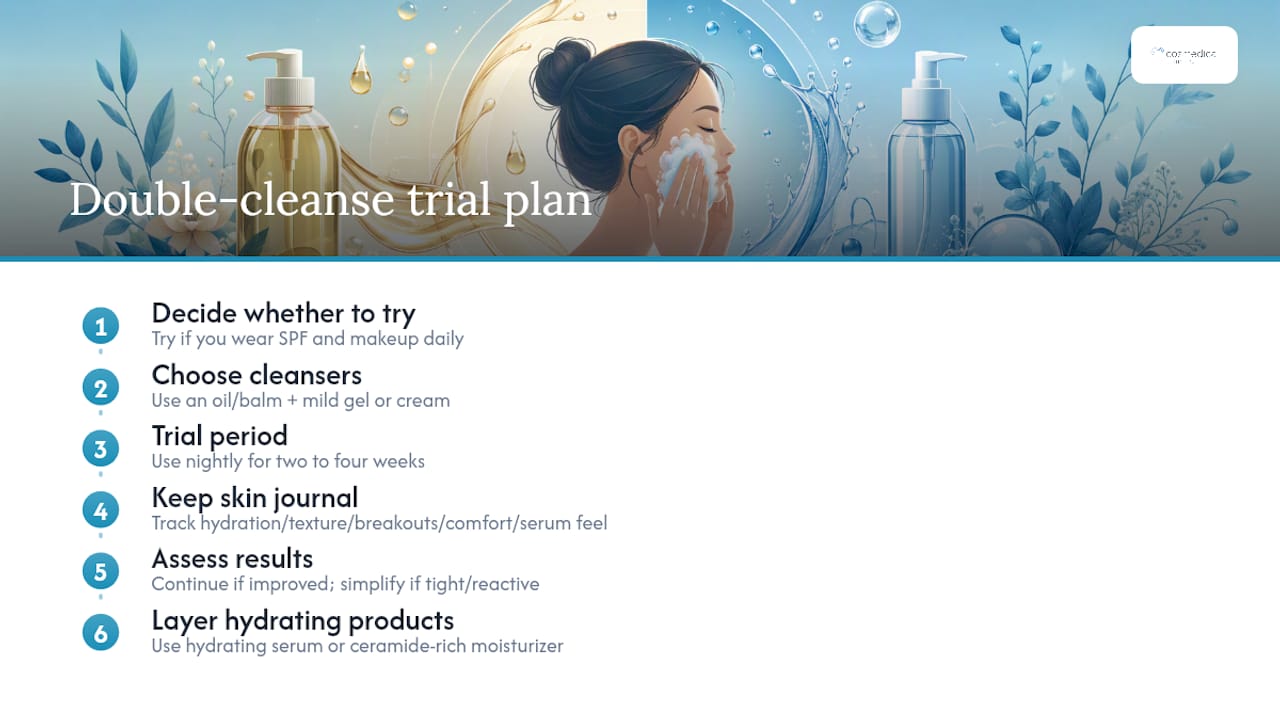
Here’s how we’d suggest running the experiment: pick two gentle cleansers, a simple cleansing oil or balm and a mild gel or cream wash, and use them together every evening for two to four weeks. Keep a quick skin journal — just a few notes on how your skin feels after cleansing, whether texture improves, and whether breakouts increase or decrease. That’s enough data to know if the routine is working for you.
Watch for hydration levels, comfort right after cleansing, and how your serums and moisturizers feel going on. If your skin feels tight or reactive after the double cleanse, that’s your cue to simplify. Pairing your cleansers with a hydrating serum or a ceramide-rich moisturizer immediately after helps lock in the benefits without leaving skin exposed. For guidance on what to layer next, our anti-aging skincare routine walks through the full sequence.
Ready to build your double cleansing routine?
Cosmedica-skincare offers a straightforward path for readers who want to try the method without guesswork. Look for fragrance-free, non-comedogenic, dermatologist-tested formulas — the kind that won’t fight your skin while you’re figuring out what works. A gentle cleansing oil or balm as your first step, paired with a mild gel or cream cleanser as your second, covers most skin types without the risk of over-stripping.
After cleansing, your skin is primed to absorb what comes next. Our moisturizer collection includes hydration-focused formulas designed to apply on slightly damp skin, right after you pat dry. For readers who want a complete post-cleanse routine in one place, the Super Serum Set pairs well with a freshly cleansed base. Browse the full range and find what fits your skin type and routine.
Sources
- Double cleansing explained
- Do You Need to Double Cleanse? - Jane Yoo MD
- Double cleansing advice from dermatologists
- How to double cleanse
FAQ
How do you do a double cleanse?
Apply an oil-based cleanser to dry skin, massage for at least 30 seconds, add lukewarm water to emulsify until milky, then rinse. Follow immediately with a gentle water-based cleanser on damp skin, rinse again, and pat dry.
Is it okay to double cleanse every day?
For oily skin types and daily makeup or sunscreen wearers, nightly double cleansing is generally fine with gentle products. Dry or sensitive skin types may do better alternating nights or skipping the second step on low-makeup days.
Who should avoid double cleansing?
Can micellar water replace an oil cleanser in the first step?
Yes. Micellar water and cleansing balms both work as first-step substitutes for a traditional oil cleanser, making the method accessible for skin types that don’t tolerate heavier oils well.