

The Real Benefits of Night Creams, Backed by Science
Yes, night creams genuinely work — and the science behind them is more interesting than most people realize. Used consistently, a good night cream boosts hydration, reduces overnight water loss, supports your skin’s natural repair cycle, and lets potent actives do their job without sunlight breaking them down. Here’s a quick look at what you can expect:
- Hydration and barrier repair — richer textures lock in moisture while you sleep
- Anti-aging support — retinol and peptides work best at night, away from UV exposure
- Brightening and pigmentation reduction — targeted actives fade spots with consistent use
- Calming for reactive or sensitive skin — soothing ingredients reduce redness overnight
- Improved texture and radiance — cell turnover peaks at night, so actives hit at the right moment
If you have dry, aging, or reactive skin, a dedicated night cream is one of the highest-return additions you can make to your routine.
Table of Contents
- What makes a night cream different from a day cream?
- How night creams work with your skin’s natural repair cycle
- The core benefits of night creams, one by one
- Key ingredients to look for in a night cream
- How to choose the right night cream for your skin type
- How to apply night cream: step-by-step routine
- What the research actually shows: timelines and results
- Key Takeaways
- The case for taking your nighttime routine seriously
- Cosmedica-skincare night creams worth trying
- Useful sources and further reading
- FAQ
What makes a night cream different from a day cream?
A night cream is formulated with one goal in mind: replenishment and repair. Where a day cream prioritizes protection — SPF, antioxidants, lightweight textures that sit well under makeup — a night cream leans into richer, more occlusive formulas loaded with actives like retinol, peptides, and ceramides. Board-certified dermatologists describe this as a clean functional split: daytime is defense, nighttime is recovery.
The texture difference is real and intentional. Night creams tend to be denser because they need to create a semi-occlusive seal that slows transepidermal water loss (TEWL) while you sleep. That heavier feel would be uncomfortable under sunscreen during the day, but overnight it works in your favor.
| Feature | Day cream | Night cream |
|---|---|---|
| Primary goal | Protection | Repair and replenishment |
| SPF | Often included | Never included |
| Texture | Lightweight, fast-absorbing | Richer, more occlusive |
| Key actives | Antioxidants, SPF filters | Retinol, peptides, ceramides |
| Best timing | Morning | Evening, after cleansing |
That said, a single well-formulated moisturizer can cover both bases if your skin is generally healthy and balanced. A separate night cream becomes most valuable when you want to use stronger actives — retinol, AHAs, or high-concentration peptides — that need the nighttime window to perform safely and effectively.
How night creams work with your skin’s natural repair cycle
Your skin doesn’t just rest at night — it shifts into an entirely different operating mode. During the day, it’s in defense mode: managing UV exposure, pollution, and moisture loss. After dark, it flips to repair. Research on circadian biology shows that keratinocyte proliferation and DNA repair pathways both increase at night, making the skin measurably more receptive to reparative ingredients.
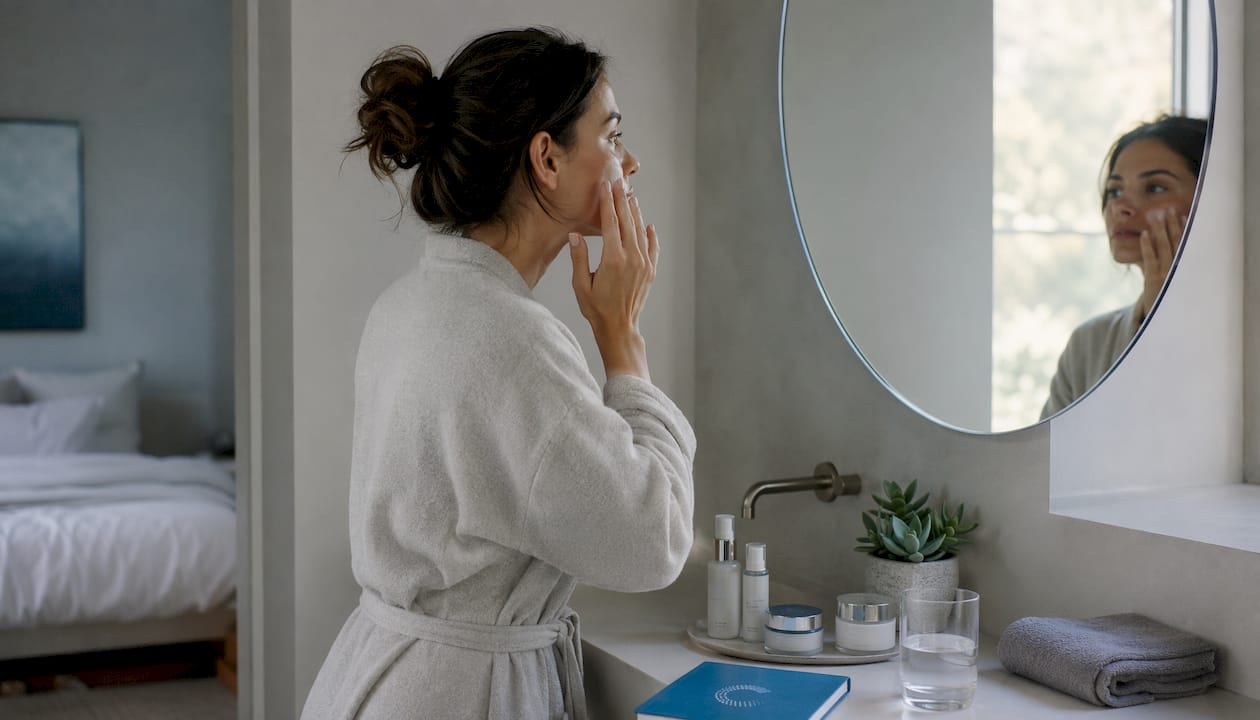
Here’s the striking part: keratinocyte proliferation in human epidermis has been measured at 30 times higher at night than at noon. That’s not a small difference. It means the cells responsible for renewing your skin’s surface are most active precisely when a night cream is sitting on your face.
Night creams exploit this window in three ways. First, occlusion: the richer formula slows TEWL, keeping the skin hydrated and the barrier intact. Second, prolonged contact time: ingredients absorb steadily over six to eight hours rather than the hour or two a daytime product gets. Third, light-sensitive actives like retinol degrade quickly in UV exposure, so nighttime application protects both the ingredient and your skin.
Pro Tip: If you’re using retinol, applying it at night isn’t just a preference — it’s a requirement. Retinol breaks down in sunlight and can make skin more photosensitive, so daytime use works against you on both counts.
Circadian-aligned skincare regimens consistently show better outcomes for radiance and photodamage repair than non-targeted moisturizers, which is why timing your routine to match your skin’s biology isn’t just theory — it’s practical strategy.
The core benefits of night creams, one by one
1. Deep hydration and barrier repair
Night creams are the workhorses of skin hydration. Humectants like hyaluronic acid pull moisture into the skin, while occlusives like shea butter and squalane seal it in. A clinical trial of a night cream containing melatonin, carnosine, and Helichrysum italicum extract showed hydration improved by 64.4% within just one hour of application. TEWL dropped noticeably in the same window.
2. Reduced transepidermal water loss (TEWL)
TEWL naturally rises in the evening, meaning your skin barrier is at its most permeable right when you go to bed. A well-formulated night cream steps in to compensate. The same clinical trial recorded a 10% reduction in TEWL within an hour, which translates to a more intact barrier by morning.
3. Anti-aging and collagen support
This is where retinol and peptides earn their reputation. Retinol accelerates cell turnover and signals collagen production; peptides send direct messages to fibroblasts to produce more structural proteins. In clinical evaluations of targeted night formulations, wrinkle counts were reduced by up to 18.9% with consistent use. That’s a meaningful, measurable change — not just marketing language.
4. Pigmentation reduction and brightening
Brown spots and UV damage respond well to nighttime actives. Niacinamide inhibits melanin transfer, while ingredients like melatonin and vitamin C derivatives address oxidative damage. The same clinical study found brown spot reductions between 5.5% and 13.2% depending on the measure and timepoint.
5. Calming for sensitive and reactive skin
Soothing botanicals like Helichrysum italicum and calming ceramides work best when they have uninterrupted contact time. In the clinical trial referenced above, 86.7% of participants reported calmer skin after just 7 days of nightly use. For anyone dealing with redness, eczema, or general reactivity, that’s a compelling case for a dedicated night formula.
6. Improved skin texture and pore appearance
Cell turnover at night means fresher, smoother skin by morning. Over weeks of consistent use, the cumulative effect is visibly refined texture and reduced pore appearance. This is especially true when the formula includes AHAs or retinol, which both accelerate surface renewal.
7. Better radiance and overall glow
Good sleepers show noticeably better skin barrier recovery (https://www.nature.com/articles/d42473-025-00151-5) after UV exposure compared to poor sleepers. A night cream amplifies this natural recovery, so you wake up with skin that looks rested and luminous rather than dull. Think of it as giving your skin the best possible conditions to do what it’s already trying to do.
Realistic expectations: Most people notice hydration and calming effects within days. Texture improvements typically show up at 4–8 weeks. Wrinkle reduction and sustained pigment changes take 8–12 weeks or more of consistent use. Night creams are not overnight miracles — they’re a long game worth playing.
Key ingredients to look for in a night cream
Knowing what’s in your night cream matters more than the brand name on the jar. Here’s what to prioritize:
- Retinol — the gold standard for cell renewal and collagen stimulation; use at night only, start slowly (2–3 nights per week)
- Peptides — short amino acid chains that signal collagen and elastin production; gentle enough for nightly use
- Hyaluronic acid — a humectant that draws water into the skin; works best when applied to slightly damp skin
- Niacinamide — strengthens the lipid barrier, reduces redness, and inhibits melanin transfer for a more even tone
- Ceramides — the building blocks of your skin barrier; especially valuable for dry, eczema-prone, or sensitive skin
- Melatonin and vitamin E — antioxidants that neutralize free radicals and support overnight repair
- Helichrysum italicum extract — a calming botanical with clinical evidence for reducing skin reactivity
- Occlusives (shea butter, squalane, petrolatum) — create a physical seal to prevent moisture loss overnight
Ingredients to use cautiously:
- Retinol + strong AHAs/BHAs in the same layer — this combination can cause significant irritation; use on alternating nights or apply retinol first and wait before layering
- Fragrance — a common irritant, especially in sensitive-skin formulations; check ingredient lists carefully
- High-concentration vitamin C (L-ascorbic acid) — more stable in morning routines; some forms work fine at night, but check the formulation
- Retinol during pregnancy or breastfeeding — consult your healthcare provider before use; many dermatologists recommend avoiding it during this period
The circadian biology research reinforces why certain actives belong at night: retinol and peptides are both more stable and more effective when they’re not competing with UV exposure and environmental stressors.
How to choose the right night cream for your skin type
Match your formula to your skin’s actual needs, not just the prettiest packaging.
| Skin type | Best texture | Ingredient priorities |
|---|---|---|
| Dry | Rich cream or balm | Ceramides, shea butter, hyaluronic acid, peptides |
| Oily / acne-prone | Lightweight gel-cream | Niacinamide, salicylic acid, non-comedogenic base |
| Combination | Medium-weight lotion | Niacinamide, hyaluronic acid, light occlusives |
| Sensitive | Fragrance-free cream | Ceramides, Helichrysum, calming botanicals, no retinol initially |
| Aging / mature | Rich cream | Retinol, peptides, antioxidants, occlusives |
| Hyperpigmentation | Medium-weight | Niacinamide, vitamin C derivatives, AHAs (low concentration) |
Selection checklist:
- Identify your primary goal (hydration, anti-aging, brightening, calming)
- Check for “non-comedogenic” if you’re oily or acne-prone
- Choose “fragrance-free” if your skin is sensitive or reactive
- Look for retinol concentration cues: 0.025–0.1% for beginners, up to 1% for experienced users
- Scan the first five ingredients — they make up the bulk of the formula
Red flags: vague ingredient lists, fragrance high on the list for a “sensitive skin” product, and concentration claims with no supporting ingredient context.
Pro Tip: The first five ingredients on any skincare label represent the majority of the formula by weight. If your “retinol night cream” lists retinol near the bottom, the concentration is likely too low to produce visible results. Look for a formula where retinol appears in the top half of the list, supported by emollients and delivery-enhancing ingredients like squalane or niacinamide.
For a deeper look at building a full nighttime regimen, the anti-aging skincare routine guide from Cosmedica-skincare walks through ingredient sequencing step by step.
How to apply night cream: step-by-step routine
The right order matters. Applying your night cream before a serum, for example, blocks absorption and wastes the active ingredients underneath. Here’s the correct sequence:
- Cleanse — remove makeup, sunscreen, and the day’s buildup with a gentle cleanser suited to your skin type
- Tone (optional) — a hydrating toner or essence adds a moisture base and preps skin for absorption
- Targeted treatments — apply serums or treatments (retinol, niacinamide, vitamin C) while skin is slightly damp
- Wait 30–60 seconds — let the treatment absorb before layering; with retinol, waiting a full minute reduces irritation risk
- Eye cream — pat gently around the orbital bone; never drag the skin
- Night cream — apply a pea-to-dime-sized amount in upward strokes, covering face and neck
- Occlusive (optional, for very dry skin) — a thin layer of squalane or a balm on top seals everything in
A few important dos and don’ts:
- Do patch test any new active on your inner arm for 24 hours before full-face use
- Do introduce retinol gradually: 2 nights per week for the first two weeks, then increase as tolerated
- Don’t mix retinol and a high-strength AHA in the same layer on the same night until your skin is accustomed to both
- Don’t skip the neck — it ages at the same rate as your face and benefits from the same actives
For a full daily skincare routine breakdown covering both morning and night steps, Cosmedica-skincare’s routine guide is a solid reference.
What the research actually shows: timelines and results
Clinical trials show measurable improvements in hydration and visible signs of photodamage with targeted night formulations, and the timelines are more specific than most product pages let on.
The most detailed evidence comes from a PMC-published clinical study of a night cream containing melatonin, carnosine, and Helichrysum italicum extract:
Hydration +64.4% and TEWL −10% within 1 hour of first application. Wrinkle counts reduced up to 18.9% and brown spots reduced 5.5–13.2% over the 84-day trial period.
Here’s how results typically unfold with consistent nightly use:
- Immediate (day 1–7): Noticeable hydration boost, reduced tightness, calmer skin in reactive types; 86.7% of trial participants reported calmer skin after 7 days
- 4–8 weeks: Texture refinement begins, early spot fading, improved radiance
- 8–12+ weeks: Measurable wrinkle reduction of up to 18.9%, sustained pigment improvement, stronger barrier function
One honest caveat: most clinical studies use specific, well-formulated products with controlled concentrations. Results vary by formulation, skin type, and consistency of use. A night cream with low active concentrations or a formula that doesn’t match your skin type will underperform relative to these numbers. Study populations also tend to be relatively small, so individual results will differ.
Circadian-aligned regimens consistently outperform non-targeted moisturizers in clinical comparisons, which reinforces the value of choosing a formula designed specifically for nighttime use rather than repurposing a day cream.
Key Takeaways
Night creams deliver their strongest results when the formula matches your skin type, the actives are used consistently, and application follows the correct layering order.
| Point | Details |
|---|---|
| Hydration is immediate | Clinical trials show hydration improves by 64.4% and TEWL drops 10% within one hour of application. |
| Anti-aging takes time | Wrinkle counts can reduce up to 18.9% and brown spots 5.5–13.2%, but these results require 8–12 weeks of consistent use. |
| Circadian biology matters | Keratinocyte proliferation is 30 times higher at night than at noon, making nighttime the optimal window for repair actives. |
| Ingredient matching is key | Choose retinol and peptides for aging concerns, ceramides and calming botanicals for sensitive skin, and niacinamide for oily or uneven-tone skin. |
| Cosmedica-skincare options | The Retinol Night Cream and Multi-Active Hydrating Night Cream map directly to the article’s ingredient and skin-type guidance. |
The case for taking your nighttime routine seriously
Night creams occupy a strange place in skincare culture. They’re often dismissed as an unnecessary extra step or a luxury for people with too much time and money. We’d push back on that pretty firmly.
The circadian biology here is not soft science. The fact that keratinocyte proliferation runs 30 times higher at night than at noon is a hard biological reality, not a marketing claim. Ignoring that window and applying the same lightweight SPF moisturizer morning and night means you’re leaving the most productive repair hours of the day unaddressed.
That said, we’d also caution against the opposite extreme: a ten-step nighttime routine stacked with every active ingredient available. More is not better when it comes to retinol, AHAs, and strong peptides layered together. The smartest approach is a focused one: one or two well-chosen actives in a formula that suits your skin type, applied consistently over months, not days.
Cosmedica-skincare’s formulations are cruelty-free, dermatologist-tested, and built around this evidence-first philosophy. If you’re pregnant or breastfeeding, skip retinol and consult your provider before introducing any new active. For everyone else, the research is clear: a well-matched night cream, used consistently, is one of the most efficient investments in your skin’s long-term health.
Cosmedica-skincare night creams worth trying
The ingredient guidance in this article points to a few clear product matches from Cosmedica-skincare’s lineup.
The 2.5% Retinol Facial Night Cream is the go-to for anyone targeting fine lines and cell renewal. At 2.5%, it’s a meaningful concentration for experienced retinol users; if you’re newer to retinol, start with two nights per week and build from there. Pair it with a hydrating serum underneath to buffer any initial dryness.
For hydration-first skin, the Multi-Active Hydrating Night Cream delivers the barrier-repair and moisture-retention benefits covered throughout this article, without the retinol intensity. It’s a strong choice for sensitive skin, combination skin, or anyone in the early stages of building a night routine.
If you want to address brightening alongside hydration, the 10% Niacinamide + Zinc Treatment Serum layers cleanly under either night cream and targets uneven tone and barrier support simultaneously.
For a ready-made nighttime regimen, the Super Serum Set bundles key serums and creams so you’re not guessing at pairings. All Cosmedica-skincare products are vegan, cruelty-free, and formulated without unnecessary fillers. Browse the full moisturizers collection to find the right fit for your skin type and goals.
Useful sources and further reading
- Night Cream Containing Melatonin, Carnosine and Helichrysum italicum Extract — PMC
- Circadian Rhythm and the Skin: A Review of the Literature — PMC
- Biological Rhythms in the Skin — PMC
- Clinical Benefits of Circadian-Based Antioxidant Protection and Repair — Journal of Drugs in Dermatology
- Do You Really Need a Separate Day and Night Moisturizer? — Cleveland Clinic
- Tapping into the Body’s Master Clock Could Re-Energize Skin Cell Repair — Nature
- Circadian Regulation in Tissue Regeneration — MDPI (IJMS)
- Retinol Night Cream — Cosmedica-skincare
- Multi-Active Hydrating Night Cream — Cosmedica-skincare
FAQ
Do night creams actually work?
Yes. Clinical trials show measurable improvements in hydration, TEWL, wrinkle counts, and pigmentation with consistent nightly use of targeted formulations. Results vary by formula and skin type, but the evidence is solid.
Is it okay to use night cream every night?
For most skin types, nightly use is both safe and recommended. If your formula contains retinol, start with 2–3 nights per week and increase gradually as your skin adjusts.
Is a separate night cream really necessary?
Not strictly, but it’s worth it if you want to use stronger actives. Night creams let you apply retinol, peptides, and richer occlusives that would be impractical or unsafe during the day, making them a meaningful upgrade over a single all-day moisturizer.
How long before you see results from a night cream?
Hydration and calming effects often appear within days. Texture improvements typically show at 4–8 weeks, while wrinkle reduction and sustained pigment changes generally require 8–12 weeks of consistent use.