

Pure CoQ10 for Skin: Your Anti-Aging Serum Guide
If you want one clear recommendation: the Cosmedica Coenzyme Q10 Serum is our top pick for topical pure CoQ10. It uses stabilized ubiquinone (the most researched active form), comes in packaging designed to protect CoQ10 from oxidation, and the formula is backed by the same clinical science showing measurable wrinkle reduction and increased antioxidant capacity in human skin. Read the how-to-use and buying checklist sections below before you add it to your cart — a few minutes here will help you get the most out of it.
Table of Contents
- How CoQ10 works in your skin — and what the science actually shows
- How to use a CoQ10 serum in your daily routine
- Is topical CoQ10 safe? Side effects and who should patch test
- What do CoQ10 serums and creams typically cost?
- Trusted pure CoQ10 topical products available in the U.S.
- Where to buy genuine CoQ10 skincare and how to avoid counterfeits
- How CoQ10 compares to niacinamide, vitamin E, and other popular actives
- Key Takeaways
- The ingredient that quietly does the heavy lifting
- Try the Cosmedica Coenzyme Q10 Serum today
- FAQ
How CoQ10 works in your skin — and what the science actually shows
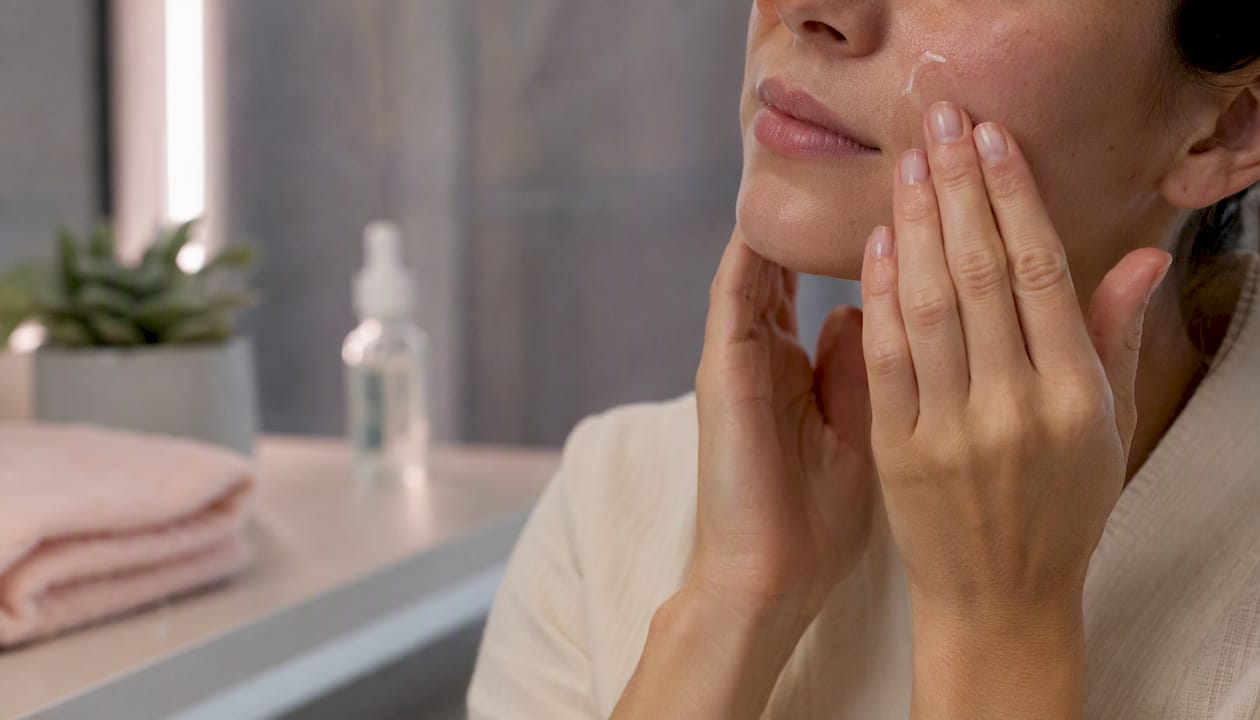
Topical CoQ10 works through two main pathways: it neutralizes reactive oxygen species (free radicals) at the skin surface, and it supports cellular energy metabolism in keratinocytes and fibroblasts. Think of it as both a shield and a battery charger for your skin cells.
The clinical evidence is genuinely encouraging. A 2024 review published on PubMed confirmed that topical CoQ10 replenishes epidermal Q10 levels, increases cellular energy metabolism, and reduces wrinkle depth in in vivo and ex vivo studies. Earlier bench work published in BioFactors showed that topical Q10 formulas raised Q10 concentrations in both the stratum corneum and deeper epidermal layers, with measurable increases in oxygen consumption rate (OCR) in keratinocytes — a direct marker of improved cellular energy production — after just two weeks of use. That same research reported decreased free radical levels (FORT units) and increased antioxidant capacity (FORD) following topical application in subjects with stressed skin, supporting the antioxidant mechanism at the tissue level.
A separate 2015 randomized study of 73 women (ages 20–66) found that topical CoQ10 increased antioxidant capacity and reduced free radicals in stressed skin. Cell-based research also shows CoQ10 protects dermal and epidermal cells from oxidative stress–induced death and stimulates production of basement membrane components including laminin 332 and type IV and VII collagens — the structural proteins that keep skin firm and attached.
| Study | Design | Key Outcome |
|---|---|---|
| BioFactors, 2015 (Knott) | Topical application, ex vivo + in vivo | Increased epidermal Q10; raised OCR in keratinocytes; reduced FORT, increased FORD |
| PubMed RCT, 2015 | 73 women, ages 20–66 | Increased antioxidant capacity; reduced free radicals in stressed skin |
| PubMed Review, 2024 | Systematic review, in vivo/ex vivo | Replenished epidermal Q10; reduced wrinkle depth; increased cellular energy metabolism |
| Cell study, 2009 | Fibroblast/keratinocyte model | Increased laminin 332, type IV/VII collagen; reduced oxidative cell death |
How to use a CoQ10 serum in your daily routine
Short answer: once or twice daily, with morning use preferred for antioxidant protection. Always follow with SPF during the day.
Step-by-step routine:
- Cleanse your face and pat dry.
- Apply your CoQ10 serum or cream while skin is slightly damp — this helps lipid-soluble actives absorb.
- Layer supporting actives: Vitamin C goes on before CoQ10 (water-based first, then lipid-soluble). Niacinamide pairs well at the same step or just after.
- Moisturize to seal everything in.
- Sunscreen — non-negotiable in the morning when using antioxidant combinations.
For pairing with retinol, dermatologist guidance suggests CoQ10 and retinol work well together because both are fat-soluble. CoQ10 in the morning and retinol at night is a clean, low-irritation split.
- CoQ10 + vitamin E: a natural pairing — both are lipid-soluble antioxidants that reinforce each other.
- CoQ10 + niacinamide: compatible and complementary for brightening and barrier support.
- CoQ10 + strong exfoliants (AHAs/BHAs): use on separate days if your skin is sensitive.
Pro Tip: If you’re new to retinol, start CoQ10 first for 2–3 weeks to build antioxidant reserves before introducing the retinoid. Your skin will thank you. For more on retinol layering, check our guide.
Is topical CoQ10 safe? Side effects and who should patch test
Topical CoQ10 is generally well tolerated, including for sensitive skin types. Serious reactions are rare. That said, patch testing is always smart, especially when layering with retinoids or exfoliants.
Precautions to keep in mind:
- Mild redness or sensitivity can occur when CoQ10 is used the same night as a strong retinoid or AHA — separate them if your skin reacts.
- Discontinue use and consult a dermatologist if you experience persistent irritation, swelling, or signs of an allergic reaction.
- Those with very reactive or compromised skin barriers should introduce CoQ10 slowly, once every other day to start.
Pro Tip: Patch test on your inner arm for 24–48 hours before applying a new CoQ10 product to your face. Apply a small amount, leave it, and check for redness or itching before committing to full use.
What do CoQ10 serums and creams typically cost?
In the U.S. market, CoQ10 topicals span a wide range. Entry-level serums (often with simpler formulas and standard packaging) typically run $15–$25. Mid-tier products with better delivery systems, supporting actives like vitamin E or squalane, and stability-friendly packaging fall in the $30–$60 range. Premium and luxury CoQ10 serums can exceed $80, though the price premium often reflects brand positioning rather than meaningfully higher CoQ10 efficacy.
The sweet spot for most shoppers is the mid-tier range, where you get formulation transparency, protective packaging, and a clean ingredient list without paying for prestige markup.
Trusted pure CoQ10 topical products available in the U.S.
Cosmedica-skincare’s Coenzyme Q10 Serum is our primary recommendation for U.S. shoppers. It’s available directly through the Cosmedica website with straightforward shipping and a clear ingredient list. Beyond that, look for brands that list ubiquinone or ubiquinol clearly on the INCI label, use opaque or airless packaging, and carry a dermatologist-tested designation. Pharmacy and department store brands sometimes carry CoQ10 creams, but ingredient transparency and packaging quality vary widely — always check the label, not just the front-of-pack claim.
Where to buy genuine CoQ10 skincare and how to avoid counterfeits
The safest place to buy is directly from the brand’s own website or a verified retailer. For Cosmedica-skincare, that means cosmedica-skincare.com or authorized sellers. Buying from third-party marketplaces carries a real risk of counterfeit or improperly stored products — CoQ10 degrades with heat and light, so a product that sat in a warehouse without climate control may be far less effective than the label suggests. When in doubt, buy direct.
How CoQ10 compares to niacinamide, vitamin E, and other popular actives
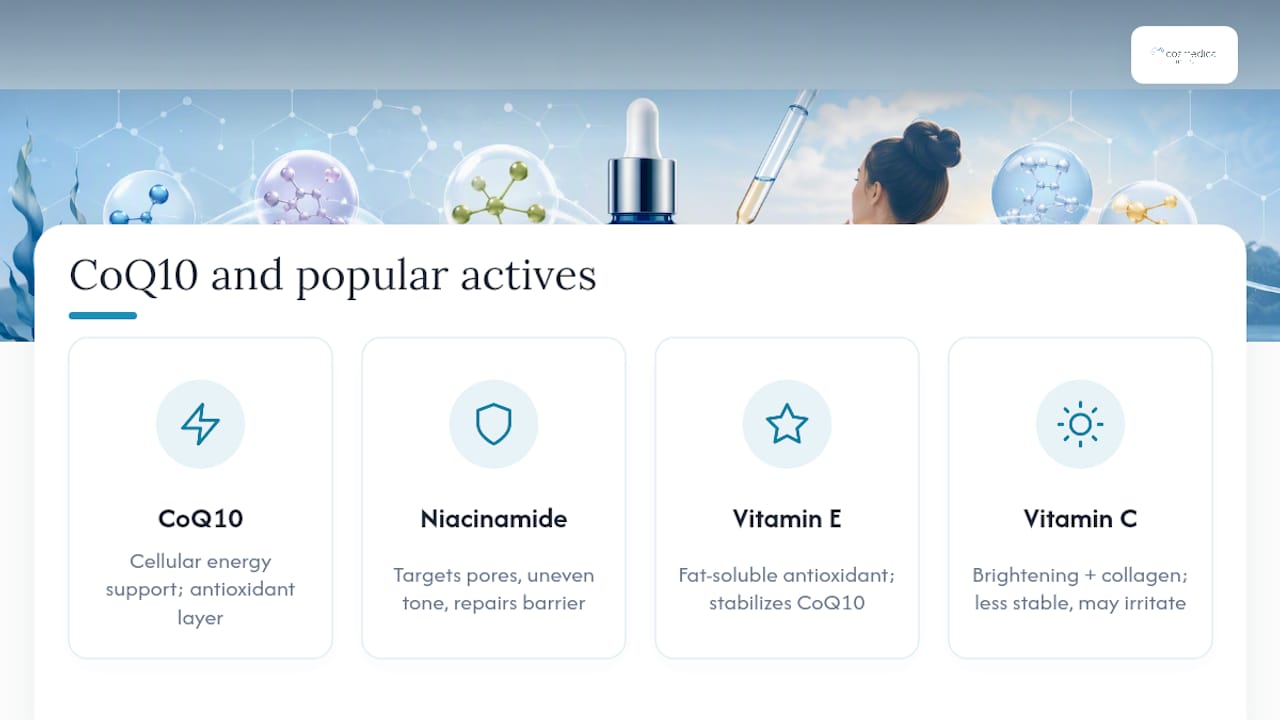
CoQ10 isn’t competing with niacinamide or vitamin E — it works best alongside them.
Niacinamide targets pore appearance, uneven tone, and barrier function. It’s water-soluble and works at a different layer than CoQ10. Pairing them gives you antioxidant defense plus brightening and barrier repair in one routine.
Vitamin E (tocopherol) is also a fat-soluble antioxidant, and it actively stabilizes CoQ10 in a formula. Products that combine both tend to deliver stronger antioxidant protection than either alone.
Vitamin C is the heavy hitter for brightening and collagen stimulation, but it’s less stable than CoQ10 and can irritate sensitive skin. CoQ10 applied after vitamin C adds a second antioxidant layer without the irritation risk.
CoQ10’s unique contribution is cellular energy support — something niacinamide and vitamin C don’t provide. That’s what makes it worth adding rather than swapping.
Key Takeaways
Topical pure CoQ10 (ubiquinone) delivers measurable antioxidant protection and supports cellular energy metabolism in skin, with clinical evidence showing reduced wrinkle depth and increased antioxidant capacity after consistent use.
| Point | Details |
|---|---|
| Active form matters | Look for ubiquinone or ubiquinol on the INCI list — not just “CoQ10” in marketing copy. |
| Packaging protects potency | Opaque, airless pump packaging prevents oxidation and preserves CoQ10 effectiveness. |
| Clinical evidence is real | A study involving human subjects showed increased antioxidant capacity and reduced free radicals after topical CoQ10. |
| Use it morning with SPF | Apply CoQ10 serum after cleansing, layer supporting actives, and always follow with sunscreen during the day. |
| Cosmedica-skincare’s pick | The Cosmedica Coenzyme Q10 Serum uses stabilized ubiquinone, dermatologist-tested formulation, and protective packaging. |
The ingredient that quietly does the heavy lifting
Here’s something most CoQ10 articles skip: the reason topical CoQ10 tends to get underestimated is that its benefits are cumulative and largely invisible in the short term. You don’t feel antioxidant protection happening. You don’t see cellular energy metabolism improving. What you do see, over weeks and months, is skin that looks less tired, holds its tone better, and shows fewer of the fine lines that oxidative stress accelerates.
The conventional wisdom is to reach for vitamin C first for antioxidant protection. That’s not wrong — vitamin C is well-studied and effective. But CoQ10 works at a different level, supporting the energy environment inside skin cells rather than just scavenging surface-level free radicals. For anyone already using vitamin C and retinol, adding CoQ10 isn’t redundant. It’s the ingredient that helps the others perform better, because cells with better energy metabolism respond more efficiently to every active you apply.
What I’d push back on is the idea that CoQ10 is only for mature skin. The antioxidant defense it provides is relevant at any age, especially for skin exposed to daily pollution and UV stress. Starting earlier means less oxidative damage to reverse later.
Try the Cosmedica Coenzyme Q10 Serum today
Cruelty-free, vegan, and dermatologist-tested — the Cosmedica Coenzyme Q10 Serum gives you stabilized ubiquinone in a formula built for real results. It’s affordable enough for daily use and transparent enough that you know exactly what you’re applying. Head to the Cosmedica serums collection to pick it up, or pair it with a daily moisturizer from the Cosmedica moisturizers collection for a complete antioxidant routine. The product page includes the full ingredient list, usage FAQ, and customer reviews — everything you need to feel confident before you buy.
Useful sources and further reading
- The Role of Coenzyme Q10 in Skin Aging and Opportunities for Topical Intervention (review)
- Coenzyme Q10 protects against oxidative stress-induced cell death and enhances basement membrane synthesis (2009)
- CoQ10 in skincare: dermatologist perspective and practical guidance (Verywell Health)
- Coenzyme Q10 in topical skincare — benefits and how to use (skincare ingredient guide)
FAQ
What is the difference between ubiquinone and ubiquinol in skincare?
Ubiquinone is the oxidized, more shelf-stable form of CoQ10 most commonly used in topical products; ubiquinol is the reduced, active form. Both deliver antioxidant benefits when applied topically, but ubiquinone is more widely used because it’s easier to stabilize in a formula.
How long does topical CoQ10 take to show results?
Antioxidant protection begins immediately, but visible improvements in skin tone and texture typically appear within 2–8 weeks. Measurable reductions in wrinkle depth generally require 8–16 or more weeks of consistent daily use, as supported by clinical review data.
Can you use pure CoQ10 with retinol and vitamin C?
Yes. CoQ10 pairs well with both. A common approach is vitamin C in the morning (applied before CoQ10) and retinol at night, with CoQ10 used in the morning for antioxidant support. If your skin is sensitive, introduce each active separately before combining them.
Is topical CoQ10 safe for sensitive skin?
Topical CoQ10 is generally well tolerated, including for sensitive skin types. Patch test before full-face use, and avoid applying it the same night as strong retinoids or AHAs until you know how your skin responds.
Where is the best place to buy a genuine CoQ10 serum in the U.S.?
Buy directly from the brand’s website or a verified retailer to avoid counterfeit or improperly stored products. The Cosmedica Coenzyme Q10 Serum is available at cosmedica-skincare.com, where you’ll also find the full ingredient list and customer reviews.