

What Is a Skin Booster? Benefits, Effects, and Results
TL;DR:
- A skin booster is an injectable treatment that enhances skin hydration and texture without altering facial shape. It works by delivering hyaluronic acid into the upper dermis to attract water and stimulate collagen over time. Unlike fillers, skin boosters focus on surface quality, providing subtle, natural improvements in skin appearance.
A skin booster is a minimally invasive injectable treatment designed to improve skin hydration, texture, and radiance without adding volume or reshaping facial features. Clinically, these treatments are often called “injectable moisturizers” or “skin quality treatments,” and they work in a fundamentally different way than the dermal fillers most people picture when they think of injectables. The American Society of Plastic Surgeons notes that skin boosters are injected just under the skin surface, more superficially than traditional fillers, which target volume and contour. If you’ve been curious about what skin boosters actually do, how they differ from fillers, and whether they belong in your skincare routine, we’ve got you covered.
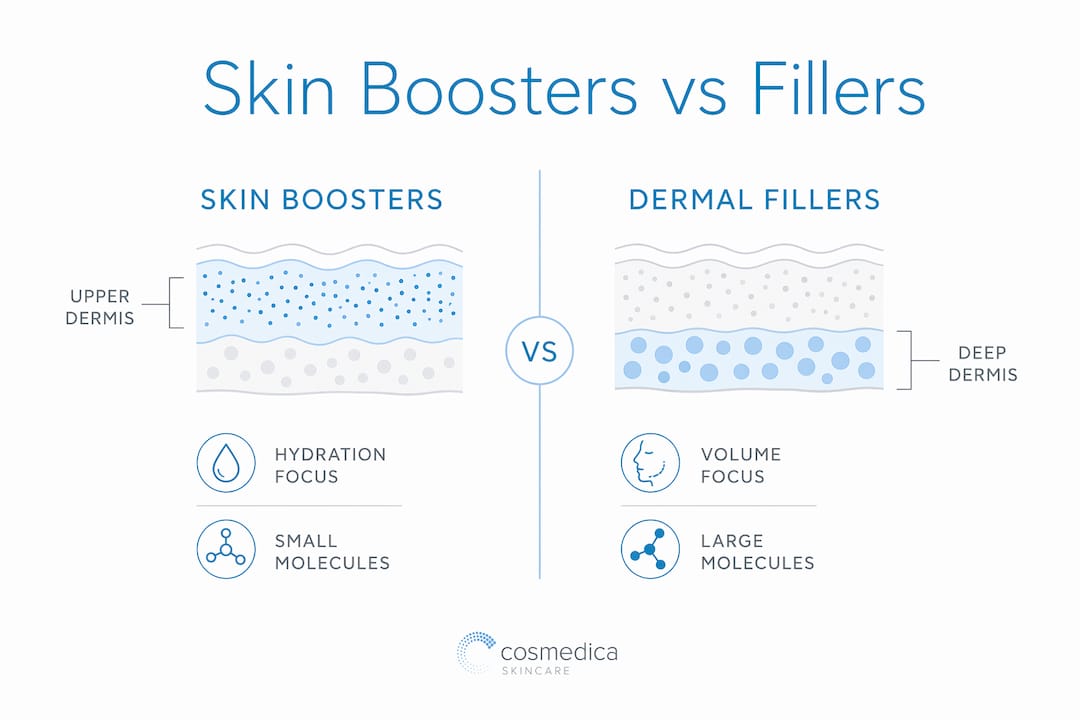
What is a skin booster and how does it work inside your skin?
Skin boosters work by delivering small molecules of hyaluronic acid (HA) directly into the upper dermis, the layer of skin just beneath the surface. Think of hyaluronic acid as a sponge. It pulls water from the surrounding tissue and holds it there, giving your skin that plump, dewy look from the inside out. According to Vogue, most skin boosters use small HA molecules that attract water and can also stimulate collagen and elastin production over time. That dual action is what makes them more than just a temporary fix.
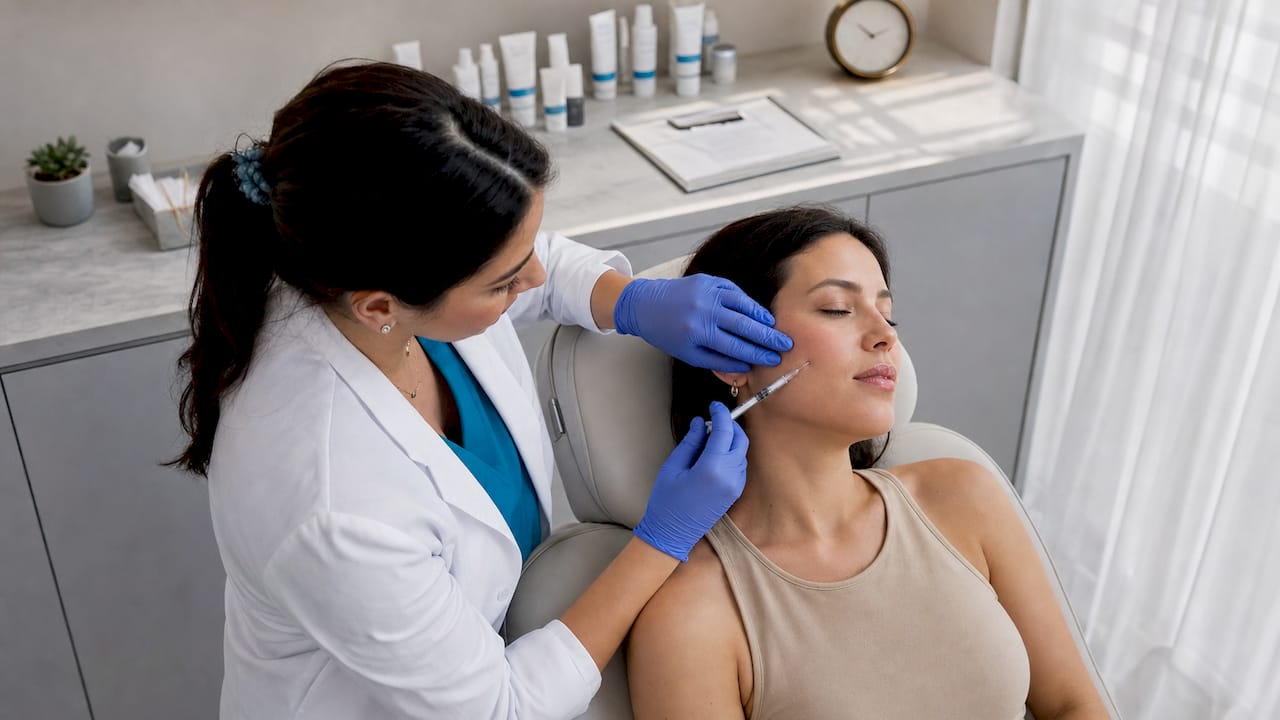
The injection technique matters enormously. Practitioners use a method called mesotherapy, which involves either “nappage” (a rapid, light tapping technique) or point-by-point micro-injections spaced evenly across the treatment area. The injection depth is superficial to mid-dermis, and that precision is what separates a great result from a mediocre one. Place the product too deep, and you lose the hydration benefit entirely.
Some skin boosters go beyond hyaluronic acid. A newer category called biostimulators uses ingredients like polynucleotides (PDRN) or diluted calcium hydroxylapatite to trigger collagen production rather than simply hydrate. These are still considered skin quality treatments, but their mechanism leans more toward tissue regeneration than moisture delivery. Knowing which type you’re getting is half the battle.
Pro Tip: Ask your injector specifically whether the product they use is an HA-based hydrator or a biostimulator. The two have different timelines, protocols, and results, and mixing them up is one of the most common sources of unmet expectations.
Skin booster vs filler: what’s the real difference?
This is the question we hear most often, and the confusion is completely understandable. Both involve needles, both use hyaluronic acid in many cases, and both are performed in a clinic. But the goals, depths, and effects are entirely different.
Dermal fillers are injected deep into the tissue, sometimes near bone, to add structural volume. They lift cheeks, plump lips, and restore facial contours. Skin boosters, by contrast, focus on the skin’s “fabric” rather than its structure. They make the surface of your skin healthier, smoother, and more hydrated. They do not change the shape of your face.
Here’s a side-by-side comparison to make it crystal clear:
| Feature | Skin boosters | Dermal fillers |
|---|---|---|
| Injection depth | Upper to mid-dermis | Deep dermis, subcutaneous, or near bone |
| Primary purpose | Hydration, texture, radiance | Volume, lift, contouring |
| Changes facial shape | No | Yes |
| Results visible | Days to weeks | Immediately |
| Typical duration | 6–12 months with maintenance | 6–18 months depending on product |
| Best for | Dull, dry, or aging skin texture | Volume loss, deep folds, lip shape |
A common misconception is that skin boosters are just a lighter version of fillers. They’re not. The clinical intent and injection depth differ so significantly that the two treatments serve completely separate purposes. You might actually benefit from both, but for different reasons.
Key skin booster benefits include:
- Improved hydration from the inside out, not just on the surface
- Smoother texture with fewer fine lines over time
- Natural-looking radiance without a “done” appearance
- Increased elasticity as collagen production is stimulated
- Thicker, firmer skin feel after a full treatment course
Pro Tip: If your main concern is dull, dehydrated skin rather than volume loss, a skin booster treatment is likely the better starting point. Save fillers for structural concerns.
What to expect during a skin booster treatment
A typical skin booster session lasts between 20 and 40 minutes, making it easy to fit into a lunch break. The practitioner applies a topical numbing cream beforehand, then uses a fine needle or cannula to deliver the product through a series of micro-injections across the face, neck, or décolletage. The mesotherapy technique distributes the product evenly to improve overall skin quality rather than targeting one specific area.
Here’s what a standard treatment course looks like:
- Initial sessions: Most protocols involve 2–3 sessions spaced approximately 4 weeks apart. This loading phase builds up hydration and begins stimulating collagen.
- First signs of improvement: Many people notice a hydration boost and a healthy glow within days of the first session. Skin feels softer and looks more rested almost immediately.
- Stronger results: Texture improvements and fine line reduction become more visible around the 8–12 week mark, as collagen production ramps up.
- Maintenance phase: After the initial course, maintenance sessions every 6–12 months keep results consistent. Some people choose to go annually; others prefer every six months.
- Recovery: Expect minor redness, small bumps at injection sites, and possible light bruising for 24–48 hours. There is no significant downtime.
Side effects are generally mild and short-lived. Swelling, tenderness, and small papules (the tiny bumps from the injections) typically resolve within a day or two. Serious complications are rare when treatment is performed by a qualified injector.
One thing worth knowing: results build gradually. Skin boosters are not a one-and-done treatment. The gradual improvement in hydration and glow is part of the process, not a sign that something went wrong. Patience pays off here.
Who should consider skin boosters, and how do you choose the right one?
Skin boosters are a strong fit for anyone whose primary concern is skin quality rather than facial structure. If your skin looks dull, feels dry, shows fine lines from dehydration, or has lost that natural bounce, a skin booster treatment addresses exactly those issues. They work well across a wide age range, from people in their late 20s using them preventively to those in their 50s and 60s restoring hydration and firmness.
Ideal candidates share a few common traits:
- Skin that feels dry or tight despite regular moisturizing
- Fine lines caused by dehydration rather than deep volume loss
- Uneven texture or a lackluster complexion
- A desire for natural-looking improvement without dramatic change
- No active skin infections or inflammatory conditions in the treatment area
Choosing the right product is where things get nuanced. Different skin booster brands vary in HA molecular size, formulation, and protocol, and those differences affect how the product spreads, how long it lasts, and how it feels in the skin. Restylane Skinboosters and Juvederm Volite are two well-known HA-based options, but newer formulations and biostimulators like Profhilo have also gained significant traction. Ask your provider specifically which product they recommend for your skin goals and why.
Injector expertise is non-negotiable. Injection depth and distribution directly impact outcomes, and a skilled practitioner tailors the technique to your skin’s needs. Before booking, ask these questions:
- What product do you recommend for my skin concern, and why?
- How many sessions do you suggest for my skin type?
- What is your injection technique, and how deep do you place the product?
- What results should I realistically expect after the full course?
Pairing skin boosters with a solid topical routine amplifies results. A hyaluronic acid serum applied daily keeps surface hydration topped up between sessions. Broad-spectrum SPF protects the collagen your skin is working hard to rebuild. Think of topical skincare as the daily maintenance and your booster treatment as the deep reset. For more on how to support skin renewal from the outside, the Cosmedica-skincare guide on skin rejuvenation methods is worth reading alongside this.
Key Takeaways
Skin boosters improve skin quality through deep hydration and collagen stimulation, not volume, making them the right choice for texture and radiance rather than structural change.
| Point | Details |
|---|---|
| Core purpose | Skin boosters hydrate and improve texture; they do not add volume or reshape features. |
| How they work | Small HA molecules injected into the upper dermis attract water and stimulate collagen over time. |
| Booster vs filler | Fillers target deep structure; boosters target the skin’s surface quality and moisture. |
| Treatment timeline | Initial results appear within days; stronger improvements build over 8–12 weeks. |
| Choosing wisely | Product formulation, injector skill, and matching treatment to your skin goal all determine results. |
My honest take on skin boosters after years of watching the trend grow
I’ve followed skin booster treatments closely for years, and the thing that strikes me most is how often people come in expecting filler results from a booster protocol. They want lifted cheeks or fuller lips, and they’re disappointed when the treatment delivers something quieter: better skin. That disappointment is almost always a communication failure, not a treatment failure.
The results from a well-executed skin booster course are genuinely impressive, but they’re subtle. Your skin looks healthier, more awake, and more even. People notice something is different but can’t quite name it. That’s actually the goal. The foundation of healthier-looking skin with fewer fine lines is exactly what these treatments deliver, and for the right candidate, it’s transformative in the best, most natural way.
What I’d push back on is the idea that skin boosters are only for people who are “ready for injectables.” Starting a booster protocol in your late 20s or early 30s, when your skin is still producing collagen well, gives you a real head start on long-term skin quality. Think of it less as a corrective treatment and more as a maintenance investment. The science on collagen stimulation supports early use, and the results compound over time.
My practical advice: choose your injector before you choose your product. The technique matters more than the brand name on the syringe. A skilled injector using a mid-tier product will outperform an inexperienced one using a premium formula every single time.
— Thomas
Cosmedica-skincare products that support your skin hydration goals
Injectable skin boosters deliver hydration from within, but what you apply daily determines how well your skin holds onto those results. Cosmedica-skincare offers a range of topical products designed to keep your skin barrier strong and your moisture levels consistent between treatment sessions. The Trio Facial Serum Kit pairs hydrating, brightening, and treatment serums to cover multiple skin concerns in one routine. For targeted daily moisture, the hydrating moisturizers collection includes options formulated with hyaluronic acid to reinforce the skin’s water retention. Cruelty-free, dermatologist-tested, and built for real results, Cosmedica-skincare products work alongside professional treatments to keep your skin looking its best every day.
FAQ
What is a skin booster made of?
Most skin boosters are made of small hyaluronic acid molecules formulated for superficial injection into the upper dermis. Some newer formulations use polynucleotides or other biostimulating ingredients to promote collagen production.
Are skin boosters safe?
Skin boosters are considered safe when performed by a qualified injector. Side effects are typically mild, including temporary redness, small bumps, and light bruising that resolve within 24–48 hours.
How long do skin booster results last?
Results from an initial treatment course typically last 6–12 months. Most people schedule maintenance sessions once or twice a year to sustain hydration and texture improvements.
Can skin boosters replace my topical skincare routine?
No. Skin boosters work from within the dermis, while topical products like hyaluronic acid serums and moisturizers maintain surface hydration daily. The two approaches complement each other rather than replace one another.
How is a skin booster different from a filler?
A skin booster targets the upper dermis to improve hydration and texture without changing facial shape. A dermal filler is injected deeper to add volume, lift, or reshape facial contours. The two treatments serve different purposes entirely.