

How to Treat Dry Skin: Remedies That Actually Work
TL;DR:
- Dry skin, or xerosis, occurs when the skin loses moisture faster than it can retain it, causing tightness and flakiness. Consistent use of clinically proven ingredients like glycerol and urea, applied immediately after bathing, effectively improves hydration and skin health. Age, hormonal changes, and environmental factors influence dryness severity, requiring age-specific skincare adjustments.
Dry skin, clinically known as xerosis, is defined as a condition where the skin’s outer layer loses moisture faster than it can retain it, leaving skin tight, flaky, and sometimes itchy. The most effective way to treat dry skin combines gentle cleansing habits, consistent moisturizer use, and ingredients with real clinical backing, like glycerol and urea. Age, hormones, environment, and daily habits all drive how severe your dryness gets. Understanding what’s behind it puts you in control of fixing it.
How to treat dry skin: daily habits that make the biggest difference
The single most impactful habit for healing dry skin is applying moisturizer immediately after bathing while your skin is still slightly damp. Think of your skin like a sponge. When it’s damp, it absorbs product more readily. Waiting even five minutes lets that surface moisture evaporate, and you’ve missed your best window. The American Academy of Dermatology confirms that post-bathing application is the most effective habit for locking in moisture and improving comfort.
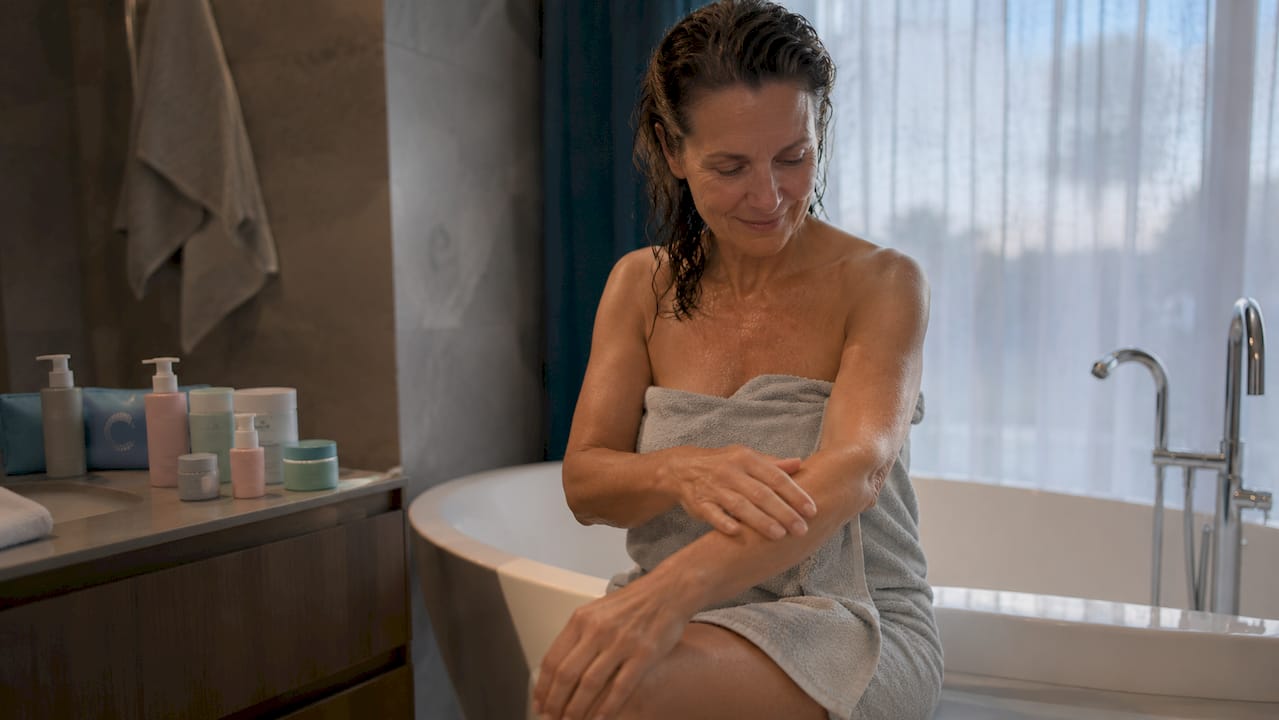
Your shower routine matters just as much as what you put on afterward. Hot water strips your skin’s natural oils fast. Warm water and short showers under 10 minutes are the standard dermatologist recommendation for protecting dry or sensitive skin. That might feel like a small change, but it makes a real difference over time.
Here are the core daily habits that support a solid dry skin skincare routine:
- Use warm water only. Hot water breaks down the lipid barrier, the protective layer that keeps moisture in.
- Keep showers under 10 minutes. Daily bathing is fine as long as it’s short and warm, not long and steaming.
- Choose fragrance-free, gentle cleansers. Fragrances and harsh surfactants are common irritants that worsen dryness.
- Pat dry, don’t rub. Rubbing with a towel creates friction that aggravates already-compromised skin.
- Moisturize within two minutes of stepping out. This is the non-negotiable step most people skip.
- Wash your face once daily. Over-washing and aggressive exfoliation damage dry or sensitive skin, especially in older adults.
- Minimize contact with irritants. Cleaning products, wool fabrics, and heavily scented laundry detergents all trigger flare-ups.
Pro Tip: Run a humidifier in your bedroom during winter months. Indoor heating pulls moisture from the air, which pulls it from your skin. A humidifier set to 45–55% relative humidity helps your skin hold onto hydration overnight.
Which moisturizer ingredients actually work for dry skin?
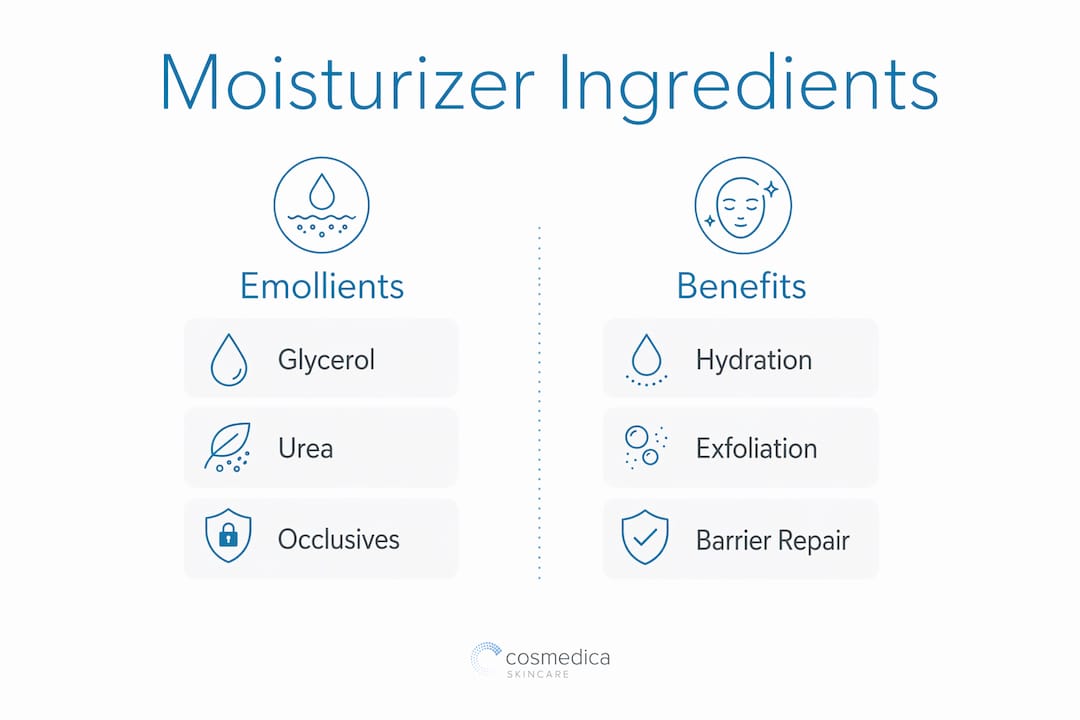
Not all moisturizers are created equal. The best moisturizers for dry skin work through three mechanisms: emollients fill in the gaps between skin cells to smooth texture, humectants draw water into the skin like a sponge pulling in moisture, and occlusives sit on top of the skin to seal everything in. A well-formulated product typically combines all three.
Glycerol: the workhorse emollient
Glycerol (also called glycerin) is one of the most studied ingredients in dry skin care. Glycerol-containing emollients at 10–20% concentration measurably improve skin hydration and reduce water loss within four weeks of consistent use. That’s a meaningful result in a relatively short time. One thing to keep in mind: concentrations above 15% can feel slightly sticky, which some people find less comfortable to wear daily.
Urea: hydration plus gentle exfoliation
Urea is a naturally occurring compound in healthy skin that declines with dryness and age. Urea-based moisturizers at 5–10% concentration both hydrate and gently exfoliate rough, flaky patches. The 5% concentration is particularly well tolerated, making it a good starting point if you have sensitive skin. Higher concentrations (10%+) work well on very rough areas like heels and elbows.
Comparing key moisturizing ingredients
| Ingredient | Type | Best for | Key benefit |
|---|---|---|---|
| Glycerol (10–20%) | Emollient/Humectant | All dry skin types | Improves hydration within 4 weeks |
| Urea (5–10%) | Humectant/Keratolytic | Rough, flaky patches | Hydrates and smooths simultaneously |
| Hyaluronic acid | Humectant | Mature and dehydrated skin | Draws water into the epidermis |
| Petrolatum | Occlusive | Very dry, cracked skin | Seals moisture in effectively |
| Shea butter | Emollient | Dry, sensitive skin | Softens and soothes the lipid barrier |
Choosing the right texture
Ointments are the most occlusive and work best for very dry or cracked skin, but they feel greasy. Creams balance hydration and wearability, making them the go-to for daily use. Lotions are lighter and absorb quickly, but they may not provide enough moisture for severely dry skin. Match the texture to your level of dryness, not just your preference.
Pro Tip: Consistency and volume matter more than the specific product you choose. Treatment success depends more on adequate, regular application than on finding a “perfect” formula. Apply generously, not sparingly, and do it every single day.
What home remedies and natural treatments can help?
Home remedies for dry skin work best as a complement to a consistent moisturizing routine, not as a replacement. Think of them as supportive tools that soothe irritation, add a layer of protection, or give your skin a hydration boost between regular applications. The good news is that several well-known remedies have real dermatological support behind them.
Common home remedies like oatmeal baths, coconut oil, and petroleum jelly provide meaningful soothing and moisturizing benefits. Here’s how to use each one effectively:
- Colloidal oatmeal baths. Add finely ground colloidal oatmeal to lukewarm bathwater and soak for 10–15 minutes. Oatmeal contains compounds called avenanthramides that calm inflammation and relieve itching. Pat dry gently and apply moisturizer immediately after.
- Coconut oil. Apply a thin layer to dry areas after bathing. Coconut oil acts as an emollient, filling in the spaces between skin cells. It works especially well on body skin, though some people find it too heavy for the face.
- Petroleum jelly (Vaseline). This is one of the most effective occlusives available. Apply it to cracked heels, dry elbows, or very rough patches before bed and cover with cotton socks or gloves overnight. You’ll notice a difference by morning.
- Omega-3 rich foods. Antioxidants and omega-3 fatty acids from foods like salmon, walnuts, and flaxseed support the skin’s lipid barrier from the inside out. Diet’s role in dry skin is complex, so focus on balanced nutrition rather than any single miracle food.
- Protective gloves. Wear cotton-lined rubber gloves when washing dishes or cleaning. Water and detergent exposure strips the skin’s natural oils quickly, and gloves prevent that loss entirely.
- Aloe vera gel. Apply pure aloe vera gel to irritated, dry patches for a cooling, anti-inflammatory effect. Look for products with minimal added ingredients to avoid triggering sensitivity.
One honest caveat: if your skin is severely cracked, bleeding, or showing signs of infection, home remedies are not enough. See a dermatologist. Natural treatments work well for mild to moderate dryness, but they don’t replace prescription-strength care when the skin barrier is seriously compromised.
How does dry skin treatment change with age?
Skin hydration capacity declines naturally with age, and that shift accelerates around menopause. Estrogen plays a direct role in maintaining the skin’s moisture levels and lipid barrier. When estrogen drops, skin becomes thinner, drier, and more prone to irritation. Older adults and menopausal individuals need moisturizers with humectants like hyaluronic acid because the skin’s ability to hold water on its own has decreased significantly.
Standard moisturizers that work well in your 30s may not be enough in your 50s and beyond. Skin dryness treatment needs evolve with age and hormonal changes, and that sometimes means adding active hydrating ingredients like hyaluronic acid or glycerin on top of your regular emollient. A hyaluronic acid serum for dry skin applied before your moisturizer gives humectants a chance to draw water into the skin before you seal it in.
Here’s how to adjust your dry skin skincare routine as you age:
- Layer humectants under emollients. Apply a hyaluronic acid or glycerin serum first, then follow with a cream or ointment to lock it in.
- Avoid harsh exfoliants. Aging skin is thinner and more fragile. Scrubs, high-strength AHAs, and frequent exfoliation can damage the barrier rather than help it.
- Prioritize night creams. Skin repairs itself during sleep. A richer, occlusive night cream gives the skin barrier the raw materials it needs to recover overnight.
- Check your cleanser again. What felt gentle at 35 may be too stripping at 55. Switch to a cream or oil-based cleanser if your current one leaves skin feeling tight.
- See a dermatologist if over-the-counter methods stop working. Persistent, severe dryness in older adults can signal conditions like eczema, psoriasis, or hypothyroidism that need medical attention.
For a deeper look at why aging skin needs more hydration and which ingredients support it best, the science-backed guide on aging skin hydration from Cosmedica-skincare is worth reading. Building a full hydration routine for your skin that accounts for your age and skin type makes a real difference in long-term results.
Key Takeaways
Treating dry skin effectively requires consistent moisturizer use with clinically backed ingredients like glycerol and urea, applied immediately after bathing, combined with gentle cleansing habits and age-appropriate adjustments.
| Point | Details |
|---|---|
| Apply moisturizer right after bathing | Damp skin absorbs product better; waiting lets moisture evaporate before it’s locked in. |
| Choose glycerol or urea-based formulas | Glycerol at 10–20% and urea at 5–10% are clinically proven to improve hydration within weeks. |
| Keep showers short and warm | Limit showers to under 10 minutes with warm water to protect the skin’s natural oil barrier. |
| Adjust your routine as you age | Mature and menopausal skin needs humectants like hyaluronic acid added to standard emollients. |
| Use home remedies as support, not substitutes | Oatmeal baths, petroleum jelly, and coconut oil complement a routine but don’t replace clinical moisturizers. |
What I’ve learned from years of watching people treat dry skin wrong
The most common mistake I see is treating moisturizer like a finishing touch rather than a treatment. People apply a thin layer once a day, usually at night, and wonder why their skin still feels tight by noon. Volume and frequency matter more than the label on the bottle. A generous application of a basic glycerol cream applied twice daily beats a premium serum used sparingly every other day.
The second mistake is over-cleansing. There’s a widespread belief that clean skin is healthy skin, but for dry skin types, washing too often strips the lipid barrier faster than it can rebuild. Once daily is enough for most people. If your skin feels tight right after washing, your cleanser is too harsh, full stop.
The third thing I’d push back on is the idea that dry skin is a cosmetic problem. For older adults especially, severe xerosis can crack and bleed, creating entry points for infection. That’s a medical issue. If you’ve tried a consistent routine with proven ingredients for four to six weeks and seen no improvement, a dermatologist visit isn’t optional. It’s the right call.
What actually works is boring but reliable: the right ingredients, applied generously, at the right time, every day. No shortcuts, no miracle products.
— Thomas
Explore Cosmedica-skincare’s dry skin solutions
If you’re ready to build a routine that actually works, Cosmedica-skincare offers a full range of cruelty-free, dermatologist-tested products formulated specifically for dry and dehydrated skin. From rich daily moisturizers for dry skin to targeted hydrating serums, every product is designed around the same principle this article is built on: the right ingredients, at the right concentration, in a formula you’ll actually want to use every day. Browse the complete product collection to find the right fit for your skin type, budget, and routine. Affordable, effective, and gentle enough for sensitive skin.
FAQ
What is the fastest way to heal dry skin?
Apply a glycerol or urea-based moisturizer immediately after bathing while skin is still damp. Consistent twice-daily application is the fastest route to visible improvement.
Why is my skin so dry even when I moisturize?
You may be applying moisturizer too late after bathing, using too little product, or using a formula that doesn’t match your skin’s needs. Aging and hormonal changes also reduce the skin’s natural ability to retain moisture.
What are the best home remedies for dry skin?
Petroleum jelly, colloidal oatmeal baths, and coconut oil are the most effective and well-supported home remedies for dry skin. Apply petroleum jelly to very dry areas overnight for best results.
How do I build a dry skin skincare routine?
Start with a gentle, fragrance-free cleanser, follow with a humectant serum like hyaluronic acid, then seal with a cream or ointment-based moisturizer. Apply the full routine morning and night, always within two minutes of washing your face or bathing.
When should I see a dermatologist for dry skin?
See a dermatologist if your skin cracks, bleeds, or shows no improvement after four to six weeks of consistent moisturizer use. Persistent severe dryness can indicate underlying conditions like eczema or hypothyroidism.