

What Is Aging Skin? Causes, Signs, and Solutions
TL;DR:
- Aging skin results from both biological decline and environmental damage, with sun exposure being the primary cause of visible signs. Preventative measures like daily SPF, retinoids, and a healthy lifestyle can significantly slow its progression. Early, consistent care focusing on barrier support and sun protection offers the best long-term skin health and appearance.
Aging skin is defined as the progressive structural and functional decline of skin tissue caused by intrinsic biological aging and extrinsic environmental damage working together. Most people think wrinkles are just a natural part of getting older, but the reality is more nuanced and, honestly, more empowering. Up to 90% of visible aging signs come from sun damage rather than the passage of time alone. That means a significant portion of what we call “aging skin” is actually preventable. Understanding what drives these changes, from collagen loss to UV exposure to your genes, puts you in a much better position to do something about them.
What is aging skin at the biological level?
Aging skin, known clinically as cutaneous aging, describes a skin state in which the epidermis (the outer layer), dermis (the middle layer), and subcutaneous tissue all undergo measurable structural decline. The epidermis becomes thinner, drier, and less able to hold moisture. The dermis loses the collagen and elastin fibers that give skin its bounce and firmness. Think of collagen as the scaffolding inside a building. When that scaffolding weakens, the structure above it starts to sag.

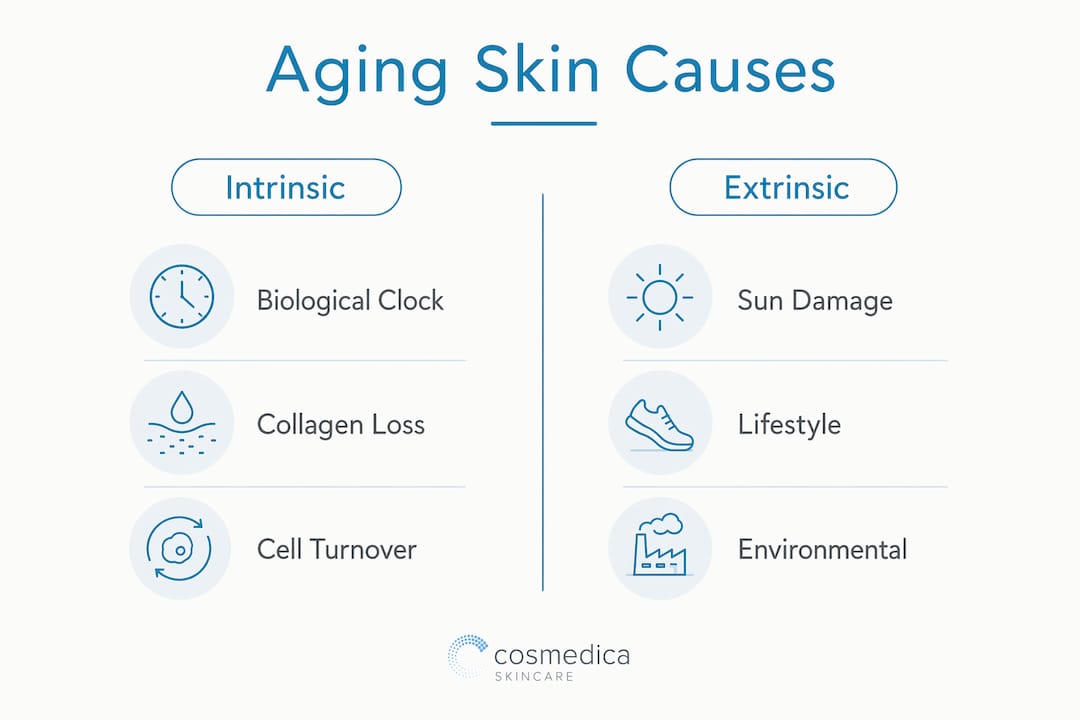
Two distinct processes drive this decline. Intrinsic aging is the biological clock built into your cells. It is governed by genetics, telomere shortening, and the gradual slowdown of cellular repair. Extrinsic aging, sometimes called photoaging, is the damage layered on top by UV radiation, pollution, smoking, and chronic stress. Both processes affect the same biological targets, collagen, elastin, and skin cell turnover, but extrinsic aging accelerates the timeline dramatically.
The key proteins involved are collagen (responsible for structural strength) and elastin (responsible for recoil and flexibility). As fibroblast cells age, they produce less of both. The result is skin that does not snap back the way it once did, that creases more easily, and that takes longer to repair itself after injury. This is not just a cosmetic concern. Skin aging is an intersection of inevitable biological processes and modifiable pathological factors, which means it sits at the crossroads of medicine and lifestyle.
What biological and structural changes happen in aging skin?
The changes inside aging skin are more dramatic than most people realize. Here is what is actually happening beneath the surface:
- Epidermal thinning: Epidermis thickness declines approximately 6% per decade, reducing the skin’s ability to retain moisture and heal efficiently. That rate compounds over decades, which is why skin in your 60s behaves so differently from skin in your 30s.
- Collagen and elastin loss: Fibroblast activity slows with age, cutting collagen production and allowing existing fibers to become disorganized and brittle. Less collagen means less structural support. Less elastin means less rebound.
- Slower cell turnover: Young skin renews itself roughly every 28 days. Older skin can take 45 to 60 days to complete the same cycle. Dead cells linger longer on the surface, creating a dull, rough texture.
- Impaired immune signaling: Slower tissue repair, reduced immune signaling, and diminished blood supply accompany aging skin physiology, making it more vulnerable to injury and infection.
- Reduced lipid production: The skin’s natural oils decrease with age, weakening the lipid barrier that keeps moisture in and irritants out. This is why dry skin becomes so much more common after 40.
These changes do not happen in isolation. Thinning skin retains less moisture, which makes it more prone to irritation, which slows healing, which accelerates visible aging. It is a cycle, and the earlier you understand it, the earlier you can interrupt it.
Pro Tip: Start supporting your skin barrier in your 30s, not your 50s. Using a ceramide-rich moisturizer daily helps reinforce the lipid barrier before significant decline sets in, making it far easier to maintain hydration and resilience long-term.
How do genetics and lifestyle influence signs of skin aging?
Your genes set the baseline, but your habits write the final story. Genetic factors account for about 50% of variance in facial wrinkle formation, with key genes governing collagen synthesis, DNA repair efficiency, and antioxidant defense. That leaves the other 50% squarely in the territory of lifestyle and environment. This is genuinely good news.
The extrinsic accelerators of skin aging include:
- UV radiation: The single largest driver of premature aging. UV rays break down collagen, damage DNA, and trigger inflammation that degrades the skin’s structural proteins over time.
- Smoking: Cigarette smoke generates free radicals that attack collagen and elastin directly. Smokers consistently show deeper wrinkles and more pronounced skin laxity than non-smokers of the same age.
- Air pollution: Particulate matter and ozone penetrate the skin barrier and generate oxidative stress, accelerating pigmentation changes and surface texture degradation.
- Chronic stress: Elevated cortisol levels suppress collagen production and impair the skin’s barrier function. Stress is not just bad for your mood. It is measurably bad for your skin.
- Poor sleep and nutrition: Sleep is when the skin does most of its repair work. Diets low in antioxidants (vitamins C and E, polyphenols) leave skin cells more vulnerable to oxidative damage.
Beyond lifestyle, epigenetic modifications influenced by lifestyle factors exacerbate skin aging by altering gene expression without changing the underlying DNA sequence. DNA methylation patterns, which are chemical tags on your genes that turn them on or off, correlate with facial wrinkle area and perceived age. This means your daily habits are literally rewriting how your skin genes behave. Sunscreen, sleep, and a nutrient-rich diet are not just good advice. They are epigenetic interventions.
Hormone changes also play a significant role, particularly for women. Estrogen supports collagen production and skin hydration. After menopause, estrogen levels drop sharply, and skin thickness and moisture retention decline noticeably within the first few years. This hormonal dimension is often underappreciated in standard skincare conversations.
What are the visible signs and symptoms of aging skin?
Recognizing the symptoms of aging skin helps you respond to them at the right stage. The signs fall into four main categories:
-
Wrinkles, fine lines, and sagging. Fine lines appear first around the eyes and mouth, where facial muscles move most frequently. Deeper wrinkles and sagging follow as collagen and elastin decline. The jawline and cheeks lose definition as the fat pads beneath the skin shift and thin.
-
Dryness, rough texture, and dullness. Reduced lipid production and slower cell turnover leave the skin feeling rough and looking flat. Skin that once felt plump and dewy starts to feel tight and look lackluster, especially in dry or cold climates.
-
Pigmentation changes and broken capillaries. Age spots (also called solar lentigines) are clusters of excess melanin triggered by cumulative UV exposure. Broken capillaries, or spider veins, appear as the vessel walls weaken with age. Both are classic markers of photoaged skin, which presents with mottled pigmentation and coarse wrinkles distinct from intrinsic aging patterns.
-
Fragility, bruising, and slower healing. Thinner skin tears and bruises more easily. Cuts and abrasions take longer to close. This is a direct consequence of the reduced immune signaling and diminished blood supply that accompany aging skin physiology.
One area that shows these changes earlier than anywhere else is the eye area. The skin around the eyes shows aging signs earliest because it is significantly thinner than skin elsewhere on the face. Crow’s feet, puffiness, and dark circles are often the first visible signals that the aging process is underway.
How can you effectively manage and prevent premature skin aging?
Managing aging skin well means working on multiple fronts at once. No single product or habit does the job alone. Here is how to build a strategy that actually holds up:
Sun protection is non-negotiable. Broad-spectrum SPF 30 or higher, applied daily (yes, even on cloudy days), is the single most evidence-backed intervention for preventing premature aging. Preventative photoprotection reduces DNA damage accumulation, lowering the risk of actinic keratoses and skin cancer alongside the cosmetic benefits.
Topical treatments that work:
- Retinoids: Vitamin A derivatives like retinol and prescription tretinoin are the gold standard for stimulating collagen production and accelerating cell turnover. Cosmedica-skincare’s retinol skin care collection offers accessible entry points into retinoid-based care.
- Hyaluronic acid: A humectant that draws water into the skin like a sponge, hyaluronic acid restores surface plumpness and hydration. Learn more about why it works specifically for aging skin.
- Antioxidants: Vitamin C serums neutralize free radicals from UV and pollution, brighten pigmentation, and support collagen synthesis. Niacinamide strengthens the lipid barrier and reduces the appearance of pores and uneven tone.
Lifestyle interventions that complement topical care:
- Aim for 7 to 9 hours of sleep per night to support overnight skin repair.
- Eat a diet rich in vitamins C and E, omega-3 fatty acids, and polyphenols from colorful fruits and vegetables.
- Manage stress through consistent practices like exercise, meditation, or whatever genuinely works for you.
- Stay well hydrated. Dehydration shows up on the skin faster than most people expect.
Professional dermatological options include chemical peels, laser resurfacing, microneedling, and injectables like botulinum toxin and dermal fillers. These are worth discussing with a qualified provider if topical care alone is not delivering the results you want. Clinics like Beauty Shot Medical Clinic specialize in professional treatments for photoaging and surface-level aging concerns.
Pro Tip: The eye area ages faster than the rest of your face because the skin there is thinner and more delicate. Start using a dedicated eye cream with peptides or retinol in your late 20s or early 30s. Waiting until crow’s feet are already deep makes the job significantly harder.
A structured anti-aging skincare routine ties all of these elements together in a sequence that maximizes absorption and effectiveness. Consistency matters more than complexity.
| Approach | Best for | Key ingredients or methods |
|---|---|---|
| Daily SPF | Preventing photoaging | Broad-spectrum SPF 30+ |
| Topical retinoids | Collagen stimulation, cell turnover | Retinol, tretinoin |
| Humectant serums | Hydration and plumpness | Hyaluronic acid |
| Antioxidant serums | Free radical defense, brightening | Vitamin C, niacinamide |
| Professional treatments | Advanced photoaging, laxity | Laser, peels, injectables |
Key takeaways
Aging skin is driven by both unavoidable biological decline and highly modifiable environmental factors, and addressing both with consistent sun protection, targeted topical treatments, and healthy lifestyle habits produces the most meaningful long-term results.
| Point | Details |
|---|---|
| Extrinsic aging dominates | Up to 90% of visible aging signs come from sun damage, making SPF the highest-impact daily habit. |
| Biology sets the pace | Epidermal thinning of 6% per decade reduces moisture retention and healing, starting earlier than most people expect. |
| Genetics is only half the story | Genetic factors account for about 50% of wrinkle variance, leaving significant room for lifestyle intervention. |
| Retinoids and hyaluronic acid lead topical care | These two ingredients have the strongest evidence base for stimulating collagen and restoring hydration in aging skin. |
| Eye area needs early attention | Thinner periorbital skin shows aging signs first, making early targeted care around the eyes a smart preventive move. |
What I’ve learned about aging skin after years in skincare
One thing I keep coming back to is how much the conversation around aging skin focuses on the surface while the real action happens underneath. People spend a lot of energy comparing serums and debating ingredients, which matters, but the biological reality is that no topical product can fully substitute for a healthy lipid barrier, adequate sleep, and consistent sun protection. Those three things do more for long-term skin health than any single product.
What I find genuinely exciting right now is the emerging research on epigenetics and skin aging. The idea that DNA methylation patterns correlate with perceived facial age means we may soon have biomarkers that tell us exactly how fast our skin is aging at a cellular level. Tools like the Aesthetic Skin Ageing Scale (ASAAS) already help clinicians distinguish natural aging from accelerated pathological aging, which is a meaningful shift away from purely cosmetic assessment. That kind of individualized, biology-informed approach is where the field is heading, and it changes the question from “what product should I use?” to “what does my skin specifically need, and why?”
My honest observation is that people who age well tend to have one thing in common: they started early and stayed consistent. Not with an elaborate 12-step routine, but with the fundamentals. Daily SPF, a good moisturizer, a retinoid introduced gradually, and genuine attention to sleep and nutrition. The science backs this up, and so does every conversation I have had with people who are genuinely happy with how their skin looks in their 50s and 60s. Start before you think you need to. Your future self will appreciate it.
— Thomas
Build a routine that works for your skin
If you are ready to move from understanding aging skin to actually doing something about it, Cosmedica-skincare has you covered. Our full product collection includes cruelty-free, dermatologist-tested formulas built around the ingredients that matter most for aging skin: retinol, hyaluronic acid, and antioxidant-rich vitamin C. For a targeted starting point, the Super Serum Set addresses multiple signs of aging in one curated kit, and our Multi-Active Hydrating Night Cream works overnight to restore moisture and support skin repair while you sleep. Affordable, effective, and built for real results.
FAQ
What is the main cause of aging skin?
Aging skin results from a combination of intrinsic biological decline (collagen loss, slower cell turnover) and extrinsic damage, primarily from UV radiation. Up to 90% of visible aging signs are attributed to sun damage rather than chronological aging alone.
At what age does skin start to show aging signs?
Visible signs of skin aging typically begin in the late 20s to early 30s, starting with fine lines around the eyes and mouth. The eye area shows changes earliest because the skin there is thinner and more delicate than elsewhere on the face.
Can aging skin be reversed?
Aging skin cannot be fully reversed, but its appearance can be significantly improved. Topical retinoids stimulate collagen production and accelerate cell turnover, while professional treatments like laser resurfacing and chemical peels address deeper photoaging damage.
What ingredients are most effective for aging skin?
Retinoids (retinol and tretinoin), hyaluronic acid, and vitamin C are the three most evidence-backed ingredients for aging skin. Retinoids rebuild collagen, hyaluronic acid restores hydration, and vitamin C neutralizes free radicals while brightening pigmentation.
How does sun exposure accelerate skin aging?
UV radiation breaks down collagen and elastin fibers, triggers DNA damage in skin cells, and stimulates excess melanin production that leads to age spots. Consistent broad-spectrum SPF use is the most effective single strategy for preventing premature photoaging.