

Role of Lifestyle in Aging: Simple Steps to Protect Skin
Your lifestyle choices are the single biggest controllable factor in how your skin ages. Daily SPF 30+ broad-spectrum sunscreen, quitting smoking, and a consistent topical routine (vitamin C in the morning, retinoid at night, moisturizer throughout) deliver the most visible anti-aging impact, according to AAD-aligned clinical guidance. Think of it as a three-layer defense: block UV damage before it starts, stop smoking from quietly depleting your skin’s oxygen supply, and give your skin the topical tools it needs to repair and rebuild overnight.
Your three starting points:
- Apply a broad-spectrum SPF 30+ sunscreen every morning, rain or shine
- Stop or sharply reduce smoking to restore blood flow and collagen production
- Add a vitamin C serum in the AM and a retinoid at night, followed by moisturizer
Pro Tip: If you can only do one thing today, put on sunscreen. UV exposure is the dominant external driver of visible skin aging, and no serum can undo what daily unprotected sun exposure accumulates over years.
Table of Contents
- How does lifestyle actually drive skin aging?
- Which topical ingredients actually work for skin aging?
- Your simple AM/PM routine (and how to start retinoids safely)
- When will you actually see results?
- Safety notes: when to modify or pause your actives
- What the evidence says (and why we trust it)
- Key Takeaways
- A note on pairing lifestyle with topicals
- Ready to build your routine with Cosmedica-skincare?
- Useful sources and further reading
- FAQ
How does lifestyle actually drive skin aging?
Skin aging comes from two directions: intrinsic (genetics, time) and extrinsic (everything your skin encounters in the world). The extrinsic side is where lifestyle choices and health habits make a real difference. Researchers now use the term cutaneous exposome to describe the total lifetime environmental load your skin carries, including UV radiation, pollution, smoking, and sleep deprivation. Together, these exposures trigger cellular senescence and extracellular matrix breakdown, which shows up as wrinkles, sagging, and uneven tone.
Sun and UV exposure are the heaviest hitters. UV radiation generates reactive oxygen species (ROS) that upregulate matrix metalloproteinases (MMPs), enzymes that break down collagen and elastin. The result is photoaging: fine lines, pigmentation, and loss of elasticity. This is not a slow, invisible process. Decades of unprotected sun exposure produce measurably thinner, less resilient skin.
Smoking works through a different but equally damaging mechanism. It narrows the tiny blood vessels in your skin’s outer layers, cutting off oxygen and nutrients. Mayo Clinic notes that this vascular restriction damages collagen and elastin directly, producing deeper wrinkles and a dull, grayish complexion. Even moderate smoking accelerates these changes.
“Lifestyle factors — including diet, sleep, and stress — create a pro-inflammatory state that worsens skin integrity. Diets rich in fruits and vegetables are associated with fewer clinical signs of skin aging.” — Journal of the European Academy of Dermatology and Venereology
Diet and inflammation matter more than most people realize. Diets high in refined carbohydrates and low in fruits and vegetables push the body toward a pro-inflammatory state, which accelerates matrix breakdown. Limiting processed sugar and eating antioxidant-rich foods supports the same collagen pathways your topicals are trying to stimulate. Systemic inflammation also affects how well topical treatments perform, so what you eat genuinely shapes how your skin responds to a retinoid or vitamin C serum.
Sleep and stress round out the picture. During deep sleep, your skin runs its repair cycle: cell turnover accelerates, growth hormone peaks, and inflammatory signaling quiets. Chronic poor sleep raises what researchers call “inflammaging” risk, a low-grade inflammatory state that degrades the dermal matrix over time. Stress compounds this through cortisol, which suppresses collagen synthesis and weakens the skin barrier.

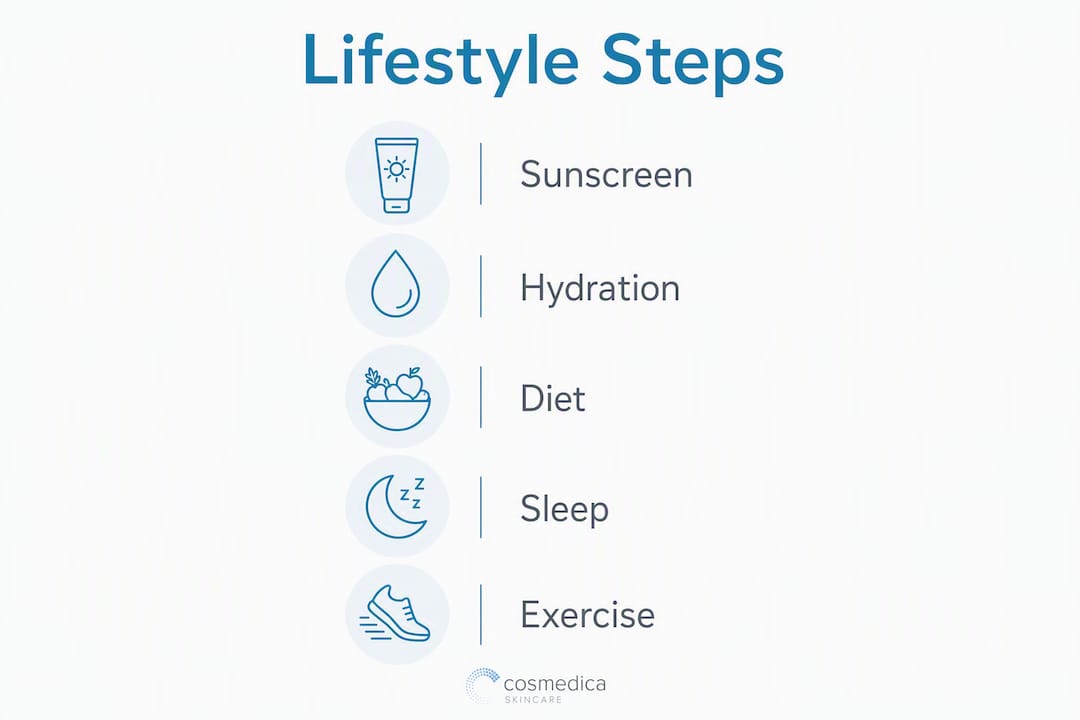
Hydration and moderate exercise play supporting roles. Staying well-hydrated keeps the skin barrier functioning, and regular movement improves circulation, delivering nutrients to skin cells more efficiently.
Which topical ingredients actually work for skin aging?
The evidence base for anti-aging topicals is narrower than the beauty aisle suggests. A handful of ingredients have real clinical backing; the rest are adjuncts at best.
| Ingredient | Primary Mechanism | Best Timing | Key Consideration |
|---|---|---|---|
| Broad-spectrum SPF 30+ | Blocks UV-induced collagen breakdown | Morning (last step) | Reapply every 2 hours with sun exposure |
| Vitamin C (L-ascorbic acid) | Antioxidant, collagen synthesis, tyrosinase inhibition | Morning (before SPF) | Measurable collagen improvement after ~84 days |
| Retinoids (retinol/tretinoin) | Epidermal turnover, collagen stimulation | Night only | 3–6 months for visible results; avoid in pregnancy |
| Hyaluronic acid / ceramides | Barrier repair, hydration, retinoid tolerance | AM and PM | Choose noncomedogenic formulas |
| Peptides | Support collagen pathways | AM or PM | Adjunct, not a replacement for SPF or retinoids |
Sunscreen is foundational, full stop. SPF 30+ broad-spectrum applied 15 minutes before sun exposure is the most evidence-backed topical intervention for preventing photoaging. Nothing else in your routine compensates for skipping it.
Vitamin C (topical L-ascorbic acid and stabilized derivatives) works on three fronts: it neutralizes free radicals before they damage collagen, stimulates new collagen synthesis, and inhibits tyrosinase to reduce dark spots. It belongs in the morning because it amplifies UV protection when layered under sunscreen.
Retinoids are the gold standard for reversing existing photoaging. OTC retinol converts to retinoic acid in the skin; prescription tretinoin delivers retinoic acid directly and works faster. Both drive epidermal cell turnover and stimulate collagen remodeling. Expect 3–6 months before structural improvements become visible. For guidance on how to select anti-aging products that actually work, the key is matching ingredient strength to your skin’s current tolerance.
Moisturizers with ceramides and hyaluronic acid repair the lipid barrier and keep skin hydrated enough to tolerate actives. Choose noncomedogenic formulas and avoid heavy oils like cocoa butter or coconut oil if you’re acne-prone.
Pro Tip: Avoid using a high-concentration AHA (like glycolic acid) on the same night you apply a retinoid when you’re first starting out. The combined irritation can set back your skin barrier and force you to pause both.
Your simple AM/PM routine (and how to start retinoids safely)
A consistent anti-aging skincare routine does not need to be complicated. Here’s what the clinical guidance supports:
Morning routine:
- Gentle cleanser
- Vitamin C serum (antioxidant protection, collagen support)
- Moisturizer with ceramides or hyaluronic acid
- Broad-spectrum SPF 30+ (apply ~15 minutes before going outside)
Evening routine:
- Gentle cleanser
- Retinoid (start low-strength; skip if post-procedure, pregnant, or breastfeeding)
- Moisturizer to buffer and seal
Starting retinoids safely — a weekly progression:
- Weeks 1–2: Apply every third night; use moisturizer before and after (the “sandwich” method)
- Weeks 3–4: Move to every other night if no significant irritation
- Weeks 6–12: Increase to nightly as tolerated; switch to a slightly higher strength if skin has adjusted
Lifestyle habits that pair with this routine:
- Drink water consistently throughout the day to support barrier function
- Aim for 7–9 hours of sleep to keep the skin’s repair cycle running
- Cut back on refined sugar and processed foods to reduce pro-inflammatory load
- If you smoke, treat cessation as part of your skincare plan, not separate from it
When will you actually see results?
Setting realistic expectations keeps you consistent, and consistency is what produces results. Here’s how the timeline typically unfolds:
- Days to 2 weeks: Better hydration, reduced tightness, and a more even surface from moisturizers and barrier repair. Sunscreen prevents new UV damage from accumulating immediately.
- 6–12 weeks: Vitamin C begins showing measurable effects on collagen markers. A clinical study of a 12% vitamin C serum found improvements in collagen synthesis and skin thickness after roughly 84 days of continuous daily use. Tone and radiance often improve noticeably in this window.
- 3–6+ months: Retinoids produce clinically visible improvements in photoaging over this period, with sustained use required for lasting benefits. Lifestyle shifts like quitting smoking and consistent sun protection compound over the same timeframe, producing changes that no topical alone can replicate.
Take baseline photos in consistent lighting when you start. Skin changes happen gradually, and photos make the progress visible in a way that daily mirror checks cannot.
Safety notes: when to modify or pause your actives
Not every skin situation calls for the same routine. A few scenarios where you genuinely need to adjust:
- Pregnancy and breastfeeding: Avoid all retinoids. Dermatology consensus guidance is clear that retinoids are inappropriate during both. Stick to vitamin C, hyaluronic acid, ceramides, and SPF.
- Post-procedure recovery: After laser resurfacing, chemical peels, or microneedling, pause retinoids until your provider clears you. The skin barrier is compromised, and actives will cause more harm than benefit.
- Sensitive skin or active dermatitis: Reduce retinoid frequency, switch to a gentler form like granactive retinoid, and buffer with moisturizer. Patch-test every new active ingredient on your inner arm before applying it to your face.
- Photosensitizing actives: When using retinoids or AHAs, sunscreen is non-negotiable. Reapply every two hours during outdoor exposure.
“Sunscreen and barrier repair are foundational across virtually all dermatologic scenarios. Retinoids help photoaging but require careful timing around procedures and specific life stages.” — Dermocosmetic consensus, Springer
Pro Tip: If you have a Fitzpatrick skin type IV–VI, consult a dermatologist before starting strong exfoliants or retinoids, especially after procedures. Post-inflammatory hyperpigmentation risk is higher, and a personalized plan prevents setbacks.
What the evidence says (and why we trust it)
The clinical picture on lifestyle and skin aging is consistent across multiple research streams. The cutaneous exposome framework gives dermatologists a practical way to counsel patients: map the cumulative environmental exposures (UV, pollution, smoking, sleep deficit) and address the modifiable ones first. UV remains the dominant driver of extrinsic aging, which is why sunscreen sits at the top of every evidence-based protocol.
On the topical side, the evidence hierarchy is clear:
- Sunscreen: Highest evidence for prevention; AAD recommends SPF 30+ broad-spectrum daily
- Retinoids: Strongest evidence for reversing existing photoaging; 3–6 months for visible results
- Vitamin C: Clinically validated for collagen support; measurable changes after ~84 days of daily use
- Peptides and growth factors: Promising adjuncts, but not yet at the same evidence level
Cosmedica-skincare formulates its products to align with this evidence hierarchy: dermatologist-tested, cruelty-free, and built around ingredients with real clinical backing.
Regular skin checks matter too. Annual or biannual dermatologist visits let you track changes, catch evolving concerns early, and adjust your routine as your skin’s needs shift with age.
Key Takeaways
Lifestyle choices and topical ingredients work together: daily SPF 30+, quitting smoking, and a consistent vitamin C plus retinoid routine deliver the most visible anti-aging results, with structural improvements appearing over 3–6 months.
| Point | Details |
|---|---|
| Sunscreen is non-negotiable | Apply SPF 30+ broad-spectrum every morning; it’s the most evidence-backed anti-aging step. |
| Quit smoking for real results | Smoking narrows skin capillaries, depletes oxygen, and damages collagen — cessation reverses the trend. |
| Vitamin C has clinical data showing measurable collagen and skin thickness improvements with continuous daily use over a clinical trial period. | |
| Retinoids need 3–6 months | Expect gradual improvement; start every third night and increase frequency as your skin adjusts. |
| Cosmedica-skincare fits the routine | Dermatologist-tested vitamin C serums, moisturizers, and retinol options map directly to the AM/PM plan above. |
A note on pairing lifestyle with topicals
We believe the best skincare routine is one you’ll actually stick to. At Cosmedica-skincare, we’ve built our formulations around the same evidence-backed ingredients this article covers: vitamin C serums for morning antioxidant protection, gentle retinol options for nighttime renewal, and moisturizers designed to support barrier repair and retinoid tolerance. Every product is cruelty-free, vegan, and dermatologist-tested, so you can follow the routine above with confidence. We also publish educational resources to help you understand what each ingredient does and why it belongs in your routine.
Ready to build your routine with Cosmedica-skincare?
Knowing the routine is one thing. Having the right products makes it effortless. Cosmedica-skincare’s serum collection covers the AM antioxidant step with vitamin C options formulated for all skin types, and the Trio Facial Serum Kit gives you a preassembled starting point that maps directly to the morning routine outlined here. Pair either with a ceramide-rich moisturizer and your daily SPF, and you have the full protocol in place. Remember to patch-test new actives and start your retinoid slowly. Browse the serum collection to read full ingredient details and clinical claims for each product.
Useful sources and further reading
The following sources informed this article and are selected for clinical credibility and US applicability:
- Vitamin C, Topical Retinoids, and Sunscreen in Clinical Practice — ACOFP
- Clinical Efficacy of a 12% Pure Vitamin C Serum — Springer
- Skin aging: mechanisms, evaluation, and rejuvenation — The EMBO Journal
- Skin care: 5 tips for healthy skin — Mayo Clinic
- Dermocosmetic Ingredient Selection Across Common Dermatology Scenarios — Springer
- Lifestyle, diet, and skin aging — Journal of the European Academy of Dermatology and Venereology
- Comparative efficacy of topical interventions for facial photoaging — PMC
Always consult a board-certified dermatologist for personalized care, especially before starting prescription retinoids or combining in-office procedures with active topicals.
This article is for general informational purposes only and does not constitute medical or dermatological advice. Confirm current ingredient safety guidelines and any treatment decisions with a qualified healthcare professional.
FAQ
What lifestyle changes help skin aging the most?
Daily broad-spectrum SPF 30+ sunscreen and quitting smoking produce the largest visible impact, followed by a consistent topical routine with vitamin C and a retinoid.
How long does it take for a retinoid to work on skin aging?
Retinoids typically produce clinically noticeable improvement in photoaging over 3–6 months of consistent nightly use; structural collagen remodeling requires sustained long-term application.
Can vitamin C serum really improve collagen?
Yes. A clinical study of a 12% vitamin C serum found measurable improvements in collagen synthesis and skin thickness after approximately 84 days of continuous daily use.
Is it safe to use retinoids and vitamin C together?
They work well together when layered correctly: apply vitamin C in the morning before sunscreen, and use your retinoid at night only, since retinoids increase photosensitivity.
When should you avoid retinoids entirely?
Avoid retinoids during pregnancy and breastfeeding, immediately after laser or ablative procedures, and during active severe dermatitis. Consult a dermatologist before reintroducing them in these scenarios.