

Humectant AM/PM Routine for Oily Skin: Hydration That Calms Shine
Yes, oily skin needs hydration, and skipping it usually backfires. The fix is a lightweight, humectant-based moisturizer containing ingredients such as hyaluronic acid and glycerin, in a gel or water-cream texture, applied every morning under sunscreen. Start there, and let your skin’s oil production settle from the inside out.
TL;DR:
- Using a lightweight, humectant-based moisturizer with hyaluronic acid or glycerin every morning can help balance oil production without clogging pores.
- Hydrating reduces water loss, preventing the skin from overcompensating by producing excess sebum, which worsens oiliness.
- Applying hyaluronic acid serum to damp skin and layering a gel moisturizer supports hydration at multiple skin depths, especially when used consistently.
- Avoid heavy oils, occlusive balms, and harsh cleansers that strip oils and irritate skin, causing increased oil production and dehydration.
- Opt for oil-free, non-comedogenic moisturizers containing humectants and barrier-boosting ingredients like niacinamide or panthenol for best results.
Table of Contents
- Why Hydration Matters for Oily and Combination Skin
- Key Ingredients That Hydrate Oily Skin Without Clogging Pores
- Your AM and PM Routine for Balanced, Hydrated Skin
- What to Avoid and How to Troubleshoot Common Mistakes
- How to Choose a Moisturizer for Oily or Combination Skin
- What Cosmedica-skincare Knows About Hydrating Oily Skin
- The Hydration Advice Most People Get Backwards
- Where to Start With Cosmedica-skincare’s Hydrating Collection
- Sources
- FAQ
Why Hydration Matters for Oily and Combination Skin
Here’s the confusion we run into constantly: oil and water are not the same thing, and your skin can be short on one while drowning in the other. Hydration means water content in the skin cells. Oil (sebum) is a separate substance your glands produce for lubrication. When skin loses water faster than it can replace it, it doesn’t just feel tight. It often sends your sebaceous glands into overdrive to compensate, a rebound effect that leaves you oilier than before you started.
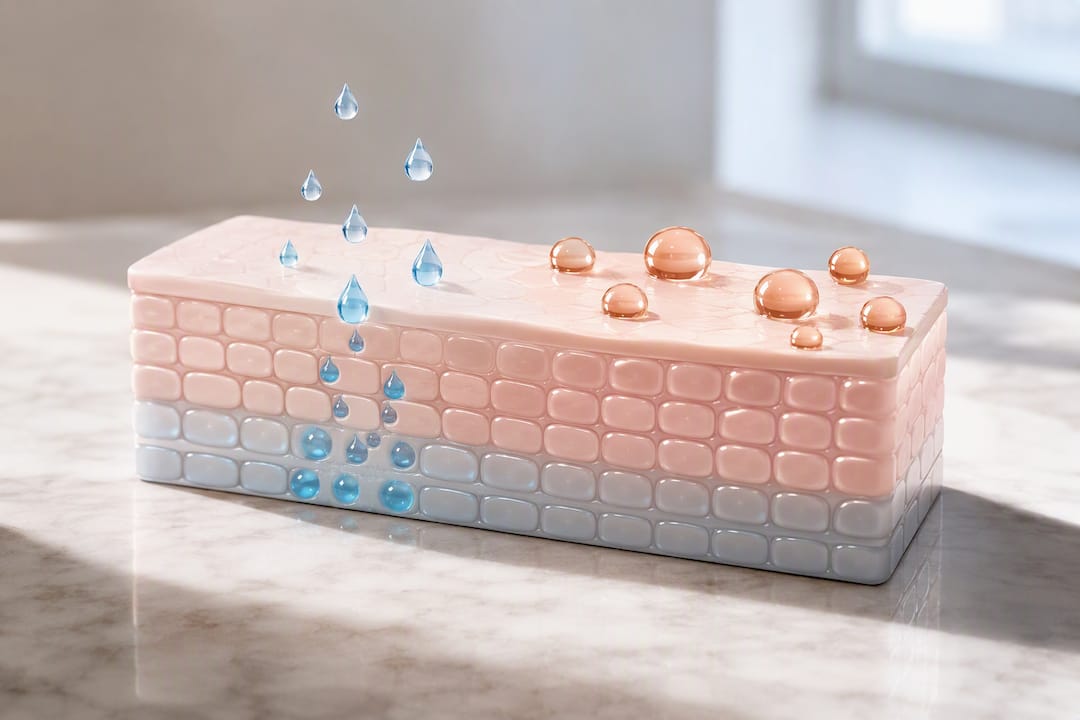
The American Academy of Dermatology confirms that people with oily skin should still moisturize, since lightweight, non-comedogenic formulas support the barrier and can actually calm excess shine rather than add to it. A compromised barrier lets water escape and irritants in, which is exactly why the Cleveland Clinic points to barrier health as central to reducing both water loss and oil overproduction.
Not sure if you’re dehydrated? Try this:
- The pinch test: gently pinch your cheek. Skin that bounces back instantly is hydrated; skin that stays creased or slow to recover is thirsty.
- The shine timeline: oily skin tends to get shiny within a few hours after cleansing; dehydrated skin can look dull, tight, and still oily later in the day.
- Over-cleansing habits: washing frequently or scrubbing with harsh cleansers strips natural oils, which triggers your glands to overproduce in response.
Key Ingredients That Hydrate Oily Skin Without Clogging Pores
Reading labels gets a lot less intimidating once you know what these actives actually do.
Hyaluronic acid and glycerin are your workhorses. Both are humectants, meaning they act like tiny sponges, pulling water into the skin from the air and from deeper layers. Glycerin in particular can penetrate a bit deeper and is naturally non-comedogenic, making it a safe bet even for breakout-prone skin. Apply either to slightly damp skin for the best absorption.
Niacinamide and ceramides are often used to help regulate sebum output and rebuild the skin’s barrier by maintaining moisture and protecting against irritants.
Panthenol and centella asiatica round things out as gentle, soothing humectants that reduce redness without adding weight.
What to skip: coconut oil, heavy petrolatum blends, and thick occlusive balms during the day. They sit on top of oily skin and can trap sebum in the pore rather than let it flow out.
- Low molecular weight hyaluronic acid penetrates deeper layers.
- High molecular weight HA sits on the surface for an immediate plumping effect.
- Layering both, if your product allows it, covers hydration at multiple depths.
Pro Tip: Apply your hyaluronic acid serum to damp (not dry) skin, then wait 30 to 60 seconds before layering your moisturizer. HA pulls water from wherever it can find it, including the air. On bone dry skin in a dry room, it can occasionally pull moisture from your own skin instead of adding to it.
Your AM and PM Routine for Balanced, Hydrated Skin
Consistency matters more than complexity here. A simple, repeatable order beats a ten-step routine you abandon in two weeks.
Morning:
- Cleanse with a gentle, sulfate-free cleanser (once, not twice).
- Apply a hyaluronic acid or glycerin serum to slightly damp skin.
- Follow with a lightweight gel moisturizer, or pair a separate mattifying SPF with your hydrator if your moisturizer doesn’t already include sun protection.
Evening:
- Cleanse again to remove sunscreen, oil, and the day’s grime.
- Apply any targeted treatments first, like a retinoid or a BHA exfoliant, if those are part of your routine.
- Layer your humectant serum onto damp skin.
- Finish with a lightweight gel moisturizer. Save heavier, richer creams for nighttime only, and only if your skin genuinely needs the extra emollient support in colder months.
A few ground rules keep this from going sideways: cleanse twice daily at most, and rinse with cool water after sweating instead of scrubbing, since heat and friction both aggravate oil glands. If you exercise midday, a quick rinse and reapplication of moisturizer beats a full second cleanse.
What to Avoid and How to Troubleshoot Common Mistakes
Most hydration problems on oily skin often relate to certain habits.
- Using harsh cleansers and alcohol-based toners, which can strip natural oils and cause glands to overcompensate.
- Applying heavy oils and occlusive balms during the day, which might trap sebum.
- Overusing multiple active ingredients like retinoids, acids, and vitamin C simultaneously, which can harm the skin barrier.
If you’re still shiny by noon despite moisturizing, check the timeline: shine that appears within an hour or two of cleansing is likely genuine oil production. Dullness, tightness, or flaking alongside that oil almost always points to dehydration, not excess hydration. When at-home adjustments plateau, a licensed esthetician or dermatologist can help identify whether professional treatments are worth adding to your routine.
How to Choose a Moisturizer for Oily or Combination Skin
Skip the brand-hopping and use a checklist instead. Look for these specifics on any product label before you buy.
- Texture: gel-cream, water-cream, or oil-free lotion, never a thick, balm-like cream for daytime use.
- Label claims: “non-comedogenic,” “oil-free,” and “formulated for acne-prone skin” are the three phrases worth scanning for first.
- Ingredient combo: a humectant (hyaluronic acid or glycerin) paired with a light emollient and a barrier-supporting ingredient like niacinamide or panthenol.
- Seasonal adjustment: lighter gel textures in summer or humid climates, slightly richer (but still oil-free) formulas in winter or dry indoor heat.
| What to Check | Why It Matters |
|---|---|
| Texture | Gel and water-cream absorb fast without leaving residue |
| Label claims | “Non-comedogenic” and “oil-free” reduce breakout risk |
| Core ingredients | Humectant + emollient + barrier booster covers all your bases |
| SPF | Look for oil-free or mattifying formulas to avoid daytime shine |
For deeper background on how these ingredient categories actually function, our breakdown of hydration versus moisture walks through the science in plain terms.
What Cosmedica-skincare Knows About Hydrating Oily Skin
Hydration for oily and combination skin is a category often formulated around using natural ingredients built around humectants and barrier-supporting actives. Our blog resources on glycerin’s role in hydration and layering hyaluronic acid correctly go deeper into application technique, and our oily skin routine guide maps these steps into a full daily template.
The Hydration Advice Most People Get Backwards
Most oily skin advice still treats moisture and shine as the same enemy, and that’s the biggest mistake in this entire category. The instinct to strip, dry out, and mattify at every turn is exactly what keeps people stuck in the cycle of overproducing oil in the first place.
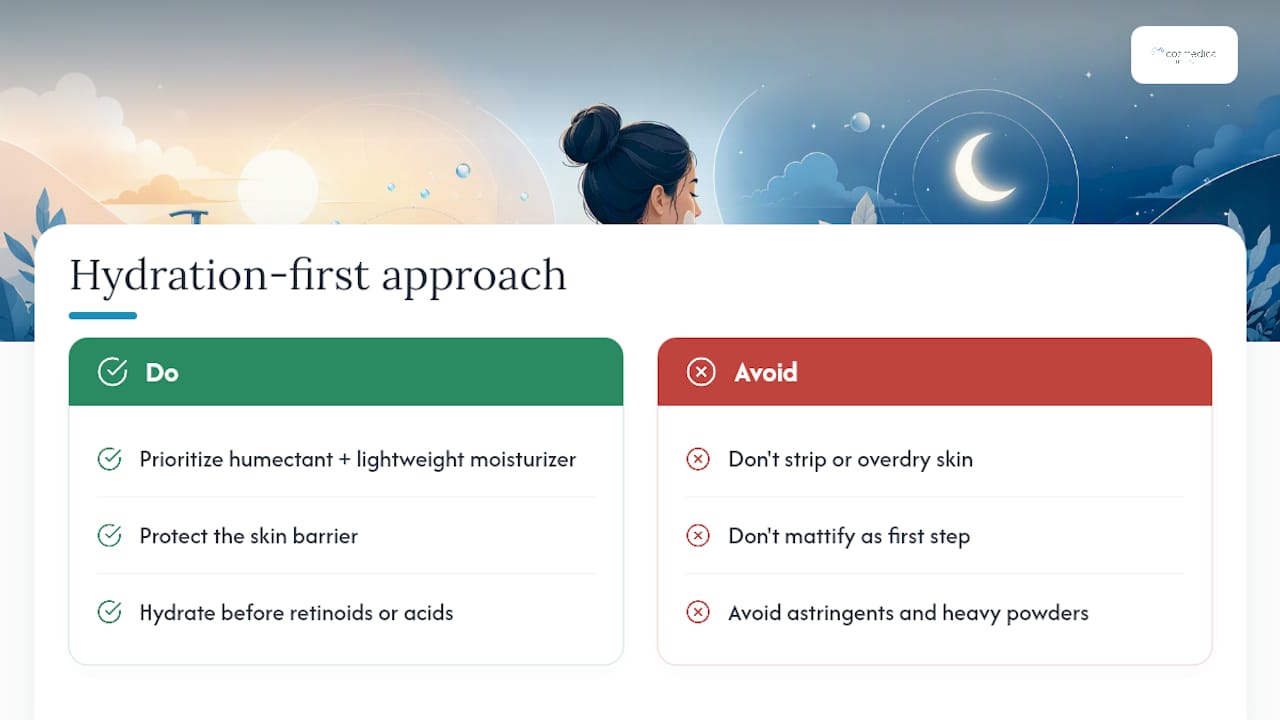
What the science actually supports is narrower and more useful than most routines suggest: hydrate with humectants, protect the barrier, and stop treating every ounce of shine as a problem to solve with harsher products. The AAD’s own guidance backs this, yet plenty of skincare advice online still recommends astringents and heavy mattifying powders as a first move rather than a last resort.
If you take one thing from this article, prioritize the humectant serum and lightweight moisturizer pairing before you touch anything else, retinoids, exfoliating acids, or spot treatments. Those tools matter, but they work better on skin that isn’t fighting a water deficit. Get hydration right first, and the rest of your routine has a much easier job to do.
— Thomas
Where to Start With Cosmedica-skincare’s Hydrating Collection
If the checklist above sounds right but you’d rather not build a routine from five separate products, Cosmedica-skincare’s moisturizers collection is organized around exactly this: lightweight, oil-free textures formulated with humectants instead of pore-clogging occlusives. For readers who want the humectant-plus-gel-moisturizer pairing covered in the routine section without guessing which two products actually work together, the Hydrating Duo pairs a humectant serum with a gel moisturizer built for oily and combination skin. Start there, apply the serum to damp skin as outlined above, and give your barrier a few weeks of consistent use before judging results.
Sources
This article draws on dermatology and clinical guidance, including the American Academy of Dermatology’s oily skin care recommendations, NIH/NCBI research on moisturizer ingredient classes, and the Cleveland Clinic’s overview of skin barrier function.
- American Academy of Dermatology — Oily skin: Moisturizing and care
- Cleveland Clinic — Skin barrier and hydration
FAQ
How Do You Hydrate Oily Skin Without Making It Greasier?
Use a humectant serum like hyaluronic acid or glycerin applied to damp skin, then seal it with a lightweight, oil-free gel moisturizer instead of a heavy cream.
Is Hydration Actually Good for Oily Skin?
Yes. A well-hydrated, healthy barrier helps regulate sebum production, while dehydration often triggers the skin to produce even more oil to compensate.
What Is the Best Type of Moisturizer for Oily Skin?
Gel-creams and water-based, oil-free formulas labeled “non-comedogenic” work best, ideally built around hyaluronic acid, glycerin, or niacinamide.
Does Oily Skin Really Need a Hydrating Product?
Yes, skipping moisturizer entirely tends to backfire, since stripped, dehydrated skin usually overproduces oil in response, according to the American Academy of Dermatology.