

Hydration Workflow for Skin: Build Your Best Routine
TL;DR:
- A skin hydration workflow is a step-by-step routine that layers humectants, emollients, and occlusives to maintain moisture and strengthen the skin barrier. Proper application order and timing are essential for effective results, with attention to skin type and daily habits supporting optimal hydration. Consistency over several weeks yields the most noticeable improvements in skin plumpness, health, and glow.
A hydration workflow for skin is a structured, step-by-step routine that combines water-drawing ingredients, barrier-strengthening agents, and moisture-sealing compounds to keep your complexion plump, healthy, and glowing. In the skincare industry, this process is often called a moisture delivery system, and it goes well beyond simply splashing water on your face. The workflow layers three distinct ingredient categories: humectants, emollients, and occlusives. Each one plays a specific role, and skipping any of them leaves your skin’s moisture balance incomplete. Think of it like building a house. Humectants pour the water in, emollients build the walls, and occlusives put the roof on. When all three work together, your skin holds onto hydration all day long.
What are the key components of a hydration workflow for skin?
The three pillars of any effective skin hydration routine are humectants, emollients, and occlusives. Balancing all three creates optimal skin moisture balance. Each category does a different job, and understanding them helps you choose the right products.
Humectants: the water magnets
Humectants like hyaluronic acid and glycerin pull water molecules into the skin from the environment and deeper skin layers. Think of them as tiny sponges sitting in your epidermis, soaking up moisture wherever they can find it. Hyaluronic acid can hold up to 1,000 times its weight in water. That is why it shows up in so many hydrating serums and toners. You can read more about how hyaluronic acid works to get the most from this ingredient.

Emollients: the barrier builders
Emollients like ceramides and fatty acids strengthen and repair the skin’s lipid barrier to prevent moisture from escaping. They fill in the microscopic gaps between skin cells, leaving your skin feeling smooth and soft. Ceramides are especially important because they make up roughly 50% of the skin’s natural lipid barrier. Products rich in ceramides include moisturizing creams, facial oils, and barrier repair serums.
Occlusives: the moisture sealers
Occlusives such as petrolatum and mineral oil form a protective film on the skin’s surface that reduces transepidermal water loss. They are the final lock on your moisture routine. Heavier occlusives like petrolatum work best at night, while lighter options like squalane suit daytime use. Under extreme climate conditions, occlusives become even more critical for protecting the skin barrier.
Product types at a glance
| Ingredient Type | Function | Common Examples |
|---|---|---|
| Humectant | Draws water into the skin | Hyaluronic acid, glycerin, aloe vera |
| Emollient | Smooths and repairs the barrier | Ceramides, fatty acids, shea butter |
| Occlusive | Seals moisture and reduces evaporation | Petrolatum, mineral oil, squalane |
| Combination | Hydrates and seals in one step | Rich creams, overnight balms |
Pro Tip: If you live in a dry climate, always apply your humectant serum over slightly damp skin. Without enough ambient moisture, humectants can pull water from deeper skin layers instead, which can actually leave your skin feeling drier.
How do you build a step-by-step skin hydration routine?
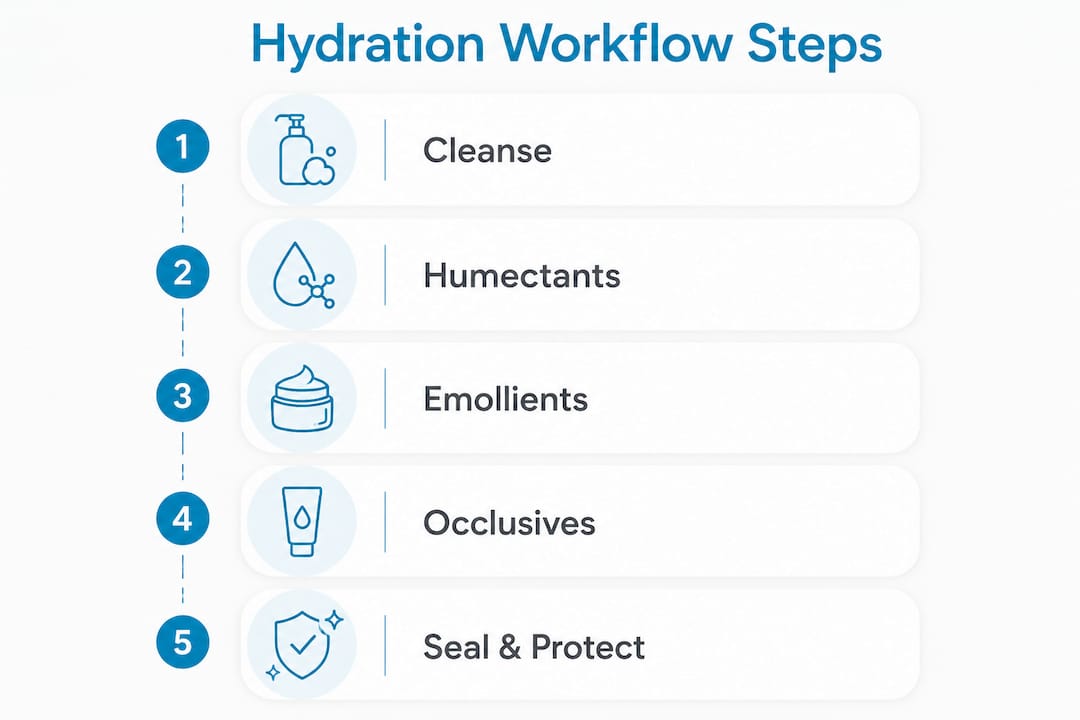
The sequence you follow matters as much as the products you use. Proper layering order based on the moisture sandwich technique significantly improves skin hydration retention. The general rule is simple: apply products from lightest to heaviest texture. Here is the full workflow we recommend.
The 5-step moisture delivery system
-
Gentle Cleanse. Start with a sulfate-free, non-stripping cleanser. Harsh cleansers remove your skin’s natural oils and disrupt the lipid barrier before you even begin hydrating. Gel or cream cleansers work well for most skin types.
-
Hydrating Toner or Facial Mist. Apply a water-based toner or mist immediately after cleansing while your skin is still slightly damp. This first layer of hydration primes the skin to absorb what comes next. Look for toners with glycerin, rose water, or panthenol.
-
Humectant Serum. Press a few drops of a hyaluronic acid or glycerin serum into damp skin. This is the core hydration step. The Cosmedica-skincare Pure Hyaluronic Acid Serum delivers concentrated humectant action in a lightweight formula that absorbs quickly.
-
Emollient-Rich Moisturizer. Follow with a cream or lotion packed with ceramides, fatty acids, or peptides. This step repairs and reinforces the barrier so the water your humectant pulled in has somewhere to stay.
-
Occlusive Layer (as needed). At night, finish with a heavier balm, facial oil, or overnight cream to seal everything in. The moisture sandwich method works by layering from light watery toners to thicker occlusive creams, creating sustained hydration by minimizing transepidermal water loss.
Timing is everything
Applying moisturizer on damp skin within 60 seconds of cleansing locks in surface moisture far better than waiting until your skin is fully dry. That 60-second window is one of the most underused hydration tips for dry skin. Set a mental timer after you rinse your face.
| Step | Purpose | Product Examples |
|---|---|---|
| Gentle cleanser | Remove impurities without stripping | Cream or gel cleanser |
| Toner or mist | Prime skin and add first hydration layer | Glycerin toner, hyaluronic mist |
| Humectant serum | Draw water deep into the epidermis | Hyaluronic acid serum, glycerin serum |
| Emollient moisturizer | Repair barrier and smooth skin texture | Ceramide cream, fatty acid lotion |
| Occlusive finish | Seal moisture and prevent evaporation | Overnight balm, squalane oil |
Pro Tip: Avoid applying strong actives like retinoids or high-potency vitamin C to damp skin during your hydration steps. Damp skin increases absorption, which can push these actives deeper than intended and cause irritation. Apply them on dry skin before your hydration layers.
What lifestyle habits support an effective hydration workflow?
Your skincare products do most of the heavy lifting, but your daily habits either reinforce or undermine everything you apply. Hydration and moisturizing are complementary steps that must be integrated into any effective skin care plan, and that includes what you do away from the bathroom mirror.
One common misconception is that drinking more water automatically gives you glowing skin. Drinking excess water does not significantly improve skin dryness unless you are chronically dehydrated. Skin barrier function is the main factor in moisture retention. That said, staying reasonably hydrated supports your body’s overall health, which does have indirect benefits for your complexion.
Here are the daily habits that genuinely move the needle on skin hydration:
- Use a humidifier indoors. Humidifiers and avoiding hot showers both reduce environmental moisture loss from the skin. Indoor heating in winter drops humidity levels dramatically, and a humidifier counteracts that.
- Switch to lukewarm showers. Hot water strips the skin’s natural oils faster than almost anything else. Cooler water preserves your lipid barrier.
- Apply sunscreen every morning. Daily sunscreen use preserves hydration and skin health by protecting the barrier from UV damage. UV exposure degrades ceramides and collagen, both of which are critical for moisture retention.
- Avoid over-exfoliating. Exfoliating more than 2–3 times per week disrupts the skin barrier and accelerates moisture loss. Gentle chemical exfoliants like lactic acid are less abrasive than physical scrubs.
- Prioritize sleep. Skin repairs its barrier overnight. Chronic sleep deprivation raises cortisol levels, which breaks down collagen and weakens the lipid barrier.
- Eat healthy fats. Omega-3 fatty acids from foods like salmon, walnuts, and flaxseed support the skin’s natural lipid barrier from the inside out.
Building healthy skin habits around your product routine is what separates people who see real results from those who feel stuck in a cycle of dryness and frustration.
Pro Tip: Place your moisturizer on your bathroom counter next to your towel. The physical reminder makes it easier to hit that 60-second application window every single time.
How do you adapt your hydration routine for different skin types?
Not every skin type needs the same approach to hydration. The core workflow stays the same, but the textures, concentrations, and occlusive strength you choose should reflect your skin’s specific needs.
Dry skin benefits from richer emollients and heavier occlusives. Look for moisturizers with shea butter, ceramides, and squalane. Layer a hyaluronic acid serum under a thick cream, then seal with a facial oil or overnight balm. Dry skin is often confused with dehydrated skin, but they are different conditions. Dry skin lacks oil, while dehydrated skin lacks water. You can have oily skin that is also dehydrated.
Oily and combination skin still needs hydration, just in lighter textures. Gel-based hyaluronic acid serums and oil-free moisturizers deliver water without adding heaviness. Skip heavy occlusives during the day and opt for niacinamide-containing moisturizers, which balance oil production while supporting the barrier.
Sensitive skin requires the most careful approach. Sensitive skin needs gentle hydrating products and avoidance of harsh actives during hydration workflow layering. Fragrance-free formulas with minimal ingredient lists reduce the risk of irritation. Patch test new products on your inner arm before applying them to your face.
Here are some common hydration mistakes to avoid, regardless of skin type:
- Skipping moisturizer because your skin feels oily (oily skin still needs hydration)
- Using alcohol-based toners that strip moisture before your serum step
- Layering too many actives at once, which disrupts the barrier
- Applying occlusive products over irritated or broken skin, which can trap bacteria
- Expecting results in two or three days. A consistent hydration routine is critical to achieving and maintaining radiant, healthy skin, and most people need at least four weeks to see meaningful change.
Understanding proper product layering for your skin type is one of the fastest ways to stop wasting products and start seeing results.
Key takeaways
A consistent, correctly layered hydration workflow for skin outperforms any single expensive product by combining humectants, emollients, and occlusives in the right sequence.
| Point | Details |
|---|---|
| Layer in the right order | Apply humectants first, then emollients, then occlusives for maximum moisture retention. |
| Apply on damp skin | Moisturize within 60 seconds of cleansing to lock in surface moisture effectively. |
| Match products to skin type | Dry skin needs heavier occlusives; oily skin benefits from gel-based, oil-free formulas. |
| Support with daily habits | Use a humidifier, wear sunscreen, and avoid hot showers to protect your skin barrier. |
| Stay consistent | Four or more weeks of routine discipline produces more visible results than product switching. |
What i’ve learned after years of watching hydration routines succeed and fail
The single biggest mistake I see people make is treating hydration as a one-product fix. They buy an expensive hyaluronic acid serum, apply it to dry skin, and wonder why their face still feels tight an hour later. The serum is not the problem. The missing occlusive layer is. Without something to seal the humectant in, the moisture evaporates right back out.
The second thing I have noticed is that people overcomplicate their routines when they hit a plateau. They add a new active, try a new acid, or switch brands entirely. Most of the time, the answer is simpler. They are either applying products in the wrong order, skipping the damp-skin window, or using a cleanser that strips their barrier before they even start.
What actually works is boring in the best way. A gentle cleanser, a glycerin or hyaluronic acid serum, a ceramide moisturizer, and a basic occlusive at night. That four-step framework beats a 10-step routine with conflicting actives every single time. The science behind consistent routines backs this up. Discipline and sequence matter more than novelty.
My honest advice: pick a simple workflow, commit to it for six weeks, and resist the urge to change anything. You will learn more about your skin in those six weeks than in years of product hopping.
— Thomas
Build your hydration routine with Cosmedica-skincare
Cosmedica-skincare makes it easy to put a complete moisture delivery system together without the guesswork. The Super Serum Set gives you concentrated humectant and brightening actives in one ready-to-use kit, while the Multi-Active Hydrating Night Cream delivers the occlusive and emollient finish your skin needs overnight. For a full product selection covering every step of your routine, from serums to moisturizers, browse the complete moisturizer collection. Every formula is cruelty-free, dermatologist-tested, and built to work with your skin, not against it.
FAQ
What is a hydration workflow for skin?
A hydration workflow for skin is a structured routine that layers humectants, emollients, and occlusives in sequence to draw water into the skin, strengthen the barrier, and seal in moisture.
How is skin hydration different from moisturizing?
Hydration refers to adding water content to the skin using humectants like hyaluronic acid, while moisturizing refers to sealing that water in with emollients and occlusives. Both steps are needed for lasting results.
How often should you follow a skin hydration routine?
A skin hydration routine works best when practiced twice daily, once in the morning and once at night, with the nighttime routine including a heavier occlusive layer for overnight repair.
Can oily skin benefit from a hydration workflow?
Oily skin can be dehydrated and still needs humectants and lightweight emollients. Gel-based serums and oil-free moisturizers hydrate without adding excess shine or clogging pores.
What is the moisture sandwich technique?
The moisture sandwich technique involves applying a hydrating toner or mist, layering a humectant serum on top, and sealing both with a moisturizer or occlusive cream to minimize transepidermal water loss.