

5 Step Clinician Approved Nightly Routine for Retinol Under the Eyes
Yes, retinol can work under the eyes, and for most healthy adults it’s safe when you use an eye-specific, low-strength formula and place it correctly. Skip it if you’re pregnant, breastfeeding, dealing with active dry eye, or recovering from eyelid surgery. Otherwise, your safest first move is a gentle, hydrating eye retinol product used just a couple of nights a week.
TL;DR:
- Use only low-strength, eye-specific retinol products built with hydrating ingredients like ceramides, peptides, and hyaluronic acid to minimize irritation and ensure safety.
- Avoid retinol if pregnant, breastfeeding, or experiencing dry eye, recent eyelid surgery, or severe eyelid dermatitis, and consult an ophthalmologist if using glaucoma drops or contacts.
- Expect noticeable improvements in fine lines, texture, dark circles, and puffiness after 8 to 12 weeks of consistent, gradual nightly application, not within the first two weeks.
- Apply retinol carefully on the orbital bone, buffer with moisturizer if sensitive, and avoid the lash line or combining with strong exfoliants, always finishing with sunscreen in the morning.
- Manage early irritation by reducing frequency, avoiding application on eyelid margins, and stopping use if persistent burning, swelling, or severe dryness occur.
Table of Contents
- Who Should and Shouldn’t Use Retinol Near the Eyes
- What Retinol Does (and Doesn’t) for Under-Eye Concerns
- Choosing Strength and Formulation for the Eye Area
- How to Apply Retinol Under the Eyes: Routine and Tolerance Schedule
- Managing Irritation, Warning Signs, and When to Stop or Seek Care
- Our Take: Why the Eye-Specific Approach Actually Matters
- How Cosmedica-Skincare Fits Your Eye Care Routine
- Sources
- FAQ
Who Should and Shouldn’t Use Retinol Near the Eyes
Retinol isn’t a fit for everyone, and the eye area raises the stakes because the skin there is so thin and close to a sensitive organ. Before you reach for anything, run through this quick self-check.
Skip retinol under the eyes if you:
- Are pregnant or breastfeeding, since vitamin A derivatives carry theoretical risks when absorbed systemically
- Have diagnosed dry eye or meibomian gland dysfunction
- Had eyelid surgery or a cosmetic eye procedure in the last several weeks
- Deal with severe dermatitis, eczema, or rosacea flaring around the eyes
Talk to an ophthalmologist first if you:
- Use glaucoma eye drops daily
- Wear hard or rigid gas permeable contact lenses
- Have chronic watery eyes or unexplained eye irritation
If none of that applies to you, and your under-eye skin tolerates your regular moisturizer without a fuss, you’re a reasonable candidate for a careful trial. Think of this checklist as a green light system, not a formality. Getting it right upfront saves you weeks of frustration later.
What Retinol Does (and Doesn’t) for Under-Eye Concerns
Retinol speeds up cell turnover and nudges your skin into producing more collagen, which is why it smooths fine lines and improves rough texture over time. Around the eyes, that translates into softer crepiness, a slightly brighter look to dark circles, and less visible puffiness, since collagen support helps the skin sit more snugly against underlying tissue.
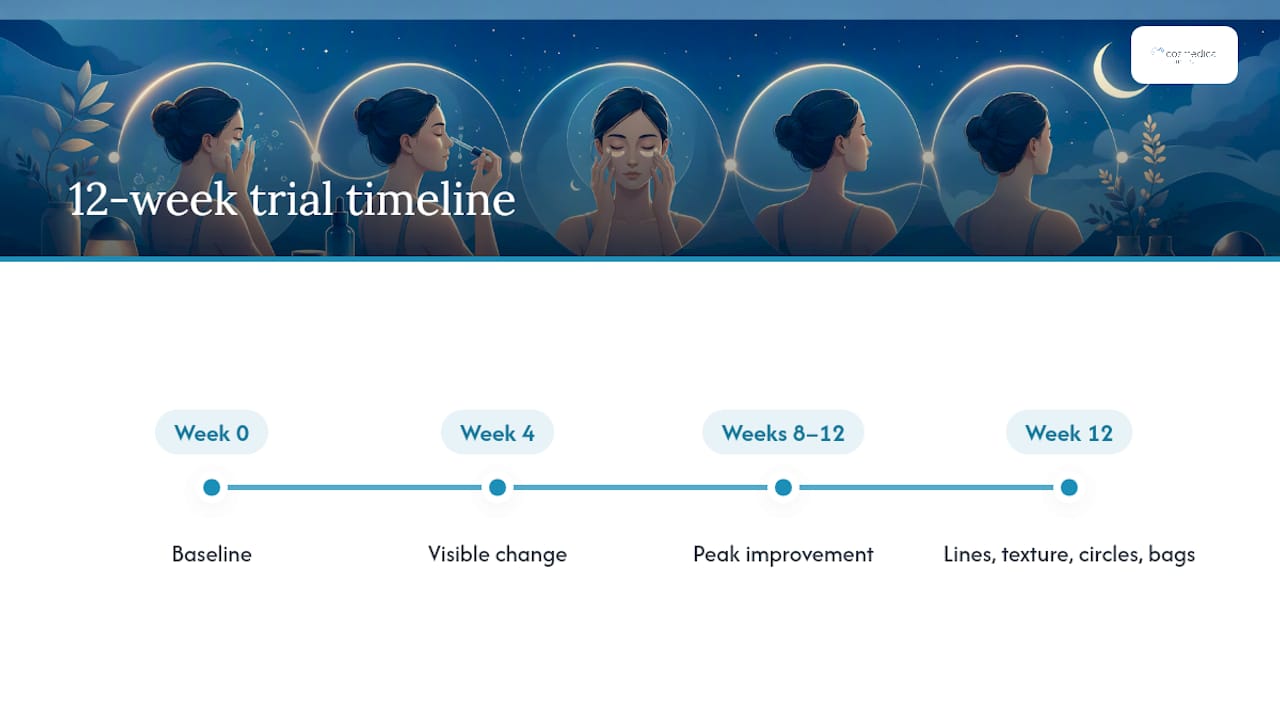
The data backs this up. A 12-week trial of a hydrating retinoid eye cream showed significant improvement in fine lines and wrinkles, with meaningful gains in texture, dark circles, and puffiness, plus high subject satisfaction and no product-related adverse events. That’s a real, measured result, not marketing language, and it lines up with what dermatologists generally tell patients to expect: visible change starting around week four, with peak improvement closer to 8 to 12 weeks of consistent use.
What retinol won’t do is fix structural issues. Deep hollows from volume loss, herniated fat pads that create permanent puffiness, or genuinely baggy lower lids are anatomy problems, not surface problems. Retinol improves the skin sitting on top of those structures. It doesn’t rebuild them. If your main concern is a hollow tear trough or a persistent under-eye bag that never goes away regardless of sleep, that’s a conversation for a dermatologist or plastic surgeon, not a skincare routine.
Choosing Strength and Formulation for the Eye Area
The biggest mistake people make is grabbing their face retinol and swiping it under their eyes. Facial formulas are usually stronger and built without the cushioning ingredients that thin eyelid skin actually needs.
Look for eye-specific products built around gentler retinoid forms, and check the base formula as carefully as the active ingredient:
- Low-strength retinol is the standard starting point for eye products
- Retinyl propionate and retinaldehyde are milder retinoid cousins some eye creams use for a softer entry
- Look for ceramides, peptides, and hyaluronic acid in the base. Dermatology guidance consistently points to eye-specific formulas with these cushioning ingredients as safer than repurposed face retinol
- Some newer eye products use encapsulated or slow-release retinal to boost efficacy while limiting irritation
Pro Tip: If a product stings, tingles sharply, or feels tight within seconds of applying it, that’s your skin telling you the formulation is too aggressive for this area. Move to something gentler rather than waiting it out.
Once your skin tolerates nightly use for two to three weeks with zero flaking or redness, that’s your signal you’ve built real tolerance. Only then consider stepping up to a stronger eye formula or a prescription retinoid, and even then, loop in a dermatologist before you make that jump. Retinal and prescription-strength tretinoin are effective, but they’re also far less forgiving on eyelid skin.
How to Apply Retinol Under the Eyes: Routine and Tolerance Schedule
Getting the technique right matters as much as picking the right product. Eyelid skin can be up to ten times thinner than skin elsewhere on the face, so precision beats generosity every time.
The nightly sequence:
- Cleanse your face and pat the eye area completely dry.
- Optional buffer step: apply a light layer of plain moisturizer first if your skin runs sensitive. This “sandwiching” technique softens the retinol’s punch without canceling its benefits.
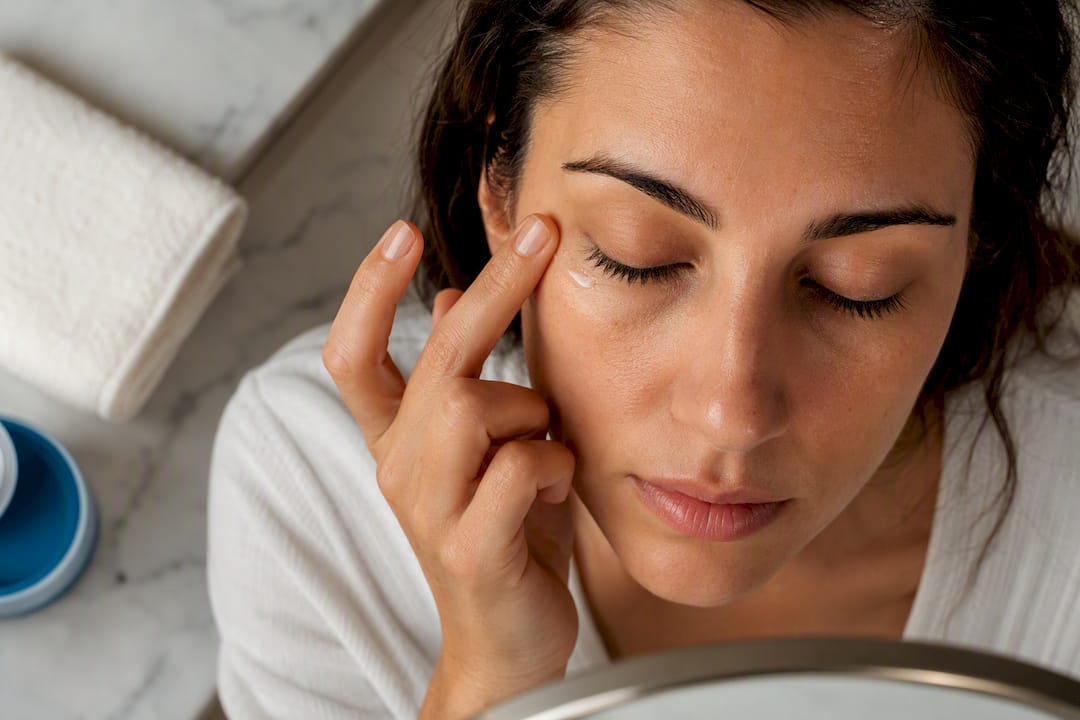
- Dot a rice-grain amount of retinol onto the orbital bone, the bony ridge just below your lower lash line, and gently pat it toward the outer corner.
- Follow immediately with a richer moisturizer to seal everything in.
- Every morning, without exception, apply sunscreen, since retinol increases photosensitivity.
Ramp up slowly. Start at one to two nights a week for the first two weeks. If your skin looks calm, no flaking, no redness, move to every other night for weeks three and four. By weeks five through eight, most people tolerate nightly use just fine. This gradual build is the difference between a routine you stick with and one you abandon after a bad week of peeling.
Where not to apply it: never on the eyelid margin, never directly on the lash line, and never layer it with a strong exfoliating acid or scrub on the same night. Those combinations compound irritation fast, especially on skin this thin.
Pro Tip: Apply retinol before your other eye serums, not after. It needs to sit directly on clean skin to absorb properly, and layering it under thicker products blocks that.
Managing Irritation, Warning Signs, and When to Stop or Seek Care
Some dryness and light flaking in the first two weeks is normal. It means your skin is adjusting, not that something’s wrong.
Red flags that mean stop immediately:
- Persistent burning that doesn’t fade within a few minutes
- Visibly swollen or puffy eyelids
- Watery, irritated eyes that don’t settle after a day off
- Scaly, cracked patches that look more like dermatitis than dryness
If retinol accidentally gets into your eye, flush with cool water right away and skip that application entirely.
When irritation shows up, the fix isn’t pushing through it. Stop applying retinol, rebuild your skin barrier with a bland, ceramide-rich moisturizer for several days to a couple of weeks, then restart at a lower frequency once things calm down. That measured reset works far better than gritting your teeth and hoping it passes.
Book a visit with a dermatologist or eye specialist if: symptoms last beyond a week off product, your eyelids stay inflamed, or you notice your glaucoma drops or contacts suddenly feel less tolerable. Persistent watery eyes deserve real attention too. Ophthalmology sources link topical retinoids to meibomian gland issues and chronic dry eye, and that’s not a symptom to just wait out.
Our Take: Why the Eye-Specific Approach Actually Matters
Most retinol advice online treats the eye area as an afterthought, a quick “just use less” tacked onto face-focused instructions. That undersells how differently this skin behaves. A 33% improvement in periorbital lines from a dedicated eye formula in a controlled 12-week trial is a legitimate result, one that plenty of blanket “retinol is retinol” advice completely ignores.
That distinction shapes how we think about eye-area treatment. Formulations built with hydrating bases give sensitive periorbital skin room to adapt instead of forcing it to keep up with a face-strength product. Our retinol skin care collection reflects that same start-low, build-slow philosophy this guide walks through, rather than a one-size-fits-all strength applied everywhere on the face.
The uncomfortable truth is that most people quit retinol under their eyes not because it doesn’t work, but because they used the wrong strength, applied it wrong, or panicked at the first sign of flaking and never came back to it. The 8 to 12 week timeline isn’t a marketing trick. It’s how long skin actually needs to remodel. Judging a product at week two and tossing it is the single most common way people talk themselves out of a treatment that would have worked.
— Thomas
How Cosmedica-Skincare Fits Your Eye Care Routine
If you’re ready to start, some products are designed for this kind of careful, gradual approach. These formulations skip the harsh, one-strength-fits-all mentality that makes so many people give up on retinol before it has a chance to work. If your skin needs extra hydration support before you introduce anything active around the eyes, our Intense Hydration Kit rebuilds your barrier first, which sets you up to tolerate retinol far better once you add it in.
For readers ready to explore stronger formulas once tolerance is established, our retinol night cream and retinol facial serum are worth browsing for the rest of your face, where thicker skin handles higher concentrations comfortably. Start with the hydration kit, build your skin’s tolerance, and move at your own pace from there.
This article is general information, not a substitute for advice from a qualified doctor. Consult a qualified healthcare professional about your own circumstances before acting on anything here.
Sources
- Efficacy and Tolerability of a Retinoid Eye Cream for Fine to Moderate Wrinkles of the Periorbital Region
- Retinol and Dry Eyes: What’s the Connection Between Them?
- Retinol Around the Eyes: Safe or Asking for Trouble? — DermApproved
- Retinol — Cleveland Clinic
FAQ
What Happens When You Put Retinol Under Your Eyes?
Used correctly, retinol speeds up cell turnover and supports collagen, which smooths fine lines and improves texture over several weeks. Used incorrectly, too much product or contact with the lash line can cause burning, flaking, or eyelid swelling.
What Do Koreans Use for Under Eyes?
Korean skincare routines around the eyes typically emphasize gentle, hydrating layering, peptide and hyaluronic acid eye creams, and light massage, rather than jumping straight to strong actives. Many routines introduce a retinoid gradually only once the skin barrier is well hydrated, echoing the same slow-build approach dermatologists recommend for this region.
Where Not to Apply Retinol?
Never apply retinol directly to the eyelid margin or lash line. Stick to the orbital bone and outer corner, since eyelid skin is dramatically thinner than the rest of the face and prone to irritation from direct contact.
Is Retinol or Vitamin C Better for Under Eyes?
They target different problems: retinol improves fine lines and texture through cell turnover, while vitamin C brightens and helps fade pigmentation, including dark circles caused by discoloration. Many people use vitamin C in the morning and a low-strength retinol at night, since combining both correctly avoids irritation while covering more concerns.