

Types of Facial Exfoliators: Your 2026 Skin Guide
TL;DR:
- Facial exfoliation removes dead skin cells through physical, chemical, or enzymatic methods, each suited to different skin types. Selecting the appropriate type and frequency improves skin texture and tone while avoiding barrier damage. Gentle options like enzymatic exfoliants are ideal for sensitive skin, while chemical exfoliants offer controlled and consistent results.
Facial exfoliation is defined as the process of removing dead skin cells from the surface of the epidermis through physical abrasion, chemical dissolving, or enzymatic digestion. The three main types of facial exfoliators are physical, chemical, and enzymatic, and each one works differently depending on your skin type and concerns. Choosing the wrong method can irritate your skin barrier, while choosing the right one can visibly improve texture, tone, and clarity within weeks. We put together this guide to help you understand exactly how each type works, which ingredients to look for, and how to match your exfoliator to your skin’s real needs.
1. What are the types of facial exfoliators?
Facial exfoliators fall into three categories: physical, chemical, and enzymatic. Each category removes dead skin cells through a completely different mechanism, which is why the same product that works beautifully for one person can cause redness and peeling for another. Physical exfoliators use friction. Chemical exfoliators use acids. Enzymatic exfoliators use proteins derived from fruit.
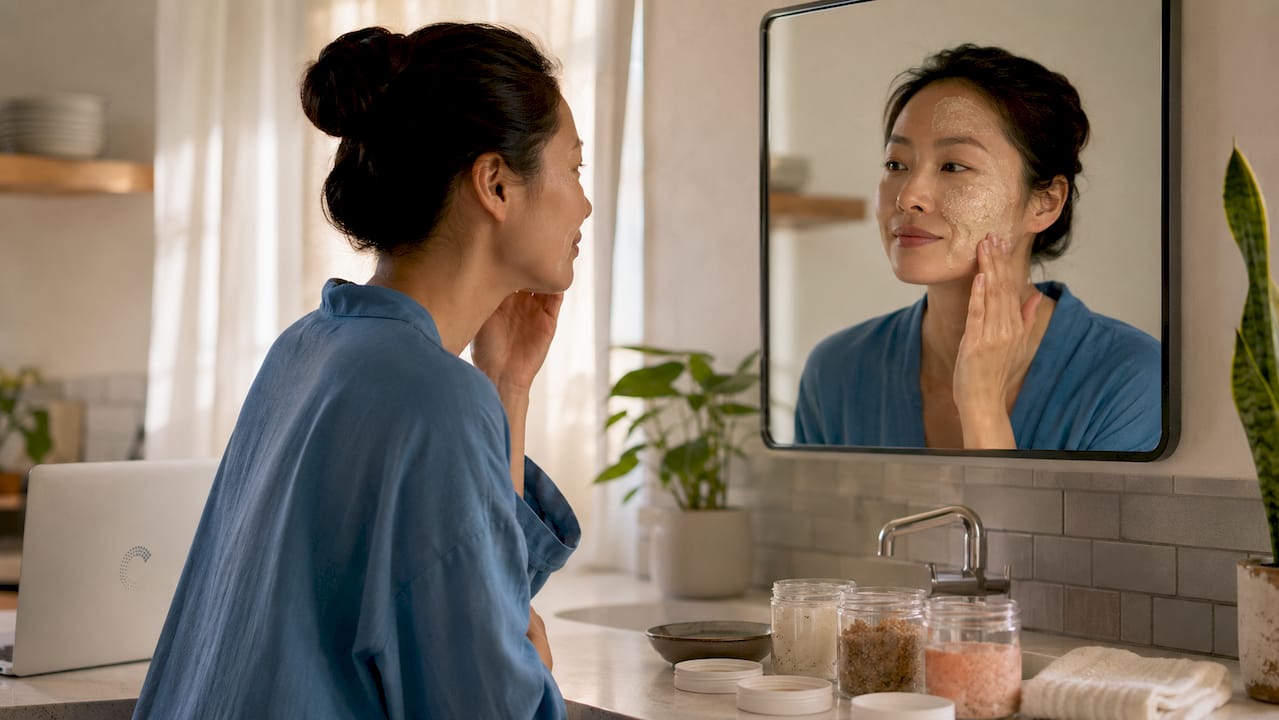
The key to getting results is matching the method to your skin type and concern. Oily, acne-prone skin responds well to salicylic acid. Dry or aging skin benefits from lactic acid. Sensitive or reactive skin does best with enzymes. We will break down each type in detail so you can make a confident choice.
2. What are physical exfoliators and how do they work?
Physical exfoliators remove dead skin cells through direct friction. You apply the product, rub it against your skin, and the abrasive particles physically lift and dislodge the outermost layer of dead cells. The result is immediate: skin feels smoother right after rinsing.
Common physical exfoliants include:
- Sugar scrubs: Fine granules that dissolve as you massage, making them gentler than most alternatives
- Jojoba beads: Perfectly round synthetic wax beads that exfoliate without tearing the skin
- Walnut shell powder: A coarser option that carries real risk if the particles are jagged or irregular
- Konjac sponges: Soft, plant-derived sponges that provide very mild daily exfoliation
- Facial brushes: Manual or electric tools that use bristle friction to buff the surface
- Microdermabrasion devices: Professional-grade mechanical exfoliation tools that vary significantly in aggressiveness
The biggest risk with physical exfoliants is micro-tears. Jagged particles like walnut shells can create tiny cuts in the skin that trigger inflammation. That “squeaky clean” feeling after an aggressive scrub often means you have stripped your skin’s natural oils, not improved its health. Physical exfoliators work best for normal to oily skin types used no more than two to three times per week.
Pro Tip: When choosing a physical exfoliant, look for round, uniform particles like jojoba beads or finely milled sugar rather than crushed shells or pits. Round particles glide; jagged ones tear.
You can explore Cosmedica-skincare’s face scrub collection to find gentle physical options formulated with skin-safe particle sizes.
3. What are chemical exfoliators and their key categories?
Chemical exfoliators dissolve the bonds between dead skin cells without any scrubbing required. Think of it like loosening the glue that holds old cells to the surface so they shed naturally. The active agents are acids, and they fall into three main families: AHAs, BHAs, and PHAs.
AHAs (Alpha Hydroxy Acids)
AHAs are water-soluble acids that work on the skin’s surface. Glycolic acid, derived from sugarcane, has the smallest molecular size and penetrates deepest. Lactic acid, derived from milk, is gentler and better suited for dry or aging skin at concentrations of 5–10% for dry skin. Mandelic acid, derived from almonds, is the mildest AHA and a good starting point for beginners. Cosmedica-skincare’s lactic acid guide explains how to use this ingredient safely for maximum results.
BHAs (Beta Hydroxy Acids)
BHAs are oil-soluble, which means they can penetrate into pores rather than just working on the surface. Salicylic acid is the only BHA used in skincare, and it is the gold standard for oily and acne-prone skin at 2% concentration. It dissolves the sebum and dead cell buildup inside pores that causes blackheads and breakouts.
PHAs (Polyhydroxy Acids)
PHAs are the newest generation of chemical exfoliants. Gluconolactone is the most common PHA. These acids have larger molecules than AHAs, so they penetrate more slowly and cause far less irritation. PHAs are ideal for sensitive skin and are a safer choice for darker skin tones where aggressive exfoliation can trigger post-inflammatory hyperpigmentation.
| Acid Type | Key Ingredient | Best For | Typical Concentration |
|---|---|---|---|
| AHA | Glycolic, Lactic, Mandelic | Dry, dull, aging skin | 5–10% |
| BHA | Salicylic Acid | Oily, acne-prone skin | 1–2% |
| PHA | Gluconolactone | Sensitive, reactive skin | 3–10% |
Chemical exfoliation works gradually. Acids dissolve desmosomes, the protein bonds holding dead cells together, over days and weeks. You will not see dramatic results after one use. Consistency over four to six weeks is what produces visible improvement in texture and tone.
Pro Tip: Start with the lowest effective concentration and use your chemical exfoliant two to three times per week. Jumping straight to high-strength formulas is one of the most common mistakes we see, and it almost always backfires.
Cosmedica-skincare’s 2.5% Glycolic Facial Scrub combines gentle chemical exfoliation with mild physical action, making it a practical entry point for those new to acids.
4. How do enzymatic exfoliators differ and who should use them?
Enzymatic exfoliators use proteolytic enzymes, specifically papain from papaya and bromelain from pineapple, to digest the keratin proteins in dead skin cells. Think of enzymes as tiny molecular scissors that snip away old cells without any friction or acid activity involved.
This mechanism makes enzymatic exfoliants unique in several important ways:
- No pH alteration: Unlike acids, enzymes do not lower the skin’s pH, which means less risk of disrupting the acid mantle
- No photosensitivity: AHAs increase sun sensitivity; enzymes do not, making them safer for year-round use without strict SPF requirements
- No irritation cascade: Enzymes work at the surface level only, so they do not penetrate deeply enough to trigger the stinging or redness that acids sometimes cause
- Safe during recovery: Enzymatic exfoliants are preferred for sensitive, rosacea-prone, or reactive skin and are generally considered safe for use during post-procedure recovery
Enzymatic exfoliators are also widely recommended for pregnant women who need to avoid retinoids and high-strength acids. They deliver real exfoliation results without the risk profile of stronger methods.
Pro Tip: Apply an enzyme exfoliant to damp skin and leave it on for five to ten minutes before rinsing. The extra contact time lets the enzymes fully activate and digest surface cells more effectively.
Cosmedica-skincare’s Mineral Enzyme Exfoliator is formulated specifically for sensitive skin types, combining papain-based exfoliation with mineral-rich ingredients that support the skin barrier.
5. Comparing types of facial exfoliators: effectiveness, safety, and best practices
Understanding the differences between exfoliator types helps you avoid the most common skincare mistakes. Here is a direct comparison across the three methods:
| Feature | Physical | Chemical | Enzymatic |
|---|---|---|---|
| Mechanism | Friction and abrasion | Acid dissolves cell bonds | Enzymes digest dead proteins |
| Speed of results | Immediate | Gradual (weeks) | Moderate |
| Irritation risk | Medium to high | Medium | Low |
| Best skin type | Normal to oily | Most types (acid-dependent) | Sensitive, reactive |
| Frequency | 1–3x per week | 2–3x per week | Daily to 3x per week |
| Photosensitivity | None | Yes (AHAs) | None |
Chemical exfoliation is preferred over physical methods because it removes dead cells at a consistent depth without relying on user pressure or technique. Physical scrubs depend entirely on how hard you press and how long you scrub, which introduces a lot of room for error and skin trauma.
One of the most important rules in exfoliation: do not layer methods in the same session. Using a physical scrub and a chemical peel together dramatically increases irritation risk. Pick one method per session and alternate on different days if you want to use both types in your routine.
Signs that you are over-exfoliating include redness, stinging, flaking, and a shiny or tight feeling. These are signals of barrier damage, not progress. When your barrier is compromised, your skin becomes more vulnerable to breakouts, sensitivity, and dullness, which is the opposite of what exfoliation is supposed to achieve.
General frequency guidelines by skin type:
- Oily skin: 2–3 times per week with BHA or gentle physical exfoliant
- Dry skin: 1–2 times per week with lactic acid or enzyme exfoliant
- Sensitive skin: 1–2 times per week with PHA or enzyme exfoliant only
- Combination skin: 2 times per week, targeting oily zones with BHA
6. How to select the right exfoliator for your skin type and concerns
Choosing the right exfoliator starts with an honest assessment of your skin type and primary concern. Here is a practical breakdown:
- Oily or acne-prone skin: Salicylic acid at 2% is your best option. It penetrates pores, dissolves sebum, and reduces blackheads. Cosmedica-skincare’s acne skincare collection includes targeted options for this skin type.
- Dry or aging skin: Lactic acid at 5–10% hydrates while it exfoliates, making it a two-in-one treatment. Cosmedica-skincare’s 5% Lactic Acid Treatment pairs lactic acid with Hylasyn for added hydration support.
- Sensitive or rosacea-prone skin: Enzymatic exfoliants or PHAs are the safest choices. Avoid physical scrubs and high-strength AHAs entirely. The Cosmedica-skincare sensitive skin guide offers additional daily care tips.
- Combination skin: Use a BHA on oily zones and a gentle enzyme or PHA on drier areas. Do not apply the same product uniformly across your entire face.
- Darker skin tones: PHAs and enzyme exfoliants are the safest options because aggressive chemical or physical methods carry a higher risk of post-inflammatory hyperpigmentation.
When introducing any new exfoliant, start with once per week for the first two weeks. If your skin tolerates it without redness or stinging, increase to twice per week. Never combine a new exfoliant with other active ingredients like retinol or vitamin C in the same routine until you know how your skin responds.
One mistake we see constantly: people use a physical scrub and then apply a chemical toner the same night, thinking more is better. Stronger exfoliation does not mean better results. High-strength or overly frequent exfoliation mimics the look of acne and dullness because it damages the barrier that keeps skin healthy.
If you have a diagnosed skin condition like eczema, psoriasis, or active rosacea, consult a dermatologist before starting any exfoliation routine. Self-treating inflamed or compromised skin with acids or scrubs can worsen the condition significantly.
Key takeaways
The most effective exfoliation strategy matches the method to your skin type: chemical exfoliants for controlled results, enzymes for sensitive skin, and physical scrubs used sparingly with gentle, round particles.
| Point | Details |
|---|---|
| Three core types exist | Physical, chemical, and enzymatic exfoliators each work through a different mechanism. |
| Chemical exfoliants offer the most control | Acids like salicylic and lactic dissolve dead cells consistently without relying on user technique. |
| Enzymes suit sensitive skin best | Papain and bromelain digest dead proteins without altering pH or causing photosensitivity. |
| Over-exfoliation damages your barrier | Redness, stinging, and shiny skin signal barrier compromise, not progress. |
| Never layer methods in one session | Combining physical and chemical exfoliation in the same routine sharply increases irritation risk. |
What I have learned from years of watching people exfoliate wrong
Most people come to exfoliation with the same instinct: if a little works, more must work better. I have seen this play out hundreds of times, and it almost never ends well. Someone starts using a glycolic acid toner, loves the results, adds a physical scrub two days later, then wonders why their skin looks worse than before they started.
The truth is that chemical exfoliants are the most reliable method for the vast majority of people. They work at a consistent depth, they do not depend on how hard you press, and when used correctly, they deliver cumulative improvement that physical scrubs simply cannot match. I reach for a well-formulated lactic acid or salicylic acid product before I would ever recommend a walnut shell scrub to anyone.
That said, I do not think physical exfoliants are useless. A gentle jojoba bead scrub used once a week on normal or oily skin can be a satisfying and effective part of a routine. The key word is gentle. If the particles are not perfectly round and smooth, put it back on the shelf.
Enzymatic exfoliators are genuinely underrated. They are the quiet achievers of the exfoliation world. I recommend them to anyone who has ever reacted badly to acids or who wants to exfoliate during pregnancy or post-procedure recovery. Papain and bromelain do real work without the drama.
My honest advice: start slower than you think you need to. Give your skin four to six weeks at a low frequency before increasing. And please, always follow exfoliation with a good moisturizer and SPF in the morning. Exfoliated skin is fresh skin, and fresh skin needs protection.
— Thomas
Find the right exfoliator for your skin with Cosmedica-skincare
At Cosmedica-skincare, we believe great skin starts with the right ingredients at the right concentration. Our collection includes enzyme exfoliants for sensitive skin, gentle physical scrubs with safe particle sizes, and acid-based treatments formulated for oily, dry, and aging skin types. Every product is cruelty-free, dermatologist-tested, and designed to deliver real results without compromising your skin barrier. Browse our new collection to find the exfoliator that fits your skin’s needs, and pair it with a moisturizer to keep your barrier strong after every exfoliation session.
FAQ
What is the gentlest type of facial exfoliator?
Enzymatic exfoliators using papain or bromelain are the gentlest option. They digest dead skin proteins without altering skin pH or causing photosensitivity, making them safe for sensitive and rosacea-prone skin.
How often should you exfoliate your face?
Frequency depends on your skin type and the exfoliator you use. Oily skin can handle two to three times per week, while sensitive skin should start with once per week and increase only if there is no irritation.
Can you use chemical and physical exfoliators together?
Using both methods in the same session significantly increases irritation risk. Alternate between methods on different days rather than layering them in one routine.
Which exfoliator is best for acne-prone skin?
Salicylic acid at 2% is the most effective choice for acne-prone skin. It is oil-soluble, so it penetrates pores to dissolve the sebum and dead cell buildup that causes breakouts and blackheads.
Are natural exfoliating products effective?
Natural exfoliating products like sugar scrubs and enzyme-based treatments can be highly effective when formulated correctly. The key is particle shape for physical options and enzyme concentration for enzymatic products, not just the natural origin of the ingredient.