

What Is Postbiotic Skincare? Your Complete Guide
TL;DR:
- Postbiotic skincare uses non-living microbial components to support skin health without stability issues. These products improve hydration, reduce inflammation, and strengthen the skin barrier within six to eight weeks of consistent use. They are safe for sensitive skin and work well alongside other skincare actives.
Postbiotic skincare is the application of preparations containing non-viable microorganisms or their components, such as short-chain fatty acids, enzymes, and bacterial lysates, to support skin health and barrier function. Unlike probiotics, which introduce live bacteria to the skin, postbiotics deliver the same functional benefits without any of the stability headaches that come with keeping microbes alive in a bottle. Think of it like getting all the goodness of fermented foods without needing to refrigerate your moisturizer. Products from brands like BiomeBounce and Avène have already brought postbiotic formulations into mainstream skincare, and the science behind them is catching up fast. If you have been curious about what is postbiotic skincare and whether it belongs in your routine, this guide breaks it all down clearly.
What is postbiotic skincare and why does it matter?
Postbiotic skincare is defined by dermatologists and microbiome researchers as the topical use of non-living microbial components to improve skin health. The term “postbiotic” was formally recognized by the International Scientific Association for Probiotics and Prebiotics (ISAPP) to describe preparations of inanimate microorganisms and their metabolites that confer a health benefit on the host. That definition matters because it separates postbiotics from the broader, sometimes murky world of “probiotic beauty.”

The skin microbiome is a community of trillions of bacteria, fungi, and other microorganisms living on your skin’s surface. When that community is balanced, your skin looks calm, hydrated, and resilient. When it is disrupted, you get redness, breakouts, and sensitivity. Postbiotics work by delivering the beneficial byproducts of microbial activity directly to the skin, bypassing the need for live colonization altogether.
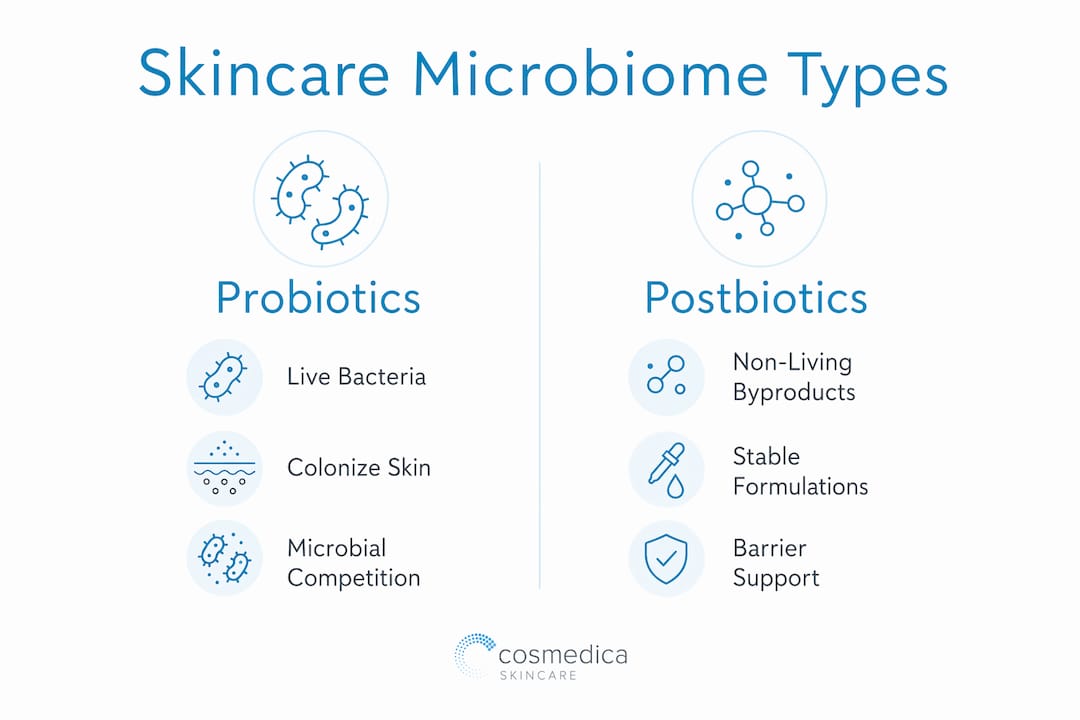
What makes this genuinely exciting is the stability factor. Postbiotics are more stable and easier to formulate than probiotics because they do not require live cultures or cold storage. That means your serum or moisturizer can sit on a bathroom shelf at room temperature and still deliver its full benefit every single time you use it.
Postbiotics for skin health also support the skin’s innate defense mechanisms, reduce transepidermal water loss (the process by which skin loses moisture to the air), and calm inflammatory responses. Brands like Avène have built entire postbiotic complexes around these mechanisms, and the results in clinical settings have been encouraging. We will get into the research details later, but the short version is: postbiotics are not a trend. They are a logical evolution in how we think about skin health.
What are the key benefits of postbiotic skincare?
The benefits of postbiotic skincare are both broad and well-supported by recent research. Here is what the science actually shows:
- Improved skin hydration. Postbiotic skincare products improve skin hydration and reduce transepidermal water loss, with some users reporting smoother, glowing skin in as little as 14 days of consistent use.
- Anti-inflammatory effects. Postbiotics modulate cytokines, the proteins that regulate inflammation, which makes them particularly useful for conditions like acne, eczema, and rosacea.
- Antioxidant protection. Certain postbiotic metabolites neutralize free radicals, helping to defend against environmental stressors like pollution and UV exposure.
- Microbiome balance. Postbiotics support a diverse, healthy skin microbiome without introducing live organisms that could potentially cause imbalance in sensitive individuals.
- Barrier repair. Postbiotics support skin barrier function and microbiome diversity, calming redness and irritation without clogging pores.
One of the most compelling advantages is that postbiotics provide immediate functional benefits such as antioxidant and anti-inflammatory effects without needing viable bacterial colonization. This resolves the stability and storage issues that have long plagued probiotic skincare formulations.
Dermatologists note that postbiotics are particularly well-suited for sensitive skin types. Because there are no live microbes involved, the risk of irritation or unexpected microbial activity is essentially eliminated. The side effect profile across clinical studies is mild, typically limited to minor, temporary irritation in a small subset of users.
Pro Tip: If you have reactive or sensitive skin, look for products labeled “microbiome-friendly” or “certified microbiome-tested.” These formulations are specifically designed to support barrier health without disrupting your skin’s natural balance.
Realistic timelines matter here. Most people see meaningful improvement in skin texture, hydration, and redness reduction after 3–8 weeks of daily use. Day one results are rare, and that is completely normal. Consistency is the real secret ingredient.
How do postbiotics differ from prebiotics and probiotics in skincare?
This is the question we hear most often, and it is a fair one. The terms sound similar, but they describe very different things. Here is a clear breakdown:
| Feature | Probiotics | Prebiotics | Postbiotics |
|---|---|---|---|
| Definition | Live beneficial bacteria | Substrates that feed beneficial microbes | Non-living microbial components or metabolites |
| Viability | Must remain alive to work | Not microbial; no viability needed | Non-viable by definition |
| Mechanism | Microbial colonization | Feed existing microbiome | Immune modulation, barrier support |
| Stability | Requires cold storage, careful formulation | Generally stable | Highly stable, no cold chain needed |
| Safety profile | Risk of imbalance in some users | Generally safe | Excellent; no live organism risks |
| Examples | Lactobacillus cultures | Inulin, fructooligosaccharides | Bacterial lysates, short-chain fatty acids |
Probiotics are live beneficial bacteria. When applied topically, they are meant to colonize the skin surface and crowd out harmful microbes. The challenge is keeping them alive in a cosmetic product long enough to actually work. Prebiotics are not microbial at all. They are substrates, think of them as food, that nourish the beneficial bacteria already living on your skin.
Postbiotics sit in a different category entirely. They are the functional byproducts of microbial activity: cell wall fragments, enzymes, peptides, and short-chain fatty acids that the skin can use directly. Because they are already “processed,” the skin does not need to wait for colonization or feeding cycles to see results.
The postbiotic vs probiotic skincare debate often comes down to practicality. Probiotics in cosmetics face a genuine formulation challenge: most preservation systems used in skincare products will kill live bacteria before they ever reach your face. Postbiotics sidestep this entirely. They do not require cold-chain shipping or special preservation, making them safer and more stable for commercial skincare formulations.
The mechanisms are also distinct. Probiotics work primarily through microbial competition and colonization. Postbiotics work by directly modulating the skin’s immune responses, reinforcing the lipid barrier (the protective layer of fats that keeps moisture in and irritants out), and delivering antioxidant compounds. They are not interchangeable, and understanding that distinction helps you make smarter choices at the beauty counter.
What postbiotic skincare products are available and how should you use them?
Postbiotic skincare products now span nearly every product category, from daily moisturizers to targeted treatment serums. Here is how to think about each format and how to use them effectively:
1. Moisturizers
Moisturizers are the most common delivery format for postbiotics. Products like the BiomeBounce Plumping Moisturizer Serum combine bacterial lysates and polypeptides to restore microbial balance and skin resilience. Apply morning and evening after cleansing. These work well as the final step in a simple routine.
2. Serums
Serums deliver a higher concentration of active ingredients and absorb quickly. If you are targeting specific concerns like acne or redness, a postbiotic serum applied before your moisturizer gives you more targeted support. The serums collection at Cosmedica-skincare includes options designed to complement microbiome-friendly routines.
3. Cleansers
Postbiotic cleansers are gentler than traditional foaming formulas. They clean without stripping the skin’s natural microbial layer, which is especially important if you are prone to dryness or sensitivity.
4. Facial mists
Mists containing postbiotic complexes, like those from Avène’s thermal spring water line, offer a quick mid-day refresh that supports barrier function without adding weight or grease.
Layering tips for your postbiotic skincare routine:
- Cleanse with a gentle, microbiome-friendly cleanser.
- Apply any water-based serums, including postbiotic serums, while skin is still slightly damp.
- Follow with a postbiotic moisturizer to lock in hydration.
- Use SPF in the morning as the final step.
Postbiotics pair well with established actives. Combining them with niacinamide enhances barrier repair and reduces redness. Pairing with salicylic acid for acne-prone skin is supported by research: postbiotics are best used as adjuncts alongside traditional treatments like salicylic acid or benzoyl peroxide, enhancing overall efficacy and tolerability.
Pro Tip: If you have sensitive or reactive skin, introduce postbiotic products one at a time. Start with a moisturizer before adding a serum, so you can clearly identify what your skin responds to.
For those with sensitive skin, postbiotic formulations are often the gentlest entry point into microbiome-friendly skincare. They deliver real results without the risk of introducing live organisms that could behave unpredictably on compromised skin.
Is postbiotic skincare effective? What the research says
The clinical evidence for postbiotic skincare is promising, and it has grown significantly through 2025 and into 2026. Here is a summary of what the research actually shows:
| Condition | Observed Benefit | Timeframe |
|---|---|---|
| Acne vulgaris | Reduced lesion count, cytokine modulation | 3–8 weeks |
| Atopic dermatitis (eczema) | Improved barrier function, reduced itch | 4–8 weeks |
| Rosacea | Calmed redness, reduced inflammatory flares | 3–6 weeks |
| General skin hydration | Reduced transepidermal water loss | 2–4 weeks |
| Skin barrier integrity | Enhanced lipid barrier, microbiome diversity | 4–8 weeks |
Postbiotics help treat skin conditions like acne, dermatitis, and rosacea by modulating cytokines and disrupting harmful biofilms, with most studies showing results within 3–8 weeks of topical use. That is a meaningful window, not an overnight fix, but a realistic one.
The mechanism behind these results is particularly interesting. Postbiotics act as immune trainers, priming innate and adaptive responses to dampen the inflammatory cascades that contribute to acne and sensitivity. Think of them as coaching your skin’s defense system rather than fighting battles on its behalf.
“Postbiotics herald a shift toward personalized, non-invasive skincare but should complement established treatments rather than replace them under current evidence.” — Prebiotics and Postbiotics in Dermatology and Cosmetology
That quote captures the honest state of the science well. The evidence is real and growing, but most postbiotic clinical trials are small and short in duration, highlighting the need for larger, longer studies to confirm long-term safety and efficacy. Current evidence supports their use as an adjunct to, not a replacement for, established dermatological treatments.
What we can say with confidence is that the safety profile is excellent. Across multiple studies, adverse effects were limited to mild, temporary irritation in a small number of participants. No serious reactions have been reported in well-formulated topical postbiotic products. For anyone curious about science-backed skincare, postbiotics represent one of the more credible recent additions to the evidence base.
Key Takeaways
Postbiotic skincare delivers real, science-supported benefits for skin barrier function, hydration, and inflammation control, but results require consistent daily use over 3–8 weeks.
| Point | Details |
|---|---|
| Postbiotics defined | Non-living microbial components like lysates and short-chain fatty acids that support skin health directly. |
| Stability advantage | Postbiotics need no cold storage or live cultures, making them more reliable in commercial formulations than probiotics. |
| Clinical benefits | Research supports improvement in acne, eczema, rosacea, and hydration within 3–8 weeks of consistent use. |
| Best used as adjuncts | Postbiotics work best alongside actives like niacinamide or salicylic acid, not as standalone treatments. |
| Realistic expectations | Visible improvements take time. Daily use over multiple weeks is required; instant results are not typical. |
My honest take on postbiotics after years in skincare
I have watched a lot of ingredients come and go with big promises and thin evidence. Postbiotics feel different to me, and here is why.
The stability argument alone is enough to take them seriously. Probiotic skincare has always had a credibility problem: most preservation systems in cosmetics kill live bacteria before the product reaches your face. Postbiotics sidestep that problem entirely. You are getting the functional output of microbial activity without gambling on whether the live cultures survived the supply chain.
That said, I want to be direct about something the marketing rarely says out loud. Postbiotics are not a cure for acne, eczema, or rosacea. The research is clear that they work best as part of a broader routine, not as a solo solution. If you have a serious skin condition, postbiotics can genuinely support your treatment plan, but they should sit alongside your dermatologist’s recommendations, not replace them.
What I find most compelling is the direction this is heading. The trend toward personalized, microbiome-friendly skincare is not a passing moment. As we learn more about how the skin microbiome influences everything from aging to sensitivity, postbiotics are going to become a standard part of well-formulated products. The brands getting ahead of this now, with certified microbiome-friendly formulations and transparent ingredient lists, are the ones worth paying attention to.
My practical advice: start with a postbiotic moisturizer, use it every day for at least six weeks, and pair it with one or two proven actives suited to your skin type. Check out how skincare routines support long-term results if you want the science behind why consistency matters so much. Patience is the non-negotiable ingredient here.
— Thomas
Explore postbiotic-friendly skincare at Cosmedica-skincare
At Cosmedica-skincare, we believe great skin starts with smart formulations. Our collection includes moisturizers, serums, and targeted treatments designed to support your skin barrier, balance your microbiome, and deliver real hydration without harsh ingredients. Whether you are new to microbiome-friendly skincare or looking to build on an existing routine, our new collection features the latest additions formulated with your skin health in mind. For a complete routine upgrade, the Trio Facial Serum Kit pairs active serums that complement barrier-supporting ingredients beautifully. Cruelty-free, affordable, and dermatologist-tested: that is the Cosmedica-skincare promise.
FAQ
What are postbiotics in skincare?
Postbiotics are preparations of non-living microorganisms or their components, such as bacterial lysates, short-chain fatty acids, and enzymes, that deliver skin health benefits without requiring live bacteria. They support barrier function, reduce inflammation, and improve hydration.
How long does it take for postbiotic skincare to work?
Most users see visible improvements in skin texture, hydration, and redness after 3–8 weeks of consistent daily use. Instant results are not typical, and patience with daily application is key.
Is postbiotic skincare safe for sensitive skin?
Yes. Postbiotics have an excellent safety profile because they contain no live microorganisms. Clinical studies report only mild, temporary irritation in a small number of users, making them one of the gentler options for reactive or sensitive skin types.
What is the difference between postbiotic and probiotic skincare?
Probiotics are live bacteria that work through microbial colonization, while postbiotics are non-living microbial byproducts that act directly on the skin’s immune and barrier systems. Postbiotics are more stable in formulations and do not require cold storage.
Can you use postbiotics with other skincare actives?
Yes. Postbiotics pair well with niacinamide, salicylic acid, and other established actives. Research supports using them as adjuncts to conventional treatments, where they can enhance overall efficacy and improve tolerability.