

What Is a Serum? Your Complete Skincare Guide
TL;DR:
- Serums are lightweight skincare products with concentrated actives designed to penetrate deeper into the skin. They treat specific concerns like aging, dullness, or acne and should be layered before moisturizers for best results. Consistent use over weeks builds visible skin improvements, but serums alone cannot replace moisturizer or sunscreen.
A serum is defined as a lightweight, highly concentrated skincare product formulated to deliver active ingredients deeper into the skin than a standard moisturizer can. Think of it as the workhorse of your routine. While cleansers and moisturizers handle the basics, a face serum targets specific concerns like fine lines, dark spots, or dehydration with precision. Dermatologists recognize serums as a distinct product category because of their unique molecular structure and ingredient density. Cosmedica-skincare builds its serum line around this principle, using clinically recognized actives like vitamin C, hyaluronic acid, and retinol to address real skin concerns at the source.
What is a serum and how does it work differently from other products?
Serums have smaller molecules and higher concentrations of active ingredients than moisturizers. That size difference is the whole point. A moisturizer sits on the surface of the skin, hydrating the outer layer and forming a protective barrier. A serum, by contrast, pushes past that surface layer and delivers its actives into the deeper layers of the epidermis where real change happens.

This is why the two products are not interchangeable. A moisturizer seals in moisture and protects the lipid barrier. A serum treats. Think of it like the difference between a bandage and medicine. You need both, but they do completely different jobs.
The texture of a serum reflects its function. Most serums are water-based, gel-like, or oil-based liquids with a thin consistency. That thinness is not a sign of weakness. It means the formula absorbs fast and does not compete with the heavier products you layer on top.
Serum vs. moisturizer: the key differences at a glance
- Molecular size: Serums use smaller molecules that penetrate deeper into the skin.
- Concentration: Serums contain a higher percentage of active ingredients per drop.
- Texture: Serums are thinner and absorb faster than moisturizers.
- Function: Serums treat targeted concerns. Moisturizers hydrate and protect the surface.
- Layering order: Serum always goes on before moisturizer, from thinnest to thickest.
Pro Tip: Apply your serum to slightly damp skin right after cleansing. Moisture presence improves skin permeability, which means your actives absorb more effectively without diluting the formula.
What are the types of serums and their specific benefits?
Not all serums do the same thing. The type you choose depends entirely on your skin concern. Here is a breakdown of the most common categories, what they contain, and who they work best for.
Anti-aging serums
Anti-aging serums rely on ingredients like retinol and peptides to reduce the appearance of fine lines and support collagen production. Retinol, a derivative of vitamin A, accelerates cell turnover. Peptides signal the skin to produce more collagen. Together, they address the structural changes that cause skin to look older over time. These serums work best at night because retinol increases sun sensitivity.
Brightening serums
Brightening serums feature vitamin C as their star ingredient, often paired with antioxidants like niacinamide or ferulic acid. Vitamin C is clinically recommended as an antioxidant for most skin types. It protects against environmental damage and improves uneven skin tone by inhibiting melanin production. Regular use of an antioxidant serum can visibly reduce dullness and pigmentation over time.
Hydrating serums
Hydrating serums center on hyaluronic acid, a humectant that draws water into the skin like a sponge. Hyaluronic acid can hold up to 1,000 times its weight in water, making it one of the most effective hydrating ingredients available. These serums suit every skin type, including oily skin, because they add water rather than oil. They are especially useful in dry climates or during winter months when the skin loses moisture faster.
Acne-fighting serums
Acne-focused serums use salicylic acid, niacinamide, or both. Salicylic acid is a beta-hydroxy acid that dissolves inside pores to clear congestion. Niacinamide reduces inflammation, regulates sebum production, and minimizes the appearance of pores. The Cosmedica-skincare 10% Niacinamide + Zinc Treatment Serum combines both functions in one formula, making it a practical option for acne-prone skin.
Serum types at a glance
| Serum type | Key ingredients | Primary benefit | Best for |
|---|---|---|---|
| Anti-aging | Retinol, peptides | Reduces fine lines, supports collagen | Mature or aging skin |
| Brightening | Vitamin C, antioxidants | Evens tone, reduces dullness | Dull or uneven skin |
| Hydrating | Hyaluronic acid | Deep moisture, plumping effect | Dry, dehydrated, all types |
| Acne-fighting | Salicylic acid, niacinamide | Clears pores, reduces breakouts | Oily, acne-prone skin |
| Exfoliating | Lactic acid, glycolic acid | Smooths texture, brightens | Rough or congested skin |
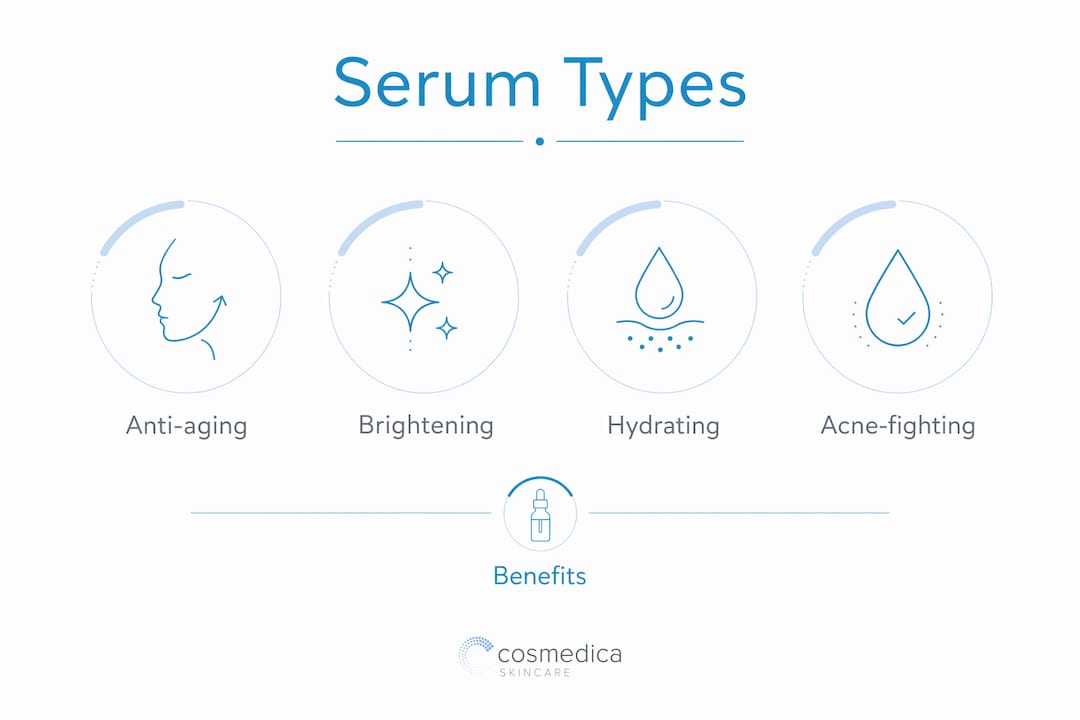
Choosing the right type comes down to one question: what is your primary skin concern right now? Start with one serum that targets that concern directly. Adding multiple serums at once makes it harder to know what is working and what is not.
How to choose and use a serum in your skincare routine
Choosing a serum starts with your skin type and your biggest concern. Dry skin benefits most from hyaluronic acid. Oily or acne-prone skin responds well to niacinamide or salicylic acid. Sensitive skin does best with gentle actives like peptides or low-concentration vitamin C. If you are new to serums, the best face serum for your skin type guide from Cosmedica-skincare is a practical starting point.
Once you have chosen your serum, application technique matters more than most people realize. Here is the correct order and method:
- Cleanse your face thoroughly. Remove all makeup, sunscreen, and surface debris before applying anything else.
- Tone if you use a toner. Toners balance skin pH and prep the surface. Apply before your serum.
- Apply serum to slightly damp skin. Pat your face dry but leave a little moisture. Damp skin enhances absorption by improving permeability.
- Dispense 2–5 drops into your palm. Experts recommend 2–5 drops twice daily for most serums. More product does not mean better results.
- Press, do not rub. Press the serum into your skin using your palms, starting at the center of your face and moving outward. Rubbing creates friction and can irritate skin.
- Wait 30–60 seconds before your next step. Waiting 30–60 seconds lets the serum fully absorb. Skipping this step causes product pilling when you apply moisturizer on top.
- Apply moisturizer. Moisturizer seals in the serum’s benefits and protects the skin barrier.
- Finish with SPF in the morning. Sunscreen protects against UV damage that can undo the work your serum is doing.
Pro Tip: If you use both a vitamin C serum and a retinol serum, use vitamin C in the morning and retinol at night. Morning antioxidants protect during the day. Nighttime retinol supports cell regeneration while you sleep.
For a complete walkthrough of the full routine, the step-by-step facial serum guide from Cosmedica-skincare covers every detail.
What are the real benefits and limitations of face serums?
Serums deliver a wide range of benefits when matched correctly to your skin. Consistent serum use addresses hydration, brightening, anti-aging, and blemish control. The small molecular weight of serum actives allows them to reach deeper skin layers where surface products cannot. That depth is what makes serums effective for long-term skin improvement rather than just temporary surface hydration.
Key benefits of adding a serum to your routine:
- Hydration: Hyaluronic acid serums pull moisture into the skin and hold it there.
- Brightening: Vitamin C and antioxidants reduce dullness and protect against oxidative stress from pollution and UV exposure.
- Anti-aging: Retinol and peptides visibly reduce fine lines with consistent use.
- Acne control: Salicylic acid and niacinamide clear pores and calm inflammation.
- Targeted treatment: Serums address specific concerns more directly than any other product category.
Serums also have real limitations. They are not all-in-one solutions.
A serum is not a replacement for moisturizer or sunscreen. Serums deliver actives, but they do not seal in moisture or block UV rays. Serums require moisturizers to lock in their benefits and sunscreen to protect the skin from damage that undoes their work. Skipping either step reduces the serum’s long-term effectiveness.
Sensitive skin types need extra care. Patch testing and gradual introduction of potent actives like retinol help minimize adverse reactions. Start with a lower concentration and use it two to three times per week before building to daily use. Your skin will tell you what it can handle.
Marketing claims around serums can also be misleading. No serum erases wrinkles overnight or permanently clears acne. Results come from consistent use over weeks and months, not from a single application. Realistic expectations are part of getting the most from your routine.
Key Takeaways
A serum is the most targeted product in any skincare routine, and matching it to your specific skin concern is the single most important factor in getting results.
| Point | Details |
|---|---|
| Serums penetrate deeper | Smaller molecules deliver actives past the surface layer, where moisturizers cannot reach. |
| Match type to concern | Choose vitamin C for brightening, hyaluronic acid for hydration, retinol for aging, and niacinamide for acne. |
| Apply to damp skin | Slightly damp skin improves absorption and helps actives work more effectively. |
| Serums need support | Always follow with a moisturizer to seal in benefits and SPF to protect against UV damage. |
| Introduce actives slowly | Start new serums two to three times per week to avoid irritation, especially with retinol. |
Why most people get serums wrong (and how to fix it)
Here is something I see constantly: people buy a serum, use it for two weeks, and decide it does not work. Then they switch to something new and repeat the cycle. The problem is almost never the serum. It is the expectation.
Serums work on a timeline measured in weeks, not days. Retinol, for example, typically takes six to twelve weeks of consistent use before you see meaningful change in skin texture. Vitamin C needs daily morning use over a similar period to visibly even out tone. Expecting faster results is how people end up with a drawer full of half-used bottles.
The other mistake I see is layering too many actives at once. Someone reads that vitamin C, retinol, and niacinamide are all great ingredients, so they use all three in the same routine. Then their skin reacts, and they blame the serum. Start with one serum. Use it consistently for four to six weeks. Then assess whether your skin needs anything else.
The science behind skin serums is genuinely interesting, but the practical lesson is simple. Less is more, especially at the start. One well-chosen serum used correctly will outperform five serums used carelessly every single time.
— Thomas
Cosmedica-skincare serums worth adding to your routine
Cosmedica-skincare offers a range of dermatologist-tested serums designed for real skin concerns, from deep hydration to acne control. The Super Serum Set is a strong starting point if you want to address multiple concerns without guessing which formula to try first. It brings together concentrated treatments for hydration, brightening, and skin health in one curated collection. Every formula is cruelty-free and built with quality ingredients that meet dermatological standards. If you are ready to build a routine that actually works, Cosmedica-skincare’s new collection includes the latest targeted treatments for every skin type.
FAQ
What is a serum in skincare?
A serum is a lightweight, highly concentrated skincare product formulated to deliver active ingredients deeper into the skin than a moisturizer. It targets specific concerns like aging, dullness, or acne using ingredients like retinol, vitamin C, or hyaluronic acid.
How is a serum different from a moisturizer?
Serums have smaller molecules and higher concentrations of actives, allowing them to penetrate deeper into the skin. Moisturizers hydrate the surface and form a protective barrier, which is why you need both in your routine.
When should you apply a serum?
Apply serum after cleansing and toning, but before moisturizer and SPF. Use 2–5 drops on slightly damp skin, press it in gently, and wait 30–60 seconds before your next step.
Can you use a serum every day?
Most hydrating and brightening serums are safe for daily use, morning and night. Potent actives like retinol should be introduced gradually, starting two to three times per week, to allow your skin to adjust.
Do serums replace moisturizers?
No. Serums deliver active ingredients but do not seal in moisture or protect against UV damage. A moisturizer and sunscreen are still required to complete the routine and protect the skin barrier.