

What Is a Cosmeceutical? Your Skincare Science Guide
TL;DR:
- Cosmeceuticals are skincare products with active ingredients designed to produce biological changes in the skin, but they lack legal regulation and rely on marketing claims. Their effectiveness depends on ingredient quality, concentration, and delivery systems, with potential risks of irritation if used improperly. Consumers should focus on specific ingredients, proven delivery technologies, and transparent brand practices rather than the label “cosmeceutical.”
A cosmeceutical is defined as a skincare product that combines cosmetic and pharmaceutical properties by including biologically active ingredients intended to improve skin health and function. The term blends “cosmetic” and “pharmaceutical” into one word, and it has become one of the most used phrases in modern beauty. Here’s the catch: the FDA does not recognize “cosmeceutical” as a legal category. Understanding what that means for your skin and your wallet is exactly what we’re here to help you figure out.
What is a cosmeceutical, and how does it differ from a regular cosmetic?
A cosmeceutical sits in the space between a traditional cosmetic and a drug. A standard cosmetic, think a tinted moisturizer or a basic cleanser, changes how your skin looks on the surface. A cosmeceutical goes further by containing active compounds, like retinoids, peptides, or antioxidants, that are designed to interact with your skin’s biology and produce measurable changes.
Think of it this way: a regular lipstick adds color. A cosmeceutical serum with retinol actually signals your skin cells to produce more collagen. One is decoration; the other is intervention. That biological activity is the defining feature of the cosmeceutical category.
The term was coined by dermatologist Dr. Albert Kligman in the 1980s to describe products that do more than sit on the skin’s surface. Today, the global skincare industry uses it widely in marketing. Brands apply it to everything from vitamin C serums to peptide creams, which is why understanding the science behind the label matters so much.
Products like Cosmedica-skincare’s Super C-Boost are built around antioxidant actives that fall squarely into this category. The ingredients are chosen for their biological activity, not just their texture or scent.
How are cosmeceuticals regulated and classified?
The FDA does not define “cosmeceutical” legally. All skincare products are legally classified as cosmetics, drugs, or combination products based on their intended use and the claims made about them. The word “cosmeceutical” on a label changes nothing from a regulatory standpoint.
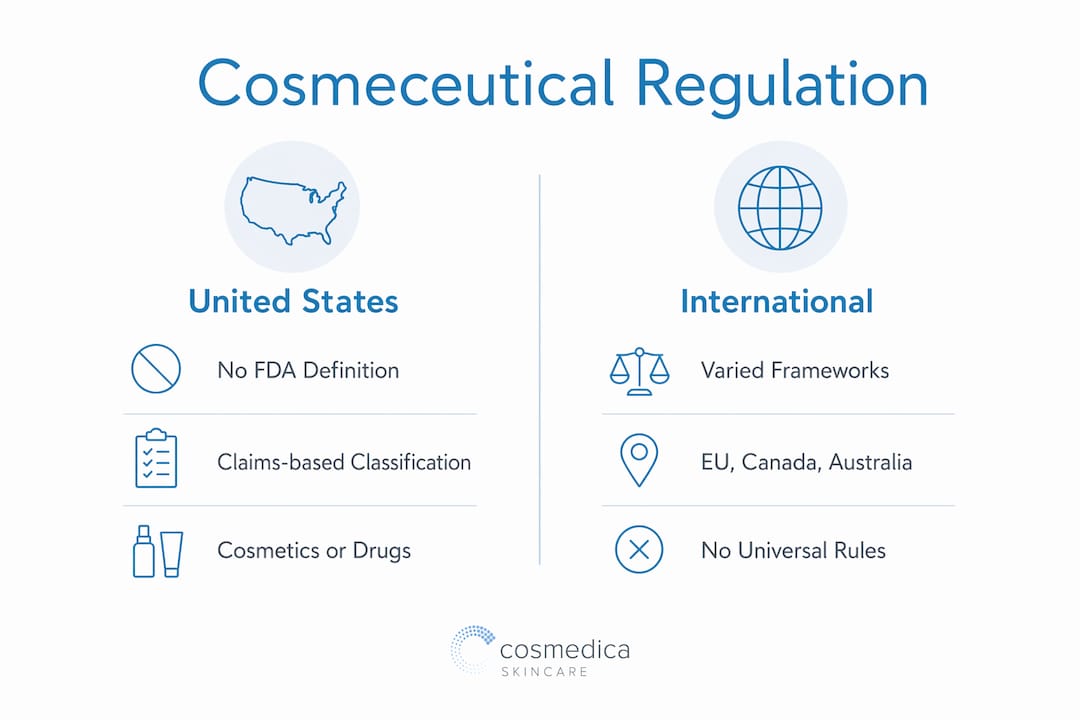
What does change the classification is the claim. If a product says it “moisturizes skin,” it is a cosmetic. If it says it “stimulates collagen production” or “treats acne,” it crosses into drug territory. That distinction matters because drugs require FDA approval before they can be sold, while cosmetics do not.
Here is what that means practically for you as a shopper:
- Cosmetics are regulated for safety but do not require clinical proof of efficacy before going to market.
- Drugs must demonstrate safety and effectiveness through clinical trials before the FDA approves them.
- Cosmeceuticals are a marketing term with no legal standing, so they follow cosmetic rules unless their claims push them into drug territory.
- Combination products exist when a product has both cosmetic and drug functions, like a medicated sunscreen.
The FDA classifies products by claims, not by ingredient lists. A product with retinol can be sold as a cosmetic if it claims to “reduce the appearance of fine lines.” That same retinol at prescription strength, claiming to “treat wrinkles,” becomes a drug.
Pro Tip: Read the claims on the label, not just the ingredient list. If a product promises to “treat,” “cure,” or “affect the structure” of your skin, it is making a drug claim, and you should ask whether it has the clinical backing to support it.
Internationally, the picture varies. The European Union, Canada, and Australia each have their own frameworks, but none formally recognize “cosmeceutical” as a legal category either. The regulatory gap is global, which is why consumer awareness is your best protection.
What active ingredients are found in cosmeceutical products?
Cosmeceutical products are built around biologically active compounds that interact with skin at a cellular level. These are not passive ingredients that sit on the surface. They penetrate the epidermis and trigger measurable biological responses.
The most studied and widely used actives include:
- Retinoids (including retinol and retinaldehyde): Vitamin A derivatives that accelerate cell turnover, stimulate collagen synthesis, and reduce the appearance of fine lines. Retinol is the over-the-counter form; tretinoin is the prescription-strength drug version.
- Antioxidants (vitamin C, vitamin E, niacinamide, resveratrol): These neutralize free radicals generated by UV exposure and pollution. Vitamin C, in particular, also inhibits melanin production, making it a go-to for brightening.
- Peptides: Short chains of amino acids that signal skin cells to produce collagen and elastin. Palmitoyl tripeptide-1 and acetyl hexapeptide-3 are two well-researched examples.
- Alpha hydroxy acids (AHAs) like glycolic acid and lactic acid: These exfoliate the stratum corneum, improve texture, and increase cell renewal.
- Niacinamide: A form of vitamin B3 that reduces redness, minimizes pores, and strengthens the skin barrier.
Clinical trials confirm that consistent use of cosmeceutical-grade actives like retinoids and antioxidants produces significant wrinkle reduction and improved skin elasticity over 12 weeks. Three months of consistent use is the benchmark most researchers use to measure real results.
The difference between a cosmetic ingredient and a bioactive one comes down to mechanism. A cosmetic ingredient like glycerin hydrates by drawing water to the skin’s surface. A bioactive like retinol changes how your skin cells behave. That is a fundamentally different level of interaction, and it is why science-backed skincare matters so much when you are choosing products.
Natural versus synthetic actives is another important distinction. Natural actives like resveratrol (from grapes) and ferulic acid (from plant cell walls) have strong antioxidant properties backed by research. Synthetic actives like retinol and certain peptides are often more stable and predictable in formulation. Neither is automatically superior. Stability and concentration determine performance, not origin.
Pro Tip: When evaluating a cosmeceutical product, check whether the active ingredient is listed near the top of the ingredient list. Ingredients are listed by concentration, so an active buried at the bottom may be present in amounts too small to produce a real effect.
The role of vitamins in skincare goes well beyond basic nutrition. Vitamins C and E, when combined in a formulation, create a synergistic antioxidant effect that is significantly stronger than either ingredient alone.
| Active Ingredient | Primary Benefit | Key Mechanism |
|---|---|---|
| Retinol | Anti-aging, cell renewal | Accelerates cell turnover, boosts collagen |
| Vitamin C | Brightening, antioxidant | Inhibits melanin, neutralizes free radicals |
| Niacinamide | Barrier repair, tone evening | Reduces inflammation, strengthens lipid barrier |
| Peptides | Firming, elasticity | Signals collagen and elastin production |
| Lactic acid | Exfoliation, texture | Dissolves dead skin cells, increases cell renewal |
How do cosmeceutical formulations deliver ingredients to your skin?
Getting an active ingredient into a product is only half the challenge. Getting it through your skin is the other half, and it is where most products fall short. The skin’s outermost layer, the stratum corneum, acts like a brick wall. Its job is to keep things out, including the actives you are trying to get in.
The stratum corneum barrier significantly limits ingredient penetration. Only formulations using advanced delivery methods can reliably get actives to the skin layers where they produce biological effects. This is the single biggest reason why two products with the same active ingredient can perform very differently.
Modern cosmeceutical formulations use several delivery technologies to solve this problem:
| Delivery Technology | How It Works | Benefit |
|---|---|---|
| Nanoemulsions | Tiny oil-in-water droplets (under 200nm) | Deeper penetration through lipid channels |
| Liposomes | Phospholipid spheres that mimic skin membranes | Targeted release at specific skin layers |
| Multiple emulsions | Water-in-oil-in-water structures | Controlled, sustained ingredient release |
| Encapsulation | Active wrapped in a protective shell | Protects unstable actives like retinol from oxidation |
Advanced delivery platforms like nanoemulsions and liposomes increase active ingredient bioavailability by 3–5 times compared to traditional formulations. That is not a small difference. A product with 0.5% retinol in a liposomal delivery system can outperform one with 1% retinol in a basic cream base.
Ingredient stability is equally critical. Vitamin C (ascorbic acid) degrades rapidly when exposed to light and air. A well-formulated cosmeceutical uses an encapsulated or stabilized form, like ascorbyl glucoside or 3-O-ethyl ascorbic acid, to maintain potency from the bottle to your skin. Cosmedica-skincare’s Vitamin C Facial Day Cream uses a stabilized vitamin C formulation designed to stay active through application.
Pro Tip: Look for products that mention encapsulation, liposomal delivery, or time-release technology on their packaging. These terms signal that the brand has invested in formulation science, not just ingredient selection.
What are the benefits and risks of cosmeceutical skincare products?
The benefits of cosmeceutical skincare products are real, but they come with conditions. Results depend on the right active, the right concentration, the right delivery system, and consistent use. When all of those align, the outcomes are meaningful.
Key benefits include:
- Anti-aging effects: Retinoids and peptides reduce the appearance of fine lines and improve skin firmness. Clinical evidence supports visible changes after 12 weeks of consistent use.
- Improved skin elasticity: Collagen-stimulating actives like peptides and vitamin C help skin bounce back more effectively.
- Reduced hyperpigmentation: Vitamin C, niacinamide, and AHAs collectively reduce dark spots and uneven tone over time.
- Antioxidant protection: Vitamins C and E protect skin from daily environmental damage caused by UV radiation and pollution.
- Barrier strengthening: Niacinamide and ceramide-based formulas reinforce the skin’s lipid barrier, reducing water loss and sensitivity.
The risks are real too, and they are worth taking seriously. Potent cosmeceutical ingredients can cause irritant dermatitis and allergic reactions, especially when used at high concentrations or introduced too quickly. Retinol, glycolic acid, and vitamin C are the most common culprits.
A common misconception is that “natural” ingredients are automatically gentler. They are not. Concentrated botanical extracts, essential oils, and plant acids can be just as irritating as synthetic actives. The concentration and formulation context matter far more than whether an ingredient came from a lab or a plant.
Concentrated actives can disrupt the skin barrier and cause irritation when introduced without an acclimation schedule. Starting with a lower frequency, two to three times per week, and building up gradually gives your skin time to adjust. This is especially true for retinol and AHAs.
There is also the issue of clinical testing. No FDA requirement exists for cosmetic or cosmeceutical products to provide clinical proof of claims before going to market. Manufacturers are responsible for safety, but they are not required to submit clinical trial data the way drug makers are. That puts the burden of research on you as the consumer.
Key Takeaways
Cosmeceuticals are cosmetic products with biologically active ingredients that produce measurable skin changes, but their effectiveness depends entirely on ingredient quality, concentration, and delivery technology.
| Point | Details |
|---|---|
| No legal definition | “Cosmeceutical” is a marketing term with no FDA legal standing; products are classified as cosmetics or drugs by their claims. |
| Claims drive classification | A product claiming to “treat” or “affect skin structure” becomes a drug under FDA rules, regardless of its label. |
| Active ingredients matter | Retinoids, peptides, antioxidants, and AHAs are the core bioactives with clinical evidence behind them. |
| Delivery technology is critical | Nanoemulsions and liposomes increase bioavailability by 3–5 times; without good delivery, actives may not reach target skin layers. |
| Risks are real | Potent actives can cause irritation; always introduce new cosmeceuticals gradually and do not assume “natural” means safe. |
A skincare editor’s honest take on the cosmeceutical category
The word “cosmeceutical” is one of the most effective pieces of marketing language in the beauty industry. It sounds scientific, authoritative, and premium. And sometimes, the products behind it genuinely are. But the label itself tells you nothing about whether the product works.
What I have learned from years of evaluating skincare is that the questions worth asking are never about the category name. They are about specifics. What is the active ingredient? At what concentration? In what delivery system? Has the brand published or cited clinical data? Those questions separate products that perform from products that just sound impressive.
The regulatory gap is real and worth understanding. Because no clinical testing is required before a cosmeceutical hits shelves, the market contains everything from genuinely effective formulations to products with trace amounts of actives that will never reach the skin layers they need to. Brand transparency about ingredient sourcing, concentration, and testing is the clearest signal of quality.
One trend I find genuinely exciting is the move toward personalized cosmeceuticals. Brands are beginning to use genetic data and AI-driven skin analysis to match specific actives to individual skin profiles. That is where the category gets truly interesting, because the science of bioactive skincare is strong. The delivery of that science to the right person, at the right dose, is where the next decade of innovation will happen.
My practical advice: treat “cosmeceutical” as a starting point for investigation, not a guarantee of results. Look for brands that assess ingredient efficacy with transparency, cite real research, and formulate with delivery technology that gives actives a real shot at working. That combination is rarer than the label suggests, and it is worth seeking out.
— Thomas
Cosmedica-skincare’s approach to active ingredient formulation
Cosmedica-skincare builds its product line around the same principles that define effective cosmeceutical formulations: clinically supported active ingredients, stable formulations, and accessible pricing. The Super Serum Set brings together multiple bioactive serums designed to address aging, pigmentation, and hydration in one coordinated routine. For those looking to start with a single targeted treatment, the 10% Niacinamide + Zinc Treatment Serum delivers one of the most well-researched cosmeceutical actives at a clinically relevant concentration. Every product is cruelty-free, dermatologist-tested, and formulated for all skin types.
FAQ
What is the cosmeceutical definition in simple terms?
A cosmeceutical is a cosmetic product that contains biologically active ingredients intended to improve skin health beyond basic beautification. The term is a marketing label with no legal status under U.S. law.
Are cosmeceuticals regulated differently than regular cosmetics?
No. The FDA classifies all skincare products as cosmetics or drugs based on their claims, not their label. A product calling itself a cosmeceutical follows the same rules as any other cosmetic unless its claims push it into drug territory.
How do cosmeceuticals work on the skin?
Cosmeceuticals work by delivering biologically active ingredients, like retinoids, peptides, and antioxidants, that interact with skin cells to produce measurable changes in collagen production, cell turnover, or pigmentation.
Are cosmeceuticals effective for aging skin?
Clinical trials show that consistent use of cosmeceutical-grade actives like retinoids and antioxidants produces significant wrinkle reduction and improved skin elasticity after 12 weeks of use.
Can cosmeceutical ingredients cause skin irritation?
Yes. Potent actives like retinol, glycolic acid, and concentrated vitamin C can cause irritant or allergic dermatitis, especially when introduced too quickly. An acclimation schedule, starting two to three times per week, reduces this risk significantly.
Recommended
- What Is Microbiome Skincare? Your 2026 Science Guide – Cosmedica Skincare
- The Role of Vitamins in Skincare: Your Science Guide – Cosmedica Skincare
- What Is Postbiotic Skincare? Your Complete Guide – Cosmedica Skincare
- Blog - Discover Tips And Tricks To Add To Your Skincare Regimen | Cosmedica Skincare