

How to Maintain Healthy Skin: a Practical Guide
TL;DR:
- Consistent daily routines of gentle cleansing, moisturizing, and SPF 30 sunscreen are essential for healthy skin. Introducing active ingredients gradually and supporting your routine with lifestyle habits like proper hydration and sleep optimize skin resilience. Overcomplicating skincare or neglecting foundational steps can hinder progress and damage the skin barrier.
Maintaining healthy skin requires a daily routine of cleansing, moisturizing, and applying broad-spectrum sunscreen with at least SPF 30. Dermatologists call this the foundational triad of skin health, and everything else, including retinoids, hyaluronic acid, vitamin C serums, and lifestyle habits, builds on top of it. The good news is that you do not need a 12-step routine or a cabinet full of products to see real results. What you need is consistency, the right ingredients for your skin type, and a clear understanding of what actually works. This guide gives you exactly that.
What are the essential daily steps for maintaining healthy skin?
A solid daily routine is the backbone of any guide to youthful skin, and it does not need to be complicated. Three steps done consistently beat ten steps done sporadically every single time.
Step 1: cleanse gently
Cleansing removes dirt, oil, pollution, and leftover sunscreen that accumulate on your skin throughout the day. The key word here is gently. Harsh cleansers strip your skin’s natural lipid barrier, the protective layer of oils and proteins that keeps moisture in and irritants out. Look for sulfate-free, fragrance-free formulas that leave your skin feeling clean but not tight. If your skin feels dry or squeaky after washing, your cleanser is too aggressive. Most skin types do well with cleansing once in the morning and once at night, though oily or acne-prone skin may benefit from a slightly more thorough evening cleanse.

Step 2: moisturize to repair your skin barrier
Think of your moisturizer as a repair crew for your epidermis. Ingredients like hyaluronic acid act like a sponge, drawing water into the skin and holding it there, while ceramides reinforce the lipid barrier so that moisture does not escape. Together, they keep your skin plump, resilient, and less reactive to environmental stressors. Apply moisturizer while your skin is still slightly damp after cleansing to lock in extra hydration. Nighttime moisturizing is especially important because your skin repairs its barrier most actively while you sleep, making that evening application your most productive skincare moment of the day.
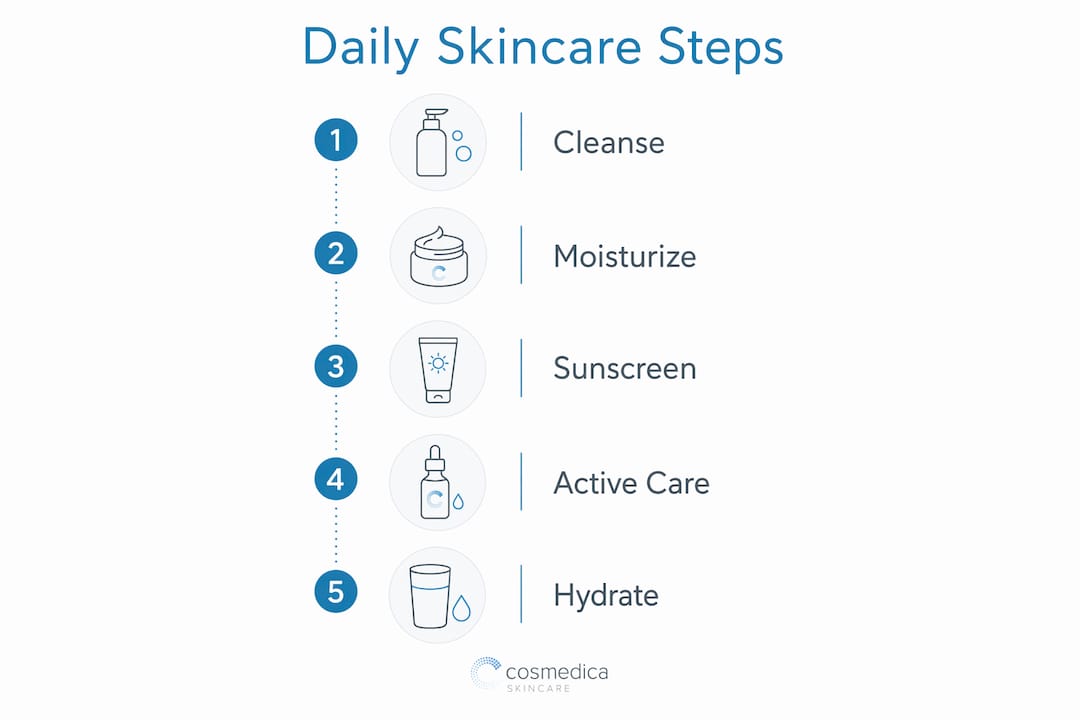
Step 3: apply sunscreen every single morning
SPF 30 or higher is universally recognized by dermatologists as the single most effective anti-aging product available. UV radiation causes collagen breakdown, hyperpigmentation, and the majority of visible skin aging, and it reaches your skin even on cloudy days and through windows. Apply a nickel-sized amount to your face, neck, and hands every morning, rain or shine. Sunscreen is not optional if you care about long-term skin health. It is the step that protects every other investment you make in your routine.
Pro Tip: Layer your sunscreen as the very last step in your morning routine, after moisturizer, so it sits on top of your skin where it can do its job without being diluted.
Check out the beginner skincare guide from Cosmedica-skincare if you want a step-by-step breakdown of how to put these three steps together for your specific skin type.
How do you introduce active ingredients safely?
Active ingredients are the power players of any best skincare routine. Retinoids, vitamin C, niacinamide, and peptides each deliver measurable improvements in skin texture, tone, and resilience. The catch is that adding them all at once is a recipe for irritation, redness, and a frustrated trip back to basics.
Here is how to build your actives stack without overwhelming your skin:
- Retinoids for anti-aging: Retinoids are the gold-standard ingredient for reducing fine lines, improving skin texture, and accelerating cell turnover. Start at a low concentration of 0.25% to 0.3%, applied every other night, and expect to wait 8 to 12 weeks before seeing visible improvements. Patience is non-negotiable with retinoids. The Cosmedica-skincare 2.5% Retinol Facial Serum is a popular option for those ready to step up their retinol concentration after building tolerance.
- Vitamin C for brightness: A vitamin C serum applied in the morning before sunscreen can brighten skin tone in as little as 4 to 8 weeks. Vitamin C also supports collagen production and neutralizes free radicals from pollution and UV exposure, making it a natural partner for your SPF. Look for formulas with L-ascorbic acid at 10% to 20% concentration for the most evidence-backed results.
- Niacinamide and peptides for support: Niacinamide reduces redness, minimizes pore appearance, and strengthens the skin barrier. Peptides signal your skin to produce more collagen. Both are gentle enough for daily use and work well alongside other actives without causing conflict.
- Timing and layering: Apply vitamin C in the morning. Use retinoids at night. Niacinamide and peptides can go into either routine. Always apply thinner serums before thicker creams, and let each layer absorb for 30 to 60 seconds before applying the next.
Introducing one active at a time and waiting 2 to 3 weeks before adding another is the safest way to build your routine. This approach makes it easy to identify what is working and what is causing a reaction.
Pro Tip: Never combine retinoids with AHAs or BHAs in the same application. That combination dramatically increases the risk of irritation and barrier damage. Use them on alternating nights instead.
Here is a quick reference for timing your actives:
| Ingredient | When to use | Key benefit |
|---|---|---|
| Vitamin C serum | Morning | Brightening, antioxidant protection |
| Niacinamide | Morning or night | Barrier support, redness reduction |
| Retinoids | Night only | Anti-aging, cell turnover |
| Peptides | Morning or night | Collagen stimulation |
| Hyaluronic acid | Morning and night | Deep hydration |
What lifestyle factors enhance skin health beyond topical care?
No topical product can fully compensate for what you eat, how much you sleep, and how you move. These lifestyle factors are the foundation that your skincare routine sits on, and they are often the missing piece for people who feel stuck despite using good products.
Here is what actually moves the needle:
- Cut back on sugar: High sugar intake triggers a process called glycation, where sugar molecules attach to collagen fibers and make them stiff and brittle. Limiting sugary drinks and processed foods reduces collagen degradation and lowers skin inflammation. This is one of the most underrated tips for youthful skin, and it costs nothing.
- Add fermented foods: Your gut microbiome has a direct relationship with skin clarity. Incorporating fermented foods like yogurt, kimchi, or kefir one to two times per week supports a healthier gut environment, which shows up as calmer, clearer skin. A plant-based diet rich in whole foods and fermented options provides additional anti-inflammatory benefits that support skin resilience from the inside out.
- Drink enough water: Knowing how to hydrate skin starts with what you drink. About 8 glasses of water daily helps maintain skin hydration and elasticity. Dehydration shows up on your face before it shows up anywhere else, so consistent water intake is a simple, free tool for better-looking skin.
- Prioritize sleep: Your skin does its most intensive repair work between 10 p.m. and 2 a.m. Poor sleep raises cortisol levels, which breaks down collagen and increases inflammation. Seven to nine hours of quality sleep is not a luxury for skin health. It is a biological requirement.
- Exercise regularly: Moderate aerobic exercise increases circulation, delivering oxygen and nutrients to skin cells while flushing out waste products. You do not need to run marathons. A 30-minute walk five days a week is enough to support skin resilience and a healthy glow.
What common mistakes hinder healthy skin maintenance?
Even people with good intentions make errors that slow their progress or actively damage their skin. Recognizing these patterns is the fastest way to improve your results.
- Over-cleansing: Washing your face more than twice a day, or using cleansers with alcohol or synthetic fragrance, strips the lipid barrier and triggers your skin to overproduce oil as a compensatory response. This is especially common in people with oily or acne-prone skin who mistakenly believe more cleansing equals cleaner skin.
- Skipping or under-applying sunscreen: Applying sunscreen every day, including indoors and on overcast days, is non-negotiable. Most people apply about 25% of the recommended amount, which means their actual SPF protection is far lower than the label suggests. Use that nickel-sized amount and reapply every two hours if you are outdoors.
- Layering too many actives at once: Dermatologists recommend simple routines with gentle, fragrance-free products used consistently. Adding five new products in one week is the most common reason people experience sudden breakouts, peeling, or sensitivity and then wrongly blame the products themselves.
- Expecting overnight results: Visible improvements from consistent product use generally require 4 to 8 weeks. Switching products before that window closes means you never give anything a fair chance to work. Commit to a routine for at least six weeks before making changes.
- Ignoring seasonal changes: Your skin’s needs shift with the seasons. A lightweight gel moisturizer that works perfectly in summer may leave your skin dry and tight in winter. Adjusting your routine every few months, rather than treating it as a permanent fixed system, keeps your skin balanced year-round.
Key takeaways
Healthy skin comes from a consistent three-step routine of cleansing, moisturizing, and daily SPF 30 sunscreen, supported by smart active ingredient use and lifestyle habits like hydration, sleep, and a low-sugar diet.
| Point | Details |
|---|---|
| Daily sunscreen is non-negotiable | Apply SPF 30 or higher every morning, including indoors, to prevent UV-driven aging. |
| Introduce actives one at a time | Wait 2 to 3 weeks between new active ingredients to avoid irritation and identify reactions. |
| Lifestyle habits matter as much as products | Sleep, hydration, diet, and exercise directly affect skin clarity and resilience. |
| Consistency beats complexity | Visible results from any product require 4 to 8 weeks of regular use. |
| Moisturize at night for maximum repair | Skin barrier repair peaks during sleep, making nighttime moisturizing your most effective application. |
Why I think most people overcomplicate their skin care
Here is something I have noticed after years of working in the skincare space: the people with the best skin are almost never the ones with the most products. They are the ones who found three or four things that work and stuck with them, rain or shine, for months on end.
Social media has made this harder. Every week there is a new serum, a new ingredient, a new “skin cycling” protocol that promises to change everything. And I get it. It is exciting to try new things. But the science is clear: a minimalist approach reduces irritation and improves routine adherence. Complexity is the enemy of consistency.
My honest recommendation is to start with barrier health. If your skin is reactive, dry, or constantly breaking out, no active ingredient will fix it until your barrier is intact. That means a gentle cleanser, a ceramide-rich moisturizer, and daily SPF. Get those three steps dialed in for six weeks before you even think about adding a retinoid or a vitamin C serum.
The anti-aging skincare routine guide from Cosmedica-skincare does a great job of showing how to layer actives onto a solid foundation without overwhelming your skin. I point people there often.
And please, do not underestimate the lifestyle side. I have seen people transform their skin more through better sleep and cutting out soda than through any serum. Your skin is a reflection of your overall health. Treat it that way.
— Thomas
Build your routine with Cosmedica-skincare
If you are ready to put these principles into practice, Cosmedica-skincare makes it straightforward. Their moisturizer collection includes ceramide-rich and hyaluronic acid formulas designed for every skin type, from dry and sensitive to oily and combination. For those ready to add actives, the serums collection covers vitamin C, niacinamide, and peptide options that slot cleanly into a morning or evening routine. Every product is cruelty-free, dermatologist-tested, and formulated to deliver results without unnecessary irritants. Not sure where to start? Take the skin quiz to get personalized recommendations matched to your specific concerns.
FAQ
What is the best daily routine for healthy skin?
The best daily routine includes a gentle cleanser, a moisturizer with hyaluronic acid or ceramides, and a broad-spectrum SPF 30 sunscreen every morning. At night, swap sunscreen for a richer moisturizer and, once your skin is ready, a retinoid.
How long does it take to see results from a new skincare routine?
Most products require 4 to 8 weeks of consistent use before delivering visible improvements. Switching products before that window closes prevents you from seeing what any single product can actually do.
How do you hydrate skin effectively?
Hydrating skin effectively combines topical humectants like hyaluronic acid with adequate water intake of around 8 glasses daily. Applying moisturizer to slightly damp skin seals in extra moisture and improves absorption.
Can diet really affect skin health?
Yes. High sugar intake degrades collagen through glycation, while fermented foods support the gut microbiome linked to clearer skin. Diet is one of the most direct and underused tools for improving skin health.
Is sunscreen necessary on cloudy days or indoors?
UV radiation penetrates clouds and glass, so sunscreen is necessary every day regardless of weather or whether you plan to be indoors. Daily application is the single most effective step for preventing premature skin aging.