

Types of Face Masks: Best Formats for Every Skin Concern
TL;DR:
- Face masks deliver active ingredients into the skin through specific contact durations, addressing concerns that cleansing and moisturizing alone cannot fully resolve. The main mask types include clay for oil control, sheet masks for hydration, peel-off for exfoliation, overnight masks for barrier repair, and enzymatic or rubber masks for specialized needs. Effective mask use depends on matching the product format and active ingredients to your skin’s condition and concerns, always following proper routine and frequency guidelines.
Face masks are concentrated delivery systems that push active ingredients into the skin during a controlled contact window, targeting concerns that daily cleansing and moisturizing alone cannot fully address. The types of face masks available today span clay, sheet, peel-off, overnight occlusive, and enzymatic formats, each with a distinct mechanism and purpose. The American Academy of Dermatology confirms that masks work as an add-on step, not a replacement for cleansing, moisturizing, or sun protection. Choosing the right format means matching the mask’s delivery vehicle and active ingredients to your specific skin concern. We put together this guide to make that choice straightforward.
1. What are the main types of face masks?
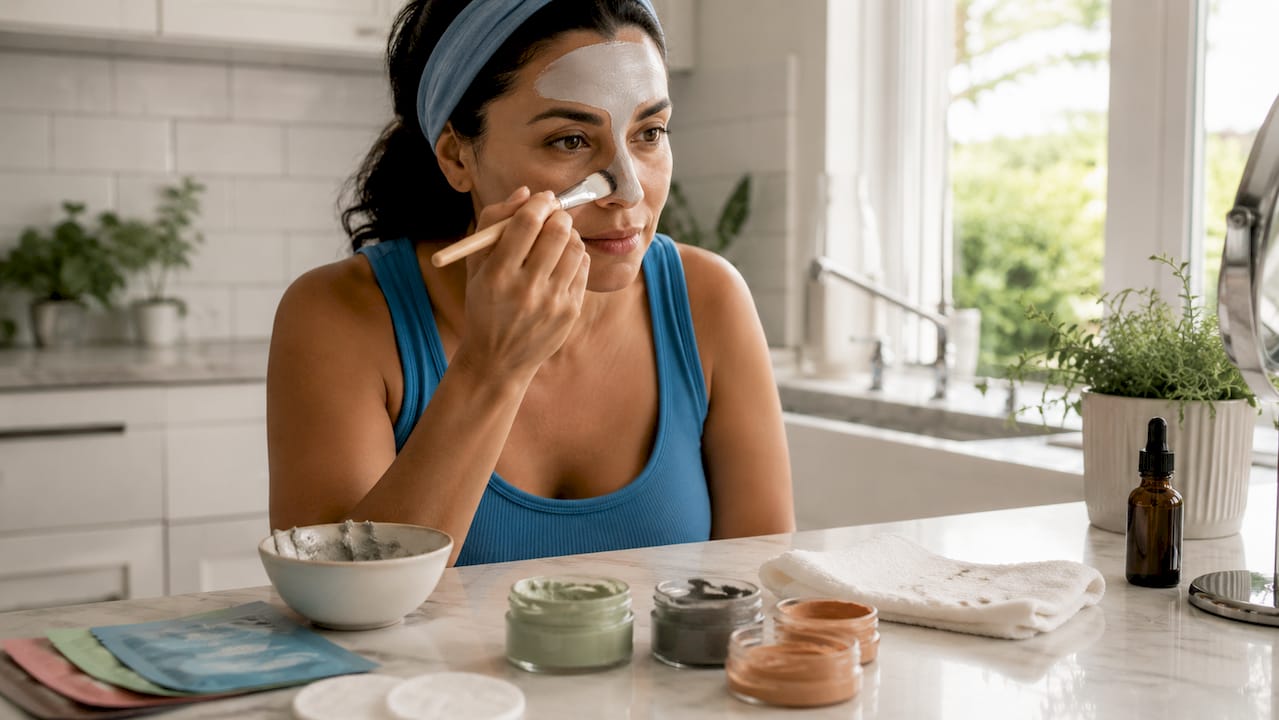
Face masks fall into five core formats, and each one interacts with the skin barrier differently. Understanding those differences is the fastest way to stop wasting money on masks that do not match your skin’s needs.
- Clay masks contain kaolin or bentonite and absorb excess sebum while soothing surface irritation. They work best on oily or acne-prone skin and are typically used 1–2 times weekly as a rinse-off treatment.
- Sheet masks are single-use fabric or hydrogel sheets soaked in a serum. They deliver actives like hyaluronic acid, niacinamide, and tranexamic acid during a 15–30 minute contact window, making them ideal for a quick hydration or brightening boost.
- Peel-off masks dry into a film on the skin and lift away dead cells and surface debris when removed. They provide mechanical exfoliation and are best used occasionally, not more than once a week.
- Overnight occlusive masks (also called sleeping masks or wash-off balms) create a seal over the skin for several hours. That extended contact time allows humectants and barrier-repair ingredients to work deeply while you sleep.
- Enzymatic and rubber (modeling) masks are more specialized. Enzymatic masks use fruit-derived enzymes like papain or bromelain to dissolve dead skin cells without physical scrubbing. Rubber masks set firm on the face and are popular in professional facial treatments for intense hydration.
Pro Tip: Contact time is everything. A sheet mask left on for 40 minutes can actually start pulling moisture back out of the skin as the sheet dries. Stick to the 15–30 minute window.
2. Which active ingredients work best for each skin concern?
The format gets the ingredient to your skin. The ingredient does the actual work. Here is how to match actives to your specific concern.
Hydration
Hyaluronic acid is the gold standard humectant in masks. Think of it as a sponge that draws water from the environment and the deeper layers of the skin up to the surface. Glycerin works the same way at a lower cost. Panthenol (vitamin B5) goes one step further by soothing and reinforcing the skin barrier while hydrating. In mask formulas, hyaluronic acid typically appears at 0.1–2%, which is enough to produce a visible plumping effect after a single use.
Oily and acne-prone skin
Salicylic acid (a BHA) is the most effective ingredient for oily and acne-prone skin in a mask format. It is oil-soluble, so it penetrates the pore lining and dissolves the sebum and dead cells that cause breakouts. Typical mask concentrations run from 0.5–2%. Niacinamide at 2–5% reduces oil production and calms post-breakout redness. Clay (kaolin or bentonite) adds physical oil absorption on top of those chemical actives. Combining aloe or hyaluronic acid with BHA or clay prevents the overdrying that makes acne worse.
Anti-aging
- Peptides signal the skin to produce more collagen. They work best in overnight occlusive masks where the extended contact time gives them room to absorb.
- Vitamin C (ascorbic acid or its derivatives) brightens uneven tone and neutralizes free radicals. Sheet masks with stabilized vitamin C deliver a fast brightening effect.
- Bakuchiol is the plant-derived alternative to retinol. It targets fine lines and firmness without the irritation risk, making it a strong choice for sensitive skin that cannot tolerate retinoids.
- AHAs (glycolic acid at 5–10%, lactic acid) resurface the top layer of the skin, smoothing texture and improving tone over time. Peptides, vitamin C, and bakuchiol are typically used 2 times weekly in overnight or sheet mask formats for anti-aging benefits.
Sensitive and compromised skin
Ceramides rebuild the lipid barrier, the protective layer that keeps irritants out and moisture in. Green tea extract (EGCG) calms inflammation. Allantoin soothes and accelerates cell turnover gently. These ingredients belong in hydrating short-contact or overnight masks, not in clay or peel-off formats that stress an already reactive skin barrier.
3. How to select the right mask for your skin barrier condition
Masks act as a barrier event, temporarily changing how the skin manages water loss and occlusion. That means your skin’s current condition matters as much as the mask’s ingredient list.
Here is a practical framework:
- Healthy, balanced skin tolerates the widest range of mask types. You can rotate clay masks for oil control, sheet masks for hydration, and AHA masks for exfoliation across the week.
- Oily or congested skin benefits most from clay or BHA masks 1–2 times weekly. Avoid back-to-back exfoliating sessions, which strip the barrier and trigger more oil production as a rebound response.
- Dry or dehydrated skin needs hydrating sheet masks or overnight occlusives. Clay and peel-off masks will pull out what little moisture is left.
- Inflamed or sensitized skin calls for gentle hydrating masks only. Inflamed skin tolerates gentle hydrating masks far better than drying clay or peel-off types, which can worsen redness and compromise the barrier further.
- Post-procedure skin (after microneedling or a chemical peel) needs barrier-repair masks with ceramides and panthenol. Avoid all exfoliating formats until the skin has fully healed.
Masks complement but do not replace your core routine. Cleanse before masking so actives can penetrate clean skin. Apply your moisturizer after to lock in what the mask delivered. The AAD guidance is clear: masks support your routine, they do not substitute for it.
Pro Tip: Multi-masking is a real technique, not just a social media trend. Apply a clay mask to your T-zone and a hydrating sheet mask to your cheeks at the same time. You address two different skin concerns in one session without over-treating either zone.
4. Comparison of popular face mask types: benefits, drawbacks, and best use cases
The table below gives you a fast side-by-side view of the most popular face mask varieties so you can pick the right one without second-guessing.
| Mask type | Best for | Key benefit | Main drawback | Frequency |
|---|---|---|---|---|
| Clay (kaolin/bentonite) | Oily, acne-prone skin | Absorbs sebum, unclogs pores | Can overdry sensitive skin | 1–2× weekly |
| Sheet mask | All skin types, especially dry | Fast hydration or brightening boost | Single-use, generates waste | 2–3× weekly |
| Peel-off | Normal, oily skin | Mechanical exfoliation, surface cleanse | Harsh on sensitive or dry skin | Once weekly |
| Overnight occlusive | Dry, mature, barrier-compromised skin | Extended hydration and barrier repair | Can feel heavy or cause milia if overused | 2–3× weekly |
| Enzymatic | Dull, uneven-textured skin | Gentle chemical exfoliation | Shorter shelf life, enzyme instability | Once weekly |
| Rubber/modeling | All types, professional use | Intense hydration, cooling effect | Higher cost, requires mixing | Once weekly |
A few things worth noting from this comparison. Sheet masks are the most forgiving format because they suit nearly every skin type and rarely cause irritation. Clay masks are the most misused. Many people with dry skin reach for clay masks because they want to “deep clean,” but clay pulls moisture along with oil, leaving dry skin worse off. The AAD notes that masks are most helpful for moisturizing and barrier strengthening, not as a substitute for treating conditions like eczema or acne medically.
When choosing a product, check the ingredient list before the marketing claims. A “hydrating” mask that lists alcohol denat in the top five ingredients will dehydrate your skin. Look for brands that list concentrations or at least rank key actives high on the label. Cosmedica-skincare, for example, publishes ingredient-focused product pages so you know exactly what you are applying. For exfoliating mask options, pairing the right format with the right active makes all the difference.
Key takeaways
The most effective face mask is the one that matches your skin barrier condition, targets your specific concern, and fits into a routine that still includes cleansing, moisturizing, and sun protection.
| Point | Details |
|---|---|
| Format determines delivery | Clay, sheet, peel-off, and overnight masks each interact with the skin barrier differently. |
| Match actives to concerns | Use BHAs and clay for oily skin, hyaluronic acid and ceramides for dry or sensitive skin, peptides and vitamin C for anti-aging. |
| Barrier condition comes first | Inflamed or compromised skin needs gentle hydrating masks, not exfoliating or clay formats. |
| Frequency matters | Most mask types work best 1–3 times weekly; daily use of strong actives risks irritation and barrier damage. |
| Masks are supplemental | Dermatologists confirm masks boost your routine but do not replace cleansing, moisturizing, or medical treatment. |
My take on where most people go wrong with face masks
Thomas here. After years of watching people build skincare routines, the single most common mistake I see is treating a face mask like a cure rather than a complement. Someone breaks out, panics, and reaches for the strongest clay mask they can find. They use it every day. Two weeks later their skin is drier, more irritated, and breaking out worse than before. The mask did not fail them. They used the wrong tool at the wrong frequency.
The second mistake is seasonal blindness. Your skin in january is not the same skin you have in july. Cold, dry air strips the barrier. Summer heat and humidity push oil production up. The mask that worked perfectly in summer may be too drying by november. I adjust my own routine every season, swapping clay masks for overnight occlusives when the temperature drops, and it makes a measurable difference.
The third mistake is skipping the moisturizer after masking. A sheet mask floods the skin with humectants, but humectants need an occlusive layer on top to stay put. Without a hydrating night cream or moisturizer after, that hydration evaporates within the hour. The mask did its job. You just did not finish the routine.
My honest advice: start with one mask type, use it consistently for four weeks, and evaluate the result before adding another. Skincare is not about using more products. It is about using the right ones at the right time.
— Thomas
Cosmedica-skincare’s face mask collection for every skin type
Cosmedica-skincare carries a curated range of beauty face masks built around the same ingredient principles covered in this guide, from hydrating hyaluronic formulas to brightening enzyme treatments. If you are building a full routine, the skincare gift sets bundle masks with complementary serums and moisturizers, which takes the guesswork out of pairing products. Every formula is cruelty-free, ingredient-transparent, and designed to work with your skin barrier rather than against it. Whether you are new to masking or ready to add a second mask type to your weekly rotation, the collection gives you a solid starting point.
FAQ
What are face masks in skincare?
Face masks are concentrated treatments applied to the skin for a set contact time to deliver active ingredients targeting hydration, exfoliation, oil control, or anti-aging. They work as an add-on step, not a replacement for daily cleansing and moisturizing.
How often should you use a face mask?
Mask frequency depends on the format and your skin type, but most masks work best 1–3 times weekly. Oily skin can tolerate more frequent clay or exfoliating masks, while sensitive skin does better with hydrating masks used 2–3 times weekly.
What type of face mask is best for dry skin?
Overnight occlusive masks and hydrating sheet masks with hyaluronic acid, glycerin, or ceramides are the best options for dry skin. Clay and peel-off masks pull moisture from the skin and should be avoided.
Can you use different face mask types in the same week?
Yes. Using a clay mask on oily zones and a hydrating sheet mask on dry zones in the same session (multi-masking) is an effective approach. Rotating mask types across the week lets you address multiple concerns without overloading any one area.
Are face masks safe for sensitive skin?
Hydrating masks with ceramides, allantoin, and green tea extract are safe for most sensitive skin. Avoid peel-off masks, high-concentration AHA masks, and clay masks on sensitized or inflamed skin, as these formats can worsen irritation and compromise the skin barrier.