

One Month Rule: When Vitamin C Oxidizes and How to Save It
If your vitamin C serum has turned orange or brown, it’s oxidized, and that batch has lost most of its punch. It’s not typically dangerous to keep using, but it also won’t do much for your skin, and strongly discolored serums are more likely to trigger irritation than deliver a glow. The fix is simple: store your bottle cool, keep it out of direct light, and cap it fast after every use.
TL;DR:
- Oxidized vitamin C serum turns orange or brown and loses its effectiveness, with visible signs appearing after about one month of use at room temperature.
- Exposure to light, heat, air, and trace metals accelerates oxidation, making storage in opaque, airtight containers and a cool, dark place essential for prolonging shelf life.
- Derivative-based vitamin C formulas are more stable and gentler for sensitive skin, while pure L-ascorbic acid requires careful handling to maintain potency.
- If serum shows heavy discoloration, off smell, or causes irritation, it should be discarded because it no longer provides antioxidant or collagen benefits.
- Proper storage, smaller sizes, and stabilized formulations can help maintain vitamin C effectiveness, but no serum remains fully immune to oxidation over time.
Table of Contents
- What Causes Vitamin C Oxidation, Chemically?
- How Can You Tell if Your Serum Has Oxidized?
- Is Oxidized Vitamin C Still Effective, or Can It Harm Your Skin?
- How Long Does Vitamin C Serum Actually Last?
- Storage Habits That Actually Slow Oxidation
- L-Ascorbic Acid vs. Vitamin C Derivatives: Which Should You Choose?
- If Your Serum Has Oxidized, What Should You Do Now?
- Why Stability Matters More Than the Number on the Label
- Shop Vitamin C Serums Built to Stay Active Longer
- Sources
- FAQ
What Causes Vitamin C Oxidation, Chemically?
Vitamin C oxidation is a two-step chemical reaction, and once it starts, there’s no stopping it in a bottle. L-ascorbic acid, the pure and most potent form of vitamin C, loses electrons when it meets oxygen. That first step turns it into dehydroascorbic acid, a less active compound. Keep exposing it to air, and dehydroascorbic acid breaks down further into other byproducts, some of which carry the yellow, orange, and brown pigments you eventually see.
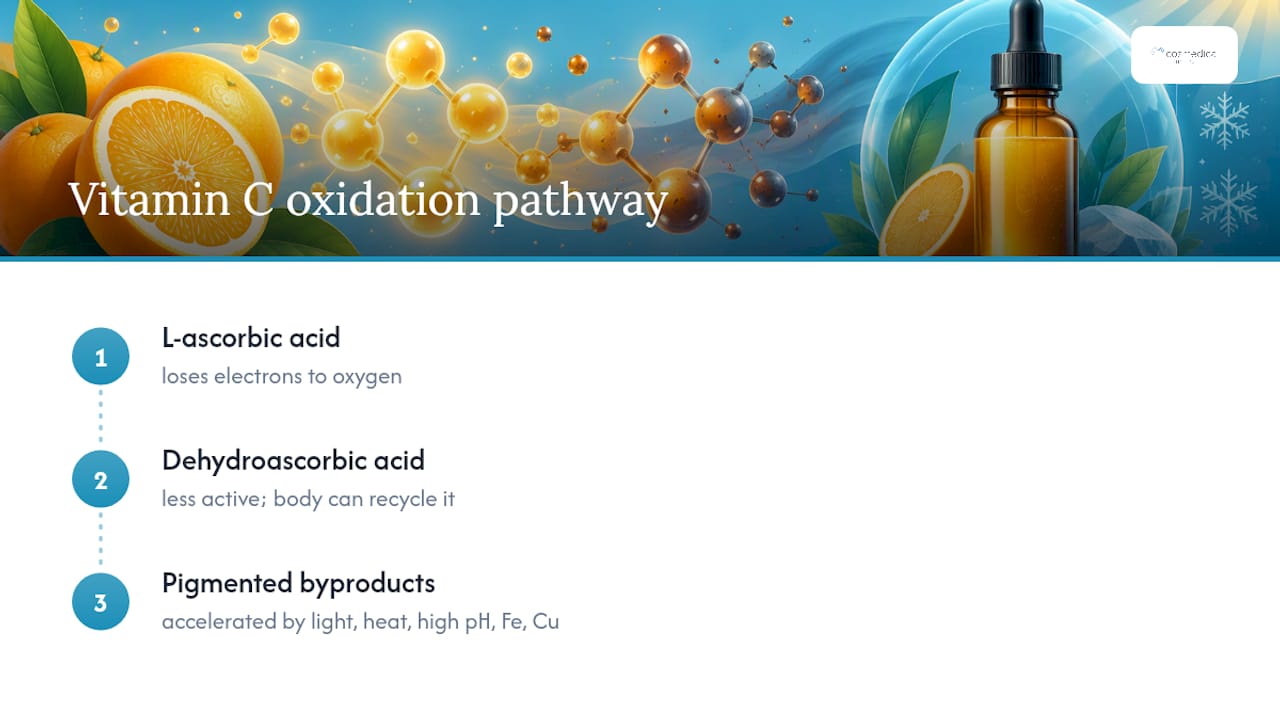
Here’s the part most people never think about: your body actually recycles ascorbic acid using enzymes that convert dehydroascorbic acid right back into its active form. A bottle of serum has none of that machinery. Once the reaction starts, it only moves one direction.
Oxygen is the trigger, but light, heat, high pH, and trace metals like iron or copper act as accelerants, sometimes causing meaningful degradation within days to weeks under normal bathroom conditions. That’s why a serum left on a sunny windowsill degrades faster than one tucked in a drawer.
How Can You Tell if Your Serum Has Oxidized?
Color is the most obvious tell, and it usually moves in stages. A fresh L-ascorbic acid serum is clear to pale yellow. As oxidation progresses, it shifts to a deeper yellow, then orange, then brown, and a visible orange or brown tint generally signals substantial oxidation worth acting on.
Color isn’t the only clue, though:
- A sharp, off, or slightly sour smell that wasn’t there when you opened the bottle
- A texture that’s gone noticeably thicker, sticky, or grainy
- Visible sediment or specks settled at the bottom
- New stinging, redness, or breakouts where the serum previously felt fine
The catch is that some of the active vitamin C is already gone before you see any color change at all. A practical rule of thumb: treat any open L-ascorbic acid serum past about one month at room temperature as at least partially degraded, even if it still looks clear.
Is Oxidized Vitamin C Still Effective, or Can It Harm Your Skin?
Once ascorbic acid oxidizes, it loses the antioxidant activity and the collagen support that made you buy the serum in the first place. The breakdown products are mostly inert. They just sit there, doing very little.
The nuance worth knowing: under certain conditions, some of those breakdown compounds can behave differently than plain vitamin C on skin, and researchers haven’t fully mapped out every downstream reaction. That’s a limited and context-dependent risk, not a guaranteed one, but it’s part of why a heavily oxidized serum is worth retiring rather than stretching for another month. Clinical research on topical vitamin C consistently ties its benefits to delivering the active form in usable concentrations, not whatever is left after weeks of air exposure.
The practical rule holds up well: if the color, smell, or texture signals heavy oxidation, or if your skin starts reacting where it didn’t before, stop using it.
How Long Does Vitamin C Serum Actually Last?
Under normal home conditions, most brands suggest finishing an L-ascorbic acid serum within two to three months of opening it, though the honest answer is “it depends on how you treat it.” A serum opened in January and left on a bathroom shelf through a humid summer won’t make it nearly that far.
A few factors do most of the damage:
- Repeated air exposure from open jars or droppers that let oxygen in every single use
- Light exposure, especially in clear glass or plastic bottles left anywhere near a window
- Heat and humidity, which is exactly what a steamy bathroom provides daily
- Higher pH formulas and trace metal contamination, both of which speed the reaction along
Packaging can push that timeline further in your favor. Airless pumps limit oxygen contact with every press, opaque bottles block light, and derivative-based formulas tend to hold up longer than pure L-ascorbic acid under the same conditions.
Storage Habits That Actually Slow Oxidation
Small changes in how you store and handle your serum add up fast, since oxidation is a cumulative process that punishes every unnecessary exposure to air, light, and heat.
Start with the basics:
- Keep the bottle in a cool, dark spot, not on a sunlit counter or a steamy shower shelf
- Choose products in airless pump bottles or opaque, dark glass over clear jars with droppers
- Buy smaller sizes you’ll actually finish within the manufacturer’s suggested window
- Keep fingers and water out of the bottle, since contamination introduces bacteria and moisture that speed breakdown
- Consider single-dose capsules or powder-to-mix formats if you go through serum slowly
Refrigeration genuinely slows the reaction down, but it comes with a real caveat: pulling a cold bottle in and out of the fridge repeatedly introduces condensation, and that trapped moisture can accelerate other forms of breakdown. If you refrigerate, commit to it, rather than shuffling the bottle between the fridge and your bathroom counter daily.
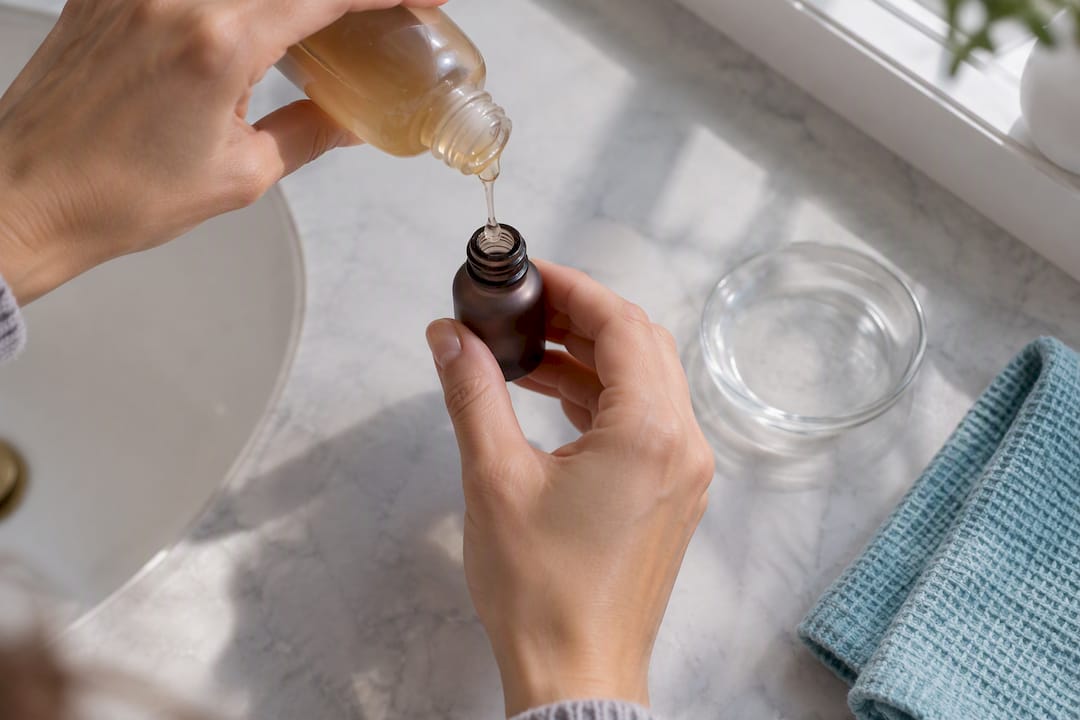
Pro Tip: Decant a week’s worth of serum into a small, opaque dropper bottle and keep the main bottle refrigerated and sealed. You get the convenience of grabbing your serum every morning without opening the primary bottle over and over.
Explore stabilized vitamin C formulations built with antioxidant support systems designed to buy you more usable time between opening and finishing a bottle.
L-Ascorbic Acid vs. Vitamin C Derivatives: Which Should You Choose?
Pure L-ascorbic acid is the most researched and potent form of vitamin C, but it’s also the most finicky. It typically needs a formula pH below about 3.5 to penetrate skin effectively and stay relatively stable. That acidity is exactly what makes it effective, and exactly what makes it more likely to sting sensitive or compromised skin.
Derivatives take a different approach. Compounds like 3-O-ethyl ascorbic acid, sodium ascorbyl phosphate, and tetrahexyldecyl ascorbate are built to stay stable at higher, skin-friendlier pH levels, converting to active vitamin C once absorbed. They oxidize more slowly on the shelf and tend to be gentler day to day.
If you have sensitive or reactive skin, a derivative-based formula is usually the more forgiving starting point. If you want maximum potency and don’t mind babying your bottle, a well-packaged L-ascorbic acid serum is worth the extra care. Either way, a stable 10 to 15 percent formula used while fresh tends to outperform a high-concentration serum that’s already halfway oxidized.
If Your Serum Has Oxidized, What Should You Do Now?
Discard it if the color has shifted to orange or brown, the smell is off, or your skin reacts in ways it didn’t before. Rinse the bottle and toss it in regular trash. If irritation shows up and doesn’t settle within a day or two after switching serums, check in with a dermatologist rather than guessing.
Why Stability Matters More Than the Number on the Label
We’ve watched plenty of shoppers chase the highest percentage on a vitamin C label, assuming bigger numbers mean better results. What actually determines your results is whether that vitamin C is still active by the time it hits your skin. That’s why we lean toward stabilized and derivative-based vitamin C formulas, each dermatologist-tested, rather than letting a concentration claim do all the marketing work.
— Thomas
Shop Vitamin C Serums Built to Stay Active Longer
An advantage for some users is vitamin C formulas built around stability, not just a headline concentration, to help maintain effectiveness over time. If you’ve been burned by a serum that turned brown before you finished it, start with our Vitamin C Super Serum or pair it with hydration in the Hyaluronic + Vitamin C Serum Set if your skin leans sensitive and benefits from a gentler routine.
Whichever formula you choose, check that the packaging uses an airless pump or opaque bottle, buy a size you’ll realistically finish, and keep it away from bathroom heat and steam. Browse the full Cosmedica-skincare lineup to find the option that matches your skin type and start your order today.
Sources
For deeper reading on ascorbic acid chemistry and stability testing, see the peer-reviewed stability research cited throughout this piece, plus lab-based stability testing methods used across the industry to measure antioxidant activity over time.
- Chemical Stability of Ascorbic Acid Integrated into Commercial …
- Skincare
- Vitamin C Serum Guide: Stability & Forms
FAQ
Is Vitamin C Still Good if It Oxidizes?
No, not in any meaningful sense. Oxidized vitamin C has lost most of its antioxidant and collagen-supporting activity, and a serum that’s turned orange or brown is better replaced than used.
What Happens When Vitamin C Becomes Oxidized?
L-ascorbic acid loses electrons on contact with oxygen and converts into dehydroascorbic acid, then into further breakdown compounds that carry a yellow to brown tint. The reaction accelerates with light, heat, and trace metals and cannot reverse itself once inside a bottle.
How Do I Avoid Vitamin C Serum Oxidation?
Store your serum in a cool, dark place, keep the cap on tight, and choose airless pumps or opaque bottles over clear jars. Buying smaller sizes you’ll finish within a couple of months, and avoiding repeated fridge-to-counter temperature swings, both help.
What Is the Best Vitamin C Serum That Doesn’t Oxidize?
No formula is fully immune to oxidation, but derivative-based options like sodium ascorbyl phosphate and 3-O-ethyl ascorbic acid resist it far better than pure L-ascorbic acid at everyday pH levels. Cosmedica-skincare’s stabilized vitamin C serum is formulated with that stability in mind for people who want consistent results without babysitting the bottle.