

What Is Skin Quenching? Your Complete Hydration Guide
TL;DR:
- Skin quenching involves applying humectant-rich products on damp skin and sealing in moisture with a moisturizer. This method improves water retention, elasticity, and barrier strength, especially when done immediately after cleansing. Consistent layering of humectants on damp skin with sealing moisturizers addresses dehydration effectively across most skin types.
Skin quenching is defined as a hydration technique that layers humectant-rich products onto damp skin, then seals them in with a moisturizer to lock water into the epidermis. The term is informal and trending in skincare communities, but the underlying method aligns with what dermatologists call occlusive-humectant layering, a well-established approach to skin hydration and barrier support. The skin hydration benefits are real: better moisture retention, improved elasticity, and a stronger lipid barrier. If your skin feels tight, dull, or rough no matter what you apply, this technique may be the missing piece in your routine.
What is skin quenching and how does it work?
Skin quenching works by taking advantage of damp skin’s superior ability to absorb water-binding ingredients. Humectants like hyaluronic acid and glycerin show 20–30% better efficacy when applied on damp skin versus dry skin. That difference is significant. It means the same serum you already own can perform measurably better with one simple change: timing.
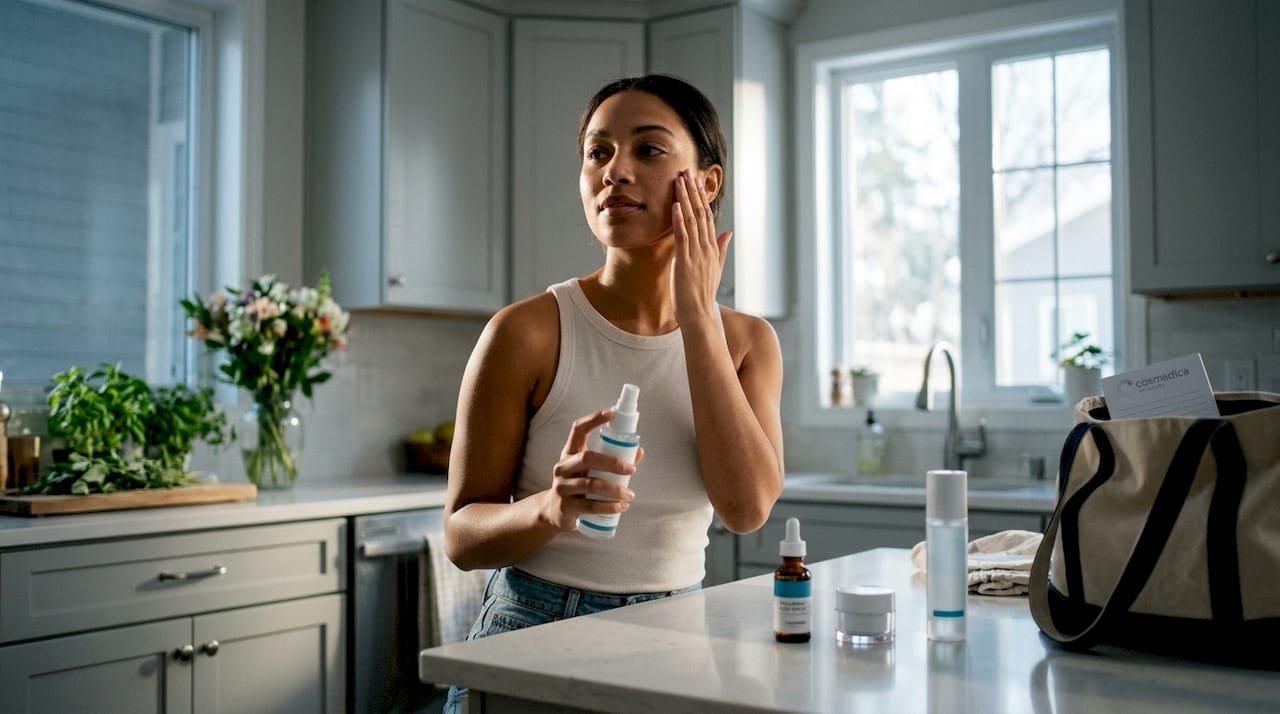
Think of humectants as tiny sponges. They attract water molecules and pull them into the outer layers of the skin, called the stratum corneum. When your skin is already damp, those sponges have immediate access to water and bind it fast. On completely dry skin, they still work, but they have to work harder and pull from deeper layers instead.
The second half of the technique is just as critical. Hydration adds water; moisture seals it in with lipids. Skipping the sealing step means the water your humectant just attracted will evaporate right off your face. That evaporation process is called transepidermal water loss, or TEWL. An occlusive moisturizer containing ceramides, squalane, or shea butter creates a physical barrier that stops TEWL and keeps your skin plump.
A 2017 study on hyaluronic acid and glycerin formulations confirmed that these ingredients improve hydration and reduce water loss over 24 hours, but only when properly sealed. Without the moisturizer on top, the hydration gains disappear within hours.
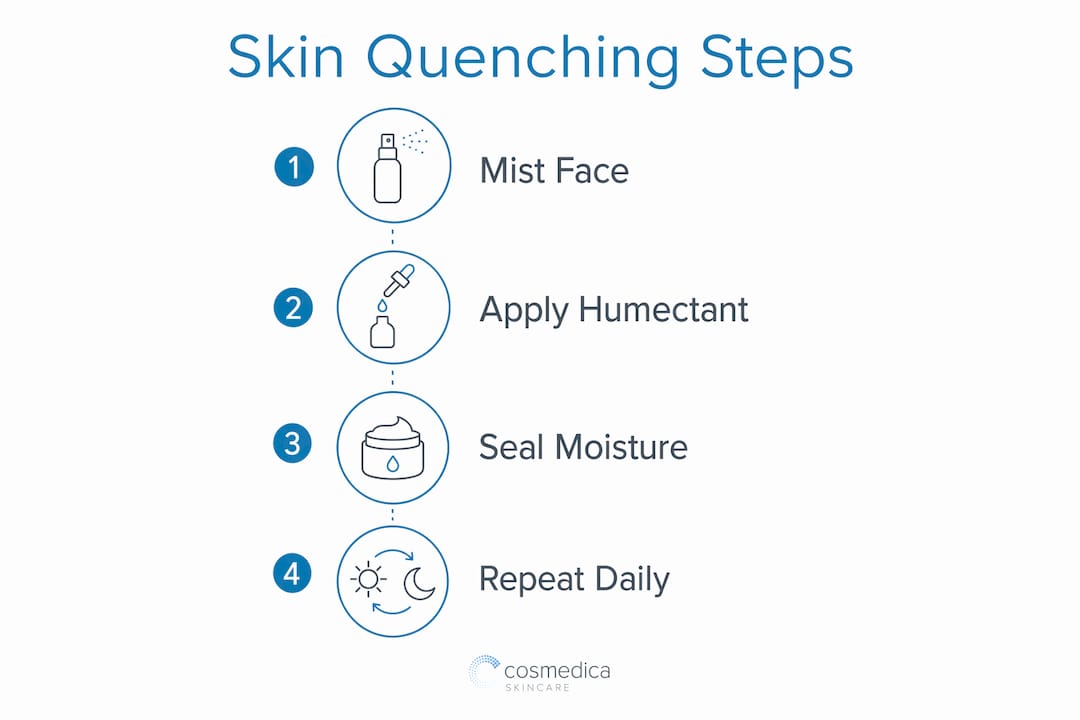
Pro Tip: Mist your face with water or a hydrating toner immediately after cleansing, then apply your humectant serum within 60 seconds while skin is still damp. Follow immediately with moisturizer. This three-step sequence is the core of skin quenching.
Damp vs. dry skin: what the data shows
| Condition | Humectant absorption | Water retention after 24h |
|---|---|---|
| Dry skin, no moisturizer | Low | Minimal |
| Dry skin, with moisturizer | Moderate | Moderate |
| Damp skin, no moisturizer | High | Low (TEWL occurs) |
| Damp skin, with moisturizer | High | High |
The table makes the logic clear. Damp skin plus a sealing moisturizer is the only combination that delivers both strong absorption and lasting retention.
What is the difference between dry skin and dehydrated skin?
Dry skin and dehydrated skin are not the same condition, and treating one with the other’s solution makes things worse. Dry skin is a chronic skin type. It lacks natural oils, called sebum, and requires emollients and occlusives to compensate for that lipid deficiency. Dehydrated skin is a temporary condition. It lacks water, not oil, and responds to humectants.
Here is the part that trips most people up: you can have oily skin and still be dehydrated. Your sebaceous glands can produce plenty of oil while your skin’s water content stays low. 1 in 3 people with oily skin who use heavy oils on dehydrated skin risk clogged pores without actually solving the hydration problem. Reaching for the right product type matters more than reaching for the most popular one.
Skin quenching targets dehydrated skin specifically. It replenishes water content using humectants and then seals that water in. If you have chronic dry skin, you still benefit from humectants, but your routine also needs stronger emollients to address the oil deficiency. For a deeper look at dry vs. dehydrated skin, the distinction shapes every product decision you make.
Signs your skin is dehydrated vs. dry
Your skin is likely dehydrated if you notice:
- Tightness after washing, even if your skin feels oily by midday
- A dull, lackluster complexion despite regular moisturizing
- Fine lines that appear suddenly and fade when you drink more water
- Skin that feels rough or slightly flaky but still produces oil
- The “pinch test” result: skin pinches slowly back into place instead of snapping back immediately
Your skin is likely dry (a skin type, not a condition) if you notice:
- Persistent flakiness and rough texture year-round
- Rarely or never feeling oily, even in humid weather
- Skin that feels tight regardless of water intake
- Visible dry patches that do not respond to drinking more water
- A family history of eczema or psoriasis
Knowing which category you fall into tells you exactly which ingredients to prioritize. Dehydrated skin needs humectants first. Dry skin needs emollients and occlusives, with humectants as a supporting layer.
What products and ingredients work best for skin quenching?
The best products for skin quenching split into two categories: humectants that attract water and occlusives or emollients that seal it in. Getting both right, and layering them correctly, is what separates a routine that works from one that just feels nice for an hour.
Hyaluronic acid is the most well-known humectant. It can hold up to 1,000 times its weight in water, making it exceptionally effective at drawing moisture into the skin. Glycerin is equally powerful and often more affordable. It pulls water from the environment and from deeper skin layers into the stratum corneum. Panthenol (vitamin B5) is a gentler humectant that also soothes irritation, making it ideal for sensitive skin types. Serums with hyaluronic acid and glycerin, followed by ceramide-rich moisturizers, represent the gold standard layering combination for skin quenching.
On the sealing side, ceramides are the most important ingredient. They are the natural lipids that make up your skin barrier, and replenishing them directly supports barrier repair. Squalane is a lightweight oil that seals without clogging pores, making it excellent for oily or combination skin. Shea butter provides rich occlusion for drier skin types and adds emollient softness.
Pro Tip: Never apply a strong exfoliant like glycolic acid or a high-strength retinoid on damp skin. Damp skin absorbs ingredients faster, which means actives penetrate more deeply and can cause irritation or chemical burns. Save those for a separate, dry-skin step.
Humectants vs. occlusives: a quick reference
| Ingredient | Type | Primary benefit | Best for | Caution |
|---|---|---|---|---|
| Hyaluronic acid | Humectant | Draws water into skin | All skin types | Seal immediately or it pulls from deeper layers |
| Glycerin | Humectant | Attracts and retains moisture | All skin types | Can feel sticky in high concentrations |
| Panthenol | Humectant | Hydrates and soothes | Sensitive, reactive skin | Generally very well tolerated |
| Ceramides | Occlusive/emollient | Repairs and seals the barrier | Dry, compromised skin | None for most people |
| Squalane | Occlusive | Seals without clogging pores | Oily, combination skin | Choose plant-derived for cleaner formulas |
| Shea butter | Occlusive/emollient | Rich sealing and softening | Dry, mature skin | May feel heavy for oily skin types |
The layering rule is simple: lightest to heaviest. Apply your water-based humectant serum first, then your moisturizer. If you use a facial oil, it goes last, over the moisturizer, not under it.
How to apply the skin quenching technique in your daily routine
Applying skin quenching correctly takes less than five minutes and fits into any existing routine. The sequence matters more than the number of products you use. Here is a step-by-step routine that works for most skin types.
-
Cleanse gently. Use a gentle, non-stripping cleanser suited to your skin type. Harsh cleansers disrupt the skin barrier before you even start, making hydration harder to retain.
-
Leave skin slightly damp. Pat your face with a clean towel but stop before it is fully dry. You want skin that feels cool and slightly wet, not soaking. This is the window where skin quenching happens.
-
Apply your humectant serum or toner. Press a few drops of a hyaluronic acid or glycerin serum into damp skin. Work quickly. The goal is to apply it while the surface moisture is still present. A hydrating toner misted directly onto the face also works well here.
-
Seal immediately with moisturizer. Apply your ceramide or squalane-based moisturizer within 60 seconds of the serum. This step locks the water in and prevents TEWL. Dampening skin before serums increases penetration and reduces reactivity, which is especially helpful for sensitive skin.
-
Apply SPF in the morning. Sunscreen is non-negotiable in a daytime routine. UV exposure degrades the skin barrier and worsens dehydration over time. Apply it as the final step after your moisturizer has absorbed.
-
Adapt for your environment. In low-humidity climates or during winter, applying humectants on dry skin without sealing can actually pull moisture from deeper skin layers and worsen dryness. In those conditions, be especially diligent about sealing quickly and consider a richer moisturizer.
For sensitive or compromised skin, reducing strong actives for 2–4 weeks while focusing on hydration and barrier repair gives your skin a chance to recover before you reintroduce exfoliants or retinoids. Skin quenching is gentle enough to use twice daily, morning and night. Consistency over two to four weeks is where the real results show up: plumper texture, fewer tight patches, and a more even tone.
Key Takeaways
Skin quenching delivers lasting hydration by layering humectants onto damp skin and sealing them with an occlusive moisturizer to prevent transepidermal water loss.
| Point | Details |
|---|---|
| Damp skin is the key | Apply humectant serums on slightly damp skin for 20–30% better absorption than on dry skin. |
| Always seal with moisturizer | Ceramides, squalane, or shea butter lock in water and prevent TEWL after humectant application. |
| Know your skin condition | Dehydrated skin needs humectants; dry skin also needs emollients. Treating the wrong condition wastes effort. |
| Avoid actives on damp skin | Strong exfoliants and retinoids penetrate faster on damp skin and can cause irritation. |
| Consistency builds results | Two to four weeks of twice-daily skin quenching produces visible improvements in texture and plumpness. |
Why I think most people are one step away from great skin
After spending years watching skincare trends come and go, the one pattern I keep seeing is this: people reach for the most active, most aggressive product when their skin acts up, when what their skin actually needs is water and a sealed barrier. Skin quenching is not glamorous. It does not involve a $200 serum or a 12-step routine. It involves damp skin and a good moisturizer applied in the right order.
The rise of skin quenching, sometimes called skin flooding or hydramaxxing in online communities, reflects a broader correction in how we think about skincare. For years, the conversation centered on exfoliation, retinoids, and acids. Those are powerful tools, but they work best on a well-hydrated, intact barrier. Using them on a compromised, dehydrated barrier is like painting a wall that has not been primed. The results disappoint, and the skin gets more reactive over time.
What I find most interesting about skin quenching is how well it works for aging skin. As we get older, the skin’s natural ability to retain water declines. The stratum corneum thins, ceramide production slows, and TEWL increases. A consistent skin quenching routine directly addresses all three of those changes without requiring a prescription or a dermatologist visit. That accessibility matters.
My honest advice: before adding any new active to your routine, spend two weeks doing nothing but skin quenching. Cleanse gently, apply a face serum suited to your skin type on damp skin, seal with a ceramide moisturizer, and wear SPF. Most people are surprised by how much their skin improves from that alone. Simplicity, done consistently, beats complexity done occasionally every time.
— Thomas
Skin quenching made simple with Cosmedica-skincare
Cosmedica-skincare formulates products specifically for the kind of layered, barrier-first hydration that skin quenching requires. The Super Serum Set delivers concentrated humectant actives designed to be applied on damp skin, while the moisturizer collection includes ceramide-rich and squalane-based formulas that seal hydration effectively. Every product is cruelty-free, paraben-free, and formulated for all skin types, including sensitive skin. If you are ready to put the skin quenching technique into practice with products built for it, Cosmedica-skincare’s hydration lineup gives you exactly what you need to start seeing results.
FAQ
What is skin quenching in simple terms?
Skin quenching is a hydration technique where you apply a humectant serum to slightly damp skin, then immediately seal it with a moisturizer to lock water into the skin.
How is skin quenching different from regular moisturizing?
Regular moisturizing applies products to dry skin, while skin quenching specifically uses damp skin to boost humectant absorption by 20–30% before sealing with an occlusive moisturizer.
Can skin quenching work for oily skin?
Yes. Oily skin can still be dehydrated, meaning it lacks water rather than oil. Skin quenching with a lightweight humectant serum and a non-comedogenic moisturizer addresses water deficiency without clogging pores.
How often should you do skin quenching?
Skin quenching is gentle enough to use twice daily, morning and night. Consistent use over two to four weeks produces the most noticeable improvements in skin texture and hydration.
Does skin quenching help with fine lines?
Dehydration makes fine lines more visible. Skin quenching plumps the stratum corneum with water, which temporarily reduces the appearance of fine lines and improves overall skin texture with regular use.