

Age Spots Explained: Your Medical and Cosmetic Guide
An age spot, medically called a solar lentigo (plural: solar lentigines), is a flat, darkened patch of skin caused by years of UV exposure — and for most people, it’s a purely cosmetic concern, not a health threat. According to Harvard Health, these spots are a sign of cumulative sun damage and have nothing to do with liver disease, despite the old nickname “liver spots.” If a spot is new, growing, or looks unusual, see a board-certified dermatologist to rule out anything more serious. For prevention, daily broad-spectrum SPF is your first line of defense. And if you want to fade existing spots, there are solid cosmetic options worth knowing about.
Key Takeaways
Age spots are a cosmetic sign of cumulative UV damage — benign for most people, treatable with the right approach, and largely preventable with consistent photoprotection.
| Point | Details |
|---|---|
| What age spots are | Flat, tan-to-dark-brown solar lentigines caused by UV-driven melanin overproduction, not liver disease. |
| When to see a dermatologist | Any spot that is new, rapidly changing, irregularly bordered, or multicolored warrants prompt evaluation. |
| Most effective prevention | Daily broad-spectrum SPF 30+ plus UPF clothing and shade during peak UV hours (10 AM–4 PM). |
| Treatment expectations | Most treatments lighten rather than permanently remove spots; recurrence is common without ongoing photoprotection. |
| At-home maintenance | Cosmedica-skincare’s vitamin C, niacinamide, and AHA formulations support fading and help maintain professional results. |
Table of Contents
- What is an age spot, exactly?
- What do age spots look like, and where do they appear?
- What causes age spots, and who is most at risk?
- How are age spots diagnosed, and when does a biopsy matter?
- Topical treatments: what works and what to expect
- In-office procedures: cryotherapy, peels, and dermabrasion
- Laser and light therapies: the most effective in-office option
- What realistic results actually look like
- How to prevent new age spots from forming
- How to choose the right treatment for your skin
- At-home skincare that can help fade spots and maintain results
- The honest truth about managing age spots
- Cosmedica-skincare products that support brightening and maintenance
- Sources
- FAQ
What is an age spot, exactly?
A solar lentigo forms when melanocytes — the pigment-producing cells in the outer layer of your skin (the epidermis) — become overactive in response to repeated UV exposure. Instead of distributing melanin evenly, they produce it in concentrated clusters, creating those telltale flat, darkened patches. Think of it like a printer that keeps depositing ink in the same spot over and over: eventually, you get a visible buildup.
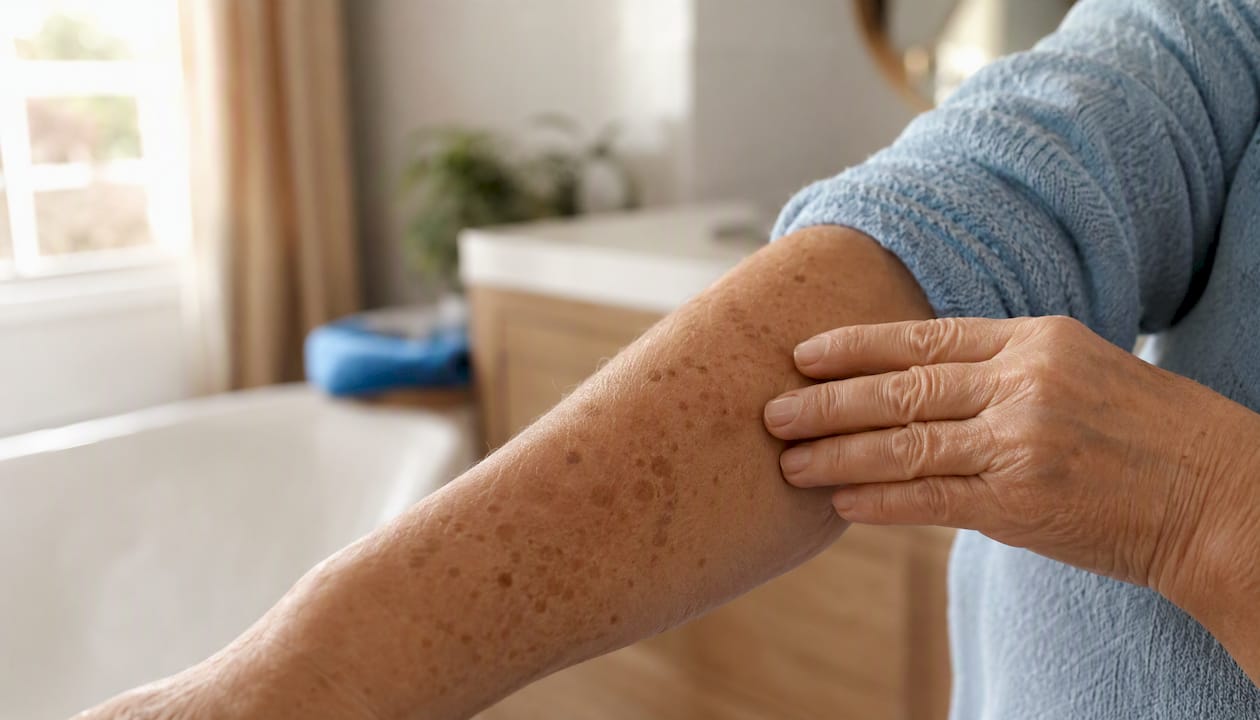
The name “age spot” is a bit misleading. UV exposure is the real driver, not aging itself. That said, Harvard Health notes that spots are most common after age 55, simply because that’s how long cumulative sun damage takes to show up visibly on the skin. People with fairer complexions tend to develop visible lentigines earlier, but all skin tones can be affected.
What do age spots look like, and where do they appear?
According to the Mayo Clinic, age spots are flat, oval areas of increased pigmentation, typically tan to dark brown, ranging from freckle size up to about 1/2 inch (13 mm) across. They show up almost exclusively on areas that receive the most sun over a lifetime.
Common locations include:
- Face (especially the forehead, cheeks, and nose)
- Backs of the hands
- Shoulders and upper back
- Tops of the feet
- Forearms
Surface texture is usually smooth, but epidermal thickening can sometimes make a lentigo feel slightly rough — which occasionally causes confusion with seborrheic keratoses. When a clinician isn’t sure from a visual check alone, dermatoscopy or a biopsy can clarify the diagnosis.
Age spots vs. freckles: a quick distinction
| Feature | Age Spots (Solar Lentigines) | Freckles (Ephelides) |
|---|---|---|
| Fade in winter? | No — they persist year-round | Yes — lighten significantly |
| Typical age of onset | Usually after 55 | Childhood and young adulthood |
| Texture | Flat; occasionally slightly rough | Always flat and smooth |
| Color range | Tan to dark brown | Light tan to reddish-brown |
DermNet NZ confirms that if a spot lightens noticeably in winter, it’s more likely a freckle than a true solar lentigo. That seasonal behavior is one of the clearest ways to tell them apart at home.
What causes age spots, and who is most at risk?
The primary cause is straightforward: cumulative ultraviolet (UV) radiation from the sun or tanning beds triggers melanin overproduction in localized areas of the skin. Every sunburn and every unprotected hour outdoors adds to that cumulative total.
Some risk factors you can’t change:
- Advancing age — the longer you’ve been alive, the more UV exposure you’ve accumulated
- Genetic predisposition — some people’s melanocytes are simply more reactive to UV
- Skin phototype — fairer complexions (Fitzpatrick types I–III) develop visible spots earlier, though deeper skin tones are not immune
Factors you can control:
- Intentional tanning and tanning beds — UV lamps deliver the same melanin-stimulating radiation as the sun, often at higher intensity
- Unprotected sun exposure — especially during peak UV hours (10 AM–4 PM)
- Photosensitizing medications — certain antibiotics, diuretics, and retinoids can increase UV sensitivity, accelerating pigment changes
The cumulative nature of UV damage is what makes prevention so powerful. Every day of consistent photoprotection is a deposit in a long-term account.
How are age spots diagnosed, and when does a biopsy matter?
Most of the time, a clinician can identify an age spot through visual inspection alone. A dermatoscope — a handheld magnifying tool with polarized light — gives a closer look at pigment patterns and can help distinguish a benign lentigo from something more concerning without breaking the skin.
Mayo Clinic explains that when a spot’s appearance is atypical, a skin biopsy (either a shave or punch technique) may be performed to rule out lentigo maligna or melanoma. This is not routine for every brown spot — it’s reserved for cases where something looks off.
Red flags that warrant prompt evaluation:
- Rapid growth or change in size
- Irregular, notched, or poorly defined borders
- Multiple colors within a single spot (black, red, or white mixed in)
- Bleeding, crusting, or ulceration
- Itching, tenderness, or other new symptoms
These map closely to the ABCDE criteria used in melanoma screening: Asymmetry, Border irregularity, Color variation, Diameter over 6 mm, and Evolution (any change). The American Academy of Dermatology recommends seeing a board-certified dermatologist for any new, rapidly changing, or unusual pigmented spot — because age spots can mimic certain skin cancers, and a trained eye makes all the difference.
Topical treatments: what works and what to expect
Topical agents are usually the first step for fading age spots, whether you’re working with an OTC product or a prescription formula. They work by either slowing melanin production, speeding up epidermal cell turnover, or both — and results typically take weeks to months of consistent use.
Key topical ingredients:
- Hydroquinone — the most studied skin-lightening agent; available OTC at 2% and by prescription at 4% or higher. Effective, but generally recommended for short-term use under dermatologist supervision due to the risk of irritation and, with prolonged use, a paradoxical darkening called ochronosis.
- Tretinoin (retinoids) — speeds cell turnover, gradually pushing pigmented cells to the surface. Prescription-strength tretinoin shows the strongest evidence; OTC retinol works more slowly.
- Azelaic acid — inhibits the enzyme tyrosinase, which is needed for melanin production; a good option for sensitive skin and darker phototypes because it carries a lower PIH risk.
- Kojic acid — another tyrosinase inhibitor, often found in brightening serums and combination products.
- Vitamin C (L-ascorbic acid) — an antioxidant that also inhibits melanin synthesis; pairs well with SPF and supports overall skin brightness.
- Alpha hydroxy acids (AHAs) — glycolic and lactic acid exfoliate the surface, accelerating the shedding of pigmented cells and improving penetration of other actives.
- Combination regimens — many dermatologists use a “triple combination” approach (hydroquinone + tretinoin + a mild corticosteroid) for faster results, always with close supervision.
Post-inflammatory hyperpigmentation (PIH) is a real risk with stronger topicals, particularly for medium to deep skin tones. Starting low and slow, and always pairing with SPF, reduces that risk considerably.
In-office procedures: cryotherapy, peels, and dermabrasion
When topicals aren’t moving the needle fast enough, in-office procedures can deliver more dramatic results — often in fewer sessions.
Cryotherapy (liquid nitrogen) applies extreme cold directly to the spot, destroying the overactive melanocytes. It’s quick, relatively low-cost, and effective for small, well-defined lentigines on fair skin. The downside: it carries a meaningful risk of hypopigmentation (a lighter patch where the spot was) or scarring, especially in darker skin tones where the margin for error is narrower.
Chemical peels use acids (glycolic, trichloroacetic acid, or salicylic acid, depending on depth) to remove pigment-bearing layers of the epidermis. Superficial peels require little downtime but usually need multiple sessions; medium-depth peels go deeper and may need a week of recovery. Both carry PIH risk in darker phototypes.
Dermabrasion vs. microdermabrasion:
- Dermabrasion is an aggressive mechanical resurfacing technique performed under anesthesia; it’s rarely used for age spots alone today.
- Microdermabrasion is a gentler, no-downtime option using fine crystals or a diamond tip to buff the surface. Results are modest and cumulative, making it better suited for maintenance or mild pigmentation than for deep or stubborn spots.
For all procedural options, recurrence is common without strict UV protection afterward. The procedure removes existing pigment; it doesn’t change the underlying tendency of those melanocytes to react to future sun exposure.
Laser and light therapies: the most effective in-office option
For visible solar lentigines, laser and light-based treatments are generally the most effective tools available. Recent global guideline summaries recommend lasers and light-based devices as first-line treatments for lentigines in fair skin, often finding them more effective than cryotherapy.
The main categories:
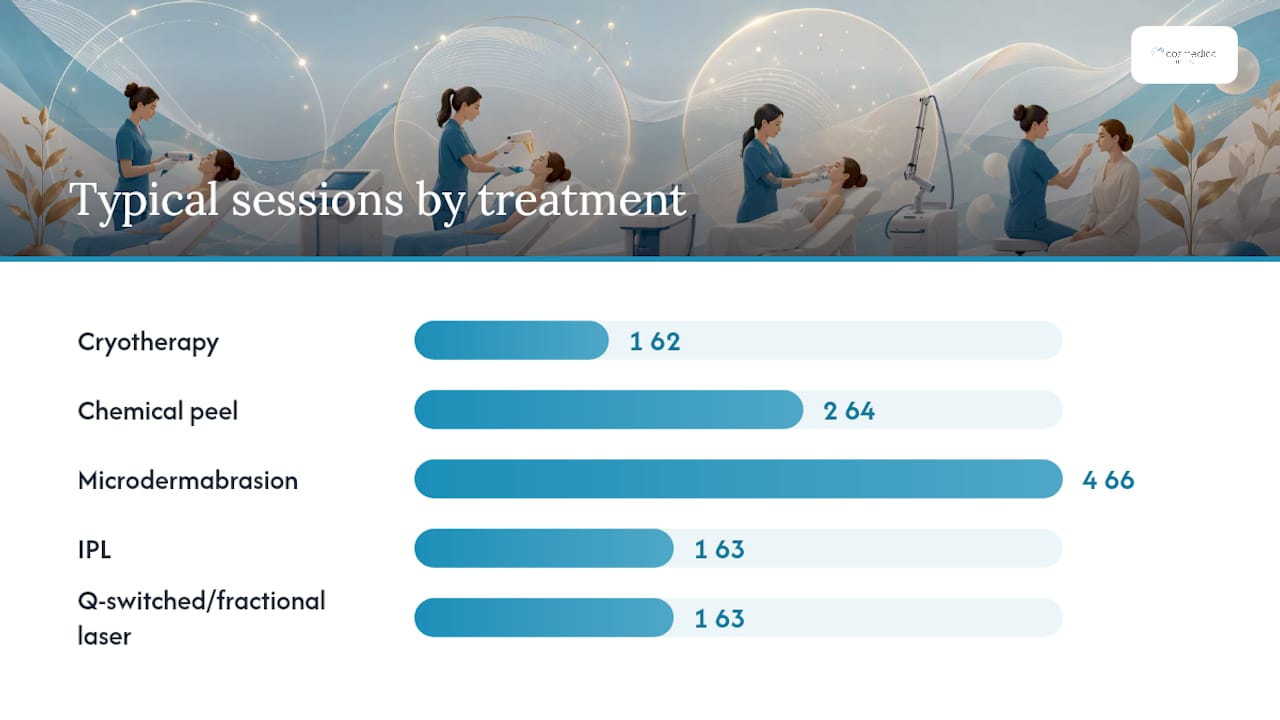
- Intense Pulsed Light (IPL) — delivers broadband light that targets melanin without ablating the skin surface. It’s well-suited for multiple spots across a large area (like the full face or hands) and typically requires 1–3 sessions for noticeable improvement.
- Q-switched lasers (Nd:YAG, ruby, alexandrite) — emit very short, high-energy pulses that shatter melanin granules. Highly precise and effective for individual lentigines; often the go-to for stubborn or darker spots.
- Fractional lasers (ablative and non-ablative) — treat a fraction of the skin at a time, stimulating collagen while addressing pigmentation. Non-ablative fractional lasers offer less downtime; ablative versions are more aggressive but deliver faster, more dramatic results.
Mayo Clinic notes that laser and IPL treatments often require 1–3 sessions, though device choice, lesion depth, and individual skin type all influence outcomes. The critical caution: post-inflammatory hyperpigmentation risk increases significantly in darker skin tones (Fitzpatrick types IV–VI). Operator skill and device selection matter enormously here — always choose a board-certified dermatologist or a laser specialist with documented experience treating your skin tone.
What realistic results actually look like
Most treatments lighten age spots rather than erase them permanently. That distinction matters because it shapes what you should expect going in.
Common side effects and recovery by approach:
- Topicals: redness, dryness, mild peeling; no downtime but slow results (2–4 months minimum)
- Cryotherapy: temporary redness and blistering; 1–2 weeks for the treated area to heal
- Chemical peels: 3–7 days of peeling and redness for superficial peels; up to 2 weeks for medium-depth
- Microdermabrasion: mild redness for a day; no real downtime
- IPL/laser: darkening of the spot (“bronzing”) before it flakes off over 1–2 weeks; possible redness and swelling for several days
Recurrence is the rule, not the exception, without consistent photoprotection. The melanocytes that produced the original spot are still there, still reactive to UV. A single laser session won’t reprogram them permanently.
Broad treatment comparison
| Approach | Effectiveness for lentigines | Typical sessions | Downtime | PIH risk in darker skin |
|---|---|---|---|---|
| Topical agents | Moderate (gradual) | Ongoing (months) | None | Low to moderate |
| Cryotherapy | Moderate | 1–2 | 1–2 weeks | High |
| Chemical peel | Moderate to good | 2–4 | 3–7 days | Moderate to high |
| Microdermabrasion | Mild | 4–6 | Minimal | Low |
| IPL | Good to very good | 1–3 | 1–2 weeks | Moderate |
| Q-switched/fractional laser | Very good | 1–3 | 1–2 weeks | Moderate to high |
How to prevent new age spots from forming
Prevention is genuinely more effective than treatment — and a lot less expensive. The goal is reducing cumulative UV exposure before it has a chance to trigger melanin overproduction.
Daily broad-spectrum sunscreen with SPF 30 or higher is the baseline. Apply it every morning to all exposed skin, and reapply every two hours when you’re outdoors. The catch: most people apply far too little, which cuts the effective SPF dramatically. A full teaspoon for the face alone is the right amount.
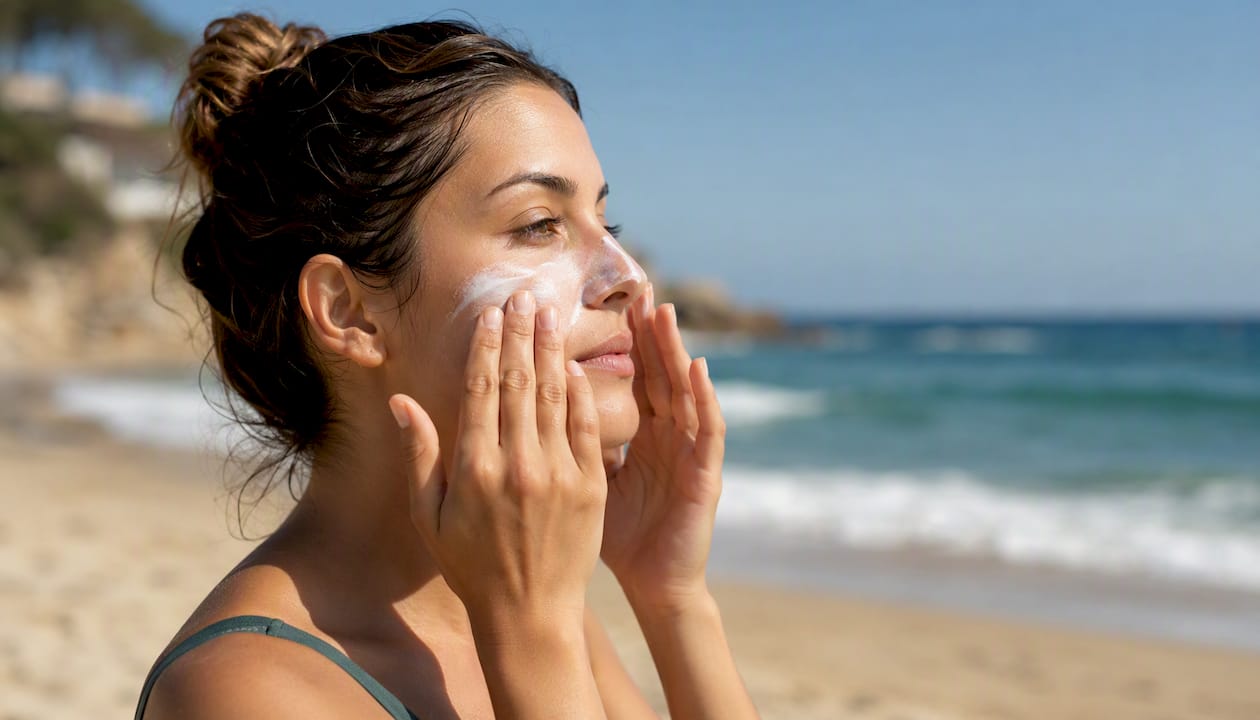
Physical protection goes further. The American Academy of Dermatology points out that UPF-rated clothing, wide-brimmed hats, and seeking shade during peak UV hours (10 AM–4 PM) are more reliable than sunscreen alone, precisely because sunscreen is so often applied incorrectly or too thinly. Think of physical barriers as your primary shield and sunscreen as the backup layer. For a deeper look at how sunscreen fits into your long-term skin health, this guide on sunscreen and anti-aging is worth bookmarking.
Avoid tanning beds entirely. UV lamps deliver the same melanin-stimulating radiation as the sun, often at higher intensity, with no meaningful benefit to offset the cumulative damage. And if you’re on photosensitizing medications — certain antibiotics, diuretics, or retinoids — talk to your prescribing doctor about extra precautions during sun exposure.
How to choose the right treatment for your skin
The “best” treatment depends on your skin tone, how many spots you’re dealing with, how quickly you want results, and how much downtime you can realistically manage.
Factors to weigh:
- Skin tone — darker phototypes face a higher PIH risk with aggressive procedures; topicals and non-ablative options are usually safer starting points
- Number and size of spots — IPL works well for multiple spots across a broad area; Q-switched lasers are better for isolated, stubborn ones
- Speed of results — topicals are slow; laser and IPL are faster but require recovery
- Budget — topicals are the most affordable; laser sessions range widely depending on the practice and region
- Downtime tolerance — if you can’t take a week off, cryotherapy and ablative lasers may not be practical right now
Questions to bring to your dermatology appointment:
- Are you board-certified in dermatology, and do you have experience treating my skin tone?
- How many sessions do you expect I’ll need, and what’s the realistic timeline?
- What are the most likely side effects for someone with my phototype?
- Can I see before-and-after photos of patients with similar skin?
- What’s the maintenance plan after treatment to prevent recurrence?
Choosing a board-certified dermatologist for any pigmented-lesion evaluation or laser procedure isn’t just a nice-to-have — it’s the single most important decision in the whole process.
At-home skincare that can help fade spots and maintain results
A solid at-home routine won’t replace in-office procedures for deep or stubborn lentigines, but it can meaningfully improve mild pigmentation and protect the results of professional treatments. The key is knowing which ingredients do what, and how to layer them without triggering irritation.
Ingredients worth building your routine around:
- Vitamin C (L-ascorbic acid) — antioxidant that inhibits melanin synthesis and brightens overall tone; use in the morning before SPF. Vitamin C’s role in fading hyperpigmentation is well-documented and it pairs beautifully with daily sunscreen.
- Niacinamide — reduces the transfer of melanin to skin cells, evening tone over time; gentle enough for daily use and low PIH risk across all skin types
- Alpha hydroxy acids (glycolic and lactic acid) — exfoliate the surface to accelerate pigmented cell turnover; use at night, not alongside strong retinoids until your skin has adjusted
- Azelaic acid — tyrosinase inhibitor with anti-inflammatory properties; a smart choice for sensitive skin or darker phototypes
- Retinoids (tretinoin or OTC retinol) — speed cell turnover and gradually push pigmented cells to the surface; start 2–3 nights per week and build up slowly
- Hydroquinone — most effective topical lightener, but use it short-term under dermatologist supervision only
Layering actives safely is where a lot of people go wrong. This guide on combining skincare ingredients walks through which pairs work well together and which ones to separate into AM and PM routines.
Pro Tip: Always patch test a new active on a small area (inner arm or behind the ear) for 48 hours before applying it to your face. Start with the lowest available concentration, use a gentle non-foaming cleanser that won’t strip your barrier, and treat consistent SPF as the non-negotiable anchor of every brightening routine — without it, actives can make pigmentation worse, not better.
The honest truth about managing age spots
Here’s a perspective worth sitting with: most of the frustration people feel about age spots comes from expecting treatments to be more permanent than they actually are. Laser sessions, chemical peels, and even prescription hydroquinone can deliver genuinely impressive fading — but the melanocytes that produced those spots are still in your skin, still reactive to UV. Without consistent photoprotection after treatment, recurrence isn’t a risk; it’s essentially a certainty.
We’d also gently push back on the idea that in-office procedures are always the right first move. For mild to moderate lentigines, a well-chosen topical routine with vitamin C, niacinamide, and a gentle AHA can produce meaningful improvement over several months — with far less cost, no downtime, and no PIH risk. That’s not a consolation prize; for many people, it’s the smarter starting point. Save the laser for spots that genuinely don’t respond to topicals, or for cases where speed matters.
And one thing we feel strongly about: if a spot is new, changing, or looks different from your other spots, don’t wait to see a dermatologist. The vast majority of age spots are completely benign, but the ones that aren’t can look deceptively similar. A quick clinical evaluation is always worth the peace of mind.
Cosmedica-skincare products that support brightening and maintenance
Fading age spots is a long game, and what you do between (or instead of) professional treatments matters. Cosmedica-skincare’s Super Serum Set brings together targeted formulations — including vitamin C, niacinamide, and AHA-based options — designed to support brightening and maintain results after professional treatment. The 10% Niacinamide + Zinc Treatment Serum is a standout for daily tone-evening with minimal irritation risk, and the 5% Lactic Acid Treatment + Hylasyn offers gentle AHA exfoliation that works well as a maintenance step after in-office procedures.
To be straightforward about it: topical skincare can improve the appearance of mild pigmentation and protect professional results, but it’s not a substitute for medical evaluation when a spot looks suspicious or for procedures when lentigines are deeply pigmented. Use these products as part of a consistent routine, always with SPF, and you’ll give your skin the best possible environment to stay clear.
Sources
These are the clinical and patient-facing resources we drew on — each worth bookmarking if you want to go deeper:
- Age spots (liver spots) - Symptoms & causes
- Melanin Hyperpigmentation Disorders, Management: Global 2025 Guideline Summary
- Get rid of age spots — American Academy of Dermatology
- Age spots (solar lentigo, liver spots) - Harvard Health
FAQ
How do I get rid of an age spot?
Treatment options range from topical agents (vitamin C, niacinamide, retinoids, and prescription hydroquinone) to in-office procedures like IPL, Q-switched lasers, chemical peels, and cryotherapy. Laser and light-based treatments are generally the most effective for visible lentigines, but consistent SPF use after any treatment is essential to prevent recurrence.
What causes age spots to form?
Age spots result from cumulative UV exposure — from the sun or tanning beds — that triggers melanin overproduction in localized clusters of skin cells. They are a cosmetic sign of sun damage and are not related to liver disease.
At what age do most people start getting age spots?
Age spots are most common after age 55, though they can appear earlier in people with fairer complexions or a history of significant sun exposure or tanning bed use.
How do you tell an age spot apart from skin cancer?
Age spots are flat, uniformly colored, and stable over time. Warning signs that suggest something more serious include rapid growth, irregular or notched borders, multiple colors within one spot, bleeding, or any change in symptoms — these map to the ABCDE melanoma criteria. See a board-certified dermatologist for any spot that looks or behaves differently from your others.