

Why Skin Loses Moisture: Causes and Real Fixes
TL;DR:
- Skin moisture loss results from the breakdown of the skin’s outer barrier, leading to increased water evaporation. Aging accelerates barrier failure due to reduced natural moisturizing factors and lipid content, making skin more prone to dryness. Effective repair involves gentle cleansing, using barrier-supporting moisturizers promptly after washing, and avoiding products that damage the skin’s structure.
Skin moisture loss is defined as the escape of water through a compromised outer barrier, specifically the stratum corneum, when its lipid matrix and natural moisturizing factor (NMF) break down. This process, clinically called transepidermal water loss (TEWL), is the root cause of dry, tight, and flaky skin. Xerosis affects 29% of the general population and climbs to 85% in middle-aged and elderly people. That gap tells us aging dramatically accelerates barrier failure. Understanding why skin loses moisture is the first step toward fixing it, and the answer goes much deeper than just drinking more water.
Why does skin lose moisture in the first place?
Skin holds water through a two-part system: the stratum corneum (the outermost skin layer) and the natural moisturizing factor (NMF) locked inside its cells. Think of the stratum corneum like a brick wall. The skin cells, called corneocytes, are the bricks. The lipids surrounding them are the mortar. When that mortar cracks, water escapes freely.
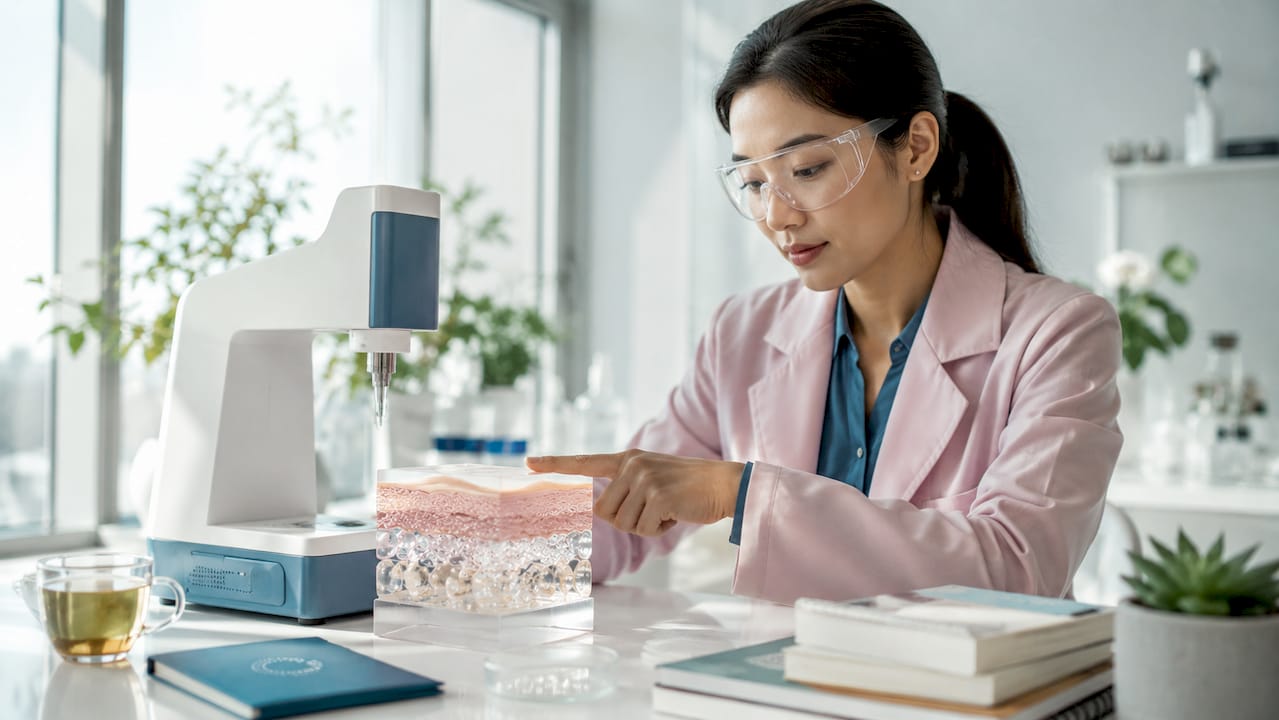
Skin hydration depends on lipid matrix organization within the stratum corneum, not just on how much water you drink. The lipid matrix is made up of roughly 50% ceramides, 25% cholesterol, and 10–15% free fatty acids. Each component plays a specific role: ceramides seal gaps between cells, cholesterol keeps the matrix fluid enough to flex, and free fatty acids regulate the skin’s pH. When any one of these drops, the whole structure weakens.
NMF is the other half of the equation. It is a collection of water-attracting compounds, including amino acids, urocanic acid, and lactic acid, produced when a protein called filaggrin breaks down inside the corneocyte. NMF acts like a sponge, pulling moisture from the air and holding it inside the skin cell. Without enough NMF, the stratum corneum dries out from the inside.
How TEWL reveals barrier health
Transepidermal water loss (TEWL) is the standard clinical measure of barrier function. A healthy barrier keeps TEWL low. A damaged barrier lets water evaporate at a much faster rate, which shows up as tightness, flaking, and sensitivity. Dermatologists use TEWL measurements to assess how well a barrier is functioning and whether a repair protocol is working. You do not need a clinical device to notice it: if your skin feels dry within an hour of applying moisturizer, your TEWL is likely elevated.
| Barrier component | Role in moisture retention |
|---|---|
| Ceramides (~50% of lipids) | Seal the spaces between skin cells |
| Cholesterol (~25% of lipids) | Keeps the lipid matrix flexible |
| Free fatty acids (10–15%) | Regulate skin pH and reinforce structure |
| NMF (amino acids, lactic acid) | Attracts and holds water inside corneocytes |
| Stratum corneum (10–20% water) | Outer shield that controls water loss |
What environmental and lifestyle factors cause moisture loss?
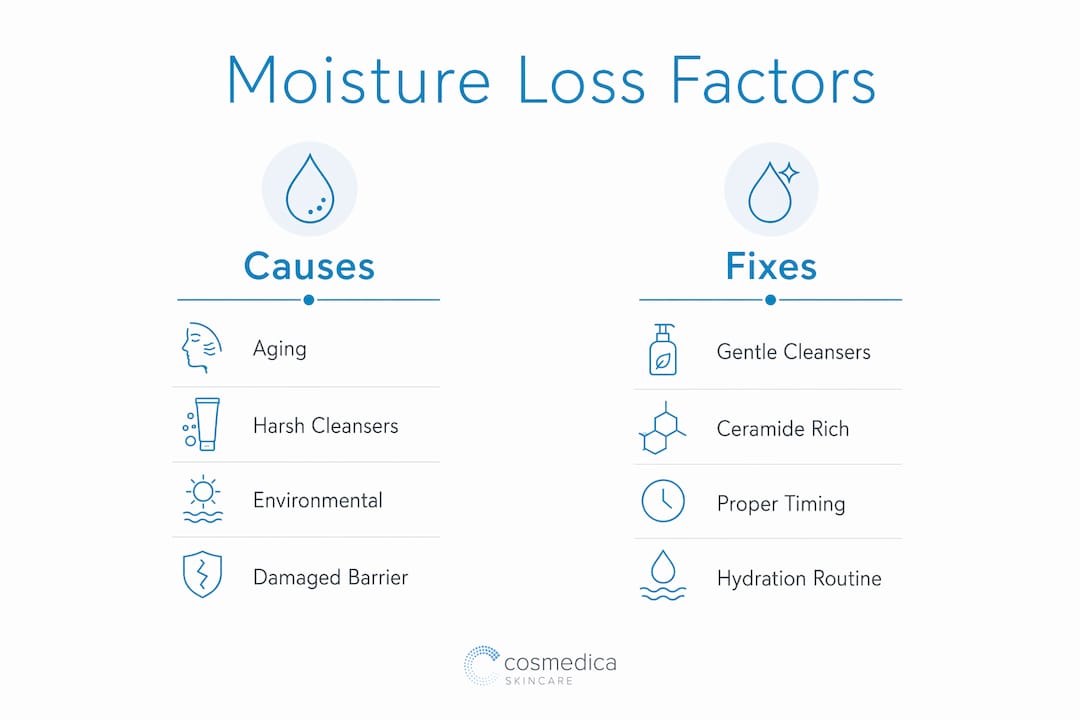
The skin barrier is tougher than it looks, but it has clear breaking points. Environmental factors like low humidity, UV exposure, and pollution disrupt the lipid matrix and increase water loss even when you moisturize regularly. Cold air holds less moisture, so winter months hit the barrier hard. Wind strips surface lipids. Air conditioning and indoor heating create the same low-humidity effect as outdoor cold.
Here are the most common barrier disruptors:
- Harsh soaps and detergents. Surfactants that strip oil from dishes also strip ceramides from skin. Overwashing, especially with hot water, removes the lipid layer faster than the skin can rebuild it.
- Hot showers. Water above body temperature dissolves surface lipids. A 10-minute hot shower can measurably reduce barrier integrity.
- UV radiation. Sun exposure generates free radicals that oxidize and degrade lipids in the stratum corneum. This is one reason sun-damaged skin feels chronically dry.
- Air pollution. Particulate matter and ozone penetrate the outer layers and trigger inflammatory responses that break down ceramides.
- Overuse of active ingredients. Excessive use of exfoliants and retinoids commonly damages the barrier and worsens moisture loss. Retinoids accelerate cell turnover faster than the barrier can reorganize its lipids. Acids lower skin pH temporarily, which disrupts enzyme activity needed for lipid synthesis.
Aging adds another layer of complexity. Aging skin shows decreased NMF, lower lipid content, and increased TEWL, along with a thinner epidermis that is less able to repair itself. This is not just a cosmetic concern. Impaired barrier function in older skin raises the risk of infection and injury. You can read more about this in our guide on aging skin hydration.
Pro Tip: Switch to lukewarm water and limit showers to 5–7 minutes. This single habit change reduces lipid stripping significantly and gives your barrier a real chance to stay intact.
Why is moisturizing alone often not enough?
Many people apply moisturizer daily and still deal with dry, tight skin. The reason is that most moisturizers add water to the surface but do not repair the structure that keeps water in. Adding water without fixing the barrier is like filling a bucket with a hole in it.
The critical difference is between humectants (ingredients that attract water, like glycerin and hyaluronic acid) and barrier repair agents (ingredients that rebuild the lipid matrix, like ceramides, cholesterol, and fatty acids). Humectants are useful, but they need a functional barrier to hold the moisture they attract. Without that structure, the water they pull in simply evaporates.
The 3:1:1 ratio of ceramides, cholesterol, and free fatty acids is clinically validated as the most effective formula for restoring barrier integrity. Many commercially available moisturizers do not meet this ratio. They may contain ceramides but skip the cholesterol, or include fatty acids without the right proportions. Reading ingredient lists matters more than reading marketing claims.
Timing also changes everything. Applying moisturizer within 3 minutes of bathing traps residual water on the skin surface and significantly improves hydration retention. Waiting 10 or 15 minutes after a shower means that surface moisture has already evaporated, and your moisturizer is working on dry skin instead of sealing in hydration.
Pro Tip: Pat your skin gently with a towel until it is just slightly damp, then apply your moisturizer immediately. This “3-minute rule” is one of the most effective and underused skin hydration tips out there.
| Moisturizer type | What it does | Limitation |
|---|---|---|
| Humectant (glycerin, hyaluronic acid) | Draws water into the skin | Needs a sealed barrier to hold moisture |
| Emollient (squalane, shea butter) | Softens and smooths skin surface | Does not rebuild lipid structure |
| Occlusive (petrolatum, dimethicone) | Blocks water evaporation | Does not repair underlying barrier |
| Barrier-repair (3:1:1 lipid formula) | Rebuilds ceramide-cholesterol-fatty acid matrix | Requires consistent use over 2–3 weeks |
How can you protect your barrier and retain moisture effectively?
Protecting your skin barrier is less about adding more products and more about removing the things that damage it. Effective barrier repair requires a 2–3 week minimalist routine that avoids active ingredients, uses gentle cleansers, and applies a 3:1:1 lipid-based moisturizer on damp skin. That timeline feels long, but the barrier cannot rebuild overnight.
Here is a practical protocol for retaining moisture and repairing your barrier:
- Switch to a fragrance-free, gentle cleanser. Fragrances and sulfates are two of the most common barrier disruptors. A gentle cleanser for sensitive skin removes dirt without stripping lipids. Look for pH-balanced formulas around 4.5–5.5.
- Pause retinoids and exfoliants during repair. Give your barrier 2–3 weeks without acids, retinoids, or physical scrubs. Reintroduce them slowly, one at a time, once your skin feels comfortable.
- Apply moisturizer on damp skin within 3 minutes. Use a product with ceramides, cholesterol, and fatty acids in the right proportions. Apply it 1–2 times daily, consistently.
- Support your barrier from the inside. A diet rich in omega-3 and omega-6 fatty acids supports lipid synthesis in the skin. Fatty fish, walnuts, and avocados provide the building blocks your barrier needs to rebuild itself.
- Use a humidifier in dry environments. Indoor air in winter can drop to very low humidity levels. A humidifier keeps ambient moisture high enough to slow TEWL, especially while you sleep.
- Seek professional care for persistent issues. If dryness is accompanied by redness, cracking, or intense itch after 3–4 weeks of a consistent routine, a dermatologist can rule out conditions like eczema, psoriasis, or contact dermatitis that require targeted treatment.
Building a consistent hydration routine for your skin does not need to be complicated. The most effective routines use fewer products applied correctly, not more products applied randomly.
Pro Tip: If your skin feels tight after cleansing, your cleanser is too harsh. That tightness is your barrier signaling lipid loss. Swap it out before adding any other products.
Key Takeaways
Skin loses moisture primarily because the stratum corneum’s lipid matrix and NMF break down, allowing water to escape faster than the skin can replace it.
| Point | Details |
|---|---|
| Barrier structure drives hydration | The 3:1:1 ratio of ceramides, cholesterol, and fatty acids is the foundation of moisture retention. |
| TEWL signals barrier damage | Elevated water loss shows up as tightness and flaking; repair takes 2–3 weeks of consistent care. |
| Timing of moisturizer matters | Applying within 3 minutes of washing traps residual moisture and dramatically improves results. |
| Active ingredients can backfire | Retinoids and exfoliants worsen moisture loss when the barrier is already compromised. |
| Diet supports barrier repair | Omega-3 and omega-6 fatty acids from food provide the lipids your skin needs to rebuild from within. |
What I’ve learned about skin hydration that most articles miss
Here is the honest truth: most conversations about dry skin focus entirely on what to put on your face. The real problem is structural, and no serum fixes a broken structure if you keep doing the things that break it.
I have seen people layer hyaluronic acid serums, rich creams, and facial oils, and still wake up with tight, flaky skin. The reason is almost always the same: they are using a retinoid three nights a week, washing with a foaming cleanser twice a day, and wondering why nothing sticks. The barrier cannot repair itself under those conditions. It is like trying to paint a wall while someone else is sanding it.
The other mistake I see constantly is switching products every two weeks because “it is not working.” Barrier repair takes 2–3 weeks minimum. If you change your routine before that window closes, you never give any product a real chance. Patience is genuinely the most underrated skin care ingredient.
Aging skin deserves a separate mention. The barrier changes are not subtle after age 50. NMF levels drop, lipid production slows, and the epidermis thins. These are not problems a single moisturizer solves. They require consistent, long-term routines that account for the biology. If you are in that age group, barrier repair products formulated with the right lipid ratios are worth prioritizing over trendy active ingredients.
The simplest advice I can give: do less, do it consistently, and give it time. Your barrier will respond.
— Thomas
Cosmedica-skincare products built for barrier repair and hydration
Cosmedica-skincare formulates products specifically for people who want real hydration results, not just a temporary fix. The Intense Hydration Kit pairs barrier-supporting ingredients with humectants designed to work together, sealing moisture in rather than just adding it to the surface. For those focused on daily hydration maintenance, the hyaluronic acid collection offers serums and treatments that complement a minimalist, barrier-friendly routine. Every product is cruelty-free, fragrance-free where it counts, and formulated to support skin at every age. If your skin has been feeling dry despite your best efforts, the right formulation makes a measurable difference.
FAQ
What is the main reason skin loses moisture?
The skin loses moisture when its outer barrier, the stratum corneum, becomes compromised and can no longer prevent water from evaporating. This happens when the lipid matrix or NMF levels drop due to aging, harsh products, or environmental stress.
How long does it take to repair a damaged skin barrier?
Barrier repair typically takes 2–3 weeks of consistent, minimalist care using gentle cleansers and a ceramide-rich moisturizer applied on damp skin. Reintroducing active ingredients too soon restarts the damage cycle.
Does drinking more water fix dry skin?
Drinking water supports overall health but does not directly restore skin hydration at the barrier level. Moisture retention depends on the lipid matrix and NMF, not on systemic water intake alone.
Why does skin feel dry even after moisturizing?
Skin feels dry after moisturizing when the barrier is too damaged to hold in the moisture being applied. Using a moisturizer with the 3:1:1 ceramide-to-cholesterol-to-fatty-acid ratio and applying it within 3 minutes of washing addresses the structural cause.
Does aging make moisture loss worse?
Aging skin produces less NMF and fewer lipids, which increases TEWL and makes the barrier thinner and more fragile. This is why preventing dry skin in older adults requires more consistent and targeted barrier repair routines.